
 Reading Time: 8 mins #
 This post may contain affiliate links.
My friend keeps peacocks. Real living peacocks, wandering her property like living chandeliers. They’re magnificent and exhausting to watch. Every ten minutes, the males explode into full display, fanning those ridiculous feathers, trembling with effort, demanding the world acknowledge their beauty. Then they collapse, deflated, and twenty minutes later do it again. Her sparrows, meanwhile, live. They find seeds. They build nests. They sing because that’s what sparrows do on Tuesday mornings. They don’t check if anyone noticed.
I was a proud innocent peacock for the first fifteen years of my career.
Not obvious. I wasn’t loud or boastful. My peacocking was quieter and, I think, more exhausting: the careful cultivation of impressiveness, the constant background hum of “is this enough, am I enough, does this matter enough?” Every article I wrote, I imagined someone important reading it and being changed. Every conversation, some part of me was auditioning. I wanted significance so badly that I couldn’t just be in a room. I had to mean something in it.
The Significance Trap
Here’s what nobody tells you about the hunger for significance: it’s a moving target with no finish line.
I reached projected milestones only to observe a rapid decline in satisfaction, with the internal deficit returning on a larger scale within 96 hours. The book deal, the speaking invitation, and the metric of audience growth were misidentified as validation protocols. In reality, they functioned as temporary signals that failed to alter the core mental flow, proving that external outcomes are insufficient for structural stability
Each milestone dissolved on contact. I was never ungrateful or broken, but significance sought from the outside can never actually fill an inside hole.
Alan Watts understood this all too well in The Wisdom of Insecurity, as he summarized that the attempt to make yourself feel permanent and solid is exactly what creates the anxiety of impermanence. We exhaust ourselves trying to matter because mattering feels like safety, and safety feels like we might finally be able to relax.
We can’t. That’s the trap. The need for validation never rests because it’s not actually about achievement; it’s about a wound underneath achievement that no achievement can reach.

The Imposter in the Room
I spent years inside what I now understand was not exactly imposter syndrome, but its less-discussed twin: the terror of being ordinary. I call it “My Ordinary Phobia.” Standard imposter syndrome says, “I don’t deserve to be here.” My version said, “What if I’m here and I’m just… average? What if I’m unremarkably competent and that’s all there is?”
The fear of being ordinary is its own specific horror. It’s not about inadequacy; it’s about insufficiency—there’s a difference. Inadequacy says you can’t measure up. Insufficiency says measuring up isn’t enough; you need to be exceptional, or what’s the point?
Brené Brown’s research on shame reveals that the core shame narrative driving most human suffering is some version of “I am not enough.” But what I found beneath my own shame was its inverse: the belief that “enough” was actually an insult. Enough was for ordinary people. I needed to be extraordinary—or I was failing at the assignment of being alive.
This is a particular kind of madness, and it’s remarkably common among ambitious, thoughtful people who’ve been told since childhood that they’re special.

[The Exceptionalism Lens: The Terror of Being Ordinary | moneycatzzz.com]
What Ordinariness Actually Costs
The fear of being ordinary has real costs that we rarely calculate honestly.
I stopped writing a novel for three years because I couldn’t guarantee it would be extraordinary. I would rather not write it than write something mediocre. I told myself this was the standard. My therapist correctly identified it as cowardice dressed in the clothing of perfectionism.
I attended my daughter’s school play, distracted and half-present, while mentally composing a newsletter that ‘might’ go viral. I chose the performance of potential significance over the actual significance of that ordinary Tuesday evening in a gymnasium that smelled like floor wax and children’s ambition.
I avoided friendships with people who didn’t “matter” professionally because time spent with unimpressive people felt like falling behind—I was so busy curating my significance that I missed ten years of actual life.
Studies on social comparison consistently show that upward social comparison, measuring yourself against people doing more impressive things, correlates strongly with depression, anxiety, and chronic dissatisfaction. We know this—we do it anyway, because the alternative—just being who we are without the comparison framework—feels frighteningly undefined.
The Sparrow’s Secret
The sparrows on my friend’s property don’t have an existential relationship with their own sparrow-ness. They’re not wondering if being a sparrow matters, if sparrows have impact, if they’re building a legacy. They’re finding seeds. They’re singing because of biology and Tuesday, and why not?
This sounds like giving up. It isn’t.
John Welwood explores this in Ordinary Magic, arguing that the sacred isn’t above ordinary life; it’s inside it. The extraordinary isn’t the opposite of ordinary; it’s ordinary life experienced with full presence rather than constant evaluation. A poem that moves you to tears is extraordinary. So is a really good piece of toast eaten slowly on a morning when you have nowhere to be.
The difference between these experiences and the peacock’s display is attention. The peacock is performing presence; the sparrow is actually present.
Releasing the Need for Validation
The moment I started recovering from my need for validation wasn’t dramatic. It was a poem I wrote.
It was a real stinker with overwrought imagery, mixed metaphors, the kind of thing a thirteen-year-old writes after reading too much Sylvia Plath. I wrote it at my kitchen table on a Saturday morning because I felt sad, and writing sometimes helps, and there was no one around to evaluate it.
And it was the freest I had felt writing anything in years.
Because it didn’t have to be good, it didn’t have to go anywhere. It wasn’t going to prove anything. It was a sad woman at a kitchen table making language out of feelings, which is what sad women at kitchen tables have done throughout human history, and it was enough. It was more than enough. It was everything.
I adored how Ichiro Kishimi equated freedom with the courage to be disliked. He suggests we need to stop organizing our lives around others’ approval. But I had extended that: freedom is also impossible without the courage to be unimpressive, to stop organizing your life around the performance of significance and just let yourself be a person, messy and ordinary and completely inexplicably enough.

The Authentic Living Alternative
Authentic living isn’t a brand or a personal development goal. It’s what remains when you stop performing. It is smaller than you expect and a lot more real than you’ve been allowing yourself to experience.
What it looks like practically:
- Finishing a project, even when it might be mediocre
- Showing up to relationships without an agenda
- Having opinions that don’t position you as interesting
- Spending time on things you enjoy without calculating their impressiveness
- Saying “I don’t know” without qualifying it with expertise
- Being moved by ordinary things without irony
Viktor Frankl’s work on meaning argues that meaning comes not from achievement or status but from how we engage with our lives, including suffering, limitations, and ordinariness. The most meaningful moments he observed weren’t impressive ones. They were human.
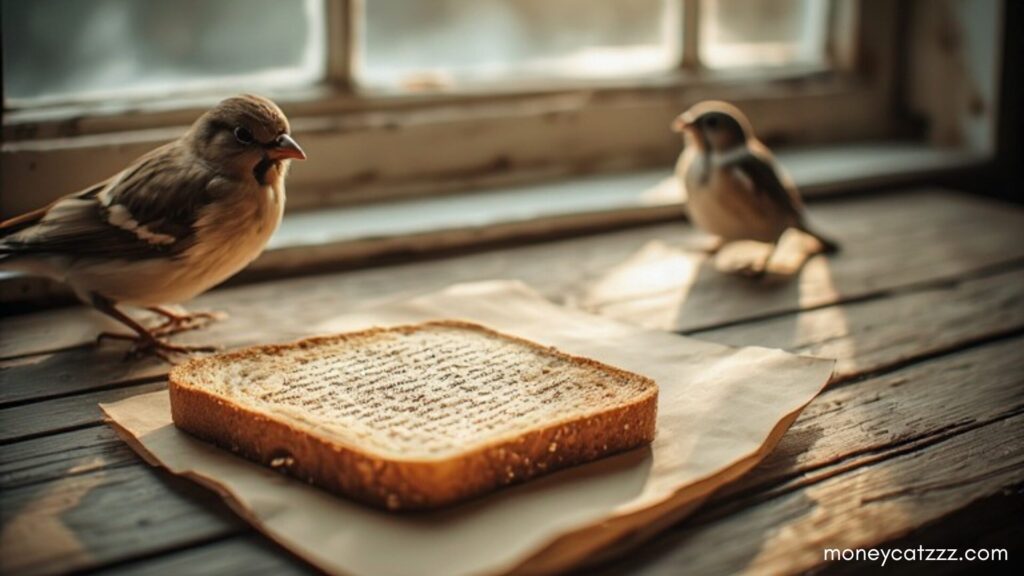
[“The Sacred in the Ordinary” |Image by moneycatzzz.com]
The Uncomfortable Math
I finally took out my underused calculator and did a final summary, honestly. I have, on a generous estimate, perhaps 40 more years of functional adult life. I spent fifteen of the ones already past performing significance rather than experiencing life. If I continue, I will reach the end having been very impressively busy while missing most of what actually happened.
The imposter syndrome I thought I was fighting wasn’t about whether I deserved my achievements. It was about whether I allowed myself to deserve them in my life. Permitting myself to feel the actual daily texture of life: the bad poems, the school plays, and the friendships with unimpressive people who loved me anyway.
Significance sought through external achievement is a long con. It promises arrival and delivers only the next departure. I’m not saying you don’t have to achieve things, but don’t make achieving things the condition of your presence in your own life.
The Sparrow Practice
The sparrows on my friend’s property have a secret the peacocks spend their entire lives missing: it’s enough to be alive on a Tuesday. It’s enough to find food, build shelter, and sing occasionally for no particular reason—it’s enough to do your ordinary, particular, unremarkable life with full attention and no audience.
Your fear of being ordinary is a fear of being human. And being human, completely and without performance, is the only thing any of us actually gets to do.
Write the terrible poem. Attend the ordinary play. Make friends with unimpressive people who make you laugh.
Stop exhausting yourself displaying. The seeds are right there.
The Courage to be Unimpressive: Reclaiming a Life Beyond Significance
The Collected Poems

Ordinary Magic
Courage To Be Happy
Disclosure: This post may contain affiliate links. We only recommend products we believe in, and we may receive a commission at no cost to you! Thank you for your support!
Acknowledgment: Cover Image by moneycatzzz.com
Disclaimer: The information is provided for general information only – moneycatzzz.com makes no representations or warranties in relation to the information, including but not limited to any representation or warranty as to the fitness for any particular purpose of the information to the fullest extent permitted by law. While every effort has been made to ensure that the information provided in this article is accurate, reliable, and complete as of the time of writing, the information provided in this article should not be relied upon to make any financial, investment, real estate or legal decisions. Additionally, the information should not substitute advice from a trained professional who can take into account your personal facts and circumstances, and we accept no liability if you use the information to form decisions.