 Reading Time: 8 mins #
 This post may contain affiliate links.
There is a moment in every marksman’s training where they stop aiming at the duck.
They aim at the space ahead of it. The shot lands. The duck falls.
That is the mental gear shift career planning requires. You cannot hit what is moving by aiming where it stands. You aim at the predicted movement, the future position, the thing that has not happened yet but will.
This is why career goals feel outdated so quickly.
Monday morning, you are revved up. The five-year plan looks crisp in your notebook. The VP track is charted. The side project has a launch date. By Wednesday, your boss quits. Your industry gets disrupted by a seventeen-year-old with a GitHub repository. The side project’s market evaporates. The notebook goes in the drawer.
You did not miss because you aimed poorly. You missed because you were aiming at a photograph of a target that was already in motion.
Call It a Vector
Stop using nouns in your career planning. Start using verbs.
The difference between a target and a vector is the difference between wanting to be a VP and wanting to solve the kinds of problems VPs solve.
One is a fixed point. The other is real-time telemetry. It recalculates as the terrain shifts. It does not collapse when the title gets eliminated.
I watched David spend eight years climbing the ranks to Director of Strategic Initiatives. When the restructuring hit in Q2 2022, his role disappeared. He did not know what to call himself. His LinkedIn still says he is seeking director-level opportunities. It has been eighteen months.
Jen’s role got cut in the same restructuring. Her LinkedIn says she solves cross-functional communication breakdowns. She had three offers in two weeks. Same skill. Different titles. She moved.
If your goal is a noun, you are cooked. If your goal is a verb, you have options.
[MindValley Promo | Rewire your mind, transform life. | Nir Eyal]
Never Aim at the Photograph
Reed Hastings understood this in 2007. Netflix was printing money from DVD rentals while Blockbuster was still the giant. Hastings could have aimed at the static target of becoming the best DVD rental company. Instead, he locked onto a dynamic vector: becoming the best way for people to access entertainment content.
He launched streaming while DVDs were still profitable. Wall Street thought he was insane. He was aiming at space. The duck had not arrived yet, but he knew where it was flying.
By 2010, Blockbuster filed for bankruptcy. Their CEO, Jim Keyes, said in 2008 that neither RedBox nor Netflix was even on the radar as competition. He was aiming at a photograph. Hastings was aiming at a trajectory.
The cost of credential stacking versus skill development plays out the same way. I have seen people spend $50,000 on MBAs, betting that the VP of Marketing will still exist in five years. When the title evaporates, the credential is a sunk cost. The person who spent that time building the capability to diagnose market inefficiencies and fix them has options.
Same effort. Different aim.
Your Network Is Radar
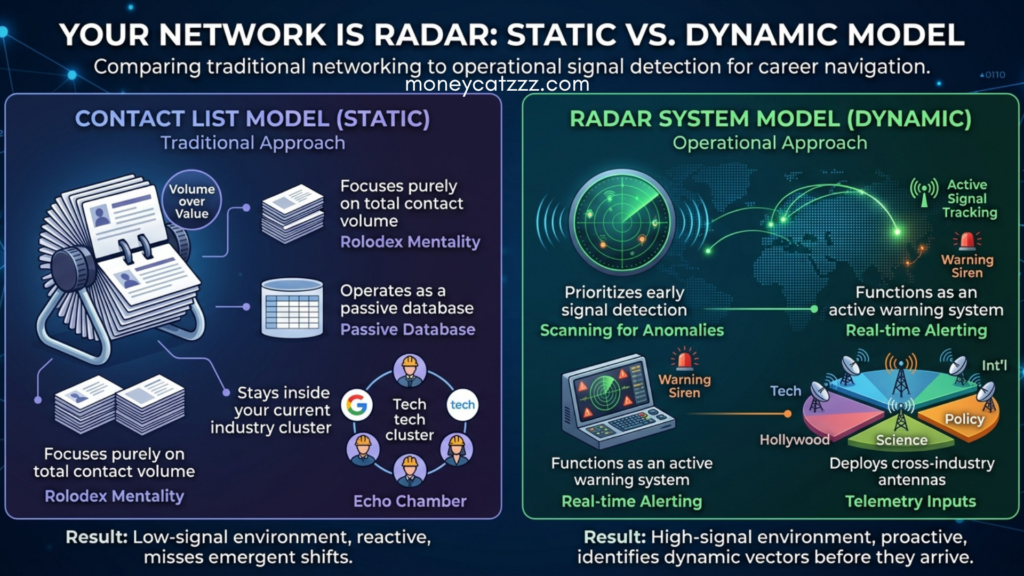
To keep a vector on target, you need external telemetry. That is where your networking strategy comes in.
Most professionals treat their networking strategy like collecting baseball cards. More contacts equals more value. This is catastrophically wrong.
Your network is your early warning system: the people who see what you do not see. They operate in adjacent industries: as competing firms, as regulatory bodies, or in completely unrelated fields. They catch the signal before it reaches your shoreline.
Three people outside your immediate field with whom you speak monthly is the minimum viable antenna. If you cannot name them, your head is down, and the target is already curving past your ear.
Position Antennas Before the Shift Hits
Hastings maintained relationships across tech, Hollywood, and international markets. When DVD rental started showing cracks, his Hollywood contacts told him licensing costs were about to spike. His tech contacts told him bandwidth was getting cheaper. His international contacts told him the global appetite for American content was exploding.
He did not get that intelligence from his executive team. He got it from his radar network.
Research on workforce disruption by the World Economic Forum shows that 85 million jobs may be displaced, while 97 million new roles may emerge. The target is not just moving; it is shape-shifting. Executing career planning in uncertain times is not about collecting business cards. It is about positioning antennas in the right places to catch the shift before it hits.
[Your Network Is Radar | moneycatzzz.com]
Blockbuster’s executive team was insulated. Same retail background. Same competitive assumptions. No one in their inner circle worked in tech, streaming, or content production. They missed every signal until it was too late.
Build Around Hypotheses, Not Convictions
A dynamic vector requires continuous testing. When managing your professional development, build around hypotheses, not convictions.
Convictions are heavy. They sink you when you are wrong. Hypotheses are light. You test them, you get data, you adjust.
Hypothesis testing replaces grand declarations when planning a career pivot:
- Don’t quit your job to study Python for nine months based on a hunch.
- Run a three-week experiment inside your current department.
- Build a single automated script to fix a team bottleneck. If it saves four hours, double down. If nobody cares, kill the test and shift vectors immediately.
The first version is a suicide pact with a plan. The second version is a scientific instrument.
Your Career Is a Laboratory, Not a Marriage
I have seen people spend eighteen months collecting certificates for tools they never touch. Eighteen months. That’s a thousand billable hours burned while their kid learns to walk without them noticing. All because they treated a guess about the future like a sacred vow.
Your career is not a marriage. It is a laboratory.
Eric Ries built an entire methodology around this in The Lean Startup. Treat your plan as a hypothesis. Build the smallest version. Measure what happens. Learn. Adjust. Your professional development deserves the same rigor.
Hastings demonstrated this in 2011 with the Qwikster disaster. He announced Netflix would split into two companies: one for DVDs and one for streaming. Wall Street panicked. The stock tanked 77% in four months.
He reversed the decision in three weeks.
That is the difference between a conviction and a hypothesis. A conviction would have required him to defend the decision, double down, and prove he was right. A hypothesis allowed him to say the data was bad and kill the project.
Most executives would have spent eighteen months defending Qwikster to avoid admitting failure. Hastings spent three weeks, executed a rapid pivot in his business plan, cut his losses, and moved on. The stock recovered. Netflix is worth $150 billion today.
Recalibrate Quarterly
Here is how to build a flexible career plan: treat every move as a small experiment backed by quick feedback loops.
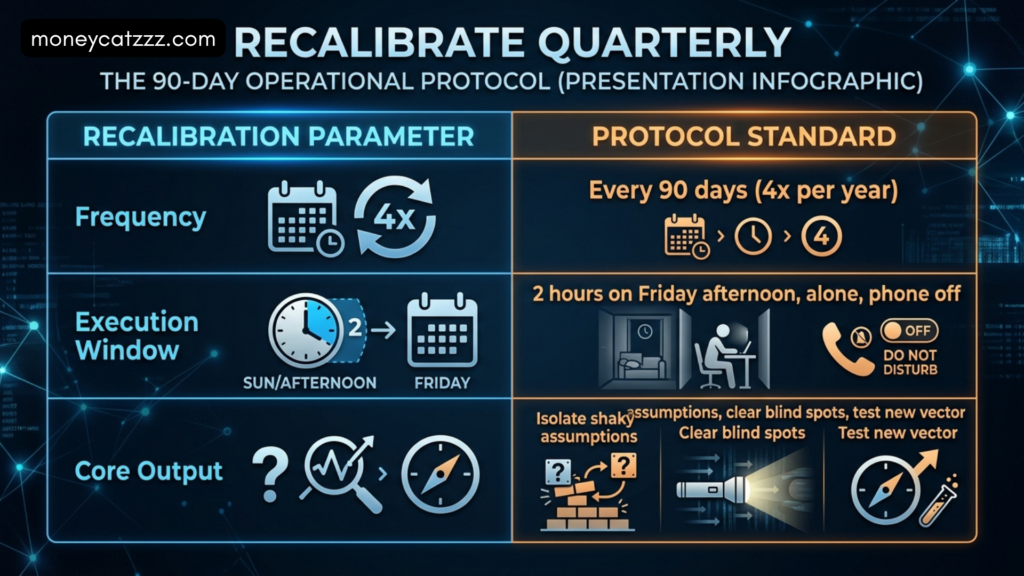
Your car needs an oil change every 5,000 miles. Your brain needs a career planning recalibration every quarter.
Before closing your laptop on Friday, run a quick recalibration protocol: audit what you assumed three months ago that now looks shaky, identify the signals you ignored, and lock in one micro-experiment to test over the next ninety days.
Four re-calibrations a year. Most people never execute one; they just run the treadmill faster and wonder why the scenery stays static. The people who hit moving targets do not need to run harder. They adjust their angle early enough to land the shot.
[Building The Flexible Career Plan | moneycatzzz.com]
Question the Vector, Not the Speed
Hastings is famous for Netflix’s quarterly strategy refresh meetings. Same questions every ninety days. He does not ask if they are executing the plan. He asks if the plan is still correct.
Research on career adaptability from Harvard Business Review confirms this. The professionals who handle disruption best are not climbing a static ladder. They are building a portfolio of transferable skills and recalibrating their aim every quarter.
David Epstein argues that in stable environments, the specialists win. In volatile ones, the generalists do. The people who thrive are the ones who can re-aim fastest.
Where the Failures Stack
Whether you lock onto a dead coordinate or spray shots without aiming, the kinetic result is identical: zero impact on the target.
Blockbuster remained focused on retail foot traffic until its bankruptcy. Modern operators fall into the opposite trap: jumping between shiny tools every quarter, moving fast without ever zeroing their sights. Bouncing across vectors without telemetry accelerates friction.
The fix for every failure mode is identical: deploy low-cost micro-experiments that return instant operational data. You do not need a master plan; you need a functioning feedback loop.
[MindValley Promo | Rewire your mind, transform life. | Vishen Lakhiani]
Monday Morning Looks Different
Come Monday morning, clear two hours for targeted execution: run one cross-industry conversation and launch a low-cost experiment around a high-upside skill.
Write down what you are assuming and what you will look for to test it.
You do it again next week, and the week after that. Skip the social media manifestos and dramatic exits. Real vector shifts do not require burning bridges; they happen through low-friction, stealth re-calibrations that quietly compound over time.
The target is going to keep moving. That is as sure as the sun rising in the morning. The question is not whether it moves; it is whether you are aiming at where it was or where it is going.
Hastings didn’t predict streaming in 2007; he calculated an expiration date for physical media. He aimed at the space in between and adjusted his sights as the telemetry came in.
You do not need to predict the future perfectly. You need to stop aiming at photographs.
The duck is already flying. Aim ahead of it.
______________________________________________
The Operator’s Bookshelf: Signals, Systems, and Vector Strategy
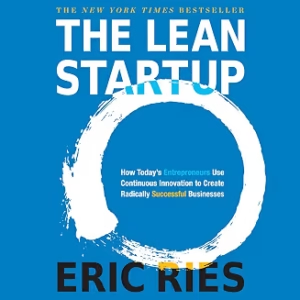
The Lean Start-Up

Education Is Freedom
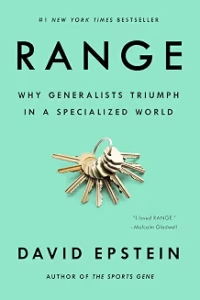
Range


Disclosure: This post may contain affiliate links. We only recommend products we believe in, and we may receive a commission at no cost to you! Thank you for your support!
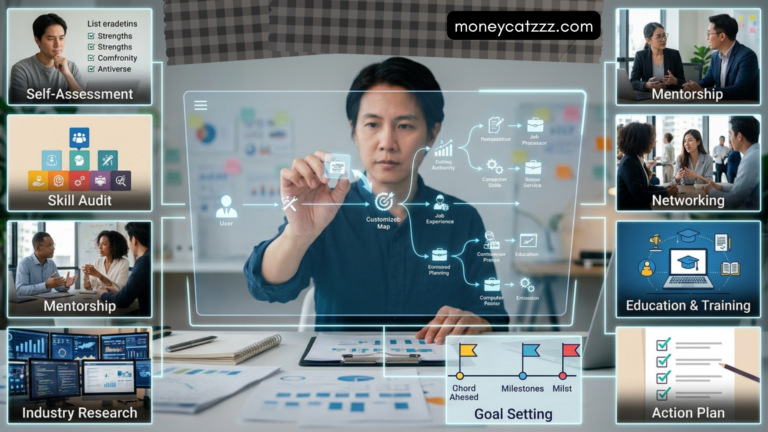
Acknowledgment: Cover Image by moneycatzzz.com
Disclaimer: The information is provided for general information only – moneycatzzz.com makes no representations or warranties in relation to the information, including but not limited to any representation or warranty as to the fitness for any particular purpose of the information to the fullest extent permitted by law. While every effort has been made to ensure that the information provided in this article is accurate, reliable, and complete as of the time of writing, the information provided in this article should not be relied upon to make any financial, investment, real estate or legal decisions. Additionally, the information should not substitute advice from a trained professional who can take into account your personal facts and circumstances, and we accept no liability if you use the information to form decisions.