 Reading Time: 8 mins #
 This post may contain affiliate links.
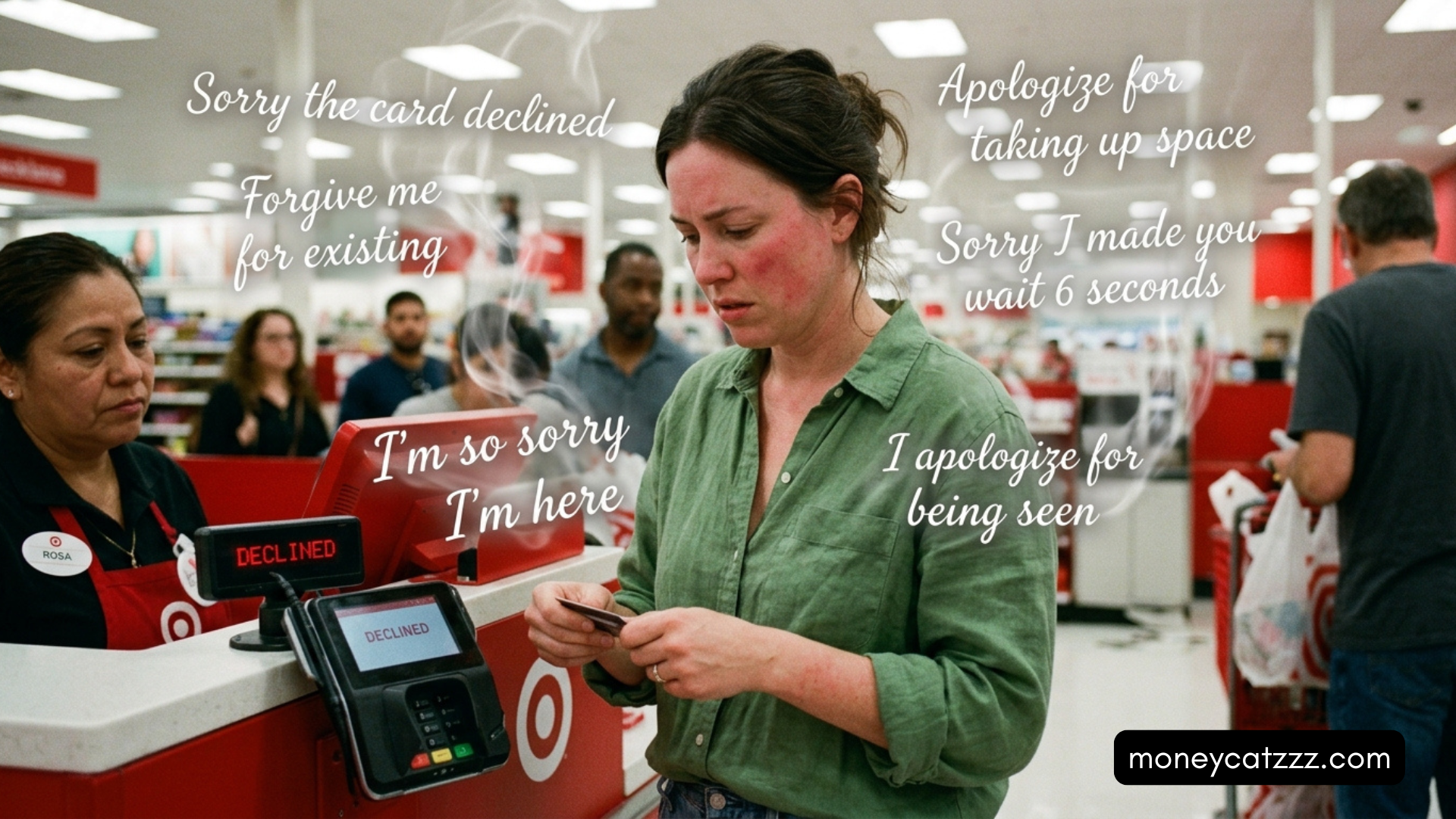
I was standing in the checkout line at Target. North Lamar. The one with the broken tile near the entrance and the smell of popcorn that never quite goes away. I’d grabbed a few things: cat food for Gus, a bag of lemons, paper towels, and a candle I didn’t need. My hands were full. My reusable bag was still in the car.
I could feel myself getting flustered before I even reached the register, caught in that quiet instinct where apologizing becomes my default setting long before anything has actually gone wrong.
The cashier was a woman I’d seen before, and I just about remembered her name: Rosa. She had a tired face. The kind that comes from standing for eight hours, smiling at people who don’t smile back, and answering the same questions about the same policies. She was efficient. She scanned my items without looking up. She told me my total. I swiped my card.
Declined.
I felt the heat rise to my face. The familiar flush. The silent, frantic thought: No, I am far too young for menopause. The immediate assumption that something was wrong with me. I had money. I knew I had money. But the machine said no, and that felt like a verdict. My next words weren’t a thought; they were a reflex. Pure muscle memory, born from years of practice, I had never even noticed.
“I’m so sorry. I’ll just use another card. Sorry about that.”
I pulled out my credit card. Swiped it. The machine processed it. No problem. The transaction went through. Rosa handed me my receipt. I looked at the total: $42.73. This was not a large purchase. Nothing about it warranted an apology.
Yet, I’d apologized four times. Four times to a woman who didn’t know me, didn’t care about me, and had already moved on to the next customer. Four times for something trivial that cost her six seconds of her life. Four times for simply existing in a way that required someone to wait an extra beat.
Rosa said, “You’re good, honey.”

She wasn’t annoyed. She wasn’t even angry or paying attention. She was doing her job. I was the one who’d turned a minor inconvenience into a confessional.
I walked out of the store. The Texas heat hit me immediately; heat that wraps around you, heavy and unapologetic. I got in my Subaru Outback with cat hair on the back seat and a persistent rattle in the passenger door. Gus wasn’t with me that day, but I could already imagine him sticking his head out the window, his ears flapping in the wind.
I sat there for a moment with the engine running. The air conditioning was struggling. I’d left my YETI Rambler in the center console, a 20-ounce cup with the MagSlider lid, the stainless steel one I’d bought two years ago after dropping my third plastic bottle. The water inside was lukewarm, but I drank it anyway. I needed something to do with my hands.
I was shaking.
The air conditioning couldn’t generate enough cold to give me chills. No, the shaking was from something else. It was from the realization that I’d just apologized to a stranger four times for a minor inconvenience that wasn’t even one. From the question that rose in my throat, cold and sharp: Why do I do that?
I didn’t have an answer.
If you step on someone’s foot, you say sorry. You arrive late, and you offer an apology. Break something? Hand on heart and apologize. There’s a clear cause-and-effect: you did something, it affected someone else, and you acknowledge it.

[The Psychology of the Spotlight Effect in Daily Life | moneycatzzz.com]
But that’s not what I was doing.
I was apologizing for existing: for taking up space, for needing the cashier to wait an extra six seconds. Having a card get declined felt like a personal failing rather than a minor technical glitch. For being seen. For being a problem that other people had to deal with.
The apology wasn’t an apology. It was a shield, a way of making myself smaller. A reflex I’d learned so long ago, I’d forgotten I’d mastered it.
Once you start recognizing that phantom guilt, you begin seeing all the other places you left it behind. Sitting there in the heat, watching the traffic pull out onto Lamar, my mind drifted straight back to Molly’s wedding two summers ago.
You might also like:

The Split Gate: What Happens When You Stop Standing Still
The Weight of a Goodbye
A single moment stood out. I stood in the back of the room holding a glass of champagne I didn’t want. Molly had asked me to be a bridesmaid, and I had agreed, yet I ended up missing the rehearsal dinner the night before. I was completely overwhelmed by the quiet weight of being around people. The next day at the reception, Molly walked by, glowing and exhausted. She looked happy, like someone holding a fragile world together.
She said, “I’m so glad you came.”
I said, “I’m so sorry I missed the rehearsal dinner.”
She looked confused. “What? Don’t worry about it. There were so many people. I didn’t even notice.”
She didn’t notice. She didn’t notice because I wasn’t central to her day. She had a hundred other things on her mind. The rehearsal dinner was a blur of logistics and relatives. My absence was a blip, the kind of thing you forget by the time the first dance starts.
I had spent the night before the rehearsal dinner, swallowed by regret, endlessly replaying my decision to stay home. I was caught in what The Decision Lab describes as the spotlight effect, that peculiar trick of hypervigilance that convinces us that everyone is keeping score of our every move. I told myself I was a bad friend, convinced my absence had carved a void in her evening that she would surely notice. I told myself I was letting her down and should have pushed through anyway.
In reality, I had carried the heavy weight of a choice that no one else had even registered. I was the only one still in the room. I was the only one still apologizing.
[Unlearning Preemptive Safety Behaviors Through Grounded Writing | moneycatzzz.com]
The Target parking lot was filling up. Cars are pulling in. Cars pulling out. The hum of traffic on Lamar. I was still sitting there, holding my YETI, staring at nothing. I thought about Rosa, the cashier.
The apology was never for her. It was for me, a way of managing a fear I’d been carrying for years.
I went home. I walked through the front door of the house I’d bought myself, the one with the porch, with the garden that kept dying. Gus greeted me at the door, winding around my ankles, his tail flicking. I picked him up. He was heavy and warm. He purred against my chest.
I sat on the floor with Gus settled in my lap, thinking about the quiet tally of things I had apologized for that week: a promotional flyer I didn’t want, a stranger who bumped into me, a friend who interrupted me, and a cashier whose machine glitched. And, of course, a bride who had not even noticed my absence.
The list was long. Too long. I’d been apologizing my entire life, not for mistakes, but for the simple fact of being present.

Learn to thrive in a changing world | advaya.life | promotion
I didn’t know when I’d started. I didn’t know when I’d learned to shrink.
My therapist told me something once. She said, “When you apologize, you’re not taking responsibility for something you did. You’re taking responsibility for someone else’s response.“
I sat there, holding Gus, thinking about that. The cashier didn’t care. The bride didn’t notice. The friend didn’t remember. Psychologists call this a preemptive safety behavior, a reflexive attempt to defuse a threat long before it ever materializes. I was apologizing to protect myself from a reaction that wasn’t coming.
The apology was never about them. It was about managing my own fear of being too much.
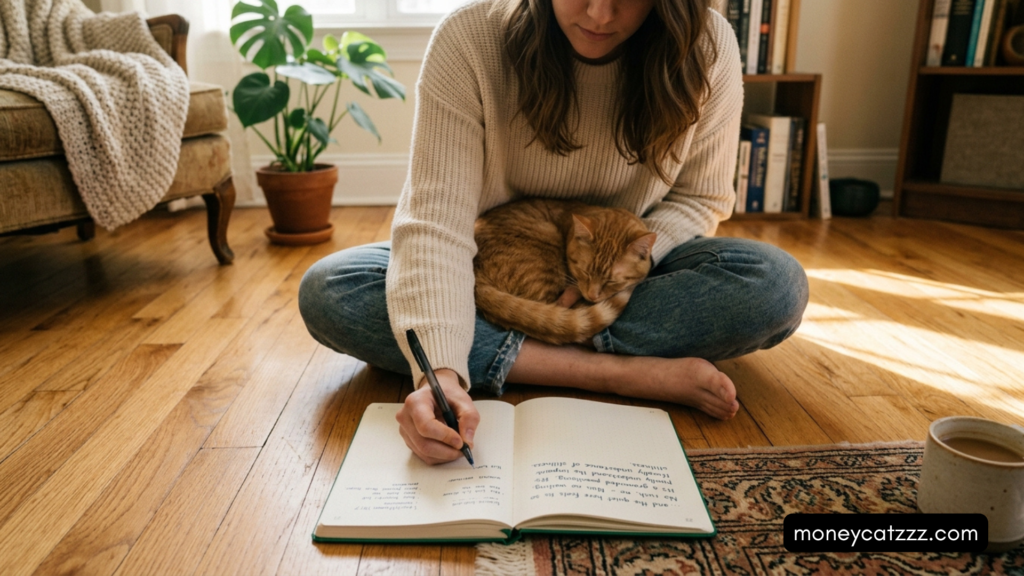
I got up. I put Gus down. I walked to my office and pulled out a Leuchtturm1917, the dotted one, the one with the pages that never quite lie flat. The cover was worn. The edges were soft. I wrote down the date.
“I don’t want to stop apologizing because I’m a good person. I want to stop because the apologies were never for the person I was hurting. They were always for me. And I’m tired.”
I closed the journal and left it on the counter. The ink was dry, and for the first time all day, I stopped explaining myself to an empty room.
The next time I went to Target, the cashier was a man I’d never seen before. I didn’t catch his name. I swiped my card. It went through. No problem.
I just smiled. I said, “Have a good day.”
He nodded. He handed me my receipt. I walked out of the store. I got in my car.
I forgot Gus’s food. He will have to have some of my salmon.
________________________________________________


Disclosure: This post may contain affiliate links. We only recommend products we believe in, and we may receive a commission at no cost to you! Thank you for your support!
Acknowledgment: Cover Image by moneycatzzz.com
Disclaimer: The information is provided for general information only – moneycatzzz.com makes no representations or warranties in relation to the information, including but not limited to any representation or warranty as to the fitness for any particular purpose of the information to the fullest extent permitted by law. While every effort has been made to ensure that the information provided in this article is accurate, reliable, and complete as of the time of writing, the information provided in this article should not be relied upon to make any financial, investment, real estate or legal decisions. Additionally, the information should not substitute advice from a trained professional who can take into account your personal facts and circumstances, and we accept no liability if you use the information to form decisions.