education cover

Why Modern Education Taught You to Think in Fragments

imagesReading Time: 8 mins #

disclosure line icon vector This post may contain affiliate links.
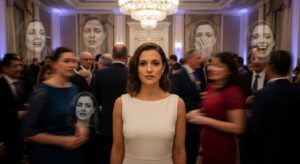
I once wrote a very good essay about grief.


It was a formal exercise in higher education: a philosophical analysis of mortality, read by a professor who awarded it a high mark. My grandfather had died three weeks earlier. I never mentioned him in the text. It did not occur to me that his death was relevant.


That gap, between what I could analyze and what I was actually living, was my schooling in miniature. Thorough, technically rigorous, but utterly divorced from the experience of being a human being in a world that collides with you in ways no syllabus ever accounts for.


The training was neither malicious nor incorrect. It was built on an incision I was too young to notice.

What Was Always Separate

The split is not subtle once you see it. It runs through everything.


Mind from body. The curriculum rewarded what you could articulate and largely ignored what you could feel. The body was the thing you carried your brain around in. It was not a source of knowledge. It was not part of the learning. Movement and bodywork happened in a different building from the kind of thinking that counted.


Self from nature. Science explained the natural world as a system external to the observer. You studied it. You did not belong to it. The connection between the learner and the living systems being studied was not part of the curriculum. It was not considered relevant.

[MindValley Promo | Rewire your mind, transform life. | Vishen Lakhiani]

Subject from subject. Biology had its room. History had its room. So does Philosophy. The connections between them existed, but were not the point. The point was mastery of the room you were in. The doors between rooms were rarely opened.


I did not experience this as fragmentation at the time. I experienced it as rigor. The split felt like precision. You do not bring a dead grandfather into a philosophical essay. That is sentimentality, a category error. The curriculum taught me to execute those distinctions with elegance, and it never once asked what the boundary cost.

The Divided Instrument

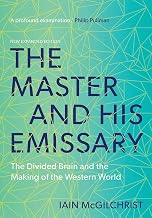
Iain McGilchrist spent decades mapping what the split actually is.


In The Master and His Emissary, McGilchrist ties this imbalance to the brain itself. The left hemisphere deals in bounded categories, sharp definitions, and clean fragments. It has come to dominate modern culture at the expense of the right hemisphere, which perceives context, relationships, and wholes. The left hemisphere is not wiser, but it is infinitely more insistent. It speaks in the explicit clarity that institutions know how to measure and reward. The right hemisphere speaks in an understanding that resists measurement entirely.


The cost of learning in pieces is not ignorance. It is something far stranger: a hyper-articulate blindness. You accumulate facts without weight, precision without purpose. You can pass every examination and still have no idea what any of it is for. You leave university with an intricate map of five different disciplines, and not the slightest inkling of the land you are actually walking on.

education: The Unlearning
[How You Unlearn What You Were Taught | moneycatzzz.com]

McGilchrist is not romanticizing the past, nor is he dismissing analysis. His point is simpler: dissecting reality without an integrating mind leaves us technically sophisticated and experientially hollow. It creates a culture where you can write an award-winning essay on grief, yet remain completely numb to the grief sitting in the room with you.


I recognized my own schooling in that description immediately.

The Six Connections Missing

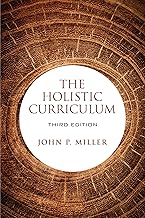
Where McGilchrist mapped the split in the brain, John Miller spent decades cataloging what the academic machine left out.


In The Holistic Curriculum, he identifies six connections that a complete education would cultivate: thinking, the relationship between body and mind, the soul, the relationships between subjects, community, and the Earth. He was not describing a utopian alternative, but inventorying what the existing system had systematically excluded.

Running my own background against that list is a useful exercise:

  • The connection between subjects: occasionally acknowledged in interdisciplinary electives, never the organizing principle.
  • The connection between body and mind: absent. The body did not learn. The mind learned about the body.
  • The connection to community: present socially, absent educationally. We were educated alongside each other, not with each other.
  • The connection to Earth: genuinely not part of the curriculum. Nature was a subject. It was not a relationship.

Reconnecting mind, body, and nature is often dismissed as self-care jargon, but Miller treats it as a foundational pedagogy. This fracture is not a personal failing, but the predictable output of a machine built to measure the pieces and call it rigor.

How to heal fragmented education is consequently not a personal development question but a structural one. The fragmentation was built in. The repair requires something the original system was not designed to provide.

The Sign

I came across Advaya sideways, which is usually how I find what matters.


It is a learning platform built on a simple premise: the split is not inevitable. Founded by sisters Ruby Reed and Christabel Reed in 2015, it brings together philosophy, ecology, embodiment, and spiritual practice, not as isolated subjects, but as distinct angles on a single question: how to live in a world that is conscious and interconnected. The co-founders frame it as a direct counter-response to fragmentation, refusing to rebuild the old boundaries into their curriculum.

I am not recommending it as a solution. A digital platform does not single-handedly fix the cultural split I am describing. But Advaya functions as a sign that someone else noticed the same absence and refused to accept it as inevitable.


That realization is useful in a way that a neat solution rarely is. It is proof that learning without splitting the world is possible. It proves that the bridge between ecology and consciousness, between history and embodiment, is not a category error; it is simply the thing we forgot to include.

education: The Rediscovery
[The Curriculum You Did Not Know You Were Missing | moneycatzzz.com]

What Whole Learning Actually Feels Like

This is not a sudden awakening or a grand intellectual shift. It is something much quieter: a slow shift in what I allow myself to notice.


The essay on grief, written as a clean, detached exercise while keeping the actual grief at arm’s length, feels increasingly impossible to hold. Precision hasn’t lost its value. What changed is the realization that the wall between the argument and the person making it was always paper-thin. That boundary produced cleaner thinking, certainly. But clean and honest are rarely the same thing


Transformative learning for adults sounds like a brochure title. It describes the experience of learning something that changes the relationship between what you know and how you live, rather than simply adding to your knowledge. I have had that experience more in the last three years than in the preceding twenty years of formal schooling. Not because the institution was bad.

Learn to thrive in a changing world | advaya.life | promotion

Still Fragmented, Less So

I am not whole. I want to be precise about that.


The split does not close because you name it. The fragmentation that was built into thirty years of education does not dissolve because you read McGilchrist and recognize the pattern. The left hemisphere does not suddenly defer to the right because you have been persuaded that it should.


The change is simple: the questions widen.


My grandfather belongs in this essay, not as an anecdote or a piece of evidence, but as the ground under the argument. That is the dimension standard schooling left out. It never asked what our knowledge was for, or who we became while acquiring it, or whether the boundary between the mind and the world was real to begin with. It simply assumed the separation and charged us for everything to learn it.


I am still giving myself that education.


You can start at any age.

__________________________________________________

Recommended Reads: The Curriculum That Was Missing

719ZE5nQbLL. AC UY218


The Master and His Emissary

by David Hawkins

Amazon Button

91kW4ZHfb1L. AC UY218


The Holistic Curriculum

by John Miller

Amazon Button

91t8 iNNSHL. AC UY218

 
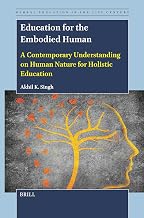
Edu.. 4 the Embodied Human
by Akhil K. Singh

Amazon Button

Disclosure: This post may contain affiliate links. We only recommend products we believe in, and we may receive a commission at no cost to you! Thank you for your support!

Acknowledgment: Cover Image by moneycatzzz.com

Disclaimer: The information is provided for general information only – moneycatzzz.com makes no representations or warranties in relation to the information, including but not limited to any representation or warranty as to the fitness for any particular purpose of the information to the fullest extent permitted by law. While every effort has been made to ensure that the information provided in this article is accurate, reliable, and complete as of the time of writing, the information provided in this article should not be relied upon to make any financial, investment, real estate or legal decisions. Additionally, the information should not substitute advice from a trained professional who can take into account your personal facts and circumstances, and we accept no liability if you use the information to form decisions.

Signup to our Newsletter for regular updates:

Marco Ban

Marco Ban is a 42-year-old, from sunny Spain bringing 7 years of experience crafting clear and engaging content in finance and digital marketing. A digital entrepreneur by trade, he brings vast experience in digital product reviews, financial blogging, and tutorials. A silky writer with a touch of a European flare, his postings are always engaging and informative.