
 Reading Time: 8 mins #
 This post may contain affiliate links.
Three months ago, I was building the perfect organizational structure for a tech startup. I had beautiful charts and color-coded hierarchies. Reporting lines that would make McKinsey weep with joy. Every detail was pristine. Every box had a purpose. Every arrow showed clear accountability.
The company imploded in six weeks.
Not because my org chart was wrong, I’d never asked what kind of company we were organizing. I’d built a gorgeous house on a foundation of assumptions that turned out to be quicksand. The strategic foundation was rotten, and I was too busy picking paint colors to notice.
This is how most of us fail: We perfect the visible while ignoring the invisible. We optimize details while our core foundation crumbles beneath us. We’re architects sketching skylights while the basement floods.
The Billion-Dollar Problem Nobody Sees
Currently, 70% of strategic initiatives fail, not because of poor execution but due to flawed foundations. McKinsey’s research on transformation failure reveals that most projects fail due to fundamental misalignment, rather than tactical errors. The systemic base was never solid, but nobody checked until the walls began to crack.
You see this everywhere. The fitness plan that assumes you’re a morning person when you’re not. The business strategy that assumes customers want innovation when they want reliability. The relationship that assumes shared interests means shared values. We build elaborate structures on foundations we’ve never examined, then wonder why everything keeps collapsing.
Daniel Kahneman writes in Thinking, Fast and Slow, about our planning fallacy: We tend to focus on specifics while overlooking fundamentals. We can see every tree, but we miss that we’re in the wrong forest. This isn’t just poor planning. It’s architectural malpractice. You wouldn’t build a house without checking if you’re on solid ground, yet that’s precisely how we approach our strategic foundation in life and work.
The Seduction of Surface Solutions
Here’s why we skip the foundation: It’s boring. Foundations are underground, invisible, unglamorous. Nobody gets promoted for foundation work. Nobody posts about it on LinkedIn. The strategic foundation doesn’t lend itself to good PowerPoints.
So we focus on what’s visible. The tactics. The quick wins. The surface solutions that make us look productive. We’re rearranging deck chairs on the Titanic, but at least the deck chairs look organized. This isn’t a strategy. It’s theater. And it’s why your core alignment is probably compromised right now.
I learned this the hard way, so focused on creating the perfect structure that I never stopped to ask, What are we actually trying to build? The founders hadn’t agreed on a basic direction. One wanted rapid scaling, another sought premium positioning, and the third aimed for a lifestyle business. I was organizing a company that didn’t know what it was; no wonder the strategic foundation couldn’t hold.
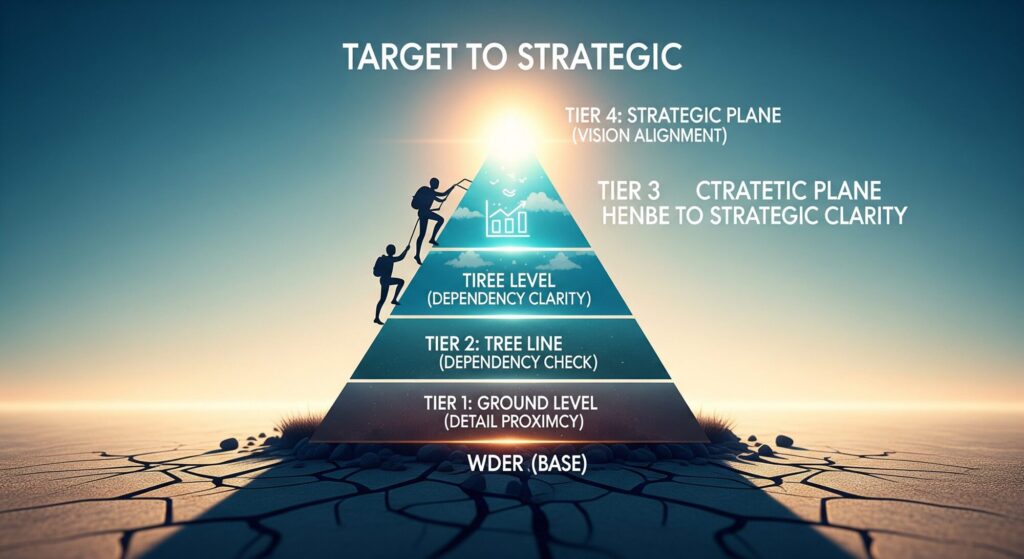
The 4-Tier Perspective Shift Protocol
After that disaster, I developed a systematic way to check foundations before building anything. This protocol forces you to ascend through four tiers of perspective, each revealing what the tier below is actually standing on. It’s an archaeological excavation in reverse: You climb up to see down.
Tier 1: Ground Level (Detail Proximity)
This is where you are right now. The immediate problem. The pressing task. The thing that feels urgent and important. For me, it was the org chart. For you, it might be a product launch, a hiring decision or a relationship issue.
The Question: What exactly am I trying to solve/build/fix right now?
Ground Level feels concrete because you can touch it. You can make spreadsheets about it. You can have meetings about it. It has deadlines and deliverables. This is where 90% of people stop. They perfect this level and assume the strategic foundation beneath is solid.
But Ground Level is just the visible tip. It’s the paint color on the walls that might be crumbling. You must ascend to see what it’s standing on.
Ground Level Examples:
- Creating a marketing campaign
- Designing a workout routine
- Planning a wedding
- Restructuring a team
- Launching a product feature
The danger here? Ground-level problems feel so immediate that they consume all attention. You become so focused on solving them that you never question whether they’re the correct problems to solve. Your strategic foundation remains unexamined.
Tier 2: Tree Line (Dependency Check)
Climb above Ground Level, and you reach Tree Line, where you can see what your immediate solution depends on. This is the adjacent factor that either enables or destroys everything you’re building at Ground Level.
The Question: What must be true for my Ground-Level solution actually to work?
For my org chart disaster, ascending to Tree Line revealed the dependency: I was organizing for rapid scaling. But was that what the company actually needed? This tier exposes the assumptions on which your Ground Level work rests. It’s the first glimpse of your strategic foundation.

[“The Seduction of Surface Solutions” – Image by moneycatzzz.com]
Tree Line is where you discover prerequisites. That marketing campaign assumes you understand your customer. That workout routine assumes you have morning energy. That wedding assumes you want the same future. These aren’t details; they’re dependencies. Ignore them, and your ground-level work becomes worthless.
Tree Line Examples:
- Marketing assumes product-market fit
- Workout assumes a consistent schedule
- A wedding assumes shared values
- Team restructure assumes clear roles
- The feature assumes the user needs
Harvard Business Review’s study on strategic failure found that most initiatives fail at Tree Line because the dependencies weren’t validated. The strategic foundation had cracks that nobody saw because they never climbed high enough to look.
Tier 3: Cloud Line (Goal Clarity)
Above Tree Line, you reach Cloud Line, where you can finally see the destination. This is the actual objective your entire system is supposed to achieve. Not the task, not the dependency, but the outcome.
The Question: What does success actually look like, and how will I know I’ve achieved it?
At Cloud Line, I saw the truth: The three founders had three different definitions of success. One wanted a unicorn valuation. One wanted work-life balance. One wanted industry disruption. My perfect org chart was trying to serve three incompatible gods. The core alignment wasn’t just cracked; it was schizophrenic.
Cloud Line is ruthless. It forces you to define victory. Not activity, but achievement. Not effort, but outcome. Most people can’t clearly articulate their Cloud Line goal because they’ve never climbed high enough to see it. They’re building toward a destination they can’t describe. No wonder the strategic foundation feels shaky.
Cloud Line Examples:
- Marketing goal: 30% revenue increase or brand awareness?
- Fitness goal: Weight loss or energy increase?
- Wedding goal: A perfect event or an authentic celebration?
- Team goal: Efficiency or innovation?
- Feature goal: User retention or new acquisition?
Jim Collins writes in Good to Great about the hedgehog concept: knowing your one big thing. Cloud Line is where you discover if you even have one big thing, or if you’re trying to chase seventeen. A strategic foundation can’t support contradictory objectives.
Tier 4: Strategic Plane (Vision Alignment)
The highest tier transcends tactics entirely. This is where you see the unchangeable core that everything else must align with. Your non-negotiable principle. Your fundamental identity. The bedrock of your strategic foundation.
The Question: What core value or identity is absolutely non-negotiable here?
At Strategic Plane, I saw the real problem: The startup had no shared vision. No core identity. No non-negotiable principle. We were building an organization for a company that didn’t know what it wanted to be. It was like designing a house without asking if the client wanted a home or an office.
The systemic base didn’t exist.
Strategic Plane is where you find or create your North Star. This isn’t about goals or methods. It’s about identity and values. Who are you? What do you stand for? What would you maintain even if it cost you everything else? Without this, your strategic foundation is just sand.
Strategic Plane Examples:
- Company: Innovation-first or reliability-first?
- Personal: Growth-oriented or stability-oriented?
- Relationship: Independence or interdependence?
- Team: Excellence or inclusivity?
- Product: Premium or accessible?
Simon Sinek’s Start with Why is about finding your Strategic Plane. But most people start with what (Ground Level) because they’ve never climbed high enough to see why. Their core alignment is accidentally built on someone else’s vision.
How I Saved the Project (By Destroying It First)
Once I saw all four tiers, the solution was painful but obvious. We had to stop everything and rebuild from the Strategic Plane downward.
Strategic Plane Reset: Three founders, three days, one room. We won’t leave until we agree on one core identity. After brutal honesty and one near-fistfight, we landed on: “Premium automation for small businesses.” Not sexy, but clear. Our strategic foundation finally had bedrock.
Cloud Line Clarification: With identity clear, the goal became obvious: $10M ARR within two years, serving 100 premium clients. Not unicorn growth. Not a lifestyle business. Sustainable premium. The systemic base now had direction.
Tree Line Dependencies: This revealed what we actually needed: Senior engineers, not growth hackers. Premium positioning, not mass market. Quality over quantity at every level. The strategic foundation now had requirements.
Ground-Level Rebuild: Only now could I create the exemplary organizational chart. Small, senior team. Flat hierarchy. Customer success at the center. The same task (org design) but completely different execution because the strategic foundation was finally solid.
The company that was imploding? Hit their targets in 18 months. The same people, in the same market, with the same product. Different foundation. That’s the power of checking your strategic foundation before you build.
The Protocol in Practice: Your Foundation Audit
Right now, you have something you’re building, fixing, or pursuing. A project, a goal, a solution. It’s probably not working as well as you hoped.
Here’s how to apply the protocol:
Step 1: Identify your Ground Level
What are you actually working on right now? Be specific. Please write it down. This is your starting point, not your ending point.
Step 2: Climb to Tree Line
What dependencies are you assuming? What must be true for your Ground Level work to succeed? List every assumption. Most will be wrong.
Step 3: Ascend to Cloud Line
What does success actually look like? Not activity, but outcome. Can you describe it in one sentence? If not, your strategic foundation is unclear.
[“The 4-Tier Perspective Shift Protocol” – Image by moneycatzzz.com]
Step 4: Reach Strategic Plane
What core value or identity drives this entire effort? What’s non-negotiable? If you can’t answer instantly, you don’t have a strategic foundation.
Step 5: Rebuild from the top down
Start with the Strategic Plane and work downward. Let identity determine goals. Let goals determine dependencies. Let dependencies determine tactics. This is how you build on a solid strategic foundation.
A ClearPoint Strategy report shows that 90% of strategic failures could be prevented by conducting thorough foundation checks. But we’re too busy being busy to climb high enough to see what we’re standing on.
The Uncomfortable Truth About Your Current Projects
Here’s what nobody wants to admit: Most of what you’re working on right now is built on a compromised strategic foundation. You’re solving problems that shouldn’t exist. You’re building toward goals you haven’t defined. You’re serving values you’ve never articulated.
This isn’t judgment. It’s a diagnosis. We all do this because checking foundations is uncomfortable. It often reveals that we need to tear everything down and start over. That beautiful project you’ve been perfecting? It might be solving the wrong problem entirely. That core alignment you assumed was solid? It might be quicksand.
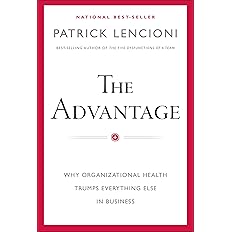
Patrick Lencioni writes in “The Advantage“ that organizational health is more important than anything else. He’s referring to a systemic basis. Without it, every other advantage becomes a liability. The better you execute a bad strategy, the faster you fail.
Frequently Asked Questions
Q: How often should I check my strategic foundation?
Every time something feels harder than it should. Difficulty is often a sign of misalignment in the foundation. When you're forcing things, you're probably building on the wrong base.
Q: What if different stakeholders see different Strategic Planes?
Then you don't have a project; you have a future conflict. Stop everything and align on the Strategic Plane first. No exceptions. A split strategic foundation guarantees collapse.
Q: Can I skip tiers to save time?
No. Each tier reveals what the one below is standing on. Skip one, and you miss critical dependencies. The primary objective is to demonstrate your strategic foundation systematically.
Q: What if I discover my foundation is entirely wrong?
Then you've just saved yourself from wasting months or years on something doomed to fail. Finding a bad strategic foundation early is a gift, not a problem.
Q: How do I convince others to check foundations?
Three months ago, I was proud of my beautiful org charts. Today, I'm proud of the ugly spreadsheet where we mapped our strategic foundation. One looks impressive. The other actually works.
Here’s what I learned from nearly destroying a company: The invisible foundation matters more than the visible structure. Always. No exceptions. You can have the world’s most beautiful building, but if the strategic foundation is wrong, it’s just an elaborate way to fail.
Your current project, goal, or initiative is likely suffering from foundational problems that you haven’t identified. You’re treating symptoms while the disease spreads. You’re perfecting details while fundamentals decay.
The 4-Tier Protocol isn’t just another framework. It’s architectural insurance. It’s the difference between building something that lasts and creating something that looks good until it doesn’t. Your core alignment determines your destiny.
Here’s my challenge: Take your most important current project. The one that’s frustrating you. The one that should be working but isn’t. Apply the protocol. Climb all four tiers. See what you’re really standing on.
You might discover you’ve been building castles on sand. But better to know now than after the first storm.
What foundation will you check today?
Strategic Clarity Resources: For Validating, Defining, and Uncovering
Thinking, Fast and Slow

Good to Great
Start with Why
Featured Book of the Week
The Advantage
The Advantage argues that the single greatest competitive advantage any organization can possess is Organizational Health. When a company is healthy, it experiences minimal politics and confusion, boasts high morale, and enjoys high productivity. Lencioni posits that this factor outweighs strategy, finance, technology, and marketing.
Disclosure: This post may contain affiliate links. We only recommend products we believe in, and we may receive a commission at no cost to you! Thank you for your support!
Acknowledgment: Cover Image by moneycatzzz.com
Disclaimer: The information is provided for general information only – moneycatzzz.com makes no representations or warranties in relation to the information, including but not limited to any representation or warranty as to the fitness for any particular purpose of the information to the fullest extent permitted by law. While every effort has been made to ensure that the information provided in this article is accurate, reliable, and complete as of the time of writing, the information provided in this article should not be relied upon to make any financial, investment, real estate or legal decisions. Additionally, the information should not substitute advice from a trained professional who can take into account your personal facts and circumstances, and we accept no liability if you use the information to form decisions.