 Reading Time: 8 mins #
 This post may contain affiliate links.
Sunday morning. Your coffee’s still warm, the world’s still quiet, and for once, your phone isn’t demanding attention. In this pocket of stillness, let me share something about mental energy that took me three years of tracking my own depletion patterns to understand.
You’re running on a 20% battery by Wednesday. Not physically exhausted, but something deeper. Your thoughts feel sluggish, your creativity has flatlined, and your patience is worn thin. Here’s what nobody tells you: the solution isn’t more rest. It’s the right kind of input.
The Depletion We Don’t Name
After analyzing my own creative burnout cycles and having conversations with dozens of high performers over coffee and quiet dinners, I’ve noticed something. We discuss time management, energy management, and even attention management. But we rarely discuss mental energy as something that requires active restoration, not just passive rest.
The Stanford research on cognitive resource depletion confirms what your Thursday afternoon brain fog already knows: knowledge workers make roughly 35,000 decisions daily. Each tiny choice, from email responses to lunch selections, draws from the same cognitive well. By evening, you’re not tired. You’re depleted.
Here’s where it gets interesting. The Renaissance polymaths we admire didn’t have supernatural focus. Leonardo da Vinci painted, engineered, studied anatomy, and wrote backwards, not despite each other, but because of each other. His diverse practices weren’t a distraction. They were cognitive restoration.
Your brain isn’t designed for singular focus eight hours straight. It’s intended for rhythms, for wandering, for what neuroscientists call attention restoration theory. When you engage different neural pathways, you’re not multitasking. You’re recharging the ones you’ve exhausted.
This Sunday in The Slow Scroll, we’re exploring three specific inputs that restore what modern work depletes. Think of them as your cognitive emergency fund, except you make deposits through deliberate play.
Input #1: Physical Creation (The Hand-Brain Reset)
Last month, I met a Fortune 500 CEO who disappears into his garage every Sunday to build furniture. Not because he needs chairs, but because he needs what his hands create: mental energy that spreadsheets can’t provide.
There’s profound science behind this. When you work with your hands, your brain shifts from analytical to spatial processing. It’s like switching from sprint to recovery mode, except you’re actively engaged. Matthew Crawford explores this beautifully in Shop Class as Soulcraft, where he argues that manual competence provides something screen work never can: completion.
The Journal of Applied Psychology research on manual hobbies found that people who engage in creative activities outside work perform 15-30% better at their jobs. Not because they’re more rested, but because they’re cognitively cross-trained. Restorative hobbies aren’t breaks from work. They’re training for it.
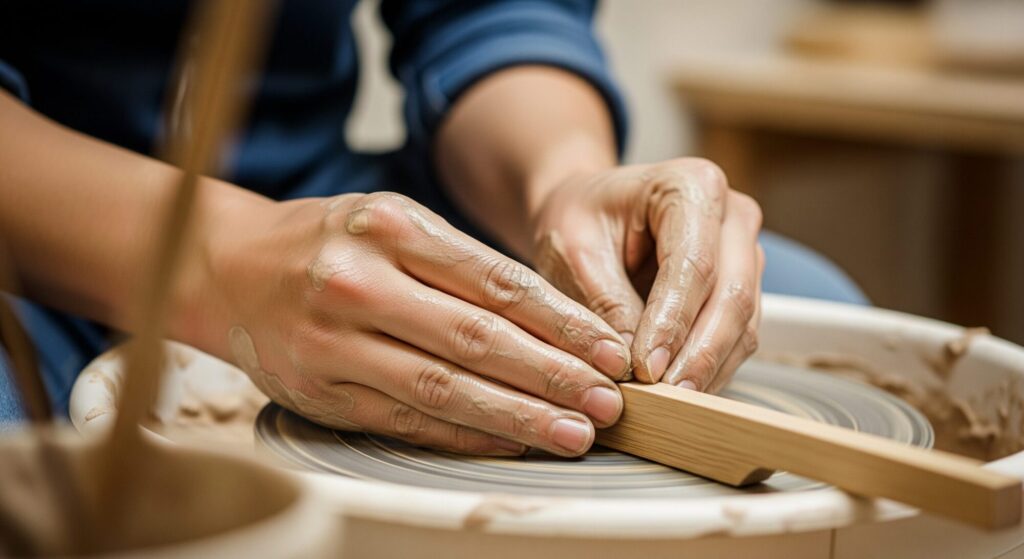
[“Physical Creation (The Hand-Brain Reset)” – Image by moneycatzzz.com]
Consider these three physical inputs:
Building creates what meetings discuss. Whether it’s woodworking, gardening, or cooking from scratch, the act of bringing something from nothing restores a sense of agency and accomplishment. Your hands remember what your mind forgets: you can create tangible value.
Repairing teaches us what innovation often misses: fixing a vintage radio, restoring old furniture, and mending clothes. Each repair is a meditation on patience, a practice in understanding how things actually work beneath their surfaces.
Creating without purpose liberates from outcomes: pottery that might collapse, paintings that might disappoint, music that might sound terrible. The freedom to fail without consequence is cognitive restoration at its purest.
I’ve instituted what I call the “2-Hour Hand Rule.” Every week, two hours minimum where my hands lead and my brain follows. No goals, no metrics, no optimization. Just the simple rhythm of physical creation restoring what digital depletion takes.
The surgeon who paints watercolors between operations isn’t procrastinating. She’s preventing creative burnout by feeding her brain the sensory input it craves. The architect who bakes bread isn’t avoiding blueprints. He’s understanding structure through sourdough.
Input #2: Narrative Immersion (The Story Solution)
Your brain on spreadsheets is like an engine redlining in first gear. Functional, but unsustainable. Your brain on stories shifts into cruise mode, covering vast territories while actually restoring mental energy.
Here’s why: stories activate your default mode network, the same system that helps you solve problems while you shower. When you immerse yourself in a narrative, you’re not escaping work; you’re engaging with it. You’re giving your subconscious room to process it. Jonathan Gottschall, in The Storytelling Animal, calls this “the night shift of the mind.”
A Harvard study on reading and stress reduction found that just six minutes of reading reduces stress by 68%, surpassing the effects of music, tea, or walking. But here’s the crucial distinction: not all reading restores equally. Work-related non-fiction often depletes further. Fiction, particularly immersive fiction, provides what I call narrative transportation.
Three types of narrative input restore different cognitive functions:
Deep Fiction demands full presence. The novels that make you forget you’re reading, that pull you into their world completely. This isn’t entertainment. It’s cognitive restoration through imaginative immersion. Your analytical mind rests while your creative mind is at play.
Visual Stories engage different neural pathways. Quality films and limited series (not endless streaming) provide restoration through passive reception. After a week of generating, your brain needs to receive. Choose carefully. The difference between mindless scrolling and mindful viewing is akin to the distinction between junk food and nutritious food.
Oral Traditions return us to our cognitive roots. Podcasts that tell stories, audiobooks during walks, and live storytelling events. The spoken word engages ancient parts of our brain that screens never reach.
It’s a restorative hobby in its oldest form.
I reserve Sunday mornings for fiction, just as I reserve Monday mornings for strategy. Both are non-negotiable. The executive who reads poetry at lunch isn’t soft. She’s strategic. The manager who listens to epic fantasy during commutes isn’t checking out. He’s checking in to a different frequency that makes the work frequency sustainable.
Mental fatigue from data overload requires narrative medicine. Stories don’t just entertain. They restore your capacity to see patterns, understand complexity, and maintain empathy. Every character you meet is practice for every person you’ll lead.
Input #3: Structured Wandering (The Explorer’s Practice)
There’s wandering that depletes (endless scrolling, channel surfing) and wandering that restores. The difference? Intention without agenda.
Structure without a specific outcome. What David Epstein calls “range” in his book Range is breadth that enhances depth rather than diluting it.
Structured wandering means choosing your exploration before your mood chooses it. It’s the difference between stumbling upon YouTube at midnight and visiting a museum on a Saturday. Both involve discovery, but only one provides cognitive restoration.
MIT research on exploration and creativity shows that exposure to diverse, unrelated fields significantly improves problem-solving in your primary field. This isn’t distraction. It’s what innovation researchers call “the adjacent possible,” where breakthrough ideas live.
Three forms of wandering that restore mental energy:
Physical Exploration moves your body to free your mind. New neighborhoods explored without GPS, hiking trails chosen for their unfamiliarity, and urban archaeology, where you document details that others miss. Your brain evolved while walking. It still thinks best in motion.
Intellectual Tourism visits territories your work never touches. Museum wandering without reading every placard, lecture series completely outside your field, and documentaries about subjects you’ll never need to know. This isn’t learning for application. It’s learning for restoration.
Cultural Immersion expands your cognitive borders. Food markets where you don’t recognize ingredients, music venues playing genres you don’t understand, community events where you’re the outsider. Comfort zones are efficient. Discomfort zones are restorative.
My rule of thirds: one third familiar (reinforces), one third adjacent (stretches), one third completely foreign (transforms). This isn’t random consumption. It’s strategic restoration through structured serendipity.
The entrepreneur who spends Saturdays at botanical gardens isn’t avoiding work. She’s cross-pollinating. The developer who studies medieval architecture isn’t procrastinating. He’s pattern-matching across centuries. Restorative hobbies that seem unrelated to work often provide the most relevant insights.
Building Your Personal Formula
After three years of tracking my own patterns, I’ve come to understand that mental fatigue has distinct signatures. Analytical exhaustion feels different from emotional depletion, which in turn differs from creative drought. Your restoration needs to match your depletion.
If your work is primarily analytical (finance, engineering, data), your restorative hobbies should be tactile and narrative in nature. Build things. Read fiction. Wander markets.
If your work is emotionally demanding (such as healthcare, teaching, or service), consider engaging in physical activity and intellectual exploration. Make something concrete. Learn something useless. Move without purpose.
If your work is repetitive (such as operations, administration, or production), consider embracing narrative and exploration — immerse yourself in stories. Seek the unfamiliar. Break your own patterns.
Track your mental energy for one week. Note when you feel depleted versus when you feel restored. Match the opposing input type. Test for 30 days minimum. This isn’t optimization. It’s observation.

[Structured Wandering (The Explorer’s Practice) – Image by moneycatzzz.com]
The Compound Effect
Here’s what happens when you maintain your creative reserve: problems solve themselves during pottery class. Strategies emerge on hiking trails. Innovations appear between fiction chapters. This isn’t magical thinking. It’s a neurological fact.
Creative burnout isn’t just about doing too much. It’s about inputting too little of what actually restores. High performers who sustain excellence don’t work more hours; they work smarter. They have better inputs. They understand that cognitive restoration compounds like interest, each deposit making the next one more valuable.
Your three inputs aren’t luxuries you’ll get to someday. They’re investments you make today in tomorrow’s mental energy. Physical creation rebuilds what screens deplete. Stories restore what data exhausts. Exploration replaces what routine erases
Sunday’s Invitation
As you sit with your coffee this quiet morning, consider this: restoration isn’t something you earn after creative burnout. It’s something you practice to prevent it.
Choose one depleted area. Apply the opposing input for two hours this week, not as a productivity hack but as a life practice. Not to do more but to be more. Your mental fatigue isn’t a weakness. It’s wisdom, your brain’s way of saying it needs different food.
The Renaissance minds we admire weren’t superhuman. They just understood something we’ve forgotten: diversity of input creates output capacity. Your creative reserve isn’t selfish. It’s strategic. It isn’t optional. It’s essential.
This Sunday, don’t just rest. Restore. Your future mental energy depends not on the hours you save but on the inputs you choose.
Until next week, may your hands create what your mind needs, your stories transport you where spreadsheets can’t go, and your wandering lead you home to yourself.
Radical Acceptance

Disclosure: This post may contain affiliate links. We only recommend products we believe in, and we may receive a commission at no cost to you! Thank you for your support!
Acknowledgment: Cover Image by moneycatzzz.com
Disclaimer: The information is provided for general information only – moneycatzzz.com makes no representations or warranties in relation to the information, including but not limited to any representation or warranty as to the fitness for any particular purpose of the information to the fullest extent permitted by law. While every effort has been made to ensure that the information provided in this article is accurate, reliable, and complete as of the time of writing, the information provided in this article should not be relied upon to make any financial, investment, real estate or legal decisions. Additionally, the information should not substitute advice from a trained professional who can take into account your personal facts and circumstances, and we accept no liability if you use the information to form decisions.