
 Reading Time: 10 mins #
 This post may contain affiliate links.
Master Self-Discipline: The Hidden Key to Extraordinary Success
Master Self-Discipline and you unlock the true potential for success. Despite facing numerous challenges, I once knew a person who achieved extraordinary accomplishments. Their secret? Not sheer intelligence or luck but an unwavering commitment to self-discipline.
In today’s fast-paced world, self-discipline isn’t just a virtue; it’s a superpower. The invisible force propels us towards our goals, no matter the obstacles. Scientific research has even proven its significance. A groundbreaking study by the University of Pennsylvania revealed that self-discipline is twice as important as IQ in predicting academic success.
Personal experience has also illuminated its power. As a student, I grappled with procrastination and poor time management. However, I transformed my academic performance and well-being by cultivating self-discipline, creating a dedicated study space, and practicing mindfulness.
This article will delve deeper into the science and art of self-discipline. We’ll explore practical strategies backed by research and expert insights to help you harness this superpower and achieve your full potential.
“The ability to discipline yourself to delay gratification in the short term to enjoy greater rewards in the long term is the indispensable prerequisite for success.” – Brian Tracy.
Master Self-Discipline: The Foundation of Success
Understanding Master Self-Discipline
Master Self-Discipline is the ability to control one’s feelings and overcome weaknesses. It’s about doing what needs to be done when it needs to be done—whether you feel like it or not. In his book The Power of Self-Discipline, Brian Tracy writes, “The ability to discipline yourself to delay gratification in the short term to enjoy greater rewards in the long term is the indispensable prerequisite for success.”
Key Aspects of Master Self-Discipline
- Delayed Gratification – Resisting immediate rewards for more significant future benefits.
- Impulse Control – Managing sudden urges or desires that may derail your progress.
- Consistency in Actions – Success requires steady effort over time, even when motivation wanes.
- Resilience in the Face of Setbacks – Master Self-Discipline is not just about doing what needs to be done; it’s about bouncing back from failures and pushing forward. It reflects determination and resilience, proving you have what it takes to overcome any obstacle.
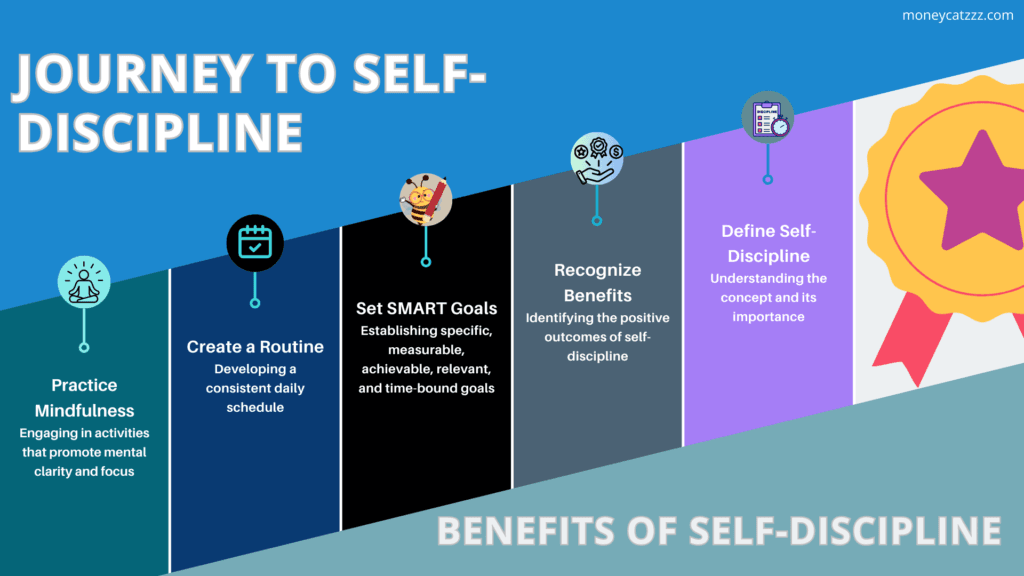
[“The Power of Self-Discipline” – moneycatzzz.com]
Master Self-Discipline: The Key to Professional Growth
The Role of Master Self-Discipline in Professional Growth
Professional growth often requires pushing beyond your comfort zone, acquiring new skills, and persisting through challenges. Master Self-Discipline is the engine that drives these efforts. In The 7 Habits of Highly Effective People, Stephen Covey emphasizes the importance of being proactive and taking responsibility for your life. This proactive approach is a cornerstone of self-discipline in professional settings—it’s about taking charge of your career trajectory rather than waiting for opportunities to fall into your lap.
Strategies to Enhance Professional Growth Through Master Self-Discipline
- Set Clear, Measurable Goals – You’re shooting in the dark without a target. Define what success looks like and create specific, achievable milestones.
- Create and Stick to a Structured Daily Routine – Consistency is key. Establish a daily schedule that aligns with your goals and adhere to it religiously.
- Continuously Educate Yourself in Your Field – Learning doesn’t stop when you leave school. Stay updated with your industry’s latest trends and developments.
- Seek Feedback and Act on It Consistently – Constructive criticism is a goldmine for growth. Actively seek feedback from mentors, colleagues, and superiors, and more importantly, act on it.

Self-Discipline and Personal Development
Personal growth is equally dependent on self-discipline. Whether it’s developing healthier habits, learning a new skill, or working on relationships, self-discipline is the force that turns intentions into actions. In his bestselling book “Atomic Habits,” James Clear argues that small, consistent actions lead to significant changes over time. He writes, “You do not rise to the level of your goals. You fall to the level of your systems.“
To foster personal growth through self-discipline, consider these strategies:
1. Identify Key Areas for Personal Improvement: Self-discipline starts with self-awareness. Reflect on areas of your life where you’d like to see change, and you’ll be on your way to personal growth.
2. Break Large Goals into Small, Manageable Daily Actions: Don’t be overwhelmed by the big picture. Focus on small, consistent steps that move you toward your goal.
3. Track Your Progress and Celebrate Small Wins: Keeping a record of your journey helps you stay on track and provides motivation when you see how far you’ve come.
4. Practice Mindfulness to Increase Self-Awareness: Mindfulness can help you become more aware of your thoughts and actions, allowing you to make more conscious choices.
Overcoming Obstacles to Self-Discipline
Developing self-discipline is only sometimes a walk in the park. Common obstacles include procrastination, lack of motivation, and external distractions. Angela Duckworth, in her groundbreaking book “Grit: The Power of Passion and Perseverance,” emphasizes the importance of long-term commitment and resilience in the face of challenges. She argues that grit – a combination of passion and perseverance – is a key predictor of success, and self-discipline is a crucial component of grit.
Strategies to overcome obstacles:
1. Use the “5-Second Rule” by Mel Robbins: When you feel the urge to procrastinate, count backward from 5 and immediately act. This simple technique can help break the cycle of overthinking and inaction.
2. Implement the “Two-Minute Rule” for Small Tasks: If a task takes less than two minutes to complete, do it immediately. This prevents small tasks from piling up and becoming overwhelming.
3. Create a Distraction-Free Environment for Focused Work: Identify your biggest distractions and create systems to minimize them. This might mean turning off notifications, using website blockers, or finding a quiet workspace.
4. Practice Self-Compassion When You Falter: Remember, developing self-discipline is a journey, not a destination. Be kind to yourself when you slip up, learn from the experience, and get back on track.
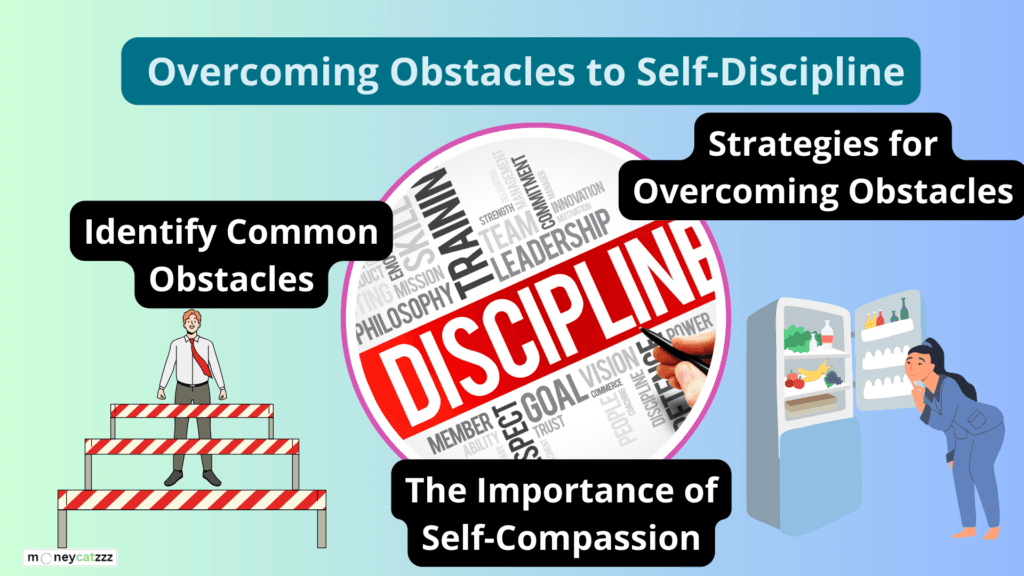
[“Overcoming Obstacles to Self-Discipline” – moneycatzzz.com]
The Power of Habits in Building Self-Discipline
Habits are the building blocks of self-discipline. Creating positive habits automates good behaviors, making self-discipline easier over time. Charles Duhigg, in “The Power of Habit,” explains the habit loop of cue, routine, and reward. Understanding this loop can help you build beneficial habits and break detrimental ones. For instance, if you want to develop a habit of early morning exercise, you might set out your workout clothes the night before (cue), go for a run (routine), and reward yourself with a healthy breakfast afterward (reward).
To harness the power of habits:
1. Identify Keystone Habits That Have a Ripple Effect on Other Areas of Your Life: Regular exercise often leads to better eating habits and increased productivity.
2. Use Habit Stacking: Link a new habit to an existing one. For instance, if you already have a habit of making coffee every morning, use that as a cue for a quick meditation session.
3. Design Your Environment to Support Your Desired Habits: If you want to read more, keep books readily accessible in various parts of your home.
4. Be Patient: Research shows it takes 66 days to form a new habit. Keep going even if it doesn’t stick immediately.
Master Self-Discipline: The Power of Mindset
The Role of Mindset in Master Self-Discipline
Your mindset plays a crucial role in maintaining Master Self-Discipline. Carol Dweck’s research on growth mindset, detailed in her book Mindset: The New Psychology of Success, shows that believing in your ability to improve is key to perseverance and success. Those with a growth mindset see challenges as opportunities to learn and grow rather than threats to their abilities.
How to Cultivate a Mindset That Supports Master Self-Discipline
- Embrace Challenges as Opportunities for Growth – Instead of avoiding complex tasks, see them as chances to strengthen your self-discipline muscle.
- View Failures as Learning Experiences – Every setback is a chance to refine your approach and return stronger.
- Practice Positive Self-Talk – The way you speak to yourself matters. Replace self-defeating thoughts with encouraging ones.
- Surround Yourself with Disciplined Individuals – Jim Rohn famously said, “You are the average of the five people you spend the most time with.“ Choose your influences wisely.
- Shifting your mindset lays a strong foundation for Master Self-Discipline, allowing you to overcome obstacles and achieve lasting success.
Balancing Self-Discipline with Self-Care
While self-discipline is crucial, it’s equally important to avoid burnout. Balancing discipline with self-care ensures sustainable growth. In “The Happiness Advantage,” Shawn Achor argues that happiness fuels success, not vice versa. Taking care of your physical and mental well-being is essential for long-term self-discipline. Think of it as recharging your batteries – you need to power up to keep going.
To maintain this balance:
1. Schedule Regular Breaks and Leisure Activities: Downtime is not wasted; it’s necessary for sustained productivity.
2. Practice Stress-Management Techniques Like Meditation or Yoga: These can help you stay centered and focused.
3. Ensure Adequate Sleep and Nutrition: Your brain and body need proper fuel to function at their best.
4. Regularly Reassess and Adjust Your Goals and Methods: Flexibility is key to sustainable self-discipline.
Measuring and Celebrating Progress
Tracking your progress and celebrating milestones is crucial for maintaining motivation and reinforcing self-disciplined behaviors. Peter Drucker, often called the founder of modern management, famously said, “What gets measured gets managed.“
To effectively track and celebrate progress:
1. Use a Journal or App to Log Daily Actions and Achievements: This creates accountability and records your journey.
2. Set Regular Check-Ins to Review Your Progress: This could be weekly, monthly, or quarterly, depending on your goals.
3. Celebrate Small Wins Along the Way to Bigger Goals: Each step forward is worth acknowledging, no matter how small.
4. Adjust Your Strategies Based on What’s Working and What Isn’t: Be willing to pivot if something isn’t yielding the desired results.

Master Self-Discipline: Real People, Real Case Studies
The Architect of Innovation: Elon Musk’s Ironclad Master Self-Discipline
Known for his intense work ethic and visionary goals, Elon Musk demonstrates extraordinary Master Self-Discipline. He’s famous for working 80-100 hour weeks, continuously learning across diverse fields, and persisting through numerous setbacks in his ventures. His self-discipline has led to groundbreaking achievements in electric vehicles, space travel, and renewable energy. Musk’s ability to maintain focus and drive in the face of immense challenges is a testament to the power of Master Self-Discipline.
Oprah’s Secret Weapon: The Unseen Force of Master Self-Discipline
Rising from a challenging childhood to become one of the most influential media personalities, Oprah‘s journey is a testament to the power of Master Self-Discipline. She maintains a strict morning routine, continuously educates herself, and has shown remarkable discipline in building her media empire and maintaining her health and wellness. Her consistent efforts over decades have not only led to personal success but have also inspired millions around the world.
These real-world examples prove that Master Self-Discipline isn’t just a concept—it’s the driving force behind extraordinary success.
Your Path to Growth and Success
Steadfast Master Self-Discipline is the key to charting your professional and personal growth. It’s the force that turns your goals and dreams into reality. Remember, self-discipline is like a muscle—the more you exercise it, the stronger it becomes.
Start today by choosing one area of your life where you want to improve. Set a clear goal, break it down into daily actions, and commit to following through consistently. With time and practice, mastering self-discipline becomes not just a skill but a fundamental part of who you are.
Your journey towards greater Master Self-Discipline starts now. Embrace the challenge, relish the growth, and look forward to the incredible achievements that await you. Remember, the most important step is the first one—so take that step today and set yourself on the path to extraordinary personal and professional growth.
Disclosure: This post may contain affiliate links. We only recommend products we believe in, and We may receive a commission at no cost to you! Thank you for your support!
Acknowledgement: Cover Image by Pfüderi @ Pixabay
Signup to our Newsletter for regular updates:
Disclaimer: The information is provided for general information only – moneycatzzz.com makes no representations or warranties in relation to the information, including but not limited to any representation or warranty as to the fitness for any particular purpose of the information to the fullest extent permitted by law. While every effort has been made to ensure that the information provided in this article is accurate, reliable, and complete as of the time of writing, the information provided in this article should not be relied upon to make any financial, investment, real estate or legal decisions. Additionally, the information should not substitute advice from a trained professional who can take into account your personal facts and circumstances, and we accept no liability if you use the information to form decisions.