
 Reading Time: 8 mins #
 This post may contain affiliate links.
Transforming Challenges into Opportunities | The moneycatzzz.com Way
In its intricate dance, life presents us with a series of rhythms—some harmonious, others jarring. Transforming Challenges into Opportunities, much like unexpected dissonances such as a sudden job loss or a health crisis, disrupt our carefully choreographed routines. They are the tests of our resilience, the moments that demand we look beyond the immediate discomfort and seek the hidden melodies within the chaos. Yet, in these moments of discord, the potential for profound growth resides. This article serves as your comprehensive guide, a blueprint to not merely endure but actively transform these challenges into opportunities for personal and professional evolution.
“The only thing that is constant is change.” – Heraclitus.
Understanding Adversity: The First Step in Transforming Challenges into Opportunities
Before effectively converting adversity into advantage, we must understand the varied lenses through which we perceive challenges. Turning obstacles into opportunities is not a passive process; it requires a conscious shift in perspective.
- The Victim Mentality: Imagine a ship tossed about in a storm, its captain convinced they have no control over their fate. This is the essence of the victim mentality. It’s a state of perceived helplessness, where external forces are seen as the sole determinants of one’s destiny. It’s when we start blaming others or circumstances for our failures and refuse to take responsibility for our actions. While acknowledging the emotional impact of adversity is crucial, dwelling in this mindset stifles agency and hinders growth.
- The Obstacle Mentality: This perspective acknowledges challenges, treating them as formidable barriers to overcome. It’s a reactive approach focused on swift resolution. While determination is essential, this mindset can lead to tunnel vision, overlooking the valuable lessons and growth opportunities inherent in the challenge.
- The Opportunity Mindset – Your Key to Adversity to Advantage: We aspire to adopt this transformative lens. It’s about actively seeking challenges as growth catalysts and opportunities to innovate and evolve. This mindset, rooted in resilience and a belief in one’s capacity for growth, is the cornerstone of successful transformation. Carol Dweck’s “Mindset: The New Psychology of Success“ illuminates the power of a growth mindset, emphasizing that our abilities are not fixed but can be developed through dedication and hard work.

Cultivating a Growth Mindset: The Foundation for Overcoming Adversity
Having recognized the importance of an opportunity mindset, we must explore how to cultivate it. This involves a deliberate shift in our thinking patterns, a willingness to embrace uncertainty, and an unwavering belief in our ability to create positive outcomes.
Reframing Challenges:
Reframing involves shifting our perspective from focusing on the negative aspects of a challenge to recognizing its growth potential. For example, a job loss, initially perceived as a setback, can be considered an opportunity to explore new career paths, acquire new skills, or even pursue entrepreneurial ventures.
Embracing Uncertainty:
Challenges often bring with them a degree of uncertainty. Rather than fearing this ambiguity, we must embrace it as a space of possibility where new opportunities can emerge.
Developing a Growth Mindset: Essential for Time Management Skills and Personal Development:
Dweck emphasizes that a growth mindset is essential for effectively navigating challenges. It allows us to view setbacks as stepping stones, as opportunities to learn and improve. This mindset is not merely about positive thinking; it’s about a fundamental belief in our capacity for growth and development.
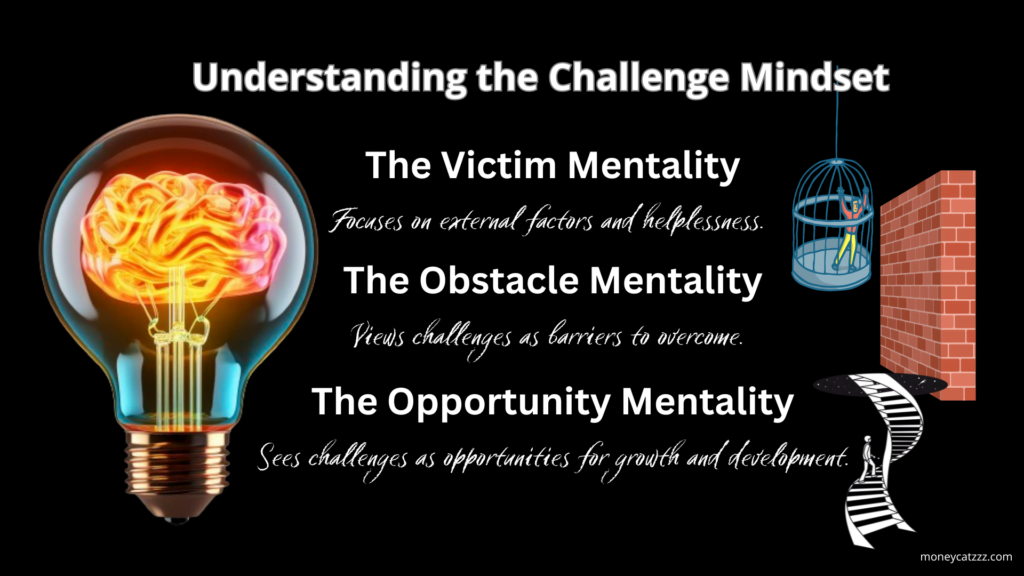
[“Overcoming Limiting Mindsets” – Image by moneycatzzz.com]
Developing Emotional Resilience: A Key Component of Overcoming Adversity
Cultivating a growth mindset lays the foundation, but emotional resilience provides the scaffolding necessary to weather the storms of adversity. It’s the ability to bounce back from setbacks, maintain composure in the face of stress, and emerge stronger from challenging experiences.
Building a Strong Support Network:
In times of adversity, having a network of supportive friends, family, and mentors can provide invaluable emotional support, guidance, and encouragement.
Practicing Self-Care:
Prioritizing physical and mental well-being is not just essential; it’s a form of self-respect. It’s for building resilience. This includes regular exercise, mindfulness practice, adequate sleep, and a healthy diet.
Cultivating a Positive Mindset:
Focusing on gratitude, optimism, and finding meaning in challenges can shift our perspective and foster resilience. This doesn’t mean ignoring negative emotions but balancing them with positive ones.
Learning from Failures:
Failures are inevitable but don’t define us. They are opportunities to learn, grow, and refine our approach. Viktor Frankl’s “Man’s Search for Meaning“ poignantly illustrates human resilience, even amid unimaginable suffering, emphasizing that meaning can be found even in the most dire circumstances.
Practical Strategies for Transforming Challenges into Opportunities: Problem-Solving Skills in Action
With a resilient mindset, we can now focus on practical strategies for transforming challenges into opportunities.
Conducting a SWOT Analysis:
This strategic tool allows us to assess our strengths, weaknesses, opportunities, and threats, providing a clear roadmap for navigating challenges.
Breaking Down the Challenge:
Overwhelming challenges can be made more manageable by breaking them down into smaller, more achievable steps.
Setting SMART Goals:
Establishing specific, measurable, achievable, relevant, and time-bound goals provides direction and a sense of accomplishment.
Seeking Feedback:
Actively seeking input from others can provide fresh perspectives and valuable insights.
Experimentation and Iteration:
Embracing a spirit of experimentation and iteration allows us to learn from our mistakes and refine our approach.
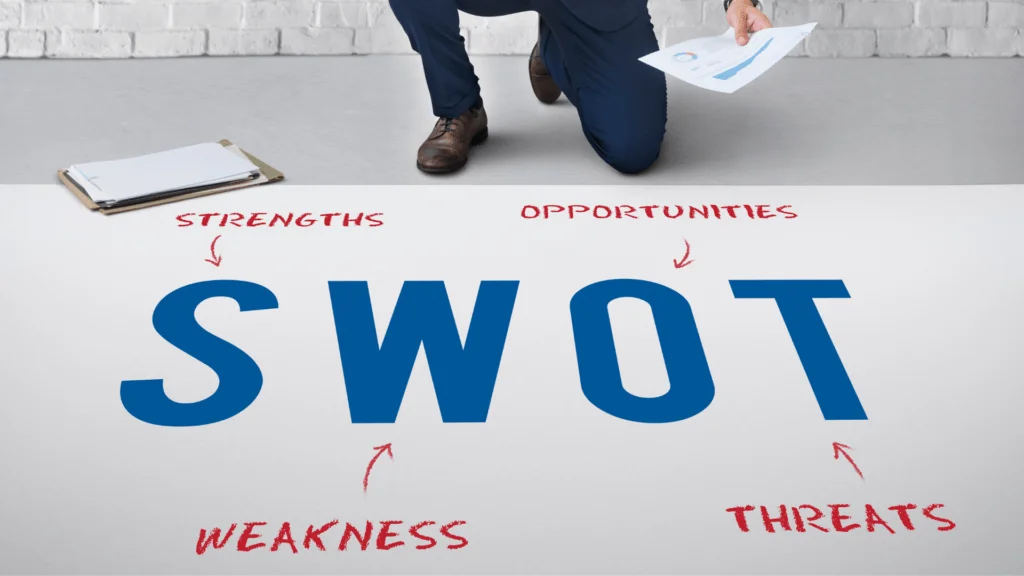
[“Practical Strategies – SWOT Analysis” – Image by Freepiks.com]
The Power of Positive Psychology in Overcoming Adversity
Positive psychology offers a robust framework for cultivating resilience and transforming challenges. It emphasizes the strengths and virtues that enable individuals and communities to thrive. Techniques such as gratitude journaling, strength identification, and mindfulness meditation can enhance our ability to navigate adversity and cultivate well-being. “Learned Optimism“ by Martin Seligman provides excellent insight into changing your explanatory style and becoming more optimistic.
The Role of Technology in Transforming Challenges into Opportunities: AI Productivity and Problem-Solving
In today’s digital age, technology offers many tools and resources to help us overcome challenges.
Online Learning Platforms:
Coursera, edX, and Udemy provide access to many courses and resources for acquiring new skills and knowledge.
Productivity Tools:
Project management software, time management apps, and AI-powered tools can help us stay organized, focused, and efficient. AI can analyze work patterns, suggest optimal times for concentrated work, and even provide personalized learning recommendations.
Virtual Communities:
Online communities and forums provide opportunities to connect with others facing similar challenges, share experiences, and offer support.
Case Studies in Resilience: Real-Life Success Stories
The stories of individuals who have triumphed over adversity are potent reminders of the human capacity for resilience.
Oprah Winfrey:
Her journey from poverty and abuse to media mogul is a testament to the power of resilience and perseverance.
J.K. Rowling:
Her perseverance in the face of numerous rejections led to the creation of one of the most beloved book series ever.
Nelson Mandela:
His unwavering commitment to justice and reconciliation inspires us all, even after decades of imprisonment.
The Power of Mindfulness: Mental Fortitude in Action
Mindfulness, the practice of being fully present in the moment, can be a powerful tool for managing stress, cultivating resilience, and enhancing our ability to navigate challenges. “Wherever You Go, There You Are“ by Jon Kabat-Zinn is a fantastic resource for practicing mindfulness.
The Importance of Emotional Intelligence: Time Management Skills and Work-Life Balance
Emotional intelligence, the ability to understand and manage our emotions and those of others, is crucial for navigating challenges effectively. “Emotional Intelligence“ by Daniel Goleman is a foundational book.
- Self-Awareness: Understanding our emotions and triggers can help us constructively respond to challenges.
- Self-Regulation: Managing our emotions and impulses is essential for maintaining focus and resilience.
- Social Skills: Building solid relationships and practical communication skills can help us seek support and collaborate with others.
- Empathy: Understanding and sharing the feelings of others can foster stronger connections and create a supportive environment.

[“Power of Mindfulness” – Image by Pixabay]
Transforming Challenges into Opportunities: Practical Application
While the principles outlined in this article apply to a wide range of challenges, exploring specific examples is helpful.
Career Challenges: Job loss, career plateaus, and workplace conflicts can be daunting. Strategies include networking, upskilling, and developing a personal brand.
Financial Challenges: Debt, financial instability, and economic downturns can create significant stress. Creating a budget, seeking financial advice, and exploring additional income streams help alleviate financial pressures. The key is to approach these challenges with a strategic mindset, much like a business owner would analyze their financial statements.
Health Challenges: Chronic illnesses, injuries, and mental health struggles can present significant obstacles. Prioritizing self-care, seeking professional help, and building a support network are crucial for coping with health challenges. Remember, physical and mental health are intertwined; addressing one often benefits the other.
Relationship Challenges: Conflicts, breakups, and communication breakdowns can be emotionally draining. Effective communication, seeking counseling, and focusing on personal growth can help heal relationships or move forward. It’s important to remember that relationships, like gardens, require consistent nurturing and care.
The Synthesis: Integrating Lessons and Moving Forward
Transforming challenges into opportunities is not a one-time event; it’s a continuous process of learning, adaptation, and growth. It’s about weaving the lessons learned from each challenge into the fabric of our lives, creating a stronger and more resilient tapestry.
To truly integrate these lessons, consider these steps:
Reflect and Journal : Take time to reflect on each challenge you face. What did you learn? How did you grow? Journaling can be a powerful tool for processing experiences and identifying patterns.
Seek Mentorship: Find individuals who have successfully navigated similar challenges. Their guidance and support can be invaluable.
Embrace Lifelong Learning: The world is constantly changing, and so are the challenges we face. Cultivate a mindset of continuous learning and adaptation.
Practice Gratitude: Even in the midst of adversity, there are always things to be grateful for. Practicing gratitude can shift your focus and enhance your resilience.

The Ultimate Transformation: From Adversity to Advantage
The journey from adversity to advantage is not always easy, but it is always worthwhile. By cultivating a growth mindset, developing emotional resilience, and embracing practical strategies, you can transform challenges into catalysts for personal and professional growth.
Remember, challenges are not roadblocks but detours on the path to your destination. They are opportunities to discover your inner strength, to redefine your limits, and to create a life of purpose and meaning.
FAQs: Addressing Common Concerns
How can I develop a more resilient mindset?
- Practice mindfulness, build a strong support network, and challenge negative thought patterns.
What are some effective strategies for managing stress during challenging times?
- Engage in regular exercise, prioritize sleep, practice relaxation techniques, and seek professional help if needed.
How can I identify opportunities within difficult situations?
- Focus on the lessons learned, explore new possibilities, and maintain a growth-oriented perspective.
How can I help others who are going through adversity?
- Offer empathetic listening, provide practical support, and encourage them to seek professional help if necessary.
What is the difference between resilience and simply “toughing it out”?
- Resilience involves learning and growing from challenges, while “toughing it out” is often a temporary and unsustainable coping mechanism.
Call to Action: Begin Your Transformation Today
Begin your transformation today! Start by identifying one challenge you are currently facing and begin to reframe it as an opportunity for growth. Join our online community to share your journey and connect with others who are on a similar path.
Community Engagement: Connect and Share
Join our community on Facebook at [Insert Real Facebook Link] to connect with others on a similar journey. Share your experiences, offer support, and celebrate your successes.
By embracing the principles outlined in this article, you can transform challenges into stepping stones on your path to a more fulfilling and meaningful life.
Disclosure: This post may contain affiliate links. We only recommend products we believe in, and We may receive a commission at no cost to you! Thank you for your support!
Acknowledgement: Cover Image by Unsplash.com
Signup to our Newsletter for regular updates:
Disclaimer: The information is provided for general information only – moneycatzzz.com makes no representations or warranties in relation to the information, including but not limited to any representation or warranty as to the fitness for any particular purpose of the information to the fullest extent permitted by law. While every effort has been made to ensure that the information provided in this article is accurate, reliable, and complete as of the time of writing, the information provided in this article should not be relied upon to make any financial, investment, real estate or legal decisions. Additionally, the information should not substitute advice from a trained professional who can take into account your personal facts and circumstances, and we accept no liability if you use the information to form decisions.