
 Reading Time: 8 mins #
 This post may contain affiliate links.
You’re working 60-hour weeks, but your revenue hasn’t moved in two years. You’re serving 47 clients, but only five pay on time. You’re managing 200 daily tasks, but can’t name three that actually matter. This isn’t a personal failure. It’s an operational failure, and it’s killing your business one scattered hour at a time. The paradox of the modern high-performer is this: we’ve never been busier, yet we’ve never been less efficient. This is precisely why adopting the strategic 80/20 protocol is vital. We often mistake motion for progress, and 80% of what you’re doing right now is a waste of time. Pure, measurable, removable waste.
This is where the strategic 80/20 protocol becomes your operational salvation. It’s not another productivity hack or time management technique. It’s a scientific methodology for resource reallocation that identifies and eliminates 80% of low-leverage activities consuming your capacity while amplifying the 20% that actually drives results.
The strategic 80/20 protocol isn’t a theory. It’s mathematics. Vilfredo Pareto discovered this principle while studying wealth distribution in Italy, finding that 20% of the population owned 80% of the land. However, this ratio is evident everywhere: 20% of your clients generate 80% of your revenue, 20% of your activities create 80% of your value, and most critically, 80% of your time is spent on things that don’t matter at all.
Last quarter, I applied the strategic 80/20 protocol, also known as the Pareto Principle, to a consulting firm that was drowning in operational chaos. They had 112 clients, 14 service offerings, and zero profit growth. After a systematic analysis and rigorous elimination, they retained 23 clients, three services, and tripled their profit margin in 90 days. They didn’t work harder. They worked on less, better.
The Diagnostic Phase: Data Over Intuition
The first law of the strategic 80/20 protocol is brutal honesty through measurement. You cannot eliminate what you cannot quantify. Most professionals operate on intuition; feeling their way through priorities. This is operational malpractice. Without data, you’re guessing. With data, you’re deciding.
The diagnostic phase requires two parallel analyses that will reveal exactly where your leverage lives, and where your waste hides.
Financial Output Analysis
Start with revenue reality. List every client, project, or product line with their associated revenue and profit margin. Don’t estimate. Pull actual numbers from your accounting system. Now, calculate the cumulative percentage. You’ll discover something shocking: a small subset of your offerings drives the vast majority of your financial results.
When I run this analysis with clients who are implementing it, the pattern is consistent. The top 20% of clients don’t just generate 80% of revenue; they often generate 120% of profit because the bottom 20% actually loses money when you factor in actual service costs.
Here’s the framework. Create a simple spreadsheet with five columns: Client Name, Annual Revenue, Service Hours Required, Profit Margin, and Cumulative Percentage. Sort by profit margin, not revenue. Revenue without profit is vanity. The strategic 80/20 protocol focuses on profit because profit is the only metric that matters for sustainability.
A software company I advised discovered that 8 of their 43 clients generated 87% of their profit. But here’s the revelation: those eight clients required only 30% of their service capacity. The other 35 clients? They were operational parasites, consuming resources while contributing nothing to growth. This isn’t unusual. It’s typical.
Time Output Analysis
The second diagnostic in the Strategic 80/20 protocol examines time allocation in relation to strategic value. For one week, track every 15-minute increment. Not what you planned to do but what you actually did. Categorize each block as either High-Leverage (directly advances strategic goals) or Low-Leverage (everything else).
The results will disturb you. The average professional spends less than 20% of their time on high-leverage activities. The rest is consumed by what I call pseudo-productivity: emails that change nothing, meetings that decide nothing, tasks that advance nothing.
One CEO tracked her time using the strategic 80/20 protocol methodology and discovered she spent 31 hours weekly on email. Of those 31 hours, exactly 2.5 hours involved decisions that mattered. She was trading 28.5 hours of her life weekly for the illusion of productivity. That’s 1,482 hours annually. That’s 37 weeks of work. That’s insanity disguised as diligence.
The diagnostic phase of the Pareto Principle not only reveals waste but also quantifies it. And once you see the numbers, you can’t unsee them. The comforting lie of “everything matters” is dispelled when faced with data showing that 80% of everything matters not at all.

[“The Exponential Curve” – Image by moneycatzzz.com]
The Elimination Protocol: Three Strategic Cuts
Diagnosis without action is just expensive information. The strategic 80/20 protocol demands systematic elimination across three domains. These aren’t suggestions. They’re surgical cuts designed to remove cancer from your operational model.
Cut 1: Client Recalibration (The Revenue Drain)
Low-profit, high-demand clients are business cancer. They metastasize throughout your organization, consuming resources, eroding morale, and hindering you from serving your best clients effectively. The strategic 80/20 protocol treats them accordingly: aggressive removal.
Here’s the methodology: Identify your bottom 20% of clients by profitability. These aren’t just low-revenue clients; they’re the ones who demand premium service while paying discount prices. They complain the most, pay the slowest, and are respected the least. You know who they are.
You have three options within the strategic 80/20 protocol for these clients:
Price Them Out: Increase their rates by 50-100%. Either they become profitable or they leave. Both outcomes are victories. One firm I advised raised prices on its bottom tier by 75%. Half left immediately. The half that stayed became profitable. Win-win.
Service Them Down: Move them to a lower service tier with defined boundaries. No more custom work, emergency responses, or unlimited revisions. They get standard service at their standard price. If they want premium, they pay premium.
Fire Them Clean: Sometimes, the strategic 80/20 protocol demands complete severance. Give them 30-60 days’ notice, help them transition, but end the relationship. The capacity you recover can be redirected to acquiring and serving ideal clients.
A design agency applied this ruthlessly. They fired 60% of their clients in one month. Revenue dropped 18% initially. Six months later, revenue was up 40% with half the stress because they could finally deliver excellence to clients who valued it.
Cut 2: Task Compression (The Time Drain)
The Pareto Principle targets pseudo-productivity by systematically eliminating tasks. Every task in your bottom 80% must pass through the Three D’s framework or die:
Delegate: If someone else can do it 80% as well, it’s theirs. Not 100%, but 80%. Your perfectionism is a luxury you can’t afford. The strategic 80/20 protocol values leverage over perfection. A virtual assistant handling your email at 80% quality frees you for activities only you can do at 100%.
Digitize: If it’s repetitive, automate it. Email templates, scheduling systems, automated invoicing, and project management workflows. The strategic 80/20 protocol demands that repetitive tasks be systematized. Every manual repetition is a failure of systems thinking.
Destroy: Most tasks shouldn’t be improved or delegated; they should be eliminated. That weekly status meeting where nothing gets decided? Destroyed. That report nobody reads? Destroyed. That “quick sync” that takes an hour? Destroyed. The strategic 80/20 protocol has zero tolerance for tasks that exist solely because they’ve always lived.
One operations manager eliminated 73 tasks from his weekly routine using this framework. Time recovered: 19 hours. Impact on business metrics: zero. Those 73 tasks were organizational theater, performed for an audience that didn’t exist.

[“The Elimination Protocol: Three Strategic Cuts” – Image by moneycatzzz.com]
Cut 3: Capacity Systematization (The Focus Drain)
Capacity is your most finite resource. The strategic 80/20 protocol treats it like gold because it is. Every minute spent on low-leverage activity is a minute stolen from a high-leverage opportunity. This isn’t time management; it’s capacity engineering.
Protected Deep Work Blocks: The strategic 80/20 protocol mandates minimum four-hour blocks of uninterrupted focus time daily. Not negotiable. Not “when possible.” Daily. During these blocks, you’re unreachable. No email, no Slack, no calls, no “quick questions.” You’re working on the 20% that matters, period.
A financial analyst implemented this and discovered something profound: four hours of protected time produced more value than the previous eight hours of fragmented work. The strategic 80/20 protocol doesn’t create more time; it makes more leverage from existing time.
Systematic No Protocol: Every yes is a no to something else. The strategic 80/20 protocol requires a systematic approach to declining low-leverage requests. Create templates for standard rejections. Build filters for incoming demands. Make “no” your default response unless the request passes specific criteria.
Here’s the criteria framework: Does this advance my top three strategic objectives? Is this genuinely urgent AND important? Am I uniquely qualified to handle this? If the answer to any of these is ‘no’, the answer to the request is also ‘no’. The strategic 80/20 protocol isn’t about being difficult; it’s about being strategic.
Leverage Multiplied
The strategic 80/20 protocol isn’t a temporary optimization technique. It’s a permanent change in your operating system. Once you see that 80% of your work is waste, you can’t return to the old way. Once you experience the leverage of focused effort on the vital few, scattered effort on the trivial many becomes intolerable.
A consultant who fully implemented the 80/20 strategic protocol shared his year-one results: a 60% reduction in client count, a 200% increase in average project value, a 40% reduction in working hours, and a 300% increase in profit margin. He didn’t become superhuman. He became systematic about elimination.
The mathematics are irrefutable. When you eliminate 80% of waste and redirect that capacity to the 20% that matters, you don’t get 20% improvement. You get exponential transformation because you’re not just working less on waste; you’re working more on what works.
But here’s the challenge most professionals face: the strategic 80/20 protocol requires courage. Firing clients takes courage. Saying no takes courage. Destroying traditional but useless tasks takes courage. Most people would rather stay comfortable in their 80% waste than face the discomfort of transformation.
The strategic 80/20 protocol doesn’t promise an easy path. It promises to be effective. It doesn’t promise to be a popular choice. It promises to be profitable. It doesn’t promise to be a busy time. It promises better.
Your assignment is simple but not easy: Apply the strategic 80/20 protocol to your worst area of operational waste this week. Just one area. Measure it ruthlessly. Cut it systematically. Redirect the recovered capacity strategically.
The reward isn’t just less stress, though that’s a pleasant side effect. The reward is a measurable multiplication of your leverage and output. While others drown in the 80% that doesn’t matter, you’ll dominate the 20% that does.
The strategic 80/20 protocol isn’t about working harder or smarter. It’s about working on less, better. In a world that celebrates being busy, choosing the vital few over the trivial many isn’t just strategic.
It’s revolutionary.
What 80% will you eliminate this week?
Part of The Thought Leadership Thursday series on strategic thinking, operational excellence, and the mathematics of professional leverage. Ray Tan writes about systematic approaches to exponential results through the strategic 80/20 protocol.
The Pareto Principle: Eliminate 80% of Waste, Multiply Professional Leverage
To further explore the strategic and economic principles underlying the strategic 80/20 protocol, we recommend the following authoritative resources on the Pareto Principle, resource allocation, and leverage:
Corporate Finance Institute (CFI) on the Pareto Principle A fundamental definition and application overview of the 80/20 rule in economics, business, and finance, detailing its historical context and modern strategic uses.
Harvard Business Review (HBR): Mastering the Art of Resource Allocation. An authoritative resource discussing how high-leverage business leaders must ruthlessly reallocate capital, time, and talent away from under-performing areas, a core tenet of the 80/20 protocol.
Forbes: How To Use The 80/20 Rule To Make Your Business More Successful. Practical application strategies from a respected business publication, focusing on how entrepreneurs and managers can translate the principle into actionable steps for profit and efficiency.
Mastering High-Leverage: Inside the Strategic 80/20 Protocol Book
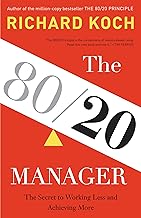
The 80/20 Manager


80/20 Your Life!
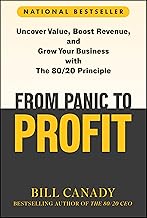
From Panic to Profit
Vilfredo Pareto’s Original Vision: The Foundational Texts of the 80/20 Law



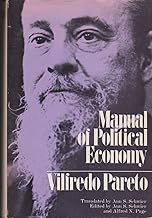
Disclosure: This post may contain affiliate links. We only recommend products we believe in, and we may receive a commission at no cost to you! Thank you for your support!
Acknowledgment: Cover Image by moneycatzzz.com
Disclaimer: The information is provided for general information only – moneycatzzz.com makes no representations or warranties in relation to the information, including but not limited to any representation or warranty as to the fitness for any particular purpose of the information to the fullest extent permitted by law. While every effort has been made to ensure that the information provided in this article is accurate, reliable, and complete as of the time of writing, the information provided in this article should not be relied upon to make any financial, investment, real estate or legal decisions. Additionally, the information should not substitute advice from a trained professional who can take into account your personal facts and circumstances, and we accept no liability if you use the information to form decisions.