
 Reading Time: 7 mins #
 This post may contain affiliate links.
Hard Reset Guide: Reboot Your Life
Our world moves at breakneck speed where careers shift, identities evolve, and the pace of change never slows—the idea of a “hard reset” has never felt more vital. Moving beyond simple recharging our batteries, we not just talking about a vacation or a quick fix. We’re talking about a purposeful re-evaluation of life’s trajectory.
According to a recent Deloitte survey, nearly half of professionals (47%) feel the need for a significant life or career change. Meanwhile, research in the Journal of Happiness Studies found that individuals who initiated intentional life resets reported a 35% increase in overall life satisfaction within one year.
“Between stimulus and response, there is a space. In that space lies our power to choose our response. In our response lies our growth and our freedom.” – Viktor Frankl, Psychiatrist and Holocaust Survivor
So what does a hard reset actually entail? Unlike impulsive changes or crisis-driven decisions, a hard reset is a structured, values-based recalibration of how you live and work. It’s about creating space for reinvention by confronting what no longer fits—and designing a life aligned with your highest aspirations.
Today, we’ll explore 8 proven steps—supported by psychological insight, real-world case studies, and expert perspectives—that can help you reset, recalibrate, and redefine your life.
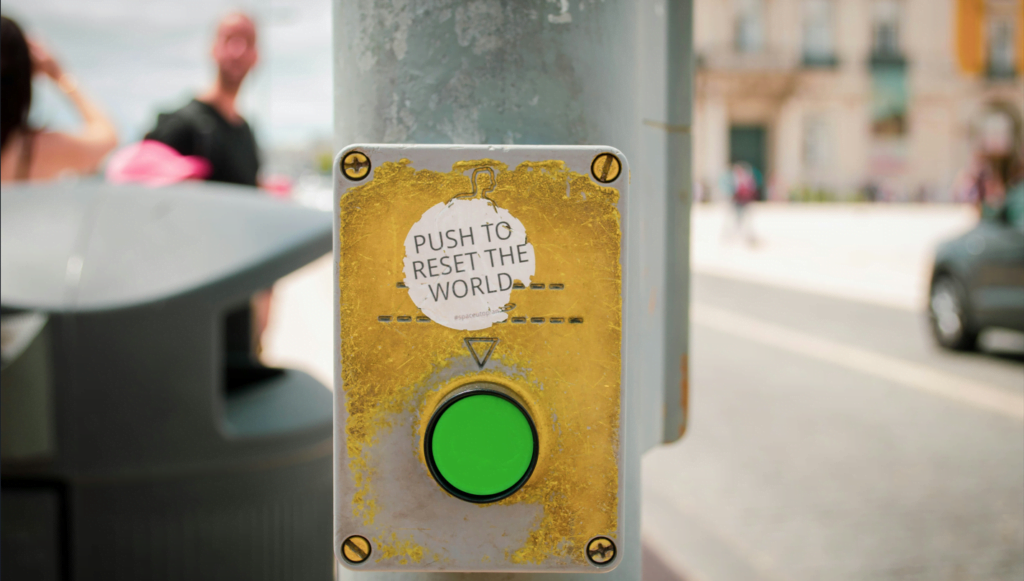
[“Reset” – Photo by Jose Antonio Gallego Vázquez on Unsplash]
1. Embrace Deep Self-Reflection and Honest Assessment
A hard reset begins with clarity. You can’t change what you don’t understand. This means carving out intentional time to reflect on what’s working in your life—and what isn’t. It’s uncomfortable, but necessary.
As James Clear, author of Atomic Habits, puts it:
“You do not rise to the level of your goals. You fall to the level of your systems.”
That starts with awareness.
Try this:
- Conduct a life audit using the Wheel of Life—score yourself in categories like career, health, relationships, and personal growth.
- Journaling daily for 15 minutes can surface unconscious patterns and feelings.
- 360-degree feedback from people you trust can illuminate blind spots.
- Mind-mapping or visual mapping exercises can help you see where you feel blocked or uninspired.
Case Study: From Marketing Burnout to Green Impact
Mark is a 35-year-old marketing executive; he felt like he was sleepwalking through his life. Externally, he was thriving. Internally, he was disengaged. Through coaching and structured self-reflection, Mark discovered that sustainability—not sales—was his true passion. He pivoted to launch Green Impact, a sustainable marketing agency that now helps purpose-driven companies reduce their environmental footprint.
You can learn more about Mark’s story and Green Impact here:
- Green Impact Website: https://www.greenimpact.it/
- Mark’s LinkedIn Profile: https://www.linkedin.com/in/mark-s-green
2. Define Your Core Values and Life Purpose
Without a compass, any road will take you somewhere—but not necessarily where you want to go. Your values and purpose are that compass. They help you make better decisions, set aligned goals, and reduce life’s static.
To get clear:
- Identify peak moments—when you felt truly alive. What were you doing? Who were you with?
- Use values assessment tools (such as Brene Brown’s Core Values List or VIA Strengths Survey).
- Write a personal mission statement: one sentence that captures why you exist and what impact you want to have.
Simon Sinek, in Start With Why, explains: “People don’t buy what you do; they buy why you do it.” That’s not just a marketing concept—it’s a life principle.
3. Set Clear, Aligned Goals with Structure
Once you’ve assessed your life and clarified your values, it’s time to set tangible goals. But not just any goals—goals that align deeply with your purpose and move the needle toward the life you truly want.
Use the SMART goals framework (Specific, Measurable, Achievable, Relevant, Time-bound), and break big dreams into micro-objectives. If your reset involves changing careers, for example, start by identifying industries of interest, then schedule informational interviews.
As Brian Tracy writes in Goals!:
“Goals are the fuel in the furnace of achievement.”
But fuel only works if you ignite it with consistent action.
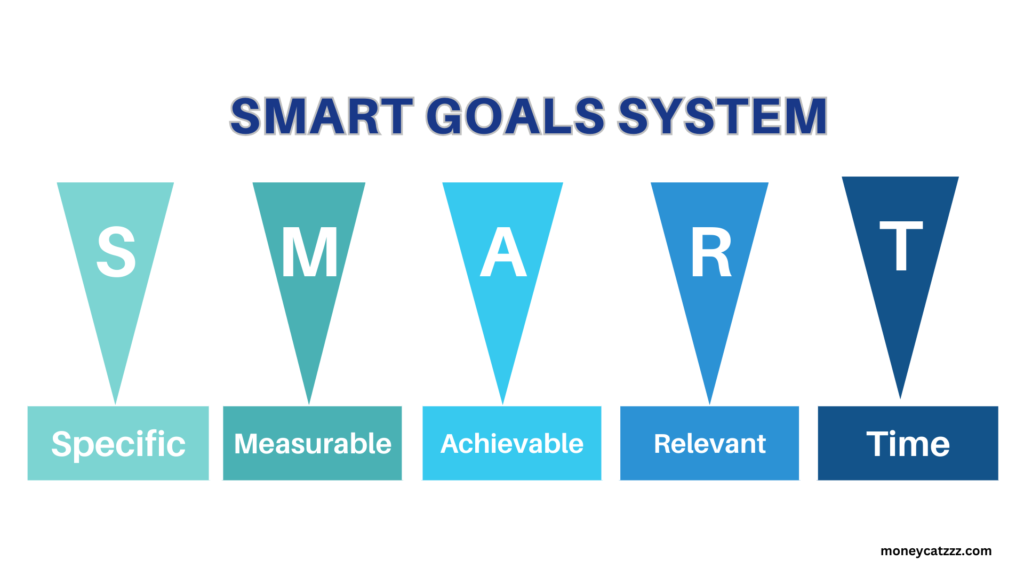
[“SMART Goals” – moneycatzzz.com]
4. Rewire Through Habits and Routines
The biggest reason people fail to maintain change is that they don’t change their underlying habits. Habits are your life’s autopilot system—and during a hard reset, you need to reprogram them.
Start by identifying keystone habits—foundational habits that create positive ripple effects (e.g., regular exercise, morning journaling, setting daily intentions).
Use habit stacking, a method popularized by Clear, where you piggyback a new habit onto an existing one: “After I brush my teeth, I’ll do 5 minutes of meditation.”
Track your progress visibly, and remember: small, consistent changes compound over time.
5. Develop a Growth Mindset for Resilience
A hard reset isn’t a linear journey—expect failure, doubt, and even regression—what separates those who thrive from those who stall is mindset.
Carol Dweck’s concept of the growth mindset teaches us that intelligence, ability, and success are not fixed—they are built through persistence, learning, and effort.
To cultivate a growth mindset:
- Normalize failure: Redefine it as feedback.
- Use reframing language: Replace “I can’t” with “I haven’t yet.”
- Practice self-compassion: Speak to yourself like you would to a struggling friend.
- Celebrate progress, not perfection.
Dweck states that, “Becoming is better than being.”
6. Restructure Your Environment to Match Your Goals
Your environment silently shapes your behavior. If your life remains cluttered with distractions, toxic influences, or conflicting messages, your reset won’t stick.
Start with your “physical space”: declutter, design for flow, and include visual cues of your goals.
Then shift your social environment: spend more time with people who reflect your future, not just your past. Ask yourself, “Who in my life challenges me to grow?”
Lastly, digital spaces matter too. Curate your feeds, remove distractions, and follow voices aligned with your values.
James Clear rightly observed that: “Environment is the invisible hand that shapes behavior.”

[“Adopt a Growth Mindset” – Image by rawpixel.com on Freepik]
7. Commit to Lifelong Learning and Skill-Building
Growth doesn’t stop with one shift. A reset often demands new skills, whether it’s technical proficiency, emotional intelligence, or leadership capabilities.
Create a personal learning plan:
- Identify 1–2 priority skills that support your reset.
- Choose a mix of learning methods: online courses, podcasts, books, coaching.
- Apply knowledge through real-world projects to reinforce retention.
- Schedule time for learning weekly, like any other priority.
In Range, David Epstein writes: “Modern life requires range, making connections across disciplines.” In a reset, curiosity becomes your superpower.
8. Practice Mindfulness and Resilience Habits
Resets can be emotionally and mentally taxing. You’re rewiring identity, confronting uncertainty, and venturing into the unfamiliar. Without mindfulness, it’s easy to burn out or give up.
Jon Kabat-Zinn describes mindfulness as “paying attention in a particular way: on purpose, in the present moment, and non-judgmentally.”
To integrate mindfulness:
- Develop a daily meditation or breathwork practice.
- Engage in movement-based mindfulness (e.g., yoga, walking in nature).
- Use stress-reduction tools like body scans, journaling, or grounding exercises.
- Build a wind-down ritual at night to restore and recharge.
The Reset Isn’t an Ending—It’s a Beginning
A hard reset doesn’t mean abandoning who you were. It means honoring what you’ve learned, letting go of what no longer serves you, and stepping boldly into who you’re becoming.
Start with one area of your life: career, relationships, health, or purpose. Take small, intentional steps, and trust that momentum will follow.
Remember, growth is not linear—and neither is fulfillment.

Final Thoughts: Designing a Life that Feels Like You
The truth is, your reset will look different from anyone else’s. That’s the point. The goal isn’t balance—it’s authenticity. As Alain de Botton said, “There is no such thing as work-life balance. Everything worth fighting for unbalances your life.”
Your hard reset is not an escape—it’s a return. A return to alignment, meaning, and self-trust. The moment you decide to reclaim that power, everything changes.
So pause. Reflect. Reset.
Then, move forward—on purpose.
Disclosure: This post may contain affiliate links. We only recommend products we believe in, and We may receive a commission at no cost to you! Thanks for your support!”
Acknowledgement: Cover Image by rawpixel.com on Freepik
Disclaimer: The information is provided for general information only – moneycatzzz.com makes no representations or warranties in relation to the information, including but not limited to any representation or warranty as to the fitness for any particular purpose of the information to the fullest extent permitted by law. While every effort has been made to ensure that the information provided in this article is accurate, reliable, and complete as of the time of writing, the information provided in this article should not be relied upon to make any financial, investment, real estate or legal decisions. Additionally, the information should not substitute advice from a trained professional who can take into account your personal facts and circumstances, and we accept no liability if you use the information to form decisions.