
 Reading Time: 8 mins #
 This post may contain affiliate links.
Michael was typing his resignation letter at 2 AM when he stumbled upon a quote that changed everything: “The desire for a more positive experience is itself a negative experience.”
This wasn’t motivational fluff. It was philosopher Alan Watts describing the backwards law: the harder you chase something, the further it runs. Michael realized his paradoxical burnout recovery wouldn’t come from trying harder to fix his exhaustion. It would come from stopping the chase entirely.
Six months later, he’s more productive than ever, working fewer hours with better results. He discovered what 76% of burned-out employees miss, according to Gallup’s 2023 workplace study: The solution to burnout isn’t in the direction you’re running, but in turning around completely.
What if everything you’ve been taught about building capacity is backwards? What if the secret to sustainable high performance isn’t adding more strategies, systems, or hours, but releasing the desperate grip on productivity itself?
What follows are three paradoxical steps that flip the script on burnout, not by doing more or even doing less, but by reversing the entire equation of effort and achievement.
Understanding the Backwards Law
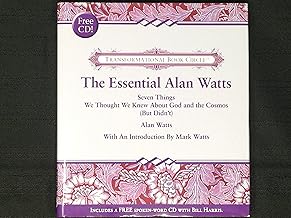
Before diving into the steps, we need to understand why traditional burnout advice often falls short. Alan Watts explained it best in The Wisdom of Insecurity:
“The more we struggle for life, the more we are actually killing what we love.”
Applied to work, this becomes devastatingly clear:
- The more desperately you chase productivity, the less productive you become
- The harder you pursue work-life balance, the more imbalanced you feel
- The more you optimize for capacity, the less capacity you actually have
Emma, a high school teacher, lived this paradox. She downloaded every productivity app, read every time management book, implemented color-coded calendars, and Pomodoro timers. Six months of optimization later, she was producing 20% less work and felt completely depleted.
“I was like someone trying to fall asleep by trying really hard to fall asleep,” she told me. “The effort itself was the problem.”
A Stanford Report confirms this phenomenon. When the brain perceives pressure to perform, the prefrontal cortex, which is responsible for complex thinking, actually begins to shut down. The harder you push, the less capable you become. It’s not a mental weakness; it’s a biological reality.
This is where backwards law productivity becomes your secret weapon. Instead of pushing harder when things get difficult, you pull back.
Instead of adding more when capacity feels limited, you subtract. Instead of gripping tighter when control slips away, you open your hands.
The three steps that follow aren’t just counterintuitive; they’re completely backwards from everything we’re taught about success. That’s precisely why they work.
Step 1: Achieve More by Attempting Less
The first paradox sounds like giving up: Do less than you’re capable of, consistently.
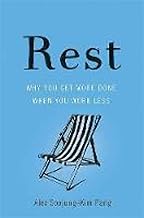
This isn’t laziness. It’s what Alex Soojung-Kim Pang discovered while researching Rest: Why You Get More Done When You Work Less. He found that history’s most productive figures, from Darwin to Dickens, worked intensely for about four hours daily, not twelve.
“They had discovered intuitively what neuroscience now proves,” Pang writes. “The brain performs best in focused bursts followed by genuine recovery, not in marathon sessions of diminishing returns.”
The 70% Principle
Here’s the radical practice: Work at 70% of your maximum capacity every day.
- Reserve 30% for adaptation and unexpected demands
- End each day with energy remaining
- Stop before you’re empty, not after
James, a management consultant, thought this was career suicide. He was billing 60-hour weeks and still falling behind. Then he tried the 70% experiment. He cut his hours to 40, deliberately leaving noticeable improvements for tomorrow, ending his workday while he still had momentum.
Six months later? Revenue up 25%. Client satisfaction up 40%. His own stress levels have been reduced by half.
“When I stopped exhausting myself daily, I started seeing solutions I’d been too tired to notice,” James explained. “My 70% effort with a clear mind beats my 100% effort with a fried brain every time.”
This connects directly to The Slow Scroll principle; when you stop frantically chasing, clarity emerges naturally. The counterintuitive rest strategies that feel like stepping backward actually propel you forward.

[“Achieve More by Attempting Less” – Image by moneycatzzz.com]
Practical Implementation
Achieving the 70% sweet spot requires deliberate, counter-intuitive actions every morning and afternoon. Here is how you can practically train your brain to stop viewing work as a daily crisis and start treating it as a sustainable daily practice:
Morning Intention: Instead of listing everything you must accomplish, list what you won’t attempt today.
The Energy Bookmark: When you feel you could do “just one more thing,” stop. That’s your bookmark for tomorrow. You’re training your brain to view work as sustainable, not a daily crisis.
The 3 PM Check: If you’re still pushing hard at 3 PM, you’re working at 100%. Dial back immediately.
These practices demand a complete reversal of instinct. They require you to let go of the control that modern productivity culture insists upon. But if stopping the frantic chase already feels counterintuitive, prepare yourself. The next step takes the ‘backwards law‘ even further by turning your perceived professional flaws into sources of immense strength.
Step 2: Build Strength Through Strategic Weakness
The second paradox feels even more backwards: Admit your limitations publicly and build your work around them.
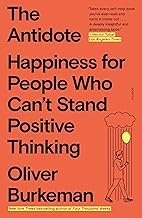
Oliver Burkeman explores this in The Antidote: Happiness for People Who Can’t Stand Positive Thinking. He calls it “the negative path to success”; achieving by embracing what you cannot do rather than pretending you can do everything.
“The efficiency trap,” Burkeman writes, “is believing that with the right system, you can transcend human limitations. The liberation comes from designing your life around those limitations instead.”
The Constraint Advantage
Sarah, a marketing director with ADHD, spent years fighting her 45-minute focus limit. Apps, techniques, and medication; nothing extended her concentration beyond that barrier. Then she stopped fighting and started designing.
Her new approach:
- Every task is broken into 40-minute chunks
- Five-minute transitions between chunks
- Major projects spread across multiple sessions
- Team meetings never exceed 45 minutes
Result? Promoted twice in eighteen months. Her “weakness” became her superpower; she was the most efficient person in the building because she couldn’t afford not to be.
Harvard Business Review’s research on authentic leadership found that leaders who openly discuss their limitations have 23% higher trust scores from their teams. The effort paradox workplace rewards honesty over heroics.
The Vulnerability Protocol
Try this radical transparency:
- Tell your team your actual energy patterns
- Share your focus limitations
- Request help where you’re weak
- Offer strength where you excel
“I do my best work between 9 AM and 1 PM. After that, you get diminished returns. Let’s structure our collaboration around that reality.” Watch how respect increases, not decreases.
The stop chasing capacity mindset isn’t about having less capacity; it’s about using the capacity you actually have instead of pretending you have unlimited reserves.
Step 3: Find Success by Releasing Success
The third paradox is the hardest: The moment you stop needing success is the moment it arrives.
Viktor Frankl, the Holocaust survivor and psychologist, discovered something profound about human achievement. He called it “paradoxical intention,” trying to fail at something often succeeds. He’d tell insomniacs to try staying awake all night. They’d fall asleep within minutes.
The same principle applies to paradoxical burnout recovery. The desperate need for achievement creates the very anxiety that prevents achievement.
The Detachment Practice
Marcus ran a struggling startup, checking metrics obsessively: user growth, revenue, engagement — refreshing dashboards every hour. His anxiety was destroying both his health and his company.
Then he tried something radical: He stopped checking metrics daily. Instead:
- Morning focus: Did I follow my process?
- Evening question: Did I learn something?
- Weekly Review: Are We Moving in the Right Direction?
The company grew 3x faster once he stopped suffocating it with attention. The backwards law productivity principle at work, the less he gripped, the more he held.
Process Over Progress
This doesn’t mean not caring. It means caring about the right things:
- Quality of effort over quantity of output
- Learning over achieving
- Sustainability over speed
- Direction over distance
As research from MIT’s Sloan School shows, companies that focus on process metrics rather than outcome metrics show 40% better long-term performance.
The Weekly Paradox Practice
Monday: Work at 70% intensity deliberately
Tuesday: Share one limitation with your team
Wednesday: Celebrate something that didn’t work
Thursday: Leave noticeable improvements for tomorrow
Friday: Measure energy invested, not tasks completed

[“Find Success by Releasing Success” – Image by moneycatzzz.com]
The Daily Integration
Making paradoxical burnout recovery a reality requires daily practice of reversing instinctive behaviors.
Morning Questions That Change Everything
Instead of: “What must I accomplish today?”
Ask: “What can I release today?”
Instead of: “How can I be more productive?”
Ask: “Where can I be more selective?”
Instead of: “How do I increase capacity?”
Ask: “How do I honor my actual capacity?”
The Energy Ledger
Track differently:
- Energy invested versus energy returned
- Sustainable pace versus sprint speed
- Recovery quality versus hours worked
Use simple tools like Toggl, not for time tracking but for energy auditing, and mark tasks as energy-giving or energy-draining. Optimize for positive energy ROI, not task completion.
The Six-Month Transformation
People practicing these counterintuitive rest strategies consistently report:
- 30% increase in sustainable output
- 50% decrease in Sunday night anxiety
- Better ideas with less effort
- Improved relationships (work and personal)
- Return of creativity they thought was lost
The paradox? By chasing less, you catch more.
The Ultimate Paradox
Here’s the final mind-bender: The moment you truly understand the backwards law, you stop needing it.
The effort paradox in the workplace resolves into a state of flow. What felt like swimming upstream becomes floating downstream. You realize you were never lacking capacity; you were using it backwards.
This isn’t about lowering standards or giving up ambition. It’s about recognizing that sustainable excellence comes from working with your human nature, not against it. The marathon runner who walks through water stations finishes faster than the one who never stops running.
Your burnout isn’t from working too hard; it’s from working in the wrong direction. Every forced push forward is actually a step back. Every desperate grasp for capacity reduces what you can hold. Every attempt to control increases chaos.
The path forward is paradoxically backward: Release to receive. Surrender to succeed. Stop to go faster.
Start with one paradox this week, just one. Try working at 70% tomorrow and see what happens. Admit one limitation to a colleague. Leave one obvious task undone. Watch what happens when you stop chasing capacity and let capacity find you.
The companies that dominate don’t work the hardest; they work the most sustainably. The people who last don’t burn brightest; they burn steadily. The ones who achieve most aren’t chasing success; they’re following their process and letting success catch up.
This ancient wisdom from Lao Tzu captures it perfectly:
“The Master does nothing, yet leaves nothing undone.”
Your burnout ends not when you find more capacity, but when you stop chasing it.
Download The Paradox Practice Planner: Daily Prompts for Reversing Effort and Building Sustainable Capacity through the Backwards Law.
When you stop pushing the river, you discover it was flowing in your direction all along.
Retrace Your Steps to Avoid Burnout:

Man’s Search for Meaning

Rest
The Antidote
Featured Book of the Week
The Essential Alan Watts (Seven Things We Thought We Knew About God and the Cosmos (But Didn’t))
Disclosure: This post may contain affiliate links. We only recommend products we believe in, and we may receive a commission at no cost to you! Thank you for your support!
Acknowledgment: Cover Image by moneycatzzz.com
Disclaimer: The information is provided for general information only – moneycatzzz.com makes no representations or warranties in relation to the information, including but not limited to any representation or warranty as to the fitness for any particular purpose of the information to the fullest extent permitted by law. While every effort has been made to ensure that the information provided in this article is accurate, reliable, and complete as of the time of writing, the information provided in this article should not be relied upon to make any financial, investment, real estate or legal decisions. Additionally, the information should not substitute advice from a trained professional who can take into account your personal facts and circumstances, and we accept no liability if you use the information to form decisions.