
 Reading Time: 8 mins #
 This post may contain affiliate links.
Mastering Work-Life Balance: Overcoming the Daily Struggle
Mastering work-life balance has become a relentless uphill battle in today’s fast-paced world. The constant barrage of emails, deadlines, and demands can leave us feeling overwhelmed, stressed, and burnt out. According to a recent study by hubstaff 77% of employees report struggling to maintain a healthy work-life balance. This pervasive issue has far-reaching consequences, impacting our mental health, relationships, and overall well-being.
However, achieving a harmonious blend of personal and professional life is more than a pipe dream. It’s a tangible goal that can be reached with the right strategies and mindset. By understanding the importance of balance, setting clear priorities, and implementing effective techniques, we can reclaim our lives and create a more fulfilling existence. It’s also important to remember that it’s okay to seek professional help if you’re struggling with work-life balance. There are many resources available, from therapists to life coaches, who can provide guidance and support.
“Work-life balance is not about finding an equal division of time between work and personal life. It’s about finding harmony and fulfillment in both.” – Unknown

Mastering Work-Life Balance: The Key to a Fulfilling Life
Understanding the Importance of Mastering Work-Life Balance
The concept of mastering work-life balance is often misunderstood. It’s not about dividing your time equally between work and personal life but rather about creating a harmonious blend where both aspects of your life support and enrich each other. As Stephen Covey emphasizes in his seminal work, The 7 Habits of Highly Effective People, prioritizing and balancing your roles as a professional, spouse, parent, friend, and individual is crucial for long-term success and fulfillment.
Mastering Work-Life Balance by Setting Priorities and Goals
Before embarking on your journey towards mastering work-life balance, it’s essential to have a clear understanding of your priorities and goals. What truly matters to you? What do you want to achieve in your career and personal life? You can create a roadmap that guides your decisions and actions by identifying your core values and aspirations.

[Image Source Unknown]
Mastering Work-Life Balance Through Time Management
Mastering the Art of Time Management for a Balanced Life
Effective time management is a cornerstone of mastering work-life balance. It allows you to allocate sufficient time for work and personal commitments without feeling overwhelmed. Consider using time management techniques like the Eisenhower Matrix to prioritize tasks based on urgency and importance. As James Clear points out in Atomic Habits, minor, consistent improvements can lead to significant long-term results.
The Power of Boundaries in Mastering Work-Life Balance
Learning to say “no” is a powerful tool for mastering work-life balance. It’s not about being selfish but protecting your time and energy for what truly matters. By setting clear boundaries between work and personal life, you can avoid burnout and create a more fulfilling existence. This sense of control and empowerment can be a huge relief amid life’s demands.
Mastering Work-Life Balance: The Role of Self-Care and Technology
Nurturing Your Well-being: A Key to Mastering Work-Life Balance
Self-care is often overlooked in pursuing success, but it’s essential for mastering work-life balance. Taking care of your physical, mental, and emotional health will improve your overall well-being and enhance your productivity and creativity. Make time for activities that rejuvenate you, such as regular exercise, meditation in nature, reading a book, or enjoying a hobby. The joy and inspiration from these activities can be a powerful motivator in your journey to balance.
Harnessing Technology for Efficiency in Work-Life Balance
Technology can be a powerful ally in mastering work-life balance by helping manage your time and workload in today’s digital age. Utilize productivity apps, calendars, and task management tools to streamline your tasks and stay organized. However, it’s important to set boundaries and avoid excessive screen time, as it can negatively impact your mental health and relationships.
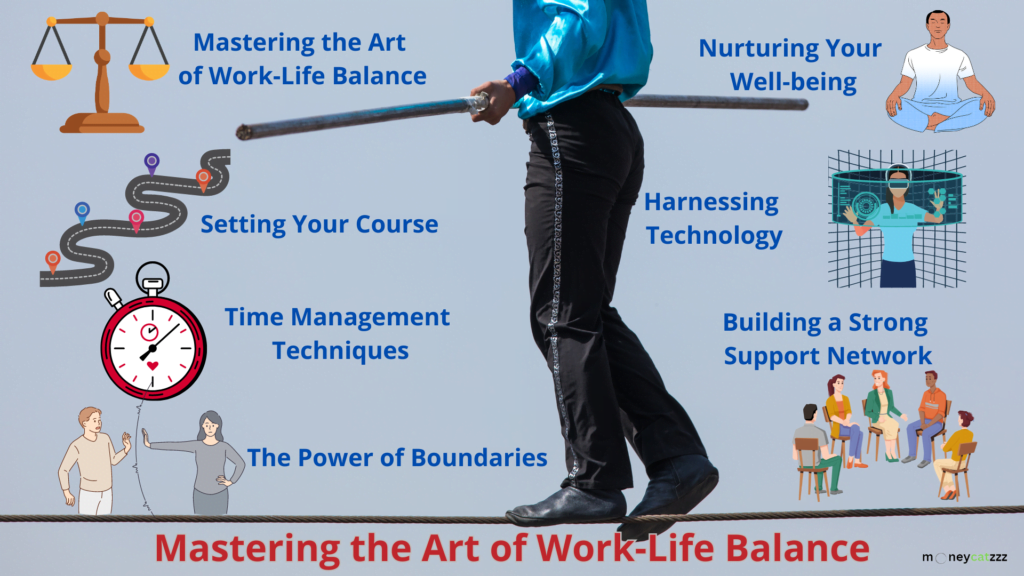
[Mastering the Art of Work-Life Balance – moneycatzzz.com]
Mastering Work-Life Balance: The Power of Support and Growth
Building a Strong Support Network for Work-Life Balance
A supportive network can provide invaluable guidance, encouragement, and accountability. Mastering work-life balance becomes easier when you surround yourself with positive and supportive individuals who share your values and goals. Building meaningful relationships can help you navigate challenges, celebrate successes, and maintain a sense of perspective. Remember, you are not alone in this journey.
Continuous Learning: A Key to Mastering Work-Life Balance
Personal and professional growth should be ongoing pursuits. To stay engaged, motivated, and adaptable, mastering work-life balance requires continuous learning and skill development. Seek opportunities for professional development, take on new challenges, and step outside your comfort zone. The excitement and engagement from these experiences can be a driving force in your journey to balance.
Mastering Work-Life Balance: Jen’s Real-World Journey
A Real-World Example: How Jen Mastered Work-Life Balance
A busy marketing executive, Jen struggled to find a healthy work-life balance. She felt constantly overwhelmed, stressed, and disconnected from her family and friends. However, mastering the work-life balance strategies outlined in this article, she regained control of her life and achieved a more fulfilling existence.
Jen started by setting clear priorities and goals. She realized that spending quality time with her family was essential to her happiness. She identified areas where she could delegate tasks and streamline her workload.
Prioritizing self-care, Jen incorporated regular exercise into her routine, meditated daily, and spent more time in nature. She also learned to say “no“ to additional projects and commitments that distracted her from her priorities.
Jen implemented the Eisenhower Matrix to improve time management, focusing on high-priority tasks first. She also used productivity apps to stay organized and minimize distractions.
Jen’s support network played a crucial role in her journey. She leaned on friends and family for emotional support and joined a professional networking group to connect with like-minded individuals and seek mentorship.
Through consistent effort and dedication, Jen successfully mastered work-life balance. She felt more energized, focused, and fulfilled personally and professionally. Her success is proof that achieving a harmonious and fulfilling life is possible with the right strategies

Additional Tips for a Balanced Personal and Professional Life
- Practice mindfulness: Incorporate mindfulness techniques like meditation or deep breathing into your daily routine to stay present and focused, reducing stress and improving your overall well-being.
- Set realistic expectations: Don’t strive for perfection. Set realistic goals and celebrate your accomplishments, no matter how small.
- Delegate tasks: Free up your time by delegating tasks to others when possible.
- Take breaks: Short breaks throughout the day can help you rest and recharge, improving your productivity and mood.
- Learn to say no: Don’t hesitate to say no to additional commitments if you’re feeling overwhelmed. Prioritize your time and energy.
- Find a hobby: Engage in activities you enjoy to relax, de-stress, and meet new people.
- Spend time in nature: Connect with nature to improve your mental and physical health.
- Get enough sleep: Aim for 7-9 hours each night for optimal well-being.
- Eat a healthy diet: Fuel your body with nutritious foods to support your overall health and energy levels.
- Connect with loved ones: Spend quality time with family and friends to strengthen your relationships and feel supported.
Following these tips can create a more balanced and fulfilling life. Remember, it’s a journey, not a destination. Be patient with yourself, celebrate your progress, and strive for harmony in all aspects of your life.

[Photo by Ricky Esquivel on Pexels.com]
Mastering Work-Life Balance: Your Path to a Fulfilling Life
Achieving mastering work-life balance is a journey, not a destination. It requires self-awareness, intentional effort, and a commitment to well-being. Following the strategies outlined in this article can create a more fulfilling and sustainable life while effectively balancing your personal and professional responsibilities.
Remember, you are not alone in this journey. Many individuals face similar challenges, but with the right resources and support networks, you can navigate obstacles and stay on track. Seeking guidance, connecting with like-minded individuals, and celebrating progress are key to long-term success.
Take the first step today toward mastering work-life balance and building a life prioritizing achievement and well-being. Your path to a more balanced and fulfilling life starts now!
Disclosure: This post may contain affiliate links. We only recommend products we believe in, and We may receive a commission at no cost to you! Thanks for your support!”
Acknowledgement: Cover Image by Canva.com
Signup to our Newsletter for regular updates:
Disclaimer: The information is provided for general information only – moneycatzzz.com makes no representations or warranties in relation to the information, including but not limited to any representation or warranty as to the fitness for any particular purpose of the information to the fullest extent permitted by law. While every effort has been made to ensure that the information provided in this article is accurate, reliable, and complete as of the time of writing, the information provided in this article should not be relied upon to make any financial, investment, real estate or legal decisions. Additionally, the information should not substitute advice from a trained professional who can take into account your personal facts and circumstances, and we accept no liability if you use the information to form decisions.