 Reading Time: 8 mins #
 This post may contain affiliate links.
“I kept waiting to feel ready. The gate was waiting for me to walk anyway.”
The Gate With No Door
I had spent eight months trying to make one decision. Yes or no. Stand up at the wedding or don’t. Love my best friend enough to lie or love her enough to tell the truth. The email sat in my drafts folder like a minute ticking bomb.
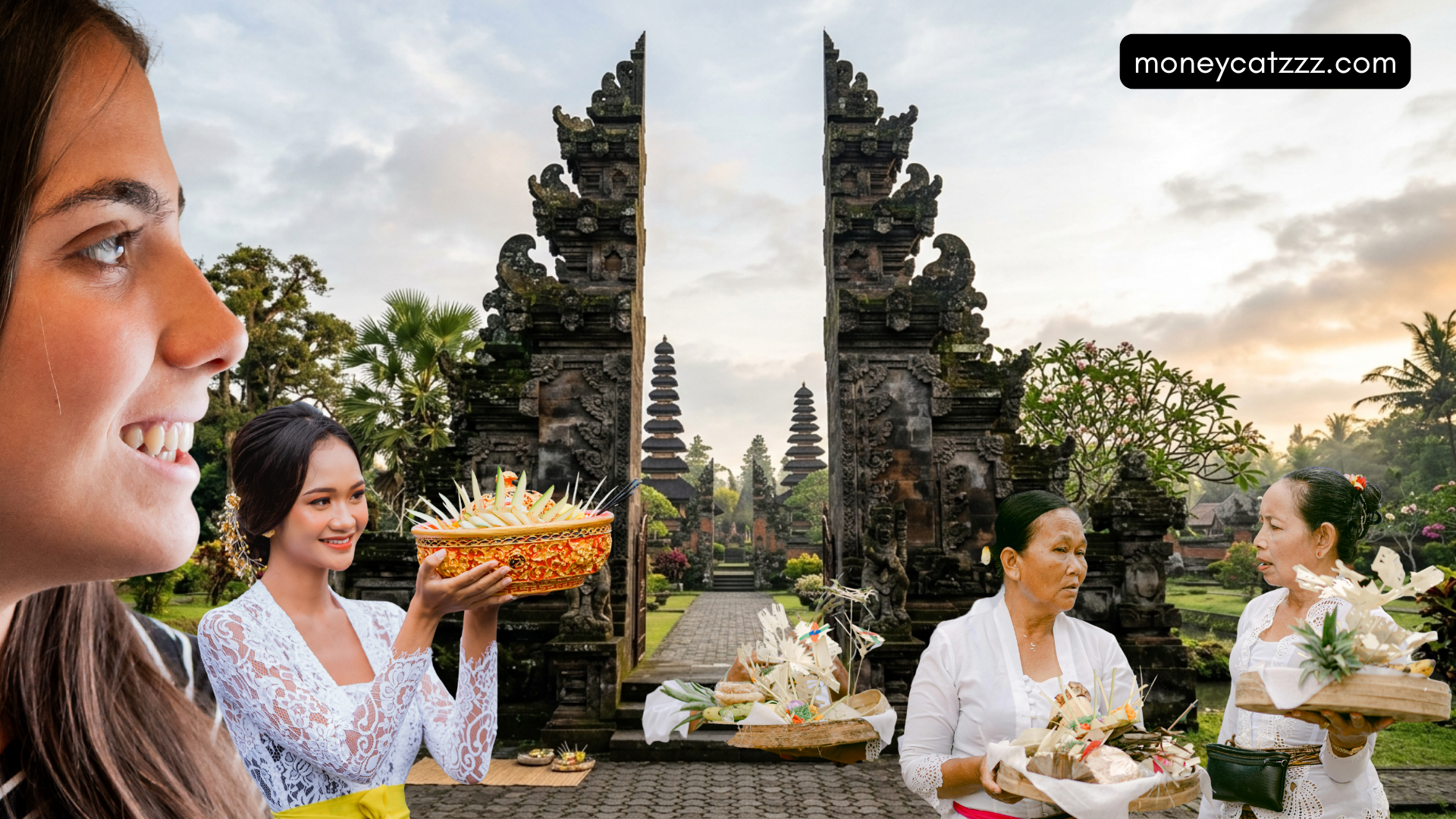
The Candi Bentar rose before me: tall, dark, and split cleanly down the center like a mountain cleaved in two. Early morning at Pura Taman Ayun, before the tour buses arrived and before the humidity turned oppressive. I was in Bali because I needed cash and had taken a short-term gig teaching English in Ubud, but I ended up standing at this gate because I had run out of ways to avoid myself.
The borrowed sarong tied around my waist was scratchy and slightly too small. My selendang sash kept slipping down my hips. Frangipani blossoms, bruised and browning at the edges, carpeted the stone ground while motorbikes droned past the outer walls. I was a white woman standing in a temple complex searching for clarity; a cliché I was fully aware of, entirely embarrassed by, and participating in anyway.
The symbolism of Candi Bentar was not subtle. Two halves of a sacred gate; a passage between the outer world and the inner. You are supposed to walk through, not stand in front of it, sweating through your tourist clothes.

The Hesitation
A small group of Balinese women walked past me, dressed in traditional lace kebayas, canang sari balanced on their heads. The small palm-leaf baskets were filled with flowers, rice, and a stick of dupa incense still smoking. One woman glanced at me with the kindest brown eyes.
“Om Swastiastu,” she said softly.
“Om Swastiastu,” I replied, mangling the pronunciation.
She smiled. They walked through the gate without hesitation. I did not.
A six-year-old boy holding his grandmother’s hand ran through, laughing. I had been standing here for five minutes.
The decision I was avoiding was this: I had to tell my best friend Claire that I could not be her maid of honor. She had asked me two years ago, back when the engagement still felt like good news. But her fiancé, Tom, was cruel in small, predictable installments. I had watched him belittle her at dinners, isolate her from friends, rewrite arguments until she apologized for things he had done. Claire insisted he was “just stressed” or “working on it.“
Standing up in that wedding felt like an endorsement. But saying no might mean losing her entirely.
I had drafted the message forty-seven times and deleted it forty-seven times.
Life transitions are supposed to feel hard. This one felt impossible.
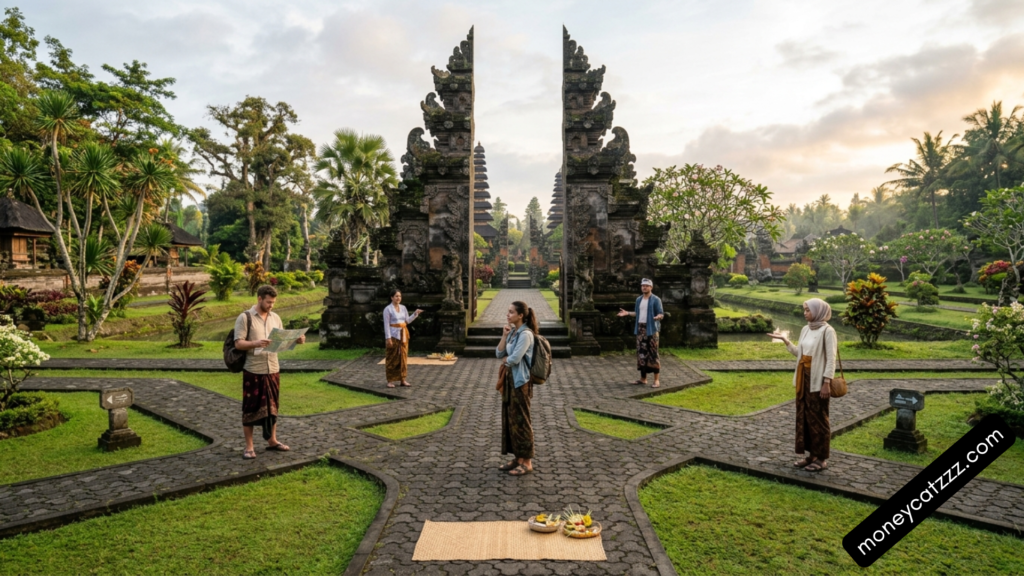
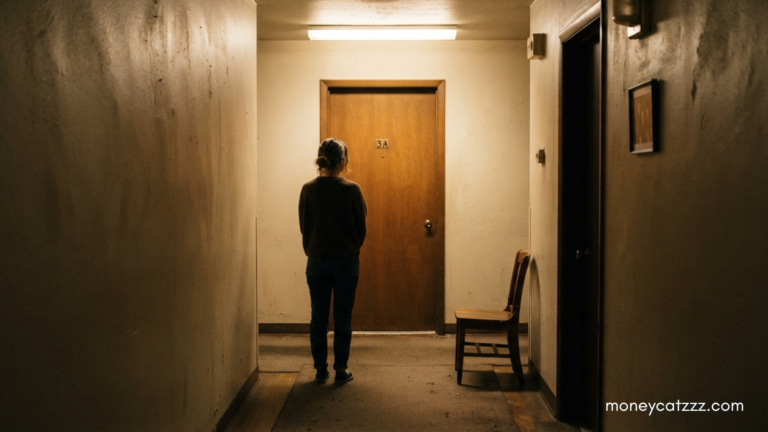
[Decision Hesitation: The Weight of Liminal Space | moneycatzzz.com]
The Symbolism
The Candi Bentar is not a decoration. It follows the Asta Kosala Kosali, the sacred proportions that govern Balinese Hindu temple architecture. The two halves represent Mount Meru, the cosmic mountain, split apart to allow passage from the profane outer world into sacred space.
You leave the noise behind. You enter with intention. But you cannot live in the gap between the two halves.
I realized I had been living in the gap for eight months.
The gate is an ancient technology for life transitions. Millions of people have walked through it. Farmers bringing offerings. Families marking births and deaths. Tourists like me, searching for metaphors that might make the hard thing easier.
The gate does not make it easier. It just stops letting you stand still.
The Priest
An older man in a crisp white shirt and a folded udeng headdress was adjusting flower offerings near the inner courtyard. The mangku noticed me standing awkwardly at the threshold, hovering in the outer court like a spectator who couldn’t commit to the play. He walked over, his footfalls quiet on the stone, his English careful and warm.
“You are waiting for something?” he asked.
“No. Just looking.”
He smiled. “You have been looking for some time.”
I laughed, caught. “I’m trying to decide something.”
“Ah. A big decision.”
“Yes.”
He gestured to the gate. “You think the gate is asking you to choose. It is not; it is asking you to carry both sides through it.”
I must have looked confused because he continued.
“Rwa Bhineda (“two opposites“). You know this?” He did not wait for my answer. “Balinese duality. Light and dark. Joy and grief. Protection and release. They are not enemies. They are partners. Balance does not mean eliminating one side; it means honoring both.”
“I don’t know how to do that,” I said.
“In Bali, we do not kill (his words) the dark. We make space for it, we offer it, and then we continue. You understand?”
“I think so.”
“Good. Then walk.”
The symbolism of Candi Bentar was suddenly less poetic and more practical. The gate was not asking me to feel brave; it was asking me to move.
The Reframe
On the plane from Manila, I had been reading Eckhart Tolle’s The Power of Now. I tried the “silence the mind” approach. Stop obsessing over the decision. Be present. Let go of the future.
I knew the book had saved other people, but it offered me no traction. Sitting with my breath while my best friend’s future hung in the balance didn’t bring peace; it just made me feel like a flawed student of an elegant idea.
The mangku’s teaching on Balinese duality offered something different. Not silence. Balance. Fear gets to exist. It just does not stop me.
I thought about The Untethered Soul, which I had read years ago. The concept of the “inner roommate,” that voice that narrates, catastrophizes, and predicts disaster. For eight months, my inner roommate had been running a full courtroom trial. Every version of the message was wrong, every scenario worse than the last; just an endless mental loop of watching her life collide with his.
The gate was asking me to hear that voice without obeying it.
Stepping through fear does not mean feeling no fear; it means walking anyway.
The Personal Reckoning
I had called my avoidance “being thoughtful,” but the truth was uglier. I had been standing still because movement means consequences. If I say no to Claire; I lose the friendship. If I say yes; I participate in something that feels morally wrong.
But there was a third harm I had not named: abandoning Claire to figure this out alone while pretending to be still present.
A young couple walked past, the woman visibly pregnant, both of them laughing. They were here for a ceremony, not a personal crisis. They walked through the gate like it was a doorway; which it was.
I was embarrassed by my own tourist-ness. I had flown to Bali for clarity. These people lived here. They walked through this gate weekly, sometimes daily, as part of ordinary devotion.
The decision I was avoiding was not actually that complicated. I did not want to face what it would cost.
The Passage
I adjusted the sarong one more time. I stepped between the two halves of the gate.
The temperature dropped. Subtle, but real. The road noise cut off behind the stone walls. The smell of dupa became stronger, mixing with frangipani and humidity. The ground beneath my feet was older, worn smooth by centuries of footsteps.
No tears. No grand revelation. I just crossed.
The anticlimax was the point.
The gate did not fix me; it allowed me to stop waiting for certainty that would never arrive.
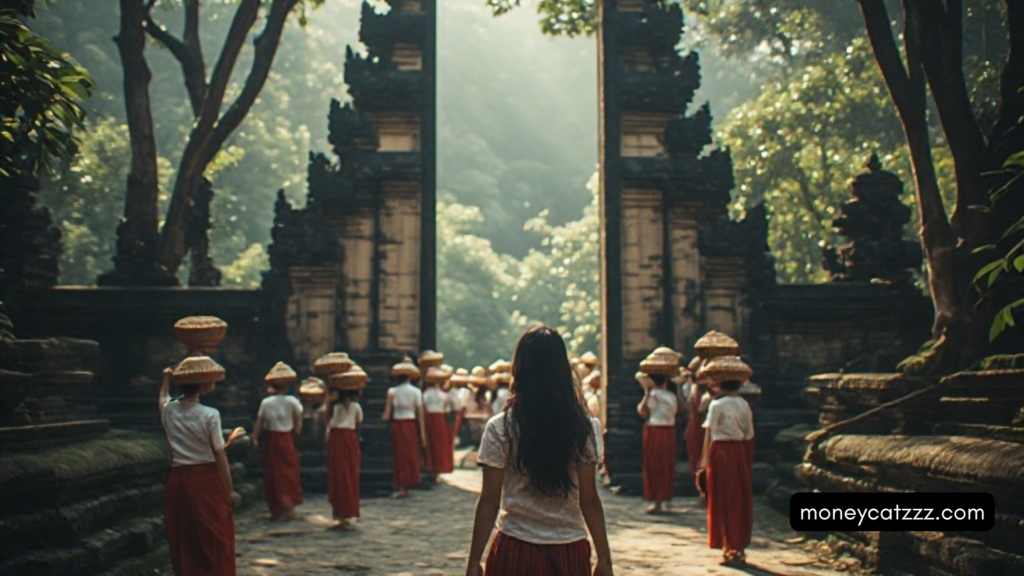
[Candi Bentar: Stepping through fear | moneycatzzz.com]
The Science of Standing Still
I remembered an unforgettable line from The Art of Possibility: paralysis is not cowardice. It is a refusal to accept a binary. Yes or no. Save Claire or protect yourself.
What if the real decision is not “maid of honor or not” but “what kind of friend am I willing to be through this?“
I didn’t need a medical study on decision paralysis to know what prolonged hesitation does to the human nervous system. My body had been running a quiet, exhausting fight-or-flight response for eight months straight. The threat wasn’t the choice itself; it was my refusal to step toward either side.
Life transitions are not just psychological events. They are physiological. Your body knows when you are stuck.
The Return
Walking back out through the gate felt different. Lighter. Or just less stuck.
The priest was in the outer courtyard, fixing a canang sari that had tipped over in the wind.
“You came back,” he said. “Did you leave anything behind?“
I thought about it. “Not everything. Some of it.“
“Good. Balance, not perfection. Rwa Bhineda.”
He was not a mystical figure. He was a man doing a job, tending a temple, living a life that included complexity. He nodded and went back to his work.
He offered Balinese duality as practical wisdom, not exotic philosophy.
The Warung Conversation
I stopped at a small warung a few minutes’ walk from the temple. Plastic chairs, a handwritten menu in Indonesian and broken English, the smell of nasi campur and sambal. The owner, a woman in her fifties, brought me a plate of mixed rice, fried tempeh, vegetables, and a fried egg on top.
“How was the temple?” she asked.
“Good. Helpful, I think.”
She laughed. “You look like you were thinking very hard.”
“I was trying to make a decision.”
“Ah. Tourists always make Bali very serious. Bali people, we go to the temple every day. Every day, same gate, same choice. Not a one-time thing.”
“What do you mean?”
“You think you decide once, sudah, what you say, finished. But life keeps asking. You keep deciding. That is the cycle.”
I ate my nasi campur in silence. She was right. Life transitions are not events. They are disciplines. The gate is not a destination. It is a tool you use, again and again.
Stepping through fear is not something you accomplish once. It is something you practice.
Learn to thrive in a changing world | advaya.life | promotion
What I Carry Through
Two days after leaving the temple, on a 10-hour train ride across Java to Yogyakarta, I finally messaged Claire. Not a polished script. A messy, honest voice note recorded en route to Borobudur.
I said: I love you but I cannot stand up in this wedding. I do not think Tom treats you the way you deserve, and I cannot pretend I am okay with it. I will be here when you need me. But I cannot celebrate something I think will hurt you.
Claire has not responded. It has been three weeks.
I do not know if the friendship will survive. The gate did not make the decision painless. It made standing still impossible.
The symbolism of Candi Bentar is not about transformation. It is about a passage. A reminder that the threshold exists, that millions of people have walked it before me, and that hesitation is human, but it cannot be permanent.
The Candi Bentar is still standing in Bali. I am still standing in London. Claire might never forgive me. Tom might prove me wrong. I might have destroyed the best friendship I ever had for the sake of a principle that does not matter as much as I think it does.
I do not know.
But I am no longer standing between two halves of a mountain, waiting for certainty to arrive like a train. I walked through. I can walk through again. That is the only decision I can make every day.
And some days, it is enough.
____________________________________________________
Overcoming Decision Paralysis: The Cost of Prolonged Indecision
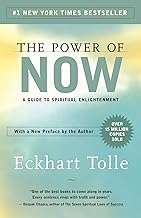
The Power Of Now

The Body Keeps the Score
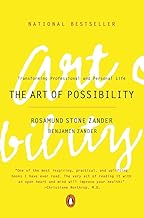
The Art of Possibility

Disclosure: This post may contain affiliate links. We only recommend products we believe in, and we may receive a commission at no cost to you! Thank you for your support!
Acknowledgment: Cover Image by moneycatzzz.com
Disclaimer: The information is provided for general information only – moneycatzzz.com makes no representations or warranties in relation to the information, including but not limited to any representation or warranty as to the fitness for any particular purpose of the information to the fullest extent permitted by law. While every effort has been made to ensure that the information provided in this article is accurate, reliable, and complete as of the time of writing, the information provided in this article should not be relied upon to make any financial, investment, real estate or legal decisions. Additionally, the information should not substitute advice from a trained professional who can take into account your personal facts and circumstances, and we accept no liability if you use the information to form decisions.