 Reading Time: 8 mins #
 This post may contain affiliate links.
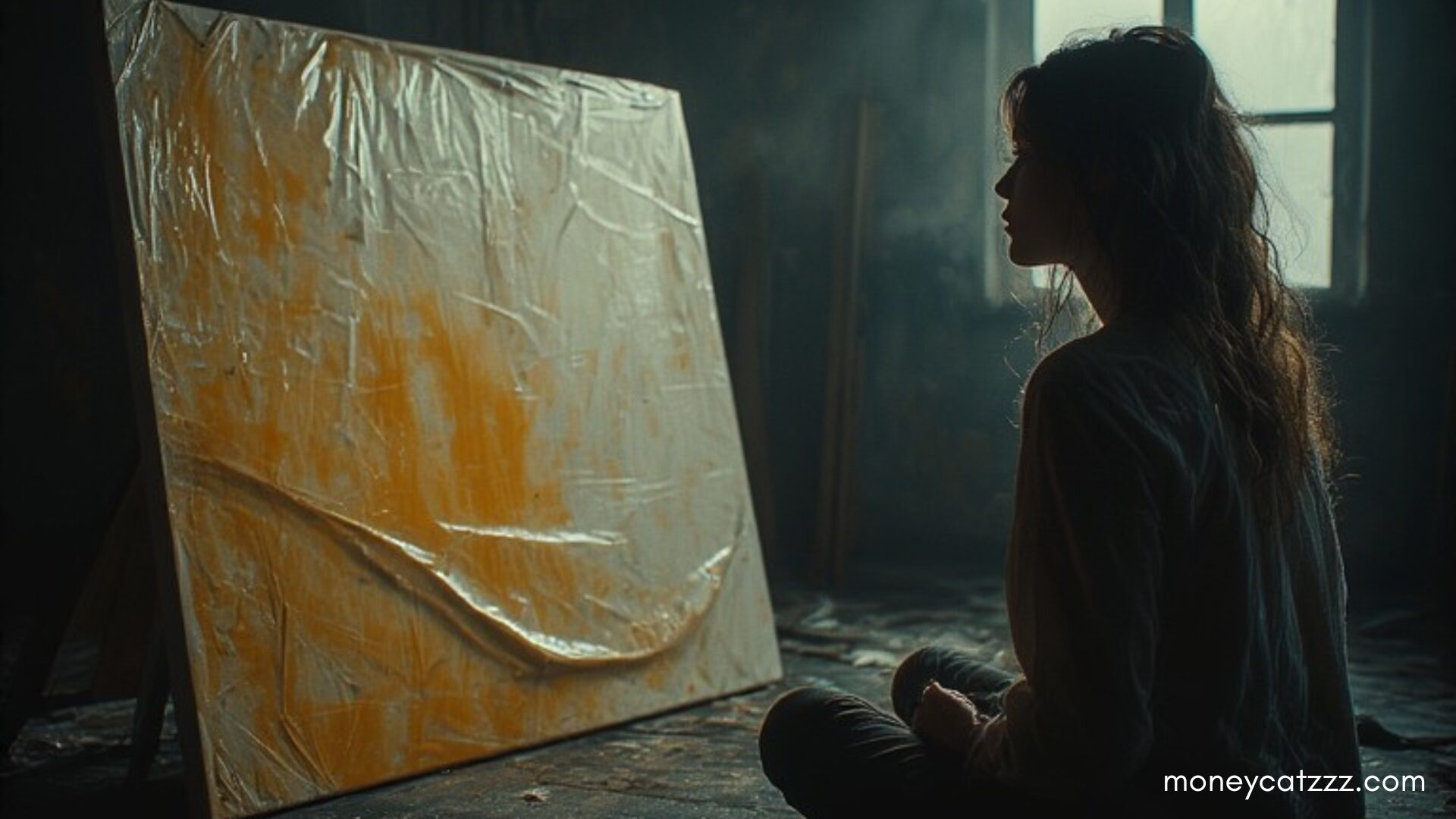
The canvas was not white anymore. Two years of indirect sunlight had yellowed it while I did nothing. Perfectionism had convinced me that waiting was safer than starting. So I waited. The canvas leaned against my studio wall, still wrapped in plastic, still ready. I was not.
I bought it after reading a book about abstract expressionism. I told myself this would be different. I would not overthink. I would paint. I stretched the canvas myself, which took three tries and a lot of swearing. I primed it with gesso. I bought expensive brushes I didn’t know how to use—and I cleared a wall and hung the blank canvas like a monument to my future creativity.
Then I stared at it for twenty-four months.
Not every day. Some weeks, I did not go into the studio at all. Some weeks, I went in, looked at the canvas, felt a wave of shame, and left. I told people I was working on something. I told myself I was gathering inspiration. I told a lot of lies.
The truth was simpler and more embarrassing: I was afraid to make something bad.
The Unpainted Canvas
That yellowed rectangle became the most powerful object in my life. It was not because it contained anything, but because it represented everything I was not doing. Every morning I walked past it, I felt a small pinch of avoidance. Every evening, I closed the studio door without touching it, and I felt a deeper wave of failure.
The canvas was not a blank slate. It was a mirror—it reflected every excuse I had ever made.
“I need more research.” The research pile was forty-seven articles deep.
“I need the right lighting.” I had installed three different fixtures.
“I need to be in the right mood.” I had not been in the right mood for two years.
Anne Lamott calls it “the fantasy of the perfect first draft,” the belief that real writers sit down and produce clean, beautiful prose without struggle. She says the only way out is to permit yourself to write “shitty first drafts.” It is not because shitty is the goal but because shitty is the only path to not-shitty.
I did not want a shitty first painting. I wanted a masterpiece, but because I could not guarantee one, I chose nothing. The canvas stayed white. My ambition stayed pure—my output stayed zero.
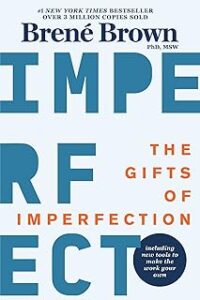
Brené Brown’s research on shame and perfectionism describes this as a protection strategy. Perfectionism is not about high standards. It is about avoiding judgment. If I never paint, no one can say my painting is bad. If I never send the manuscript, no one can reject it. The unpainted canvas is a shield. But shields block everything—including the good.
What I Was Really Protecting
One night, I sat on the studio floor with my back against the wall, facing the canvas. I asked myself the question I had been avoiding for two years.
“What am I so afraid of ruining?”
Not the canvas. Canvas is cheap. Not the paint. Paint washes off. Not my reputation as an artist—I was not an artist. I had never finished a painting in my adult life. There was no reputation to protect.
I was afraid of ruining the fantasy—the version of myself who could paint if she wanted to—the woman with potential. As long as the canvas stayed blank, I could tell myself I was holding back. I was saving my best work for later. I was a masterpiece waiting to happen.

[“The Metabolic Cost of Doing Nothing” – Image by moneycatzzz.com]
A finished painting, even a bad one, would replace the fantasy with reality. However, reality might be mediocre. Reality might be average. Reality might prove that I was not secretly talented. I was just a person who bought a canvas and stared at it for two years.
In his easily digestible book, Originals, Adam Grant deduces that procrastination is often a form of hidden perfectionism. We delay because we are afraid our work will not match our standards. But the delay does not protect the work. It protects the ego. The ego would rather live with the fantasy of greatness than risk the reality of okay.
Staring at that canvas wasn’t passive. It was an active, high-calorie expenditure of anxiety. I was burning more energy avoiding the paint than I ever would have spent actually applying it.
That night on the studio floor, I realized my perfectionism was not helping me make better work. It was helping me make no work at all.
The Ceramics Lesson
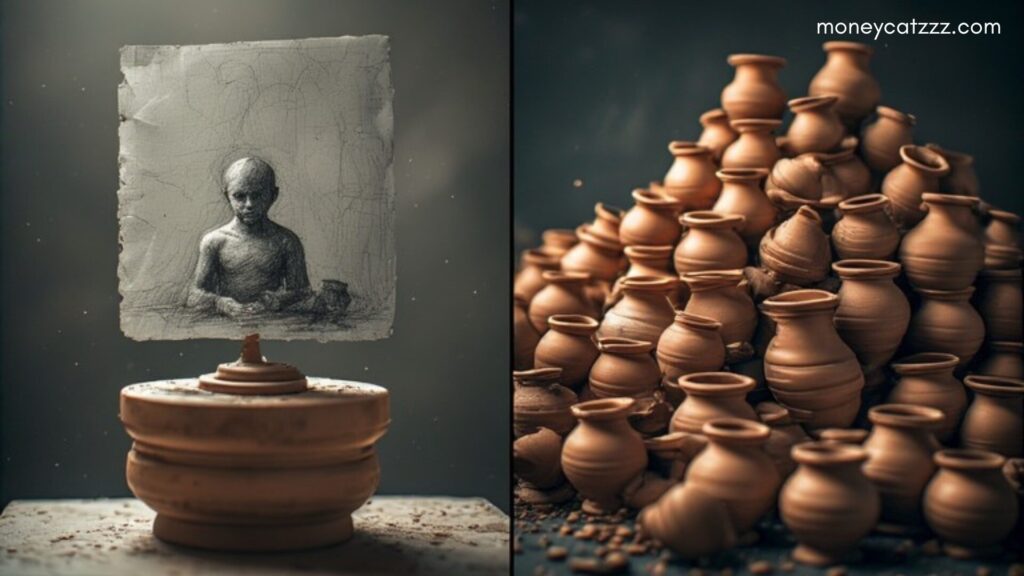
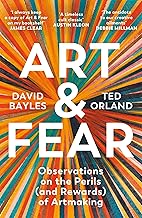
There is a story from the book Art & Fear by David Bayles and Ted Orland. A ceramics teacher split his class into two groups on the first day.
One group would be graded on quantity. Fifty pounds of pots equaled an A. Forty pounds a B. And so on. They could make as many pots as they wanted, but their grade depended entirely on how much clay they moved.
The other group would be graded on quality. One perfect pot. That was it. They did not need to make many pots. They needed to make one excellent pot.
Here is what happened. The quantity group produced the better work. They spent the semester making pot after pot, learning from each failure, improving with each iteration. The quality group spent the semester theorizing about perfection. They planned. They sketched. They debated the ideal shape. Most of them produced nothing worth keeping.
[“The Iteration Engine” – Image by moneycatzzz.com]
Bayles and Orland write: “The ceramics class reminds us that the real work is not in planning the perfect pot. It is in making the imperfect ones, failing, and making another.”
Iteration beats intention every time. Motion beats planning. A bad pot you can learn from is worth more than a perfect pot you never make.
I was in the quality group. Two years of planning. Zero paintings.
My perfectionism had convinced me that waiting was working. It was not. It was just waiting.
How I Unfroze Myself
The protocol came together by accident. I did not design it. I failed my way into it.
First, I stopped calling it art. That word carried too much weight. “Art” needed to be good. “Art” needed to mean something. So I stopped. I was moving paint around. No different from moving furniture or folding laundry. Just a thing you do with your hands.
The shift was small, but everything changed. I was no longer failing at art. I was just bad at moving paint. And being bad at moving paint did not feel like a character flaw.
Second, I made the target stupid. Not smaller. Stupid. A ten-minute painting on cheap paper using the ugliest colors I could find. I picked colors that clashed on purpose. Orange and magenta. Yellow and gray. If the painting was going to be bad, I wanted it to be aggressively bad. Own the badness before someone else can point it out.
That first ten-minute painting was awful. I laughed when I finished it. That was the first time I had laughed in that studio in months.
Third, I told one person the truth. I stopped telling people, “I am working on something,” or “I have a project in development.” Just: “I have been paralyzed for two years, and I finally made something ugly, and I am embarrassed, but I am showing you anyway.”
My friend did not say anything profound. She said: “Okay. Show me the next one.”
That was it. No judgment. No advice—just an expectation that I would keep going. Someone was watching now. Not to critique. To witness.
Fourth, I buried the fantasy. I took the perfect painting out of my head and killed it. It is not because I wanted to give up, but because that painting was never going to exist. It was not a goal—it was a jail. The fantasy painting had been keeping me safe and stuck for two years. Letting it fade felt like losing a friend. But that friend was a liar.
The actual painting I actually finished? It was clumsy and uncertain. The colors did not work. The composition was weird. But it was real. It existed in the world, and I absolutely adored it. The fantasy had been perfect for two years and had never been seen by anyone. The real painting was imperfect and unfinished. I will take finished over flawless every time.

What Happens When You Make Something Bad
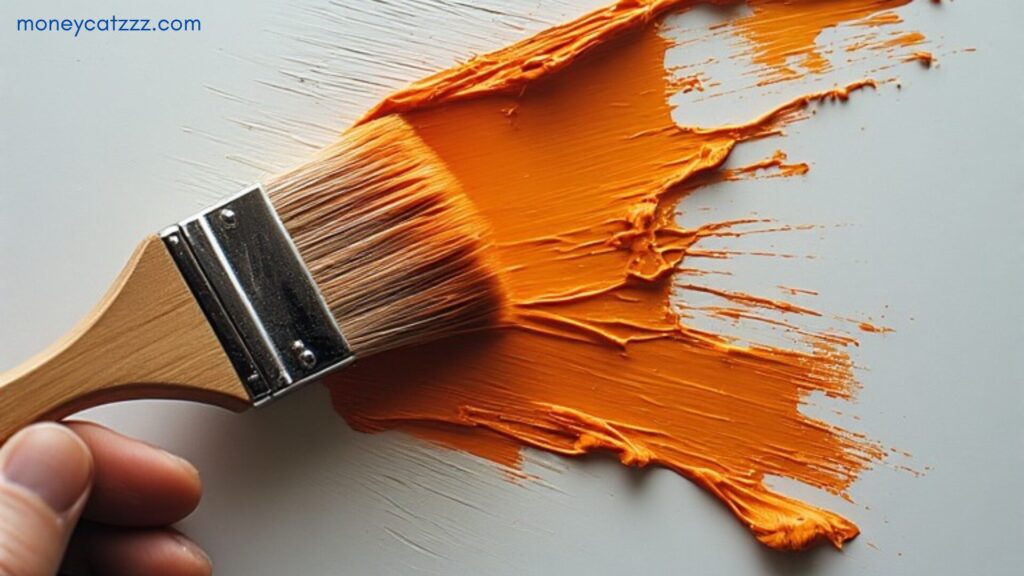
The first thing I noticed was relief. The canvas was no longer watching me. The weight of potential was gone. I had replaced a fantasy with a fact that was not impressive, but it was mine.
The second thing I noticed was momentum. Once the first ugly painting existed, the second one was easier. The third was easier still. Fear is front-loaded. The hardest mark is the first one. After that, you are just a person making things, not a person staring at a blank surface.
The third thing I noticed was learning. My bad paintings taught me what did not work. I could not have learned that from a book or a video. I had to make the mistake myself. Iteration requires failure. Failure requires action. Action requires letting go of perfection.
Adam Grant writes that “originals” are not people with better ideas. They are people with more output. They produce more, fail more, learn more, and eventually succeed more. The difference between a successful artist and a non-artist is not talent; it is the number of bad paintings they are prepared to make.
[“The Relief of the First Mark” – Image by moneycatzzz.com]
The Canvas Is Not the Point
I still have that yellowed canvas. The plastic is gone. There is a painting on it now. It is not good enough to hang in a gallery. It is not bad enough to throw away. It is just a painting—made by someone who spent two years afraid to make anything.
Perfectionism told me I needed to be great before I started. That is backward. You start. Then you get better. The order is not negotiable.
That thing you are not finishing? The manuscript, the business plan, the difficult conversation, the creative project you have been “researching” for eighteen months? Perfectionism is not protecting you. It is hiding you. It is keeping the fantasy alive and the reality dead.
The unpainted canvas does not contain your potential. It contains your avoidance. Peel off the plastic. Make something bad. Show someone. Learn. Repeat.
Done is better than perfect. Finished beats flawless. The masterpiece you never make is worth less than the mess you actually finish.
Your canvas is waiting. It has been waiting long enough. Go and pick up a brush today.
The Reading List for People Who Can't Finish Anything
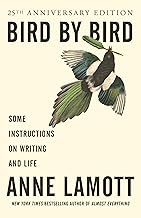
Bird by Bird

Art & Fear
The Gifts of Imperfection

Originals
Disclosure: This post may contain affiliate links. We only recommend products we believe in, and we may receive a commission at no cost to you! Thank you for your support!
Acknowledgment: Cover Image by moneycatzzz.com
Disclaimer: The information is provided for general information only – moneycatzzz.com makes no representations or warranties in relation to the information, including but not limited to any representation or warranty as to the fitness for any particular purpose of the information to the fullest extent permitted by law. While every effort has been made to ensure that the information provided in this article is accurate, reliable, and complete as of the time of writing, the information provided in this article should not be relied upon to make any financial, investment, real estate or legal decisions. Additionally, the information should not substitute advice from a trained professional who can take into account your personal facts and circumstances, and we accept no liability if you use the information to form decisions.