
 Reading Time: 8 mins #
 This post may contain affiliate links.
The Krug champagne tasted like liquid gold and poor decisions, which is precisely what $400-a-bottle champagne should taste like at a Zurich gallery opening where everyone’s watch costs more than my annual rent. I was doing that thing where you hold the glass as if you belong there, nodding at abstract art that looked like my emotional state if my emotional state cost $2 million.
That’s when Viktor, a German investor with the kind of quiet wealth that doesn’t need logos, mentioned his logistics company was struggling with Asian distribution. “We should explore a merger with my partners in Singapore,” I said, because the champagne was excellent and I wanted to sound important; words have power, but sometimes we forget that power can detonate.
I meant it as a conversation. He heard it as a contract.
Three weeks later, I’m in a Zurich hotel suite at 2 AM, staring at actual merger documents with my name on them, while my “Singapore partners” (two guys I’d met once at a conference who gave me business cards) are being flown in for negotiations I never intended to start. This is what I learned that night about acoustic debt: every word you speak is a check you’re writing against your future, and the universe always cashes them.
The $50,000 Education in Shutting Up
Getting out of that accidental merger cost me $50,000 in legal fees, a business relationship, and what remained of my reputation in Zurich. But it taught me something worth more: words have power in ways we’ve been trained not to see.
We treat language like it’s Uber, just a service to get us from point A to point B. But language is architecture. It builds rooms we have to live in, contracts we have to honor, and realities we have to navigate. Every sentence is a blueprint, and most of us are constructing prisons while thinking we’re making small talk.
Susan Scott correctly identifies that “our lives succeed or fail one conversation at a time.” But it’s more granular than that. Our lives succeed or fail one word at a time, one careless promise at a time, one honest lie at a time.
The Etymology Nobody Wants You to Know
After the Zurich disaster, I became obsessed with etymology, not in a pretentious way at dinner parties, but in a survivalist way. If words have power, I needed to understand what kind of power I was wielding.
Take “government.” It means administration, leadership, boring people in suits making boring decisions about taxes. But etymology tells a different story. It comes from Latin: “gubernare” (to steer, to direct) plus “mens” (the mind). The word “government” literally means “to steer the mind” or “mind control.”
We use this word casually, never realizing we’re literally saying “mind control” every time we discuss politics. This isn’t a conspiracy theory; this is linguistic archaeology. The Romans, who coined the word, were more honest about power than we are. They knew linguistic manipulation was the real governance.
Or consider “mortgage,” which we think means “home loan.” It’s actually French: “mort” (death) plus “gage” (pledge). Death pledge. You’re literally signing a death pledge when you buy a house, but the real estate agent doesn’t mention that between discussions of crown molding and school districts.
The Honest Lie We Tell Daily
The most dangerous verbal consequences aren’t from the big lies but from what I call the honest lie, the things we say to lubricate social interaction without meaning them. “Let’s definitely get coffee!” when you’d rather die than get coffee with that person. “I’ll think about it,” when you’ve already decided no. “It’s fine,” when it’s categorically not fine.
My friend Rachel, who runs a tech startup, told me she tracked her “honest lies” for a week. Forty-seven times, she said things she didn’t mean. Forty-seven small tears in her credibility fabric. “By Friday,” she said, “I didn’t believe myself when I said I’d go to the gym.”
This is how acoustic debt accumulates, not through grand deceptions but through these micro-betrayals where we teach our subconscious that our voice has no value. We become verbal spendthrifts, throwing words around like confetti at a wedding we’re not sure should be happening.
The body keeps score of this dishonesty. That tightness in your chest when you say “I’d love to help,” but you’re already drowning. That’s your nervous system charging interest on your acoustic debt. The insomnia after you promise something you can’t deliver? That’s your brain trying to figure out how to pay a check your mouth wrote.

[“The Sentence That Cost Me Everything” – Image by moneycatzzz.com]
The People Who Use Words Like Weapons
In certain circles, where a handshake can move millions, words have an almost physical power. I’ve watched deals worth more than the GDP of small countries get made with just three sentences. I’ve also watched careers end with one misplaced adjective.
The dangerous people aren’t the screamers or the threateners. They’re the ones who understand that language is a tool of construction and destruction, who use words like a surgeon uses a scalpel. They know that “maybe” means no, that “interesting” means boring, that “let’s circle back” means it’s dead.
I learned this from a mentor who ran a hedge fund where verbal consequences were immediate and brutal. “Never use seven words when four will do,” he said. “Every extra word is a door you’re leaving open for interpretation, and interpretation is where deals die.”
He had a rule: twenty-four hours before any verbal commitment. The number of opportunities he “missed” by waiting? Zero. The number of disasters he avoided? Countless.
The Zurich Protocol for Verbal Hygiene
After my $50,000 education in learning to keep my mouth shut, I developed what I call the Zurich Protocol, named after the city where I learned that words have the power to create alternate realities that you then have to live in.
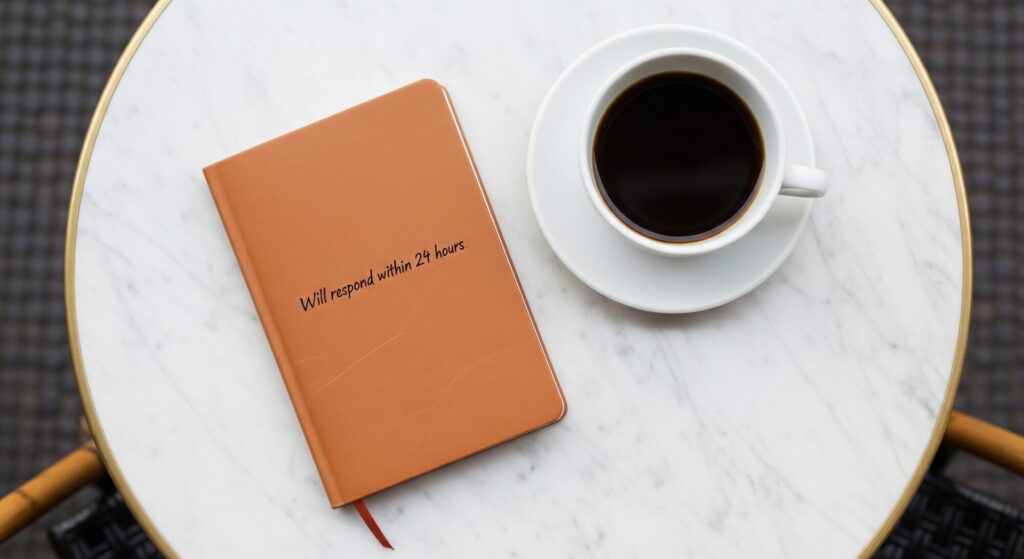
The Twenty-Four-Hour Buffer: Never commit to anything in the room where it’s proposed. Excitement is a drug that makes your mouth write checks your life can’t cash. I carry a small notebook where I write “will respond within 24 hours” to remind myself that immediate answers are usually expensive.
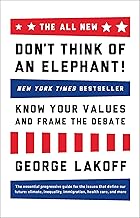
The Etymology Check: Before using a word, especially in negotiation or commitment, I look up its etymology. George Lakoff’s Don’t Think of an Elephant! taught me that linguistic manipulation happens through frames we don’t even see. When someone asks if I want to “partner,” I remember that means “to partition.” Do I want to partition something, or keep it whole?
The Weight Test: Before speaking, I ask: “Am I willing to let this sentence reorganize my life?” Because that’s what words do. They’re not descriptions of reality; they’re instructions to reality. As Florence Scovel Shinn writes in The Game of Life and How to Play It, “Words are the building blocks of your life.”
The Silence Practice: I’ve learned to love the pause, the quiet moment where you don’t fill the air with verbal vapor. A Taylor and Francis paper indicates that silence in negotiation typically benefits the party that remains silent. But beyond strategy, silence is a form of sovereignty. It’s saying, “I don’t owe you words I haven’t chosen.”
The Currency You’re Spending Without Counting
Attention is currency, but words are the mint that prints it. Every time you speak, you’re creating value or debt, building or destroying, connecting or severing. Most of us have verbal deficits that we don’t even know exist.
I think about that gallery in Zurich sometimes, how one sentence created a cascade of verbal consequences that took months to clean up. But I also think about the sentences that built things: the carefully chosen words that started genuine partnerships, the precise language that secured funding, the honest conversation that saved a friendship.
Acoustic debt isn’t just about the negative. It’s about understanding that every word is an investment or a withdrawal, and most of us are overdrafting accounts we didn’t know we had.
Studies on linguistic priming demonstrate that the words we use not only shape how others perceive us but also influence how we perceive ourselves. When you constantly say “I’m broke,” your brain starts building a reality to match. When you say “I’m exploring options,” you create space for possibility.
[“The Zurich Protocol: The Power of the Pause” – Image by moneycatzzz.com]
The Architecture of Your Next Reality
Last week, I attended another gallery opening, this time in New York, where I drank champagne that cost less than the one in Zurich but tasted better because I knew exactly what I wasn’t going to say. Someone mentioned a potential collaboration, the kind that sounds impressive but feels exhausting.
“I’ll consider that carefully,” I said. Not yes, not no, not maybe. A complete sentence that commits to nothing except thought.
They looked surprised. People aren’t used to verbal precision in social settings. We’re trained to be verbose, to fill silence with sound, to mistake noise for connection. But words have power only when we stop diluting them with volume.
The man from Zurich still emails occasionally. He says he respects my “American directness,” which is funny because I learned it from nearly bankrupting myself with American vagueness. He signs his emails with a quote he attributes to me from that night: “Words are load-bearing walls. Choose them like an architect, not an interior designer.”
I don’t remember saying it, but it sounds like something you’d say at 2 AM in Zurich when you’re signing papers to dissolve a merger that should never have existed. It sounds like something you’d say when you finally understand that your mouth isn’t just a communication device. It’s an architecture firm, constantly building the rooms you’ll have to inhabit.
The question isn’t whether words have power. The question is whether you’re conscious of the power you’re wielding or if you’re swinging it around like a toddler with a sledgehammer, surprised when walls fall.
What acoustic debt are you carrying? What verbal architecture are you building? Share your stories of when words created realities you hadn’t intended.
Be A Power Player with These Books

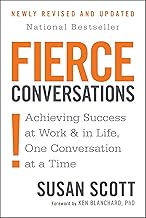
Fierce Conversations
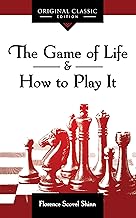
The Game of Life and How
Disclosure: This post may contain affiliate links. We only recommend products we believe in, and we may receive a commission at no cost to you! Thank you for your support!
Acknowledgment: Cover Image by moneycatzzz.com
Disclaimer: The information is provided for general information only – moneycatzzz.com makes no representations or warranties in relation to the information, including but not limited to any representation or warranty as to the fitness for any particular purpose of the information to the fullest extent permitted by law. While every effort has been made to ensure that the information provided in this article is accurate, reliable, and complete as of the time of writing, the information provided in this article should not be relied upon to make any financial, investment, real estate or legal decisions. Additionally, the information should not substitute advice from a trained professional who can take into account your personal facts and circumstances, and we accept no liability if you use the information to form decisions.