
 Reading Time: 8 mins #
 This post may contain affiliate links.
“In a room full of shouting, the person whispering the truth is the only one with a plan.”
While everyone’s screaming about disruption and pivoting, you, as a forward-thinking professional, can already claim the territory nobody else sees. You’re not following maps. You’re drawing them. And by the time those maps go on sale, the land has already been conquered.
Last week, I observed a room full of venture capitalists dismiss a pitch for a now $2 billion company because they were relying on outdated maps. The founder? She saw the territory shifting three years before anyone else. That’s not luck.
That’s forethought weaponized into an empire.
The Map Versus The Dirt
Here’s what nobody understands about success: Maps are ghosts. They’re simplified memories of a world that no longer exists. Yet 99% of professionals navigate their careers using maps drawn by dead people for dead markets. They follow “best practices” like religious scripture, believing the map is truth itself.
But maps lie by definition. A map that shows every detail would be as considerable as the territory itself, and therefore useless. So maps simplify, and in that simplification, they deceive. The crowd follows these deceptions off cliffs, into dead ends, straight into obsolescence.
The Cartographer doesn’t worship printed lines. They watch the actual dirt and see erosion before it becomes a landslide. They spot new paths before they become highways. While Map-Lovers argue about which outdated guide to follow, Cartographers are already claiming unmarked territory through strategic positioning.
I learned this lesson brutally. Ten years ago, I built an entire business following the “proven blueprint” for my industry, with perfect execution of an ideal plan. Eighteen months later, I was perfectly bankrupt. The territory had shifted. The map hadn’t. I’d been navigating by a ghost.
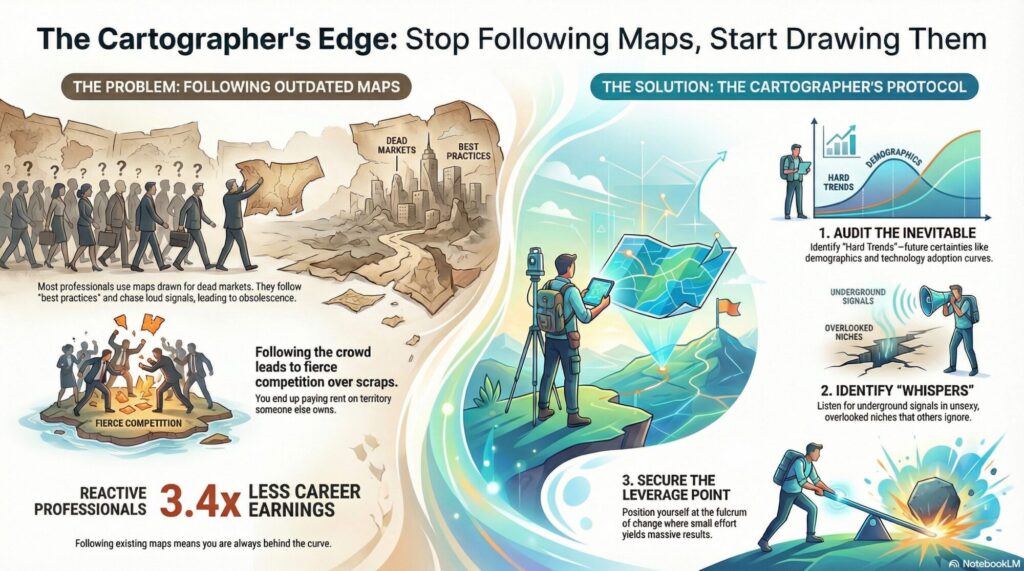
Daniel Burrus refers to these shifts as “Hard Trends” in The Anticipatory Organization. These are future certainties based on measurable factors: demographics, regulations, and technology cycles. The Cartographer identifies these trends not through market signals that everyone’s discussing, but through the whispers that everyone’s ignoring. You don’t adjust to change when you have forethought. You’re already positioned where the change leads.
The Architecture of Strategic Advantage
Most people think competitive advantage comes from being better at the game. That’s poverty thinking. A real advantage comes from playing a different game entirely, one you’ve designed through proactive planning, while others react to circumstances.
Take Netflix, for example. While Blockbuster was perfecting its map of retail locations, Netflix was drawing an entirely different map of digital distribution. They didn’t win by having better stores. They won by making stores irrelevant. That’s the Cartographer’s approach: don’t compete on the existing map. Draw a new one.
The modern professional landscape is a cacophony of noise. LinkedIn influencers shouting about “personal branding.” Thought leaders preaching “disruption.” Everyone’s screaming the same insights at increasing volumes. This cacophony isn’t leadership. It’s panic. It’s the sound of people who’ve realized their maps are wrong but don’t know how to draw new ones.
Strategic positioning through forethought means ignoring this noise entirely. While the crowd chases loud signals, you’re listening for whispers. The quiet admission from a CEO about an industry pain point. The demographic shift nobody’s discussing: the regulation that’s boring today but revolutionary tomorrow.
The Whisper Strategy
In 2010, everyone was shouting about social media marketing. The whisper? Mobile commerce. Those with forethought positioned themselves in mobile while others fought over Facebook strategies. By 2015, mobile commerce had experienced significant growth. The shouters were still shouting. The whisperers were counting money.
This is the Whisper Strategy in action. It requires three disciplines that most people lack: silence to hear whispers, accumulation to quietly position oneself, and patience to wait for the right moment.
First, the discipline of silence. You can’t hear whispers while you’re shouting. Most professionals are so busy broadcasting their “thought leadership” that they miss the market signals that matter. Peter Thiel explores this in Zero to One, arguing that the best opportunities are secrets hiding in plain sight, visible only to those quiet enough to notice.
Second, the discipline of accumulation. When you identify a whisper through forethought, you don’t announce it. You position yourself quietly, accumulating advantage while others remain oblivious. By the time the whisper becomes a shout, you own the territory.
Third, the discipline of patience. The whisper might take years to become valuable. Most professionals lack the proactive planning to wait. You can trust your long-term vision and play a longer game.
I used this strategy to build my current ventures. While everyone was obsessed with cryptocurrency in 2017, I heard whispers about the creator economy, which included discussions about content monetization, direct fan relationships, and ownership models. I spent three years positioning myself in that “boring” space. Today, the creator economy is worth $104 billion. The crypto bros are broke. The whisper became a roar.

[“Weaponizing Market Signals: Seeing the Dirt, Ignoring the Ghost” – Image by moneycatzzz.com]
The 80/20 of Future Territory
Here’s how strategic positioning actually works in practice. You spend 20% of your energy on quiet observation, which yields 80% of your long-term results. This calm focus helps you stay confident amid market noise.
The Professional Territory: Identify high-leverage skills the market will desperately need in three years. Not what’s hot today, but what’s inevitable tomorrow. While others crowd into “prompt engineering” or whatever this week’s trending skill is, you’re developing capabilities in areas nobody’s discussing yet.
A client of mine noticed a whisper in 2019: supply chain visibility. Unsexy. Boring. Nobody at conferences was talking about it. She spent two years building expertise in this “boring” field. Then 2020 happened. Supply chains collapsed globally due to COVID-19. Suddenly, her “boring” expertise was worth millions. That’s a competitive advantage through forethought.
The Financial Territory: Position capital where trends inevitably lead, not where they currently are. Ray Dalio’s Principles details this approach: understanding the machine of markets rather than chasing its current output. Our Cartographer invests in tomorrow’s necessity while others bid up today’s luxury.
The Cartographer’s Protocol
Stop following other people’s maps. Start drawing your own through systematic forethought. Here’s the protocol:
Audit the Inevitable
What’s sure about the next three years? Not speculation, but mathematical certainty. Aging demographics? Climate regulations? Technology adoption curves? These Hard Trends are your foundation for strategic positioning.
A Dr. Robert Li paper on technology adoption shows that most innovations follow predictable S-curves. The Cartographer identifies where an industry sits on the curve and positions it accordingly. You’re not predicting the future. You’re reading the present more carefully than anyone else.
Identify Underground Signals
If everyone’s talking about an opportunity, the alpha has evaporated. Look for market signals in unsexy niches, boring industries, and overlooked demographics. The best territory is the one nobody wants until everybody needs it.
I discovered gold mines in industries that are often overlooked: industrial sensors, agricultural technology, and elder care innovation. Unsexy? Absolutely. Profitable? Obscenely. Because by the time these sectors become “interesting,” I’ve already claimed the high ground.
Secure the Leverage Point
Find the specific point where small shifts yield massive results. This isn’t about working harder. It’s about proactive planning to position yourself at the fulcrum of change.
One developer I know identified that voice interfaces would transform elder care. Instead of building apps, he focused solely on voice-first experiences for seniors. Small niche, massive leverage. When major tech companies entered this space, they acquired his company for $50 million. He didn’t win by being better. He won by being there first through forethought.
[“The Cartographer Edge” – Image by moneycatzzz.com]
The Cost of Following
Every professional following someone else’s map is paying rent on someone else’s territory. They’re competing where competition is fiercest, fighting over scraps of what is obviously an opportunity. They’re so focused on optimizing their position on the existing map that they never realize the territory itself is shifting.
Stanford research on career trajectories reveals that professionals who anticipate industry shifts earn 3.4 times more over their careers than those who react to them. The difference? Strategic positioning based on foresight rather than hindsight.
But here’s the brutal truth: Most people prefer following maps to drawing them. Following feels safer. There’s comfort in crowds, even when they’re marching off cliffs. Drawing new maps requires accepting that you might be wrong, might be alone, might be early. Most people choose the inevitable death of obsolescence over the uncertain life of innovation.
Drawing Your Map
The “down payment” for becoming a Cartographer isn’t just hard work. It’s the mental labor of seeing what others won’t see, going where others won’t go, waiting when others won’t wait. It’s the price of forethought in a world addicted to reaction.
I don’t follow crowds down roads about to wash away. I watch the erosion patterns. I study the weather. I measure the slope. And when I see the inevitable landslide coming, I don’t warn the crowd. I quietly claim the high ground and wait.
This isn’t about predicting the future. It’s about reading the present with ruthless clarity. Every disruption has signals. Every revolution has whispers. Every transformation has early warnings. The Cartographer doesn’t have supernatural foresight. They pay attention when everyone else is distracted.
Your competitors are fighting over territory on a map drawn in 1995. They’re optimizing positions in games that are already over. They’re following best practices toward inevitable obsolescence. Meanwhile, you could be drawing the map everyone will desperately need in three years.
The universe doesn’t care about your passion, your purpose, or your why. It only cares about your coordinates. And the person with the better map doesn’t just own the land. They determine where everyone else travel.
What territory will you claim before the maps are drawn?
Books To Help You Map Your Journey
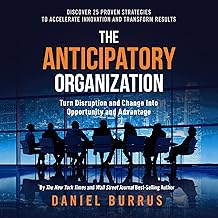
The Anticipatory Organization


Principles
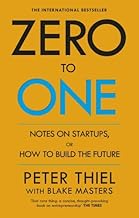
Zero To One
Disclosure: This post may contain affiliate links. We only recommend products we believe in, and we may receive a commission at no cost to you! Thank you for your support!
Acknowledgment: Cover Image by moneycatzzz.com
Disclaimer: The information is provided for general information only – moneycatzzz.com makes no representations or warranties in relation to the information, including but not limited to any representation or warranty as to the fitness for any particular purpose of the information to the fullest extent permitted by law. While every effort has been made to ensure that the information provided in this article is accurate, reliable, and complete as of the time of writing, the information provided in this article should not be relied upon to make any financial, investment, real estate or legal decisions. Additionally, the information should not substitute advice from a trained professional who can take into account your personal facts and circumstances, and we accept no liability if you use the information to form decisions.