
 Reading Time: 8 mins #
 This post may contain affiliate links.
Maxwell’s words cut through the noise of motivational nonsense because they acknowledge a truth most success literature avoids: The universe charges admission. Not just once, but continuously. Every level demands its toll. Most people see that toll booth and either freeze in place or exhaust themselves trying to jump the gate.
But there’s a third way. The navigators of old knew something we’ve forgotten in our GPS world: When you’re lost at sea, you never surrender to the storm, but you also don’t waste energy fighting it. You triangulate. You find your position using three fixed points and chart a course that neither retreats nor charges blindly forward.
“Dreams require down payments. Dreams are free, but the journey isn’t. There is a price to pay. When you find your why, you’ll find your way. When you develop your will, you will embark on your way. Many people start; few people finish. Many people have a dream; few people achieve their dreams.” — John C. Maxwell.
The Great Lie of Binary Choices
We’ve been programmed to believe life offers only two options when facing obstacles: quit or push harder. Stay stagnant or evolve. Give up or give everything. This binary thinking is why most people either burn out or fade out. They can’t see the third coordinate.
Watch water flowing down a mountain. When it hits a boulder, it doesn’t stop (stagnation) or try to erode through it (exhausting evolution). It finds the path of intelligent resistance, flowing around, over, or under. Water always wins, not through force but through triangulation.
The Tao Te Ching describes this concept as wu wei, often mistranslated as “non-action.” It’s not non-action. It’s intelligent navigation. It’s the understanding that between surrender and struggle lies a third option: strategic repositioning. You don’t win by defeating obstacles. You win by making them irrelevant.
The Stagnant Trap: Death by Standing Still
The first trap catches those who hit their first real obstacle and… stop. They call it being “realistic” or “practical.” They’ve calculated the cost of progress and decided it’s too high. So they plant their flag where they are and call it home.
But here’s what they miss: In a universe of constant motion, standing still is an illusion. You’re either growing or dying, expanding or contracting. The stagnant life isn’t peaceful; it’s a slow-motion collapse. Research from Harvard Business School shows that companies that stop innovating don’t plateau; they decay at predictable rates. The same applies to individuals.
I knew a brilliant programmer who hit a ceiling at his company. Instead of navigating around it, he chose stagnation, telling himself he was being “stable.” Five years later, his skills were obsolete, his network had evaporated, and the stability he sought had become a prison. He thought he was avoiding risk. He was actually guaranteeing failure in slow motion.
The Evolve Trap: Death by Acceleration
The second trap catches the ambitious. These are the people who respond to every obstacle by working harder, longer, faster. They evolve their effort but not their strategy. They’re like ships in a storm that respond to headwinds by burning more fuel.
Cal Newport writes in “Deep Work” about the fallacy of busyness as productivity. The evolution trap makes you feel productive while ensuring you never actually progress. You’re running faster on a treadmill, mistaking motion for movement.
I watched an entrepreneur respond to declining sales by working 100-hour weeks. He adjusted his effort, stress, and caffeine intake. But he never stopped to triangulate, to find the actual coordinates of his problem. Turns out his market had shifted, and no amount of hustling in the wrong direction would bring it back. He didn’t need to evolve. He needed to navigate.
The Navigator’s Move: Triangulation as Life Strategy
When sailors are lost in fog, they don’t guess. They don’t push blindly forward. They triangulate. They find three fixed points and determine their exact position. Only then do they plot their course.
This is what it means never to surrender while also never exhausting yourself in futile struggle. Triangulation in life requires three coordinates:

[“Karmic Leverage: How Bhutan’s “Mani” Walls Define the Mathematics of Intent” – Image by moneycatzzz.com]
The First Coordinate: Your Why (The Lighthouse)
Your purpose isn’t some mystical calling. It’s a practical navigation tool. Simon Sinek’s “Start With Why“ isn’t about inspiration; it’s about orientation. When you know your why, you have your first fixed point.
But most people’s “why” is actually someone else’s. They’re navigating by borrowed stars. Their parents’ definition of success. Society’s version of achievement. Instagram’s projection of happiness. No wonder they’re lost. They’re using someone else’s map.
Your true ‘why’ is discovered not through vision boards, but through subtraction. Strip away what others want for you. Remove what you think you should wish to. What remains? That’s your lighthouse. That’s your first coordinate for triangulation.
The Second Coordinate: Your Will (The Fuel)
Maxwell calls this the “down payment,” but it’s more than money or effort. It’s your capacity to endure the space between where you are and where you’re going, not through gritting your teeth, but through intelligent resource management.
Robert Greene, in “The 33 Strategies of War,” discusses the economy of force, which involves never spending more energy than necessary to achieve an objective. Your will isn’t infinite. Every time you waste it on the wrong battle, you don’t have it for the right one.
The Third Coordinate: Your Way (The Current)
This is where triangulation becomes practical. Your way isn’t a straight line from A to B. It’s the intelligent path that uses existing currents, market gaps, and systemic inefficiencies to your advantage.
Think of Brazilian Jiu-Jitsu, where smaller fighters win by using their opponent’s force against them. They don’t evolve to become stronger. They triangulate to find leverage points where strength becomes irrelevant. Your way is about finding these leverage points in life.
The 80/20 of Never Surrendering
Here’s the mathematical beauty of triangulation: 80% of obstacles can be bypassed with 20% of the effort it would take to overcome them. But this only works when you stop seeing obstacles as things to defeat and start seeing them as navigation markers.
When you hit a wall in your career, don’t just work harder (evolve) or give up (stagnate). Triangulate:
- What skills are adjacent to yours that the market values more?
- What problems can you solve that others are ignoring?
- What connections can create bridges over the wall?
This isn’t giving up. This is intelligence. You never surrender your destination, but you constantly adjust your route.
McKinsey’s research on strategic pivots shows that companies that succeed in the long term don’t adhere dogmatically to plans. They triangulate constantly, using new information to adjust course while maintaining direction.
The Storm Navigator’s Toolkit
When facing any obstacle, run this triangulation protocol:
Position Check: Where exactly are you? Not where you wish you were or where you pretend to be. Where are you actually? Most people can’t win because they refuse to acknowledge their starting position.
Coordinate Identification: What are your three fixed points?
- Purpose (Why this matters)
- Resources (What you can actually deploy)
- Opportunity (Where the system has gaps)
Route Calculation: Plot the path that requires minimum energy for maximum progress. This often means taking a detour before proceeding forward. Pride says this is a retreat. Wisdom knows it’s triangulation.
Course Correction: Every navigator knows that no journey goes precisely as plotted; wind shifts. Currents change. The commitment to never surrender doesn’t mean adjusting. It means never losing sight of the destination while constantly optimizing the path.

[“The Mercenary Philanthropy Protocol: A Systems-Thinking Approach to Giving” – moneycatzzz.com]
The Price of the Third Way
Let me be clear: Triangulation isn’t the easy way. It’s the intelligent way. It requires something more complex than effort: humility. The humility to admit when you’re on the wrong path. The wisdom to see alternatives. The patience to take indirect routes.
Most people would rather fail heroically than succeed circuitously. They’d rather be seen grinding than navigating. This is ego, not strategy. The navigator who reaches port doesn’t care if others think they took the “coward’s route.” They care that they arrived while others are still lost at sea or wrecked on rocks.
The Arrival That Matters
Here’s what Maxwell understood that most miss: “Many people start; few people finish.” But finishing isn’t about endurance. It’s about navigation. The finishers aren’t the strongest or the most persistent. They’re the ones who understood that between quitting and grinding exists a third option.
They never surrender their destination, but they constantly triangulate their position. They don’t stay stagnant in false safety, and they don’t drive themselves into exhaustion. They navigate with intelligence, finding currents that others miss, gaps that others overlook, and passages that others fail to see.
The next time you face an obstacle that seems insurmountable, resist both the urge to quit and the urge to charge. Instead, stop. Breathe. Triangulate. Find your three coordinates. Plot your indirect path.
Remember:
“Water always reaches the sea, not because it’s strong, but because it never surrenders while always finding the smartest way down the mountain.” – The Cat Speaks, moneycatzzz.com
What will you triangulate around today?
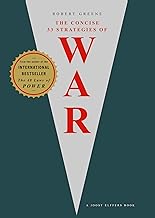
The 33 Strategies of War

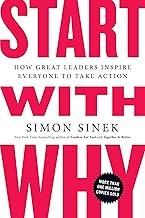
Start With Why
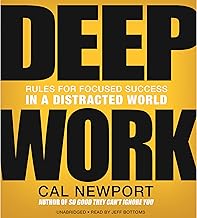
Deep Work
Disclosure: This post may contain affiliate links. We only recommend products we believe in, and we may receive a commission at no cost to you! Thank you for your support!
Acknowledgment: Cover Image by moneycatzzz.com
Disclaimer: The information is provided for general information only – moneycatzzz.com makes no representations or warranties in relation to the information, including but not limited to any representation or warranty as to the fitness for any particular purpose of the information to the fullest extent permitted by law. While every effort has been made to ensure that the information provided in this article is accurate, reliable, and complete as of the time of writing, the information provided in this article should not be relied upon to make any financial, investment, real estate or legal decisions. Additionally, the information should not substitute advice from a trained professional who can take into account your personal facts and circumstances, and we accept no liability if you use the information to form decisions.