 Reading Time: 8 mins #
 This post may contain affiliate links.
I am standing behind a railing that smells like wet metal and sunscreen, staring at 750,000 gallons of water per second crashing into a basin with the kind of violence that makes your ribcage hum. Niagara Falls is not subtle. It doesn’t build to a crescendo. It just is, all the time, relentless and indifferent to whether you’re ready for it or not.
I came here because I thought I needed to see something big. Something that would shake me out of the abundance paralysis I’ve been living in for the past six months. I have seventeen tabs open on my laptop right now. I have four half-finished projects, three overdue emails, and two competing job offers that both feel like traps disguised as opportunities. I am drowning in options, moving at full speed, and somehow getting absolutely nowhere.
The guide next to me, a woman in her sixties with a laminated name tag that says “Brenda,” is talking to a family from Ohio about the history of barrel riders. She says, “Most of them survived the fall. It was the aftermath that killed them.” I wasn’t supposed to hear that, but the mist carries sound in strange ways. I write it down in my phone because it feels like a prophecy.
I’m not here to write about the scenery. This is about the quiet rot of “Speed Addiction.” It’s what happens when you spend six months sprinting in circles because you’re too terrified to admit that having every door open is just another way of staying stuck in the hallway.
The Abundance Problem No One Warns You About
Before I got to Niagara, I spent three days in Toronto attending a conference I didn’t need to attend, networking with people I’ll never speak to again, and collecting business cards like they were evidence of a life well lived. I am very good at looking busy. I am very bad at knowing why.
Nobody warns you that having everything is its own kind of hell. From the street, it looks like success, like “having a seat at the table.” But I’m standing there with an empty plate, physically shaking with terror at the opportunity cost. It’s not a buffet; it’s a hostage situation where the kidnapper is just a long list of “Better Options” that don’t actually exist.
Research from Columbia University Business School found that when people are offered too many choices, they experience a phenomenon called “choice overload.” The study showed that shoppers were far less likely to purchase when presented with 24 varieties of jam than when presented with only 6. More options didn’t lead to greater satisfaction. It created paralysis. That’s what my life has become—a jam aisle with no end.
I’m watching the Falls now, and a man in a Red Sox cap standing next to me says to his wife, “It’s just water, but it’s a lot of water.” She laughs. He’s not wrong. That’s exactly what abundance feels like. It’s not that any single thing is overwhelming. It’s that the cumulative volume makes it impossible to see clearly.
Speed as Camouflage
I took the Maid of the Mist boat tour because Brenda told me it was “mandatory.” She said it in the same tone my therapist uses when she tells me to “sit with the discomfort.” I didn’t want to sit with anything. I wanted to keep moving.
The boat gets close enough to the Falls that you can’t hear anything but the roar. The mist soaks through the flimsy plastic poncho they give you. I’m surrounded by tourists taking selfies, trying to capture something that refuses to fit on a phone screen. There’s a teenager next to me, maybe nineteen, filming the whole thing on his phone without looking up once. His dad taps his shoulder and points at the actual Falls. The kid nods but keeps filming.

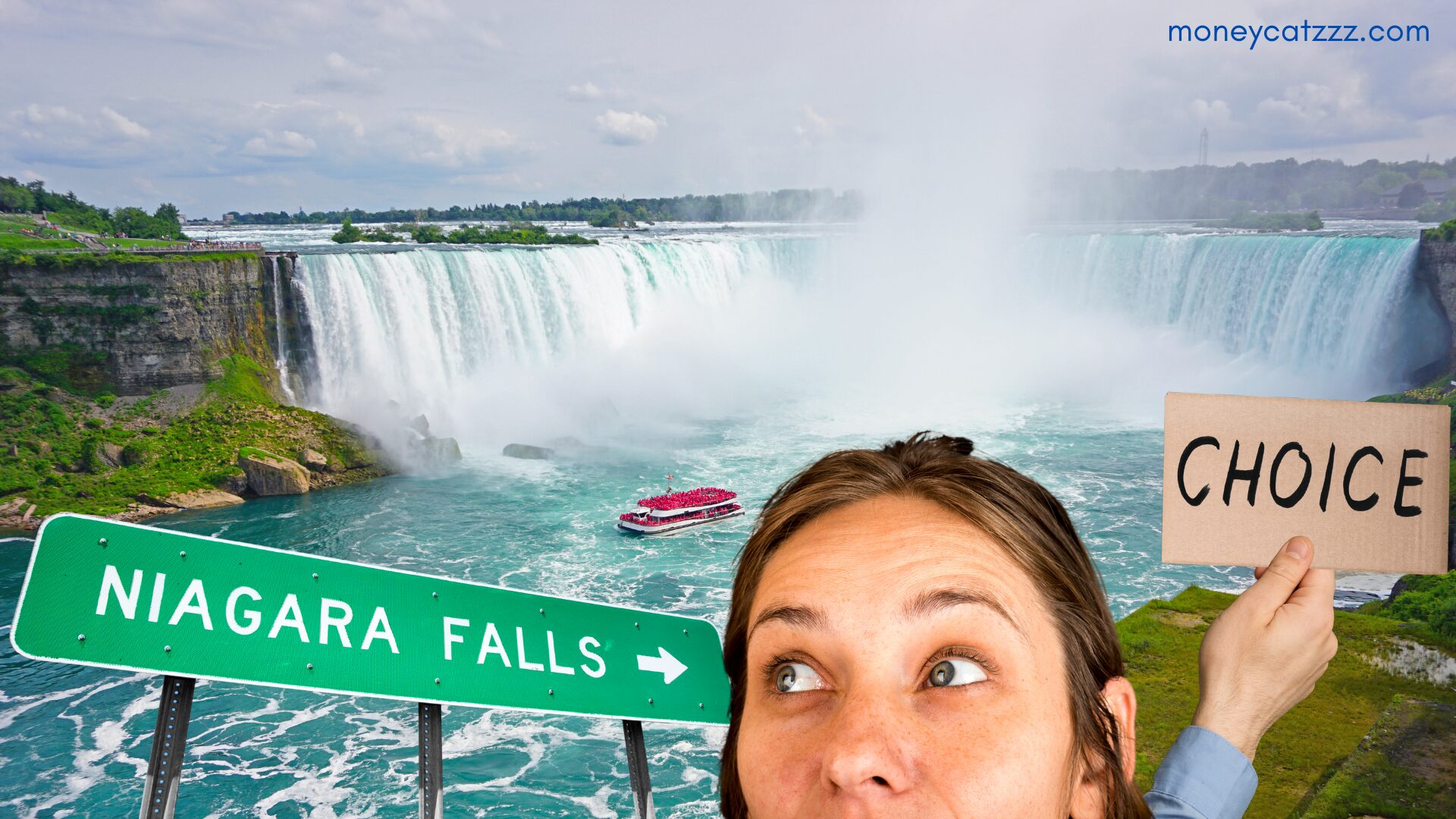
[“Neural Overload: The Biological Limit of Choice” – Image by moneycatzzz.com]
I realize I’ve been that kid for months. Moving so fast, I forgot to look up.
Speed addiction is insidious because it feels productive. It feels like momentum. You’re checking boxes, responding to emails, saying yes to things, filling your calendar until there’s no white space left. But speed without direction is just noise. It’s the appearance of progress without its substance. I’ve been sprinting in circles for half a year, mistaking exhaustion for achievement.
There’s a line in The Ruthless Elimination of Hurry that Comer pulled from Dallas Willard: “Hurry is the great enemy of spiritual life in our day.” I read that on the plane and wanted to throw the book across the cabin. Not because it was wrong. Because it was right. I have been weaponizing speed to avoid the harder, slower work of deciding what I actually want my life to look like.
The Conversation at Table Rock
After the boat, I walk to Table Rock, the viewing platform that gets you as close to the edge as you can legally get. There’s a couple there, mid-fifties, holding hands, just staring, not taking photos, not talking. Just standing there in the mist like they’re at church.
I sit on a bench nearby, and a woman with a thick French-Canadian accent sits next to me. She’s eating a soggy hot dog and says, unprompted, “You come here alone?”
“Yeah.”
“Me too. Husband died two years ago. He always wanted to come here. So I came.”
I don’t know what to say to that, so I nod. She takes another bite and says, “You look like you’re thinking too much.”
I laugh because she’s not wrong. “I have a lot to figure out.”
She shrugs. “The water doesn’t figure anything out. It just goes.”

It’s such a simple thing to say, but it lands in my chest like a stone. The Falls don’t deliberate. They don’t weigh options. They don’t suffer from decision fatigue or wonder if they’re making the right choice. They move. Not because they’re rushing. Because they’re following the only path available to them.
I’ve been confusing momentum with having a thousand paths. Real momentum is about committing to one.
The Neuroscience of Too Much
Back in my hotel room that night, I pulled up research I’d saved weeks ago and never read. A study from Princeton University found that information overload doesn’t just slow decision-making. It actively degrades the quality of the decisions we make. The prefrontal cortex, the part of the brain responsible for clarity in chaos, essentially short-circuits when presented with too many variables. We don’t make better choices with more information. We make worse ones.
Abundance paralysis isn’t a character flaw. It’s a neurological response to cognitive overload. Your brain wasn’t designed to process seventeen job listings, forty-three podcast episodes, and an infinite scroll. It was designed to assess immediate threats and opportunities in a world where scarcity was the default.
I think about the barrel riders Brenda mentioned. They didn’t survive because they were fearless. They survived because they committed. They chose one insane path and followed it all the way down. The ones who hesitated, who second-guessed mid-fall, were the ones who didn’t make it.

What the Mist Doesn’t Wash Away
The next morning, I go back to the Falls before the crowds arrive. It’s cold and gray, and the mist is so thick I can barely see the edge. There’s a guide setting up for the day, a younger guy, maybe thirty, adjusting the rope barriers.
I ask him if he ever gets tired of looking at it.
He laughs. “Every day. But also never. It’s always doing the same thing, but it’s never the same twice. Depends on what you bring to it, I guess.”
That’s when it clicks. The Falls aren’t the lesson. I am. The abundance, the speed, the paralysis—it’s not happening to me. It’s something I’ve been choosing because choosing nothing felt safer than choosing wrong.
I pull out my phone and open my notes app. I have 247 notes. Half of them are titled “Ideas,” “To Do,” or “Maybe.” I start deleting. Not all of them. Just the ones that make me feel nothing when I read them. The ones I saved because I thought I should care, not because I actually did.
By the time I’m done, I’m down to sixty-three. It’s not clean. It’s not minimal. But it’s lighter.

[“Subtractive Clarity: The Protocol for Ending Decision Fatigue” – Image by moneycatzzz.com]
The Quiet Work of Subtraction
Parker talks about this in The Art of Gathering—the idea that we’ve been taught to think addition equals value. More is better—more options, more connections, more experiences. But real clarity in chaos doesn’t come from addition. It comes from subtraction. From the brutal, unglamorous work of saying no to good things so you have room for the right things.
I didn’t come to Niagara Falls and have an epiphany. I didn’t stand at the edge and suddenly know what to do with my life. But I did realize that I’ve been using abundance as an excuse. As long as I had seventeen options, I didn’t have to commit to one. As long as I was moving fast, I didn’t have to ask where I was going.
The Falls don’t move fast. They move inevitably. There’s a difference.
The Edge You Choose
On my last day, I take one more walk along the edge. The couple I saw before is back. Still holding hands. Still just looking. I wonder if they come here often. If this is their ritual. If they’ve figured out something I’m still learning.
Brenda is nearby, talking to a new group. I hear her say, “The Falls have been here for twelve thousand years. They’ll be here long after we’re gone. Puts things in perspective.”
She’s right. But not in the way she means. The perspective isn’t that my problems are small. It’s that my decision fatigue, my speed addiction, my abundance paralysis—these are problems I invented. The Falls don’t have options. They have gravity. And maybe that’s what I need. No more choices. Just one good direction and the guts to follow it.
I’m getting on a plane in three hours. I’m going to decline one of those job offers. I’m going to delete ten of the seventeen tabs. I’m going to stop moving and start choosing.
Because the mist doesn’t wash away what you’re carrying, it just makes it harder to pretend you don’t see it.
What are you sprinting toward that you don’t actually want? What choice are you avoiding by keeping all the doors open?
Close a door. Not because you’re sure. Because staying in the hallway is killing you.
Essential Reads to Cultivate an Abundance Mindset
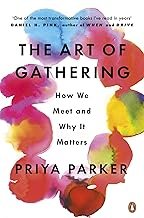
The Art of Gathering

Ruthless Elimination …
The Art of Possibility
Disclosure: This post may contain affiliate links. We only recommend products we believe in, and we may receive a commission at no cost to you! Thank you for your support!
Acknowledgment: Cover Image by moneycatzzz.com
Disclaimer: The information is provided for general information only – moneycatzzz.com makes no representations or warranties in relation to the information, including but not limited to any representation or warranty as to the fitness for any particular purpose of the information to the fullest extent permitted by law. While every effort has been made to ensure that the information provided in this article is accurate, reliable, and complete as of the time of writing, the information provided in this article should not be relied upon to make any financial, investment, real estate or legal decisions. Additionally, the information should not substitute advice from a trained professional who can take into account your personal facts and circumstances, and we accept no liability if you use the information to form decisions.