
 Reading Time: 8 mins #
 This post may contain affiliate links.
It’s Sunday morning. Before the week rushes in with its urgencies and obligations, let’s pause here together. Take a breath. Feel the weight of the phone you’re not checking, the emails you’re not reading, the tasks you’re not planning. This moment of stillness reveals something profound; beneath all that mental clutter lives a different kind of wealth. I call it the clarity dividend.
In our Slow Scroll sanctuary today, we’re exploring what happens when you stop wearing busyness like armor and start treating simplicity like medicine. This isn’t about doing less to accomplish more. It’s about discovering who you are when the noise finally stops.
The Weight We Carry Without Knowing
Have you noticed how your mind feels heavier at the end of each day? Not tired from physical labor, but weighted down by invisible obligations, half-formed thoughts, and the constant hum of unfinished everything. This mental clutter accumulates so quietly that we don’t notice until we’re drowning in our own thoughts.
Greg McKeown, in his transformative book Essentialism, poses a question that stopped me mid-page: “What if success becomes a catalyst for failure?” He’s talking about how each achievement adds another layer of complexity, another commitment, another “quick check” to our already overflowing days. We say yes to good opportunities without realizing we’re saying no to our own cognitive bandwidth.
The American Psychological Association’s research on stress reveals something startling: information overload doesn’t just make us less productive; it fundamentally changes how our brains process emotions. We’re not just busy. We’re retraining ourselves to overcome emotional exhaustion.
Notice how even reading about busyness makes your shoulders tense.
That’s your body keeping score of a debt you didn’t know you were accumulating. Every notification, every “quick question,” every mental tab left open adds to what I call cognitive debt. Unlike financial debt, this one charges interest in the currency of presence, creativity, and joy.
The most insidious part? We’ve made being busy a badge of honor. “How are you?” we ask. “Busy,” we answer, as if anything else would be an admission of failure. But what if the absolute failure is mistaking motion for progress, noise for signal, mental clutter for meaningful work?
The Illusion of Mindful Productivity
There’s a gentle irony in our modern solution to overwhelm: we try to optimize it. Mindful productivity has become the new gospel, promising we can have our chaos and be present to it, too. But adding mindfulness to an unsustainable pace is like putting premium gas in a car driving off a cliff.
I discovered this truth during what I call my “productivity perfectionism” phase. I had apps for everything, systems for systems, and a morning routine that required its own manual. I was practicing mindful productivity with the intensity of an Olympic athlete. Yet beneath all that optimization, emotional exhaustion was growing like a silent tumor.
The MIT study on multitasking and cognitive performance confirms what our ancestors knew intuitively: the human brain isn’t designed for constant switching. It’s intended for depth, for following a thought to completion, for what I call sacred slowness.
What if the goal isn’t to be more productive, but to be more present? What if mindful productivity isn’t about doing more with awareness but about choosing less with intention? The real revolution isn’t in our tools or techniques. It’s in questioning why we’re so afraid of space on our calendars, silence in our minds, and the radical act of doing nothing productively at all.

[“The Weight We Carry Without Knowing – Cognitive Debt” – Image by moneycatzzz.com]
Simplicity as a Form of Self-Compassion
When I first encountered the concept of radical simplicity, I initially mistook it for deprivation: less stuff, less stimulation, and a less fulfilling life. But true radical simplicity isn’t about taking away. It’s about no longer adding what was never needed.
Cal Newport’s Digital Minimalism helped me understand this distinction. He writes about the difference between connection and communication, between being informed and being overwhelmed. His research showed me that our nervous systems aren’t failing us; they’re functioning perfectly in an environment for which they were never designed.
Last month, I experimented. For one week, I removed one commitment, one app, one “should” each day. Not with grand gestures or dramatic declarations. Just quiet subtractions. By Sunday, the mental clutter had cleared enough for me to notice something remarkable; I wasn’t missing anything. I was finding everything I’d lost in the noise.
The Stanford research on choice overload validates what happened next. With fewer options, my decisions became clearer. With less input, my creativity expanded. With radical simplicity, I found not emptiness but spaciousness.
This isn’t about becoming a digital hermit or a productivity dropout. It’s about recognizing that emotional exhaustion isn’t a personal failing; it’s a systemic overwhelm. And the antidote isn’t another app or method. It’s the revolutionary act of subtraction, the courage to disappoint, the wisdom to recognize that protecting your mental space is not selfish but necessary.
Here’s your Sunday practice: Choose one thing to release this week. Not forever, just for now. Notice the space it creates. Notice who you are in that space.
The Sacred Art of Enough
In a culture that worships more, “enough” sounds like surrender. But what if enough is not about settling but about recognizing abundance? Lynne Twist, in The Soul of Money, writes about the “toxic myth of scarcity” that keeps us in a perpetual state of wanting. She suggests that sufficiency, knowing you have enough, is the doorway to genuine wealth.
This principle applies to more than money. It applies to information, stimulation, achievement, and even self-improvement. The constant pursuit of more creates mental clutter at the deepest level. It assumes we’re incomplete, that the next thing will finally make us whole.
Radical simplicity begins with a different assumption: you already have what you need. Not to stay where you are, but to take the next right step. When you operate from sufficiency rather than scarcity, mindful productivity transforms from frantic doing to purposeful being.
I think of my grandmother’s kitchen, where one good knife did the work of a dozen gadgets. Where conversations happened without screens. Where Sunday meant rest, it was productive, and doing nothing was, in fact, doing something essential. She practiced radical simplicity before it needed a name, understanding that voluntary simplicity wasn’t about having less but about making room for what mattered.
In the space between breaths, there’s no rush. Why not live there?
Gently Clearing the Mental Landscape
Clearing mental clutter doesn’t require a dramatic overhaul. Like tending a garden, it’s about daily, gentle practices that preserve the spaciousness you naturally possess.
Start with mornings. Before the world rushes in with its demands, create what I call a mental sabbath. Not an hour of meditation or elaborate ritual. Just five minutes of sitting with your coffee before checking your phone. Five minutes of remembering who you are before the day tells you who to be.
The art of saying no becomes easier when you understand it as saying yes to clarity. Each ‘no’ to another commitment is a ‘yes’ to preventing emotional exhaustion. Each ‘no’ to an immediate response is a ‘yes’ to thoughtful presence. Radical simplicity isn’t about rejection; it’s about protection.
Three gentle steps I’ve found helpful:
First, notice where mental clutter gathers without judgment. Is it in the morning email check that becomes an hour? The social media scroll that leaves you feeling empty? Notice.
Second, release what no longer serves with gratitude. That committee you’ve outgrown. That daily news binge only adds anxiety. Thank it for what it taught you, then let it go.
Third, protect the cleared space with loving boundaries. Not walls, but garden fences that say, “This space is reserved for what truly matters.”
The Quiet Revolution of Clarity
When you commit to radical simplicity, something remarkable happens. The clarity dividend doesn’t arrive all at once but accumulates quietly, like interest on an investment you forgot you made.
Creativity expands in the space you’ve cleared. Without the constant noise of mental clutter, your mind begins making connections it couldn’t see before. This isn’t traditional mindful productivity. It’s something more profound: the natural productivity of a mind at rest.
Relationships deepen when you’re fully present. Without the mental tabs of unfinished tasks and unchecked messages, you can actually hear what others are saying, feel what they’re feeling. Emotional exhaustion lifts like fog, revealing the landscape of connection that was always there.
Your natural level, that sustainable pace unique to you, becomes clear. Not the pace others expect, not the speed culture demands, but the rhythm that allows you to create without depletion, to give without emptying, to achieve without sacrificing your essence.

[“Simplicity as a Form of Self-Compassion – Radical Simplicity” Image by moneycatzzz.com]
Coming Home to Stillness
The clarity dividend doesn’t announce itself with fanfare. It arrives quietly, like Sunday morning light through the window. You notice it in the ease of a decision made from stillness rather than stress, in the luxury of a thought allowed to unfold completely, in the simple joy of being present to your own life.
When you release the identity of being busy and embrace radical simplicity, you’re not retreating from life. You’re returning to it. You’re choosing depth over surface, presence over performance, being over becoming.
Mental clutter isn’t just a modern inconvenience; it’s a barrier between you and your own life. Every piece you clear away reveals more of who you actually are beneath all that noise. The emotional exhaustion you’ve been carrying wasn’t weakness; it was wisdom, your soul’s way of saying “this isn’t sustainable.”
This Sunday, as you rest in these words, notice the space around them. The pause between paragraphs. The breath between sentences. That’s where clarity lives, not in doing more mindfully, but in being present to less.
The clarity dividend pays in the only currency that truly enriches: peace of mind, emotional availability, and the gentle freedom that comes from knowing you have enough, you do enough, you are enough.
Mindful productivity, when redefined as presence rather than performance, becomes a practice of coming home to yourself again and again.
Until next Sunday, may you find wealth in stillness, abundance in simplicity, and freedom in the space between thoughts.
Books and Tools to De-clutter Your Mind
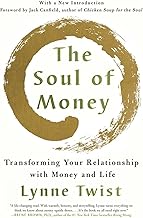
The Soul of Money

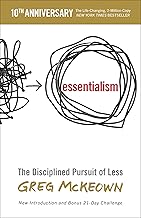
Essentialism
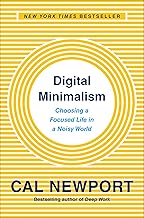
Digital minimalism
Disclosure: This post may contain affiliate links. We only recommend products we believe in, and we may receive a commission at no cost to you! Thank you for your support!
Acknowledgment: Cover Image by moneycatzzz.com
Disclaimer: The information is provided for general information only – moneycatzzz.com makes no representations or warranties in relation to the information, including but not limited to any representation or warranty as to the fitness for any particular purpose of the information to the fullest extent permitted by law. While every effort has been made to ensure that the information provided in this article is accurate, reliable, and complete as of the time of writing, the information provided in this article should not be relied upon to make any financial, investment, real estate or legal decisions. Additionally, the information should not substitute advice from a trained professional who can take into account your personal facts and circumstances, and we accept no liability if you use the information to form decisions.