 Reading Time: 8 mins #
 This post may contain affiliate links.
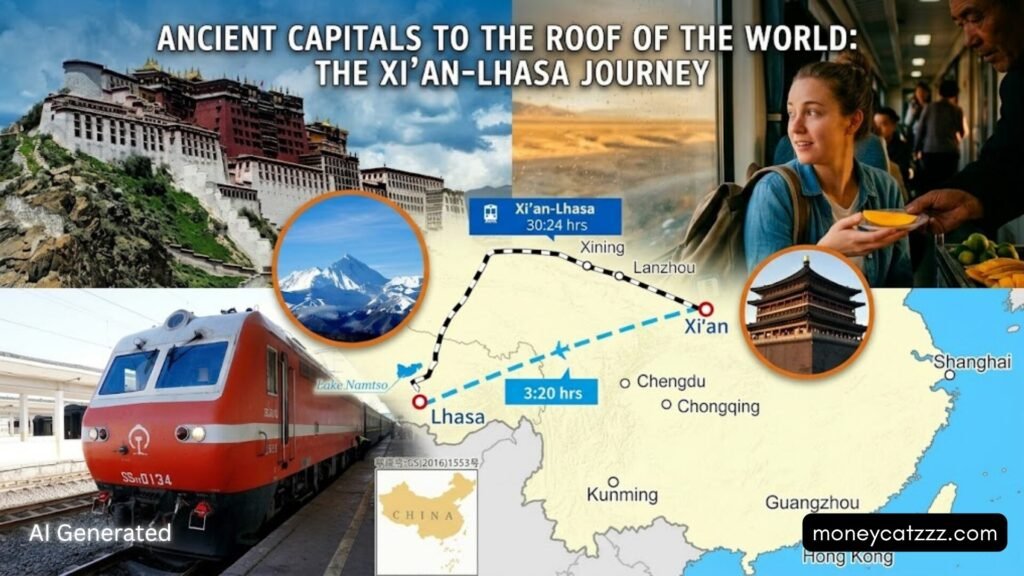
The Z265 left Xi’an at dawn. Thirty‑one hours would pass before the 6,400-horsepower hauler reached Lhasa. Hard sleeper. Narrow berth. A Tibetan woman across from me peeled a hard‑boiled egg and offered half. I took it. In my haste, I had forgotten to buy provisions. My forward-facing window seat was an empty throne with no food. Outside the window, the Qaidam Basin stretched like a forgotten planet.
I have two bucket lists, one enshrined in my Google Drive, the other scribbled on whatever paper was available and stuffed into my journal. The Tanggula Pass at 5,072 meters – the highest rail track in the world- was added to an ever-growing list at the back of my journal. Something trivia to boast about when the conversation drifted. A few minutes later, we passed Tanggula Station, the highest railway station on Earth, at 5,068 meters, where the air is 40% thinner than at sea level. You cannot get off there. No staff. No platform access. You look through the glass and keep moving.
I am on my way to the “Roof of the World” to see another empty throne, one that waits behind glass. I found that strangely appropriate.
A young monk sat two rows behind me. He spun a prayer wheel with one hand and scrolled through his phone with the other. A text message. A mantra. A text message. The sacred and the mundane share a seat on that train. I took that as a good sign.

The Climb Before the Climb
Lhasa sits at 3,700 meters above sea level. The air is thin. My lungs felt like they were breathing through a straw. I arrived two days early, as the guidebooks recommend. I drank yak butter tea. I ate tsampa. Trying not to pass out was at the top of my list. The Tibethostel Scenic Hotel is on the higher end of the price scale, but the views from the windows are priceless.
The yak butter tea was salty and thick, unlike any tea I had ever tasted. One to cross off my list. The tsampa was simpler: roasted barley flour mixed into a dough. A dining hall staff member showed me how to knead it with my fingers. “Food for the climb,” he said. He did not smile. He was not joking.
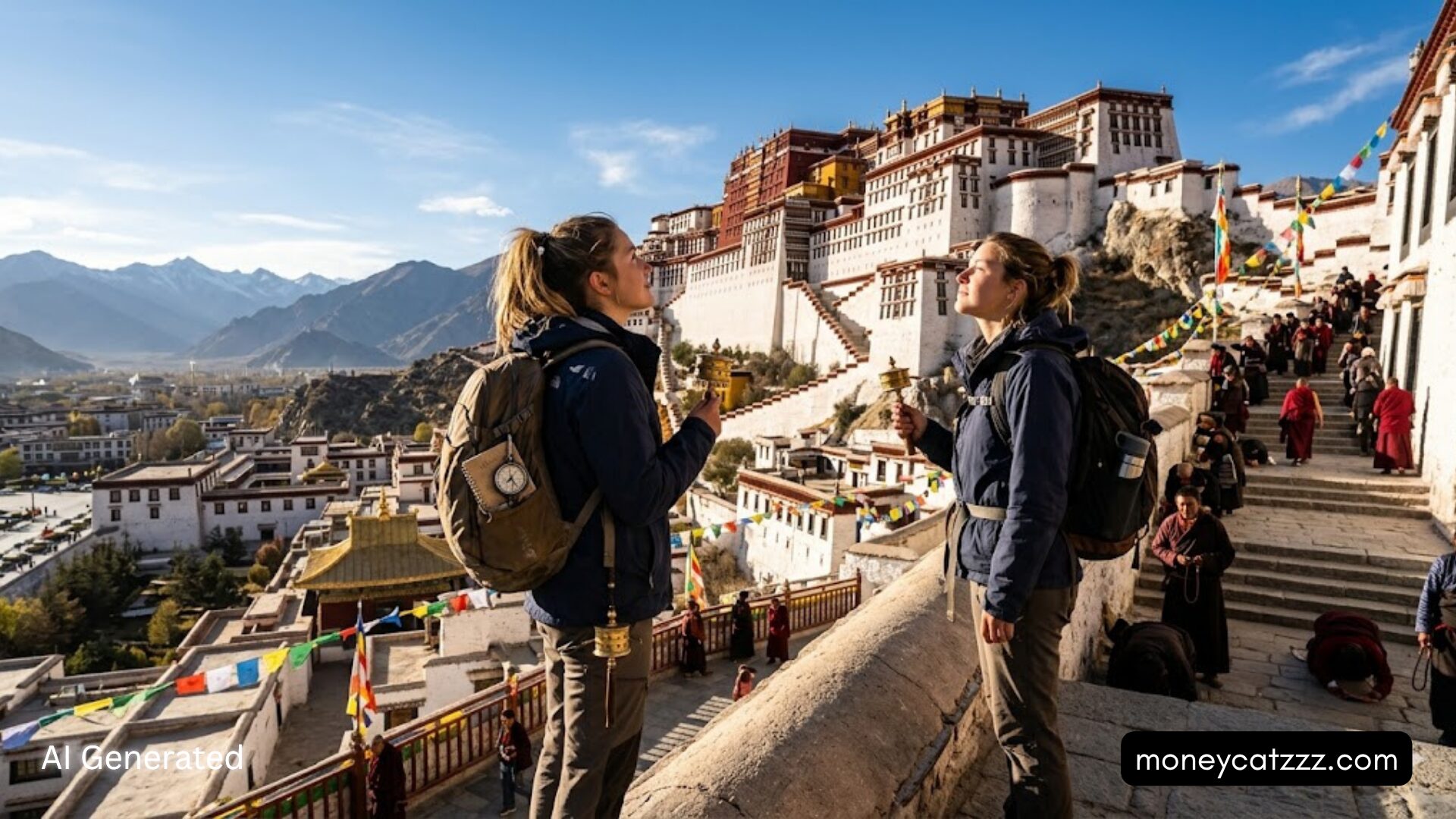
The first morning, I walked the Potala kora, the pilgrim circuit that circles the red hill. “Tashi delek,” an older man in a traditional Tibetan robe, a chuba, said as we crossed paths. I said it back. We kept walking. No need for more.
Others whispered mantras while holding their malas, a string of 108 prayer beads, counting recitations, breathing mindfully, and anchoring their concentration. The echoes of “Om Mani Padme Hum” filled the air. I found that comforting.
[The “Roof of the World” Journey | moneycatzzz.com]
The Guide Who Remembers
Kunchok grew up in the shadow of the Potala. He wore a dark blazer with different-colored pants and a hat that looked out of place, paired with an official China National Tourist Guide badge.
“We called this area Xue,” he said, pointing to a courtyard below. “Home of the people. My grandfather used to bring me here.” He paused. “Now, not many people use that name.”
I asked him what he calls it now.
He shrugged. “I still call it Xue.”
Kunchok believes the Dalai Lama will return. He told me this without drama. “Every day I walk these stairs. Every day I hope. Hope is not stupid.” He laughed. “Maybe it is. But I do it anyway.”
I asked him about monastic education, rooted in the ancient Indian Nalanda tradition. He looked surprised that I knew. I was too embarrassed to tell him it was inscribed on the brochure that he had given me. He said novices enter the monastery around the age of 7. They eat and breathe the Tibetan script, memorize scriptures, and then spend sixteen years on the five great subjects: logic, perfection of wisdom, middle‑way philosophy, phenomenology, and monastic discipline. ‘Sixteen years,’ he said. ‘Longer than medical school.’
All I could think of to say was “wow”. I thought about my own education, how I had learned to move, not to stay. How I had collected skills like passport stamps, always useful, never deep.
The 365 Steps
The climb begins at the foot of the White Palace. 365 granite steps worn smooth by centuries of feet. Unreachable heights are a physical law; every twenty steps, I had to stop to breathe. A young monk passed me, barely winded. He smiled. “Thu je che,” I said. Thank you. He nodded and kept climbing.
The White Palace was the residence of the Dalai Lamas. The 13th and 14th. Their private rooms are preserved. A bed. A clock. A meditation cushion. I stood in the doorway of the 14th Dalai Lama’s study. His ritual tools were still on the table, as if he might return after lunch.
Kunchok said nothing. He did not need to.
The Red Palace is higher; it is the spiritual heart. Golden stupas holding the remains of past Dalai Lamas. The largest stupa, for the 5th Dalai Lama, is covered in 3.7 tons of gold and 20,000 precious stones. Coral. Turquoise. Pearls.
It is breathtaking. It is also a tomb. The dead are more present here than the living.
I asked Kunchok if he ever felt the absence.
“Every day,” he said. “But the absence is also a teacher. It teaches me to keep walking.”
I discovered something interesting at the foot of the Red Palace steps. A healthy-looking pilgrim prostrated just once, then stood and walked normally. He did not prostrate the whole way. Even pilgrims negotiate between devotion and practicality – I found that honest.
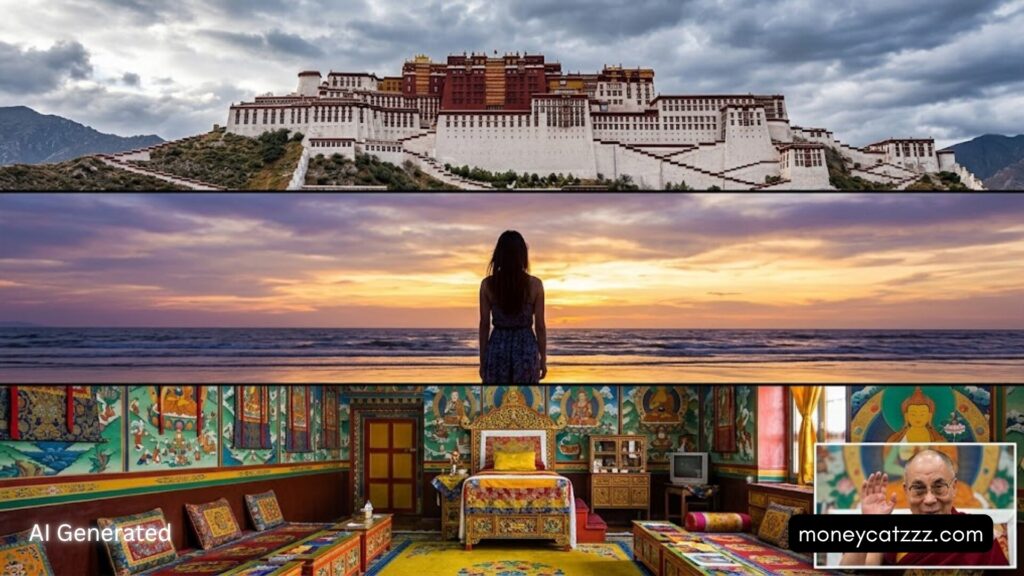
The Empty Throne
The throne is in the Great West Hall, enclosed behind glass since 1959. The Dalai Lama’s robes are folded on the seat. He was 23 years old, and perhaps the robes no longer fit. A nearby plaque, inscribed by Emperor Qianlong in the 18th century, proclaims this place “the first blooming of a lotus.”
I stood there for a long time, soaking in the history.
The empty throne is not a testament to a failed kingdom. It is a reminder. Something sat there once. Someone was expected to return. The expectation has not died, even if the return is delayed. It is faith dancing with stubborn feet; maybe they are the same.
Kunchok said, “When I was young, I thought the empty throne meant something was missing. Now I think it means something is waiting.”
I did not know what to say. So I said, “Ya bu.” Good. It was not enough, hollow yet substantive.
Outside, a pilgrim prostrated toward the palace. Her forehead touched the ground. Then she stood. Then she did it again. She did not look at the throne. She did not need to. The empty throne was not her destination. The act itself was. I thought of imitating her, just for fun, but that would be grossly disrespectful. The thin air had made many tourists observers from afar.
The View from the Top
From the roof of the Red Palace, Lhasa spreads out below; the old city and the park with its lake. The mountains beyond are bare and silent.
Kunchok told me about sky burials (jhator). “We do not bury the body,” he said. “We offer it. The vultures take it to the sky. That is the ultimate merit. No attachment. No storage. Just generosity.”
I looked at the mountains. The Buddhist concepts of impermanence, non-attachment, and reincarnation made me think about how hard I work to hold on to things. How hard I work to be kept.
[The Empty Throne of Possibilityies | moneycatzzz.com]
A local vendor sold sweet tea at the bottom of the descent. The Guangmingshop Teahouse is the oldest in Lhasa, another “been there, done it” check stuffed in my journal. I did not know the rules. I put money on the table. A waiter poured my tea and took his change. No one asked what I wanted. No one needed to.
The tea was sweet and warm, and it’s the exact tonic I needed. I drank it slowly. A woman next to me shared her chili sauce for my momos. She did not ask, just pushed the bowl toward me. Small gestures, no contracts. How trust is built at 3,700 meters above sea level.

What I Did Not Find
I did not find enlightenment at the Potala Palace. I did not find any proof of redemption. The empty throne gave me no answers.
What I found was more intangible. A guide who still hopes. A young monk who checks his phone between prayers. A teahouse where strangers share their chili sauce. A mountain where the dead become food for birds.
Unreachable heights are exactly that by design. They live within their own realm. You climb. You breathe. You stop. You keep going. You never reach the top because the top is not the point.
The Potala taught me that.
The Prayer Wheel on My Desk
I bought a small brass prayer wheel and a Tibetan singing bowl from a vendor near the kora. He named a price. I did not bargain. “Ka li phe,” he said when I left. Goodbye to the one leaving. I said it back. Wrong context. He isn’t going anywhere. He smiled anyway.
The prayer wheel sits on my desk now. I spin it when I forget that waiting is not wasting, that absence is not emptiness, that some thrones stay empty, so you learn to stand on your own. I gave the singing bowl to my mother after the 10th time she praised its beauty during a single Thanksgiving dinner.
Kunchok said, “Hope is not stupid.” I am still not sure I believe him. But I am climbing anyway. In my mind. Wherever I am.
That is the empty throne. It offers possibility.
________________________
Essential Reading: The Scale of Absence
Seven Years in Tibet

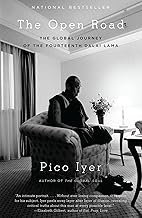
The Open Road
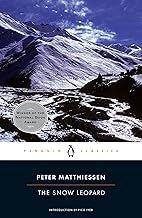
The Snow Leopard
Disclosure: This post may contain affiliate links. We only recommend products we believe in, and we may receive a commission at no cost to you! Thank you for your support!
Acknowledgment: Cover Image by moneycatzzz.com
Disclaimer: The information is provided for general information only – moneycatzzz.com makes no representations or warranties in relation to the information, including but not limited to any representation or warranty as to the fitness for any particular purpose of the information to the fullest extent permitted by law. While every effort has been made to ensure that the information provided in this article is accurate, reliable, and complete as of the time of writing, the information provided in this article should not be relied upon to make any financial, investment, real estate or legal decisions. Additionally, the information should not substitute advice from a trained professional who can take into account your personal facts and circumstances, and we accept no liability if you use the information to form decisions.