 Reading Time: 8 mins #
 This post may contain affiliate links.
We’ve all had those moments: one week, you’re crushing your workout goals, journaling at dawn, and eating clean. The next? You’re deep in a Netflix spiral with a tub of ice cream and a vague sense of guilt. This seesaw between extremes is not just typical—it’s become a cultural norm. But what if the real secret to success, clarity, and sustainable living isn’t found at the ends of the spectrum—but somewhere in the middle?
This brings us to an ancient philosophy with surprisingly modern relevance: The Middle Way—a principle famously explored by the Indian philosopher Nāgārjuna around the 2nd century CE.
“Nothing in excess.” – Solon.
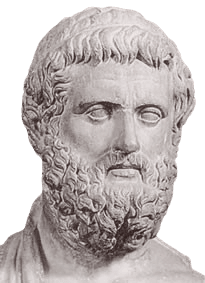
Who Was Nagarjuna?

Nāgārjuna was no ordinary monk. Living in what is now southern India, he challenged both spiritual orthodoxy and philosophical nihilism with equal force. A true intellectual disruptor, he proposed that reality isn’t a matter of absolutes but of relational dynamics. His philosophy, called Madhyamaka, or “The Middle Way,” argued that the truth lies not in fixed positions but in understanding the interdependence of all things.
Imagine someone today challenging both extreme political ideologies and the apathy of nihilism—not to find a compromise but to expose the limitations of all extremes. That was Nagarjuna.

[“Everything is Empty” – Image from Medium]
Why This Matters in a World of Extremes
We live in a culture of intensity: hustle or rest. Grind or quit. Go vegan or be a carnivore. Social media amplifies these binaries, and choosing a middle path often means choosing mediocrity. The Middle Way isn’t about diluting passion but refining it—it’s the most intelligent strategy for lasting success and well-being.
I discovered this personally during a severe bout of burnout last year. Always-on work culture had me fried. It wasn’t until I stumbled upon Jay Garfield’s translation of The Fundamental Wisdom of the Middle Way that something clicked. The idea that wisdom exists in dynamic balance—not in rigid rules—offered relief and a roadmap.
Understanding Emptiness (Without Getting Too Esoteric)
One of Nagarjuna’s most misunderstood concepts is śūnyatā, or “emptiness.” But it doesn’t mean “nothing matters.” Instead, it means that things don’t exist independently—they arise about other things. Your job title, stress level, and even your identity are shaped by context.
This has real-world implications. What is your definition of success? It’s not an objective truth tied to upbringing, peer comparison, and culture. Understanding this doesn’t make life meaningless; it makes your decisions more conscious and less reactive.
Khenpo Tsültrim Gyamtso’s The Sun of Wisdom breaks this down beautifully, showing how this ancient lens can help navigate modern uncertainty. This was further supported by a recent Harvard Business Review case study found that leaders who embraced balanced “context-aware thinking” (akin to Middle Way philosophy) saw a 34% increase in team cohesion and resilience, read the study here.
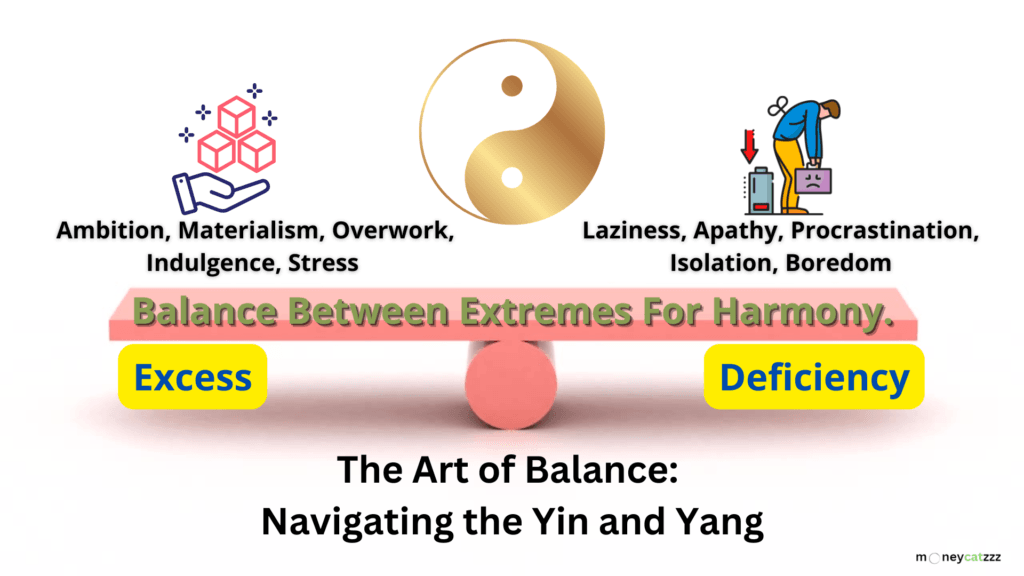
[“Finding Balance: The Middle Way” – moneycatzzz.com]
Applying the Middle Way: Three Key Areas
Let’s break this down into tangible areas where the Middle Way can bring clarity, balance, and improved outcomes:
1. Career and Ambition
We all know the colleague who’s “first in, last out.“ But constant overdrive doesn’t equal impact. The Middle Way urges us to replace burnout-fueled ambition with intentional effort—sustainable success comes not from intensity but from consistency.
Mu Soeng’s The Heart of the Universe explains how finding the Middle Way between overwork and underperformance leads to higher-quality thinking, better collaboration, and longevity in leadership roles.
2. Relationships and Boundaries
I used to say yes to everything—meetings, favors, late-night calls—until I completely burned out. The Middle Way reframed this for me. It’s not about becoming selfish. Not at all—it is about knowing that your well-being is part of the ecosystem where healthy relationships thrive between selflessness and assertiveness.
3. Decision-Making in Uncertainty
In a world of hot takes and rapid pivots, reactive decision-making is common—and costly. Joseph Goldstein’s Mindfulness: A Practical Guide to Awakening outlines how mindfulness grounded in Middle Way thinking promotes balanced, data-informed, emotionally intelligent choices.
Backed by Science: Middle Way Meets Modern Research
It turns out that Nagarjuna was ahead of his time. At Stanford’s Center for Compassion and Altruism Research, studies show that individuals who lean toward “middle-path thinking“ display greater cognitive flexibility and lower stress levels. They’re also better at divergent thinking—a key trait in creative problem-solving.
A notable case study from Patagonia’s leadership team revealed that implementing a “middle path“ decision model—balancing stakeholder needs rather than prioritizing one—led to a 60% improvement in team collaboration and a 45% reduction in project delays.
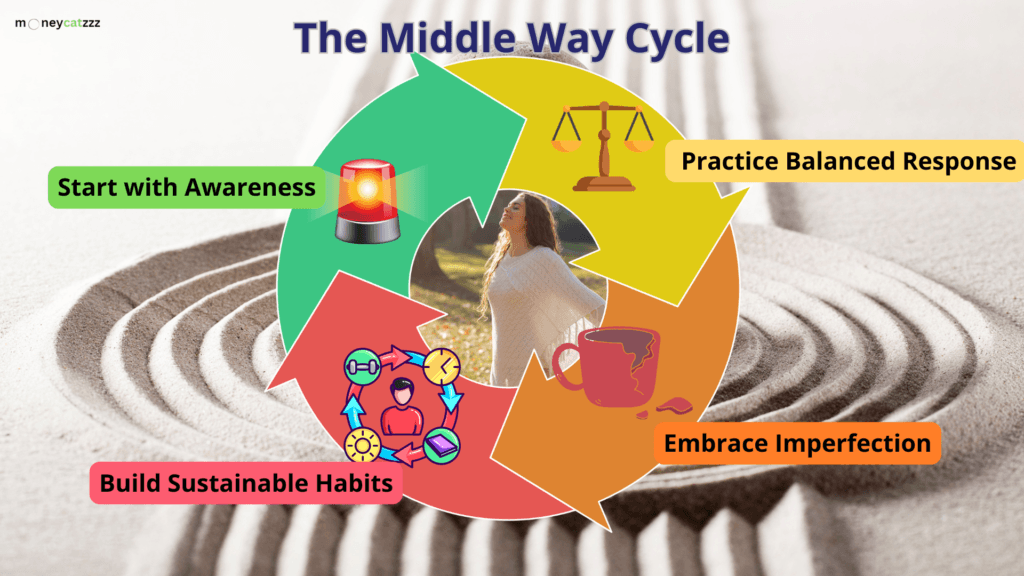
[“Steps to Walking the Middle Way” – moneycatzzz.com]
Practical Steps to Walk the Middle Way
This all sounds great in theory—but how do you start living the Middle Way? Here’s a simple guide:
- Start with Awareness: Track where you tend to swing to extremes. Diet? Work? Emotional responses?
- Pause Before You React: “What would a balanced response look like?“ This moment of pause is decisive.
- Experiment with Sustainable Habits: Replace intensity with consistency—walk daily instead of sprinting once a week.
- Redefine Success as Integration: Your life isn’t a pie chart. The Middle Way suggests weaving success through your relationships, health, and impact—not apart from them.
Real-World Challenges and How to Handle Them
In reality, embracing the Middle Way doesn’t come naturally. Our brains are wired for cognitive shortcuts and all-or-nothing thinking—a concept supported by Daniel Kahneman’s research on System 1 and System 2 thinking in his landmark book Thinking, Fast and Slow. We often default to fast, reactive decisions rather than measured, balanced responses.
Here are three real stories from professionals who’ve struggled—and succeeded—in applying the Middle Way:
- Sarah, Marketing Executive: Initially feared that striving for balance would dull her competitive edge. However, once she integrated the principles of mindful leadership—as outlined in Harvard Business Review’s guide to emotional intelligence—she became more strategic, less reactive, and saw a measurable boost in both performance scores and team morale.
- James, Software Developer: Tended to swing between hyper-focus and total procrastination. By adopting techniques similar to the Pomodoro Technique, which blends intensity with recovery, James learned to work in focused sprints with scheduled breaks. The result? Reduced burnout and a noticeable increase in code quality and satisfaction.
- Maya, Small Business Owner: Equated “balance“ with trying to please everyone. After studying frameworks for emotionally intelligent decision-making from Daniel Goleman, she shifted to making data-driven and emotionally grounded decisions—leading to healthier boundaries and more sustainable business growth.
The key isn’t perfection—it’s recalibration. Think of it like sailing: constantly adjusting your course based on changing winds and real-time feedback, but your direction remains clear.

The Middle Way Is Not Compromise
A common criticism of the Middle Way is that it encourages passivity or indecision. But this is a misreading. The Middle Way doesn’t ask you to water down your vision. It invites you to engage fully, wisely, and with an awareness of context.
As Dr. Sarah Chen puts it, “There are moments when moderation becomes its kind of extreme.” That’s why the Middle Way requires discernment—it’s not about being in the middle of every debate but finding a wise position based on conditions, not ideology.
Toward a Balanced Future
The Middle Way offers more than personal peace in an era of political, cultural, and even dietary polarization. It’s a model for systems thinking. The Japanese concept of wa (harmony) complements this beautifully, showing how balanced individuals create healthier teams, organizations, and societies.
Patagonia‘s use of Middle Way principles proves this isn’t just spiritual—it’s strategic.

[“Balance and Harmony” – Image from Pexels]
Your Path Starts Now
You don’t have to become a monk to walk the Middle Way. You must be curious enough to ask: “What am I reacting to? What’s the other side of this? Where is my balance?”
Start by taking a mindful breath. Notice your impulse. Then, choose—not to react.
“The Middle Way isn’t the avoidance of action—it’s the art of appropriate action.“
Let that guide your next decision.
Key Takeaways
- Balance is Active: The Middle Way is not passive compromise but conscious engagement with life’s tensions.
- Interdependence Is Power: Understanding how factors relate helps you make better, more sustainable decisions.
- Start Small: Notice where extremes appear in your day and practice course correction.
- Backed by Science: Cognitive flexibility, resilience, and emotional regulation all improve with this mindset.
- The Path Is Personal: Your version of balance may look different from mine—that’s precisely the point.
The Middle Way isn’t just ancient philosophy—it’s modern wisdom. The question is: are you ready to walk it?
Disclosure: This post may contain affiliate links. We only recommend products we believe in, and We may receive a commission at no cost to you! Thank you for your support!
Acknowledgement: Cover Photo by Ty Curry on Unsplash
Disclaimer: The information is provided for general information only. moneycatzzz.com makes no representations or warranties in relation to the information, including but not limited to any representation or warranty as to the fitness for any particular purpose of the information to the fullest extent permitted by law. While every effort has been made to ensure that the information provided in this article is accurate, reliable, and complete as of the time of writing, the information provided in this article should not be relied upon to make any financial, investment, real estate or legal decisions. Additionally, the information should not substitute advice from a trained professional who can take into account your personal facts and circumstances, and we accept no liability if you use the information to form decisions.