
 Reading Time: 8 mins #
 This post may contain affiliate links.
I once watched a CEO refuse to use a scheduling link because he thought it made him look ‘available.‘ He preferred the three-day email chain of ‘Does 4 PM work for you?’ because it felt more expensive. He was willing to lose hours of his life to prove he was important—a monkey would have sent the link and gone to find a banana.
The Chimpanzee’s Lesson
The chimpanzee did not attend any fancy workshops. It did not read any “how-to” books. It watched another chimpanzee strip a twig, poke it into a termite mound, and pull out a meal. Then it simply copied and did the same. There was no ego, no delay, no internal debate about whether the method aligned with its personal brand. The chimpanzee is not averse to new knowledge. It just watches, copies, and eats.
The whole transaction took about four seconds.
I thought about that chimpanzee while staring at my own termite mound: a hard drive full of courses I had paid for but never opened. Productivity apps I had installed and ignored. A stack of books by my bed, each marked “Chapter 1” with a bookmark that had not moved in eighteen months.
I have access to more new knowledge than any human in history. I have the tools. The monkeys have sticks. They are eating. I am still reading the user manual for a stick I have not picked up
.
Why?
The Knowledge Accumulation Trap
The average professional owns 14 productivity apps and uses only 3 at most. The average middle executive buys 12 business books per year but finishes only 1 or 2 at best. The average online course has a completion rate below fifteen percent.
We are not suffering from a lack of new knowledge. We are drowning in it. And drowning people do not drink. They panic.
I met a man last year who had spent $6,000 on a certification program. He never watched the first video. He said he was “waiting for the right time to focus.” The right time never came. The certification expired. The new knowledge stayed in the cloud, untouched.
A monkey does not wait for the right time to eat termites. It sees termites. It picks up a stick. It eats.
Accumulation vs. Action
We have replaced action with accumulation. Buying the course is the same as taking the course. Bookmarking the article is the same as reading it. Owning the tool is the same as using it.
It is not. The monkey knows this. We have somehow forgotten.

Barriers to Adoption: Ego and Origin
Here is where humans get weird. A chimpanzee does not care which chimpanzee invented the twig-stripping technique. It does not ask for credentials. It does not demand a randomized controlled trial—it just watches and copies.
I watched a team reject a perfectly good workflow system because the person who suggested it was from the “wrong” department. The system would have saved them ten hours a week. They prefer to work 40 hours a month more than to accept help from an outsider.
This is called Not Invented Here syndrome. It is a documented bias. And it is a form of ego so powerful that it overrides the survival instinct.
I have done this myself. A colleague sent me a framework for managing my calendar. It was simple. It would have worked. I ignored it for six months because I did not like the way he phrased the email. I chose to stay busy and stressed rather than adopt new knowledge from a source I had decided was beneath me.
A monkey would have watched, copied, and eaten termites within the hour. Figuratively speaking, I went six months without eating because my feelings were hurt.
Ego is not confidence. It is the refusal to learn from anyone who makes you feel small. And it can be expensive.
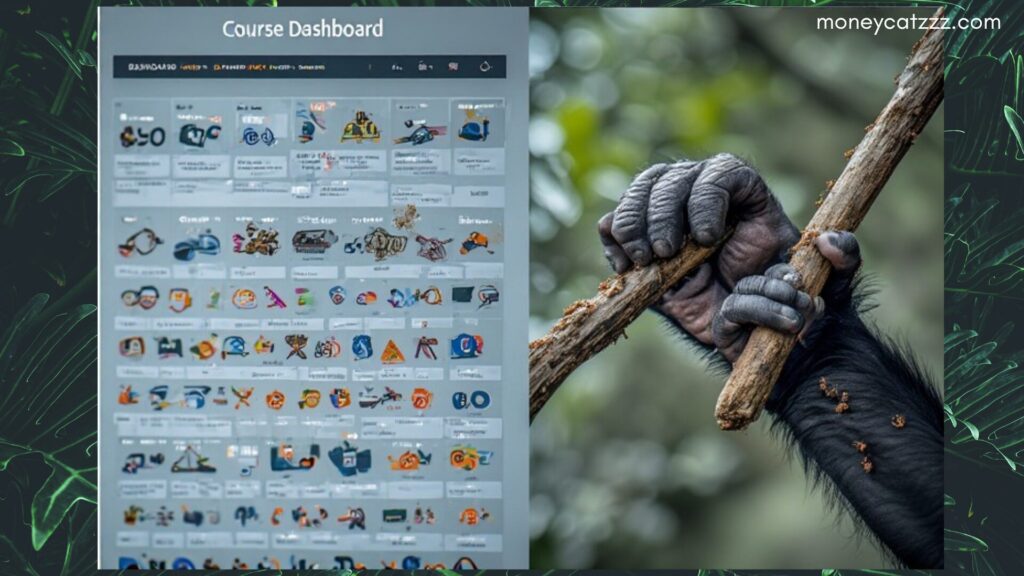
[“Accumulation is Not Action” – Image by moneycatzzz.com]
Social Proof and the Cost of Shame
In the monkey kingdom, social proof is a survival mechanism. It is a shortcut to safety. If the alpha uses a stick to extract termites, the rest of the tribe uses a stick. There is no social risk in copying success; in fact, the risk lies in ignoring it. To the monkey, the utility of the tool is the only metric that matters.
In the human kingdom, social proof is often a barrier rather than a bridge. We have tied our identity to our tribes, which means that if the “wrong” person uses a tool, we reject it to distance ourselves from that person. We would rather stay hungry than be seen using the same stick as someone we do not respect—our bias is what is holding us back.
This is where the cost of shame becomes a tax on our progress. We see a peer, perhaps someone we find annoying or “unrefined,” find a shortcut using new knowledge. Instead of copying the shortcut and saving ourselves an hour of work, we scoff. We call it “cheating” or “low-brow.” We retreat into our complex, slower methods because they feel more “distinguished.”
We have turned copying into a status game. A monkey sees a tool and sees a meal. A human sees a tool and asks, “What does using this say about me?” If the answer makes us feel even slightly “lesser” or “too available,” we drop the stick. We choose the prestige of struggling over the “shame” of a simple solution, just because someone else has discovered it first.
The Safety of Familiar Suffering
There is a reason people stay in bad jobs, bad relationships, and bad habits. The devil you know. Familiar suffering is predictable. It does not surprise you. New knowledge is unpredictable. It might work. It might not. The uncertainty is worse than the pain.
A monkey does not have this problem. It sees a new tool. It tests the tool. If the tool works, keep using it. If it fails, it tries another. No emotional attachment to the old method. No loyalty to suffering.
The Comfort Zone Paradox
I spent three years using a project management system that I hated. Everyone hated it. But we were used to it. We knew its quirks. We had developed workarounds. When someone suggested a better system, the room went quiet. The idea died.
Why? Because learning the new system would require admitting the old system was a waste of time. And admitting that felt like admitting we were fools. So we stayed in familiar misery.
The comfort zone is not comfort. It is just the absence of surprise. And new knowledge is always a little surprising. That is why we resist it. Not because it is hard. Because it makes us feel stupid for not knowing it sooner.
The Complexity Disease
A monkey uses a stick. A human builds a stick-based productivity ecosystem with syncing, analytics, and a subscription fee.
I am not exaggerating. There is a five-hundred-dollar “smart pen” that digitizes your handwriting. The monkey uses a stick. The stick costs nothing. The stick does not need charging. The stick does not require a firmware update.
The Mirage of Feature-Rich Solutions
We have a disease where we believe that more complex tools are better tools. We add features, integrations, dashboards, and notifications—then we wonder why we do not use any of them.
I bought a voice recorder to capture ideas: it had Bluetooth, cloud backup, and AI transcription. I have never used it! The operation manual is half an inch thick, and the setup process alone took an hour. I use a three-dollar notebook now and write down my ideas. It works.
New knowledge does not need to be complicated. The best new knowledge is often stupidly simple. But simple feels insufficient. Simple feels like cheating. So we reject it in favor of a fifty-step framework that we will never complete.
The monkey would laugh at us. Then it would eat another termite.

The Shame of Seeking Help
This is the deepest resistance. The chimpanzee learns by watching. It does not pretend to know in advance. It does not feel ashamed about copying. It just watches and learns.
Humans will stare at a problem for hours before asking for directions. We would rather fail alone than succeed with help. We have convinced ourselves that asking for help is a confession of incompetence.

[“The Failure of the Solo Inventor” – Image by moneycatzzz.com]
Learned Helplessness and the Myth of Discovery
I have a friend who spent six months struggling with a software issue. Six months. He finally mentioned it to a colleague. His colleague fixed it in forty-five seconds. My friend was not relieved; he was embarrassed—he wished he had never asked.
That is wild. But I have done the same thing. I have wasted days on problems that someone else could have solved in minutes because asking felt like failure.
Learned helplessness is not helplessness. It is the refusal to accept that new knowledge often comes from others. We want to discover it ourselves. We want to be the monkey who invented the stick, not the monkey who copied it.
But copying is how knowledge spreads. Copying is how we learn. Copying is not cheating. It is the entire point.
Picking Up the Stick
I do not have a tidy answer for why we resist new knowledge. The monkeys do not have this problem. They see a tool. They use it. They eat.
We see the same tool. We bought a course about the tool. We read reviews of the tool. We compare the tool to other tools. We create a spreadsheet to track our tool usage. We feel tired. We take a nap. The termites multiply.
The chimpanzee is not smarter than you. It is not more disciplined. It is not more evolved. It just has not learned to resist yet. It has not been taught that asking for help is weak. It has not been told that simple solutions are insufficient. It has not developed an ego that would rather starve than admit it was wrong.
We learned all of that. Which means we can unlearn it.
The stick is still there. The termites are still there. The only question is whether you will pick it up or spend another six months researching the optimal stick-holding posture.
The monkeys are not waiting for you. They are eating.
What is your excuse?
Books That Explain Why We Resist
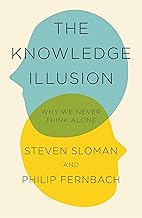
Steven Sloman & Philip Fernbach, The Knowledge Illusion — We think we know more than we do. Most of our intelligence lives in other people and tools. Copying is not cheating; it is how humans survived.
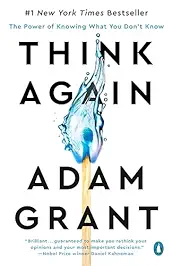
Adam Grant, Think Again — The problem is not ignorance. It is the refusal to unlearn. Grant shows why staying curious and admitting you are wrong are the most underrated skills.
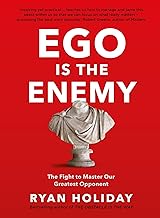
Ryan Holiday, Ego Is the Enemy — Ego makes you reject good ideas from the “wrong” people. It chooses status over survival. A monkey has no ego. That is why the monkey eats.

Disclosure: This post may contain affiliate links. We only recommend products we believe in, and we may receive a commission at no cost to you! Thank you for your support!
Acknowledgment: Cover Image by moneycatzzz.com
Disclaimer: The information is provided for general information only – moneycatzzz.com makes no representations or warranties in relation to the information, including but not limited to any representation or warranty as to the fitness for any particular purpose of the information to the fullest extent permitted by law. While every effort has been made to ensure that the information provided in this article is accurate, reliable, and complete as of the time of writing, the information provided in this article should not be relied upon to make any financial, investment, real estate or legal decisions. Additionally, the information should not substitute advice from a trained professional who can take into account your personal facts and circumstances, and we accept no liability if you use the information to form decisions.