
 Reading Time: 8 mins #
 This post may contain affiliate links.
If your goal is truly winning any negotiation, you must stop thinking about mutual gain. Negotiation isn’t collaboration. It’s a contest for resources and the difference between a decent deal and total victory is usually a single, decisive move your opponent never sees coming. These are the contraband rules that business schools don’t teach because they’re too effective and too uncomfortable for polite company.
Last week, I watched a startup founder lose 40% of his company because he believed in “win-win negotiations.” His investor didn’t believe in anything except winning. The founder walked away feeling good about the “partnership.” The investor walked away with control. One of them was right about how negotiation actually works.
The Great Negotiation Lie
We’ve been sold a fantasy about negotiation. Books preach collaboration. Seminars teach compromise. Experts advocate for “expanding the pie.” But here’s what they don’t tell you: while you’re trying to expand the pie, someone else is eating it.
The myth of win-win negotiation has created a generation of professionals who confuse being liked with being successful. They prioritize relationships over results, fairness over victory, comfort over conquest. Then they wonder why they always leave money on the table, accept worse terms, and feel vaguely cheated even when everyone’s smiling.
Winning any negotiation requires understanding three uncomfortable truths. First, information should never be equally shared. Transparency is tactical suicide when your counterpart treats data as a form of ammunition. Second, fairness is a subjective fiction. What’s fair is what the stronger party says is “fair.” Third, every negotiation permanently alters power dynamics. The relationship changes based on who dominates the table.
Robert Cialdini’s research in Influence demonstrates that negotiation outcomes are more often determined by psychological leverage than by logic. The person who controls the frame controls the outcome. These contraband rules are about frame control, pure and simple.
Rule 1: Anchor on Obscenity (The Reset Button)
The human brain can’t evaluate numbers in absolute terms. We assess them relative to reference points. This cognitive limitation is your greatest weapon in winning any negotiation. Start with a number so extreme that it shatters their expectations, making your actual request look reasonable by comparison.
I’m not talking about starting high. I’m talking about starting at absurd. If you want $100,000, don’t start at $120,000. Start at $300,000. Watch their face. Let them process the shock. Don’t smile. Don’t apologize. Don’t say “just kidding.” Deliver absurdity with complete conviction.
Here’s what happens neurologically: their brain anchors on your extreme number. Even when they reject it intellectually, it becomes the reference point. When you “compromise” down to $150,000, their relief at avoiding the obscene makes them accept the merely expensive. You’ve just used covert negotiation tactics to reset their entire frame of reference.
A client recently used this in salary negotiations. She wanted $140,000. She opened at $280,000. The hiring manager laughed. She didn’t. She calmly explained why her expertise was worth that investment. After forty minutes of discussion, they “met in the middle” at $165,000. She earned $25,000 more than her target by making it look like a concession.
The key to winning any negotiation with obscene anchoring is total commitment to the absurd number. Any weakness, any hint of humor, any apologetic energy destroys the effect. You must believe, at least in that moment, that your obscene ask is justified. Your conviction makes their relief at your “compromise” feel like victory.
Rule 2: Control the Information Asymmetry (The Silent Weapon)
Information is the currency of negotiation, and like any currency, its value depends on scarcity. The moment you reveal your position, constraints, or alternatives, you’ve handed your opponent the exact tools needed to minimize your outcome. Strategic asymmetry means knowing everything while revealing nothing.
Chris Voss, a former FBI hostage negotiator, writes in “Never Split the Difference” about the power of tactical empathy. However, what most readers overlook is that tactical empathy is about gathering intelligence, not giving it. You understand them completely while remaining opaque yourself.
The technique is simple but requires discipline. Ask open-ended questions, then shut up. Count to seven after they stop talking. Most people crack at four seconds. The silence feels unbearable, so they fill it with information, revealing constraints, deadlines, alternatives, and fears. Meanwhile, you’re taking notes on exactly how to structure your position for success.
When they ask about your position, you deflect with curiosity. “That’s interesting, you ask. What range did you have in mind?” When they press for your constraints, you redirect. “Let’s first understand what you’re trying to accomplish.” Every question they answer gives you ammunition. Every question you avoid preserves your mystery.

[“The Silent Interrogator” – Image by moneycatzzz.com]
MIT Sloan’s research on negotiation dynamics shows that the party with superior information wins 73% more value than the party with symmetric information. Covert negotiation tactics aren’t about deception; they’re about selective revelation. Share what serves you, hide what doesn’t, and always know more than you show.
Last month, a consultant used this rule to triple his project rate. Instead of revealing his availability (which was wide open) or his alternatives (none), he asked questions about the timeline, budget approval process, and project priority. He discovered they had board approval for $500,000 and a deadline in six weeks. He priced accordingly. Total victory often means simply listening while others talk themselves into a corner.
Rule 3: The “Future Cost” Gambit (Manufactured Urgency)
Humans are biologically wired to overweight immediate threats and underweight future benefits. This cognitive bias, known as hyperbolic discounting, makes the “future cost” gambit devastatingly effective for winning any negotiation. You create urgency by making delay more expensive than agreement.
The structure is elegant: introduce a legitimate-sounding reason why terms will worsen over time. “After Friday, this includes our peak season surcharge.” “The board meets quarterly, and they’re reviewing pricing upward.” “My schedule opens up now or not again for six months.” These aren’t lies; they’re strategic framings of truth that create power negotiation dynamics.
Behavioral economists have documented our overwhelming aversion to loss. People will work twice as hard to avoid losing $100 as they will to gain $100. By positioning delay as loss rather than agreement as gain, you trigger primal psychological responses that bypass rational calculation.
A real estate investor I advised used this brilliantly. Instead of negotiating on price, he negotiated on timing. “I can close in seven days at this price. After that, I need to factor in carrying costs, market risk, and opportunity costs, which drops my offer by $10,000 per week.” The seller, facing mounting expenses, accepted immediately. The investor was securing the deal by making time more expensive than money.
The key is making future costs feel systemic, not personal: “Company policy,” “Market conditions,” and “Regulatory requirements.” You’re not creating pressure; you’re simply explaining reality. This frame removes personal conflict while maintaining a sense of urgency. Contraband rules are most effective when they feel like natural laws rather than tactical choices.
Rule 4: The Cold Walk-Away (The Non-Bluff)
The ultimate tool for winning any negotiation is the genuine willingness to lose it. This isn’t about bluffing or brinksmanship, it’s about actually completely being prepared to walk away and never look back. This power can’t be faked because humans are exceptional at detecting false confidence.
William Ury explores this in Getting Past No, but most negotiators overlook a crucial element: the walk-away must be genuine. You must have alternatives. You must be genuinely okay with no deal. You must value your position more than you need their agreement. Only then does the walk-away become a tool for achieving results rather than just a show.
The execution requires perfect emotional control. When they present unacceptable terms, you don’t argue or counter. You stand slowly, gather your materials methodically, and say with complete calm: “I don’t think we’re aligned. Best of luck with your decision.” No anger, no disappointment, no door-slamming drama. Professional finality.
Here’s what makes this contraband rule so powerful: it reverses the entire power dynamic. Suddenly, they’re facing loss, not you. They must decide immediately whether their position is worth losing the deal. The pressure shifts entirely to them while you’re already mentally onto the next opportunity.
I’ve used this exactly three times in major negotiations. Twice, they called before I reached my car. Once, they didn’t, and I consider that the most significant win because the deal would have been destructive. Strategic asymmetry arises from the fact that one party needs the deal more than the other. When you genuinely don’t care about winning more than winning the proper negotiation, you become unstoppable.
The Implementation Reality
These contraband rules aren’t theoretical. They’re tools I’ve used to help clients add millions in value to their negotiations. But they require preparation, practice, and most importantly, the stomach to use them.
Start with low-stakes practice. Use obscene anchoring in your next restaurant negotiation. Practice strategic silence in your next meeting. Create future costs in small vendor negotiations. Walk away from deals that don’t matter. Build your confidence and capability before the high-stakes moments arrive.
Covert negotiation tactics are effective because they exploit cognitive biases that are shared by all. They’re uncomfortable because they violate social norms about fairness and transparency. But here’s the truth: your counterpart is either using these tactics or losing to those who do.
A venture capitalist told me something that changed my perspective forever: “There are no fair negotiations, only negotiators who are better prepared.” Successful negotiation isn’t about being liked or even being right. It’s about being effective.

[“The Cold Walk-Away” – Image by moneycatzzz.com]
The Morality Question
Are these contraband rules manipulative? Absolutely. However, so is every negotiation technique, from the good cop/bad cop approach to deadline pressure and false alternatives. The only difference is effectiveness.
Power negotiation isn’t about destroying relationships or taking advantage of others. It’s about getting what you deserve, rather than what others are willing to give. It’s about recognizing that resources are finite and someone will claim them. Why shouldn’t it be you?
The most successful negotiators I know use these rules not to exploit but to achieve appropriate value. They use strategic asymmetry to balance existing power imbalances. They employ covert negotiation tactics because their counterparts certainly are.
FAQ: The Contraband Rules
1. Are these "Contraband Rules" considered manipulative?
Yes, they are highly manipulative tactics. However, every effective negotiation technique, from anchoring to deadline pressure, leverages cognitive biases. The difference is these rules prioritize effectiveness and your desired outcome over the comfortable fiction of pure fairness.
2. Doesn't the "Cold Walk-Away" permanently ruin the relationship?
If a relationship is destroyed by you stating your honest values and boundaries, it wasn't a sustainable relationship to begin with. Strong professional relationships withstand genuine firmness. The walk-away is a final test of commitment, yours and theirs.
3. I'm not a CEO. Where can I practice these high-stakes rules?
Start small. Practice Obscene Anchoring when negotiating small vendor fees or services. Use the Silent Weapon in low-stakes internal meetings to gather information. Build your strategic muscle on low-value deals before applying them to your career or finances.
4. What's the most significant risk when using these tactics?
The most significant risk is faking conviction. Suppose you use these tactics as a bluff without the genuine internal willingness to execute (especially the walk-away). In that case, your counterpart will sense the weakness, and you will lose credibility and power.
Your Negotiation Evolution
Every negotiation you enter from now on is a choice. Use these contraband rules or be a victim of them. Master these tactics or serve those who do. There’s no neutral ground in negotiation, only winners deciding what losers accept.
Start tomorrow. Pick one rule. Apply it ruthlessly. Track your results. Notice how winning any negotiation becomes less about luck and more about a methodical approach. Notice how confidence replaces hope. Notice how control replaces chance.
The founder who lost 40% of his company? He hired me six months later. We used all four contraband rules in his Series B. He retained majority control and doubled his valuation. He learned that winning the race requires abandoning the comfortable fiction of fairness and embracing the uncomfortable reality of power.
These rules exist whether you use them or not. Your counterparts are using them whether you recognize them or not. The only question is whether you’ll remain a victim of these dynamics or become a master of them.
Which contraband rule will you deploy in your next negotiation?
Part of The Thought Leadership Thursday series on power dynamics, strategic thinking, and the hidden rules of professional success. Marco Ban reveals the contraband rules for winning any negotiation that polite society won’t teach you.
The Arsenal: Essential Reading on Strategic Negotiation
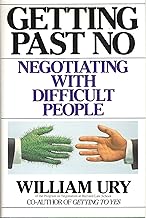
Getting Past No

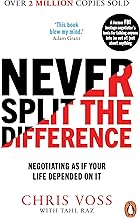
Never Split the Difference
Influence
Disclosure: This post may contain affiliate links. We only recommend products we believe in, and we may receive a commission at no cost to you! Thank you for your support!
Acknowledgment: Cover Image by moneycatzzz.com
Disclaimer: The information is provided for general information only – moneycatzzz.com makes no representations or warranties in relation to the information, including but not limited to any representation or warranty as to the fitness for any particular purpose of the information to the fullest extent permitted by law. While every effort has been made to ensure that the information provided in this article is accurate, reliable, and complete as of the time of writing, the information provided in this article should not be relied upon to make any financial, investment, real estate or legal decisions. Additionally, the information should not substitute advice from a trained professional who can take into account your personal facts and circumstances, and we accept no liability if you use the information to form decisions.