 Reading Time: 8 mins #
 This post may contain affiliate links.
The Shepherd's Gift Across Time
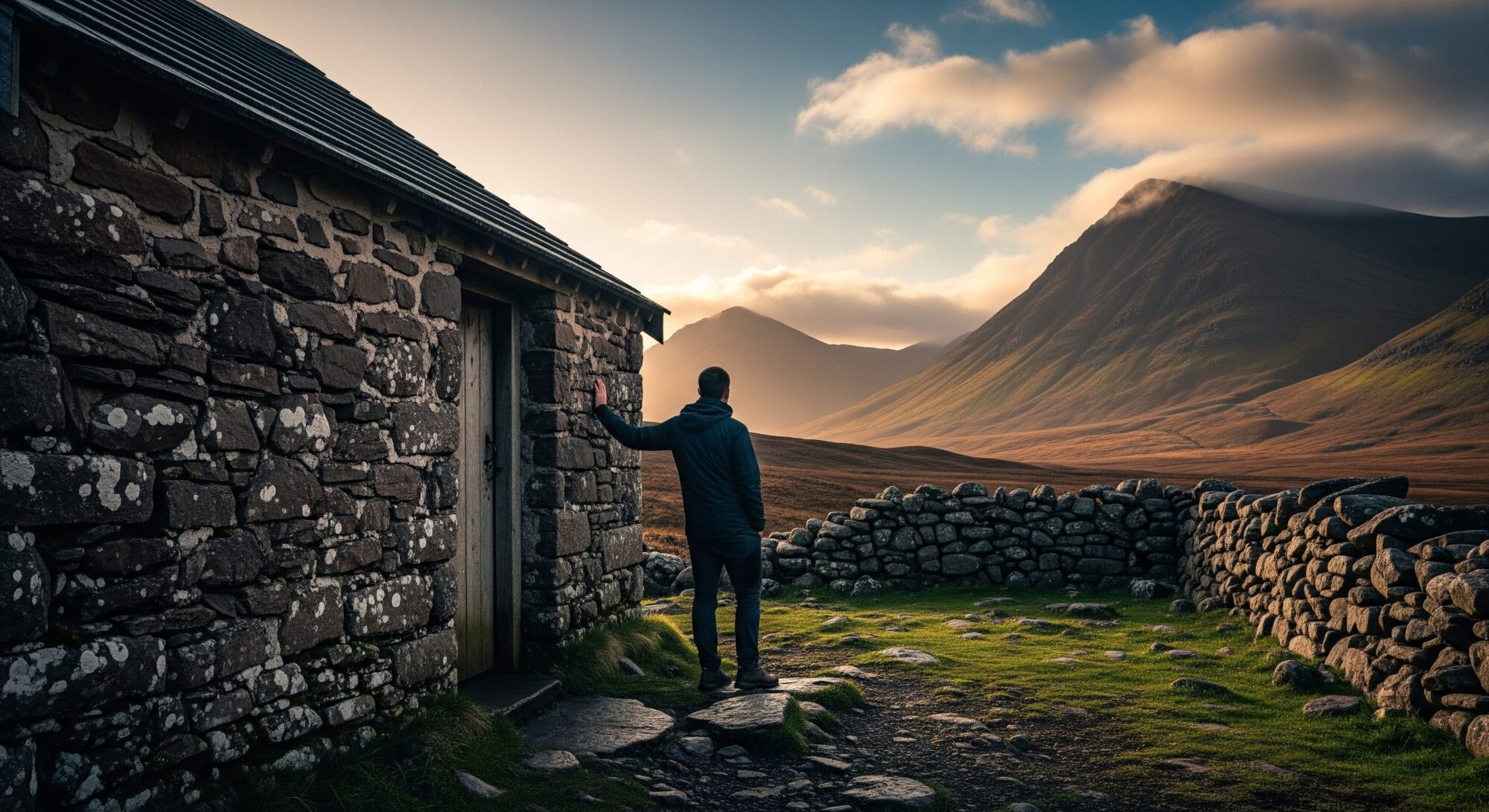
In 1845, a Scottish shepherd named Mackenzie built a stone shelter in Glen Affric, not for himself but for whoever might need it after him. He couldn’t have known that 178 years later, a management consultant from London would stumble through his door, carrying three dead phones and the peculiar modern grief of being connected to everyone and no one. I had come to Scotland to study solitude vs loneliness, though I wouldn’t have admitted that. I told people I was hiking. What I was really doing was calculating whether isolation might save me from the exhaustion of perpetual performance.
The bothy stood exactly as promised: unlocked, unmanned, free. Four stone walls, a corrugated roof, two wooden platforms for sleeping, and a fireplace with a stack of dry wood that someone else had gathered. No electricity. No running water. No signal.
Perfect.
The Mathematics of Escape
I’d discovered Scottish bothy culture through a forum for burned-out executives, a digital support group I’d joined under a pseudonym at 3 a.m., the hour when successful men admit failure to strangers. Someone mentioned these shelters scattered across the Highlands, maintained by the Mountain Bothies Association, which are available free of charge to anyone who needs them.
The concept seemed impossible. Unlocked shelters? No booking system? No surveillance? In London, I paid £2,400 monthly for a flat with three deadbolts and a camera system. The idea of deliberate vulnerability felt like strategic madness.
But madness was already winning. My marriage had become a series of logistics meetings. My friendships were LinkedIn connections. I had 500 contacts in my phone and no one to call at midnight. The difference between solitude and loneliness had collapsed; I was never alone yet always lonely.
The drive from London to Glen Affric took eleven hours. I turned off my phone at Fort William. The silence was immediate and terrible. Then, slowly, it became something else.
The Honor System as Architecture
Scottish bothy culture operates on principles that would destroy most modern systems. No locks (anyone can enter). No bookings (first-come, first-served). No payment (everything free). No surveillance (trust without verification).
The first night, I couldn’t sleep. Not from discomfort, the sleeping platform was fine, and my sleeping bag was warm enough. But the unlocked door bothered me. Anyone could walk in. Anyone.
Around 2 a.m., someone did.
An older man, maybe sixty, wearing a headlamp and carrying a pack that had seen decades. He nodded, chose the opposite platform, and unrolled his bag in practiced movements. Within minutes, his breathing steadied into sleep.
I lay there analyzing this. He’d trusted me immediately, a stranger in the dark. No questions, no suspicion, no defensive positioning. Just arrival, acknowledgment, rest.
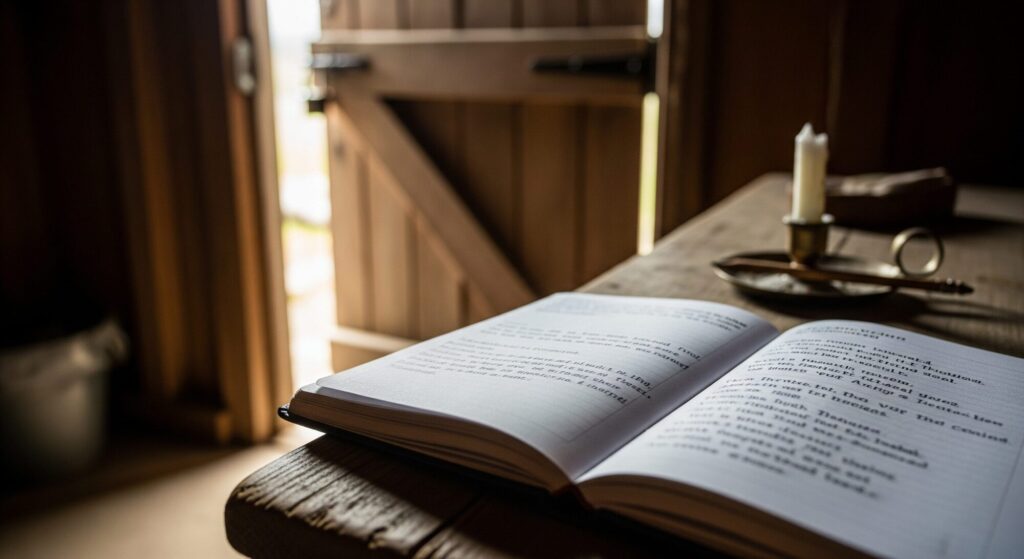
This was my first lesson in healing through isolation: it wasn’t actually isolation at all. It was solitude with evidence of others. The worn floor, the stacked wood, the logbook by the door: all proof that humans had been here, would be here, creating continuity without contact.
[“The Honor System as Architecture” – Image by moneycatzzz.com]
The Logbook Conversations
Every bothy has a logbook. Not official, just notebooks left by visitors, replaced when full. I read entries by candlelight — a conversation across months and years:
“Third divorce final. Needed to remember who I was before all that.” — James, March 2023
“Walked from Cape Wrath. Feet destroyed. Soul restored.” — Sarah, July 2023
“My son died in Afghanistan. This silence helps.” — Anonymous, December 2022
The entries taught me about the difference between solitude and loneliness through their honesty. Loneliness was a form of enforced disconnection, characterized by rejection, abandonment, and exclusion. But solitude? Solitude was a strategic withdrawal, a conscious choice, a deliberate rest.
I wrote: “Day 2. The door stays unlocked, and somehow that’s becoming okay.”
Bothy Etiquette: The Unwritten Contract
The older man, Donald, I learned over morning tea boiled on his camp stove, explained bothy etiquette, Scotland style:
“Leave it better than you found it, dry wood for the next person. Sweep before leaving. If something breaks, fix it or report it. Take nothing but memories.”
He’d been walking bothies for thirty years. “After my wife died,” he said, not looking at me, “I couldn’t bear walls with memories. So I found walls without them.”
We walked separately that day but in parallel, two men maintaining a respectful distance while sharing direction. This was another revelation about the benefits of solitude: it didn’t require absolute isolation. It required the absence of performance, not people.
That evening, we gathered wood together in silence. He taught through demonstration, which included showing how to identify the best dead branches for burning, how to stack them for proper drying, and the amount needed for a single cold night. We were practicing care for people we’d never meet.
The Philosophy of the Unlocked Door
On day four, alone again, I came to understand something fundamental about Scottish bothy culture. The unlocked door wasn’t a vulnerability; it was philosophy made physical. It said: humans are trustworthy until proven otherwise. It said: shelter is a right, not a commodity. It said, ‘We survive through mutual aid, not competition.’
I thought about my life in London: the contracts, NDAs, non-compete agreements, the legal architecture of distrust. Every relationship is hedged against betrayal, every interaction documented for potential litigation. I’d mistaken paranoia for prudence.
The bothy stood as a counterargument. For 178 years, strangers had maintained this shelter without enforcement mechanisms. They carried in wood, carried out trash, repaired what broke, and left behind what might be of help. The MBA maintains over 100 bothies, all of which operate on an honor system.
Books for Bothy Contemplation
I’d brought four books, chosen for weight and wisdom:
- Solitude: A Return to the Self by Anthony Storr: A psychiatrist’s argument that solitude is essential for creativity and mental health, not symptomatic of dysfunction.
- The Stranger in the Woods by Michael Finkel: The true story of a man who lived alone in the Maine woods for 27 years, exploring the difference between isolation and solitude.
- Silence: In the Age of Noise by Erling Kagge: A Norwegian explorer who walked alone to the South Pole, examining silence as a resource rather than a void.
- The Living Mountain by Nan Shepherd: A masterpiece about the Cairngorms, teaching attention and presence through landscape.
Each book reinforced what the bothy was teaching: solitude vs loneliness isn’t about the presence or absence of people. It’s about the presence or absence of the authentic self.
The Restoration Equation
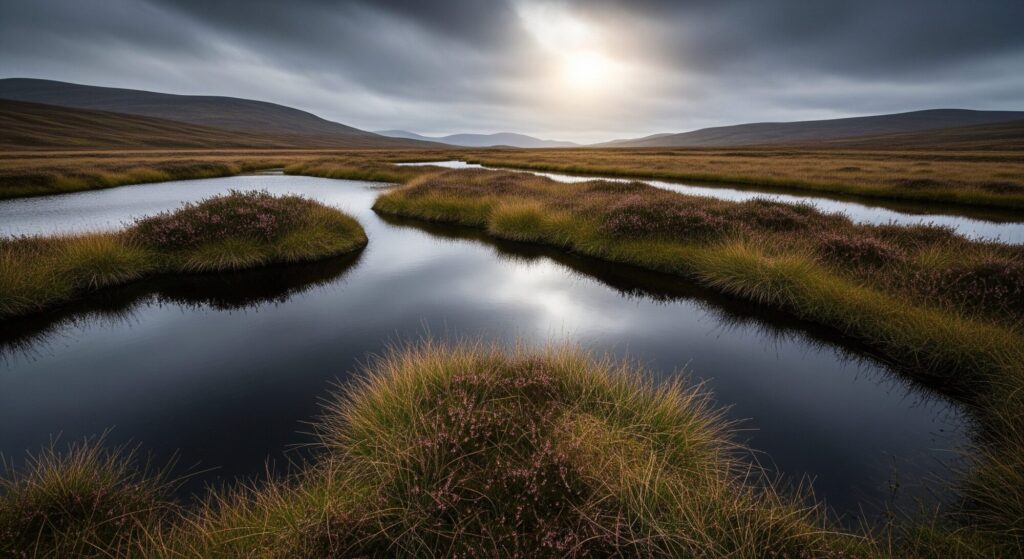
By day six, my nervous system had recalibrated: no notifications, no performance metrics, no one needing immediate responses. The benefits of solitude manifested physically: more profound sleep, slower heartbeat, and the strange sensation of thoughts completing themselves instead of fracturing across tasks.
I met other bothy users: a teacher walking off a breakdown, a young woman celebrating her PhD, a retired soldier who came annually “to remember and forget.” We shared tea, sometimes dinner, rarely names. The conversations had a quality I’d forgotten existed, purposeless but profound.
One man, a carpenter from Glasgow, articulated what I’d been feeling: “In the city, you’re lonely in crowds. Here, you’re accompanied in solitude.”
This was the crux of healing through isolation; it wasn’t isolation at all. It was a connection stripped of performance, a community without surveillance, a belonging without obligation.
The Trust Experiment
Scottish bothy culture challenged every strategic principle I’d lived by. In business, I assumed competition, protected advantages, and leveraged information asymmetry. But the bothies operated on an abundance mindset: there’s enough wood, enough space, enough trust for everyone.
I tested this. Left my expensive equipment visible while hiking. Shared my best food with strangers. Told Donald about the divorce I hadn’t even told my brother about. Each vulnerability went unpunished. Each trust was met with equal trust.
The Cairngorm Club has maintained bothies since 1887 on this principle. The John Muir Trust protects the wild lands around it. Thousands of volunteers maintain these shelters, asking nothing in return.
[“The Restoration Equation” – Image by moneycatzzz.com]
Understanding Solitude vs Loneliness
The revelation came on day eight, as I read entries in the logbook. People wrote about partners, children, jobs; whole lives they’d temporarily left. They weren’t escaping connection, but a false connection. They weren’t seeking isolation but integration.
Solitude vs loneliness became clear:
Loneliness is a scarcity of love, attention, and understanding. It breeds desperation, compromise, and performance anxiety.
Solitude is abundance, having enough inner resources to choose connection rather than needing it. It creates discernment, boundaries, and authentic engagement.
In London, surrounded by millions, I was lonely because every interaction was strategic. In Glen Affric’s bothy, alone for hours, I felt accompanied by everyone who’d ever rested here, everyone who ever would.
The Return Protocol
On my last morning, I followed bothy etiquette, a Scottish tradition, by sweeping thoroughly, stacking wood to the roof, and leaving tea bags and oatmeal in the supplies box. In the logbook, I wrote:
“Day 10. Learned the difference between loneliness and solitude. The door stays unlocked, and now I understand why. For the next person seeking shelter, it’s here.” — M, London.
Donald had left two days earlier with a handshake and six words: “You’ll be back. They always are.“
He was right. I’ve returned four times, to different bothies each visit. The benefits of solitude compound; each retreat makes real life more bearable because it is less performative. I’ve stopped optimizing relationships, such as supply chains, and started leaving doors unlocked, metaphorically speaking.
The Portable Bothy
Healing through isolation sounds like withdrawal, but Scottish bothy culture taught me it’s actually an advance toward trust, simplicity, and genuine connection. You can’t carry a stone shelter home, but you can have its principles:
- Leave things better than you found them.
- Trust until given reason not to.
- Create shelter for others, especially strangers.
- Maintain what matters without needing credit.
- Choose solitude to avoid loneliness.
My London flat still has locks; I’m not naive. But I’ve created what I call “bothy moments“: the phone off, the door metaphorically open, and present for whoever appears. The benefits of solitude aren’t in the isolation but in the integration it enables.
The Shepherd’s Wisdom
Mackenzie, that shepherd from 1845, probably never struggled with solitude vs loneliness the way we do. His isolation was geographical, temporary, and practical. Ours is psychological, persistent, and surrounded by crowds.
But he knew something we’ve forgotten: the best response to potential future suffering is present generosity. Build a shelter you’ll never use. Stack wood for fires you’ll never warm by. Trust strangers you’ll never meet.
The bothy still stands in Glen Affric. The door still doesn’t lock. People still arrive carrying modern loneliness, still leave understanding ancient solitude. The shelter shelters, as Mackenzie intended.
I close my laptop now; the irony of writing about disconnection on a connected device isn’t lost on me. But outside, London churns with its particular loneliness, and I remember: solitude vs loneliness isn’t about geography. It’s about the quality of space you create, the shelter you offer, the wood you stack for strangers.
The door closes. But it doesn’t lock.
It never needs to.
Required Reading: Books That Unpack Solitude and Societal Trust
The Living Mountain


Silence: In the Age of Noise
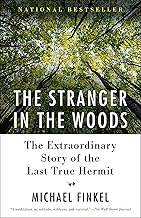
The Stranger in the Woods
Disclosure: This post may contain affiliate links. We only recommend products we believe in, and we may receive a commission at no cost to you! Thank you for your support!
Acknowledgment: Cover Image by moneycatzzz.com
Disclaimer: The information is provided for general information only – moneycatzzz.com makes no representations or warranties in relation to the information, including but not limited to any representation or warranty as to the fitness for any particular purpose of the information to the fullest extent permitted by law. While every effort has been made to ensure that the information provided in this article is accurate, reliable, and complete as of the time of writing, the information provided in this article should not be relied upon to make any financial, investment, real estate or legal decisions. Additionally, the information should not substitute advice from a trained professional who can take into account your personal facts and circumstances, and we accept no liability if you use the information to form decisions.