
 Reading Time: 8 mins #
 This post may contain affiliate links.
Same problem, different job. Same drama, different relationship. Same shortage, different month.
Ever notice how your specific brand of chaos seems to follow you everywhere? Like you’re starring in a remake of your own life, just with different sets and supporting actors? Your Limiting beliefs dragging you down?
Here’s the uncomfortable truth: You’re not stuck in your reality. You’re projecting it.
The Projector, Not the Screen
In 1991, Michael Talbot (1953-1992) blew minds with a radical idea: reality isn’t what happens to you — it’s what happens through you. Drawing on the work of physicist David Bohm (1917-1992) and neurophysiologist Karl Pribram (1919–2015), he proposed that our universe operates like a hologram. Everything you experience “out there” is actually a projection from “in here.“
Think about a holographic image. The picture you see isn’t really there; it’s a projection from information stored on film. Change the film, change the image. Talbot suggested your life works the same way. Your limiting beliefs are the film. Your reality is the projection.
This isn’t mystical thinking. It’s pattern recognition. Why do chronically broke lottery winners end up broke again? Why does the person who “attracts narcissists” keep finding them in different cities, industries, and social circles? Why do your problems have the same flavor no matter how much you change your external circumstances?
Because you’re not changing the film, you’re just moving the projector to different rooms.
The Implicate Order (The Blueprint)
Bohm argued that the visible world of space, time, and separate objects (the explicate order) is actually a product of a deeper, undivided, non-local realm of information: the implicate order. Think of the explicit order as the waves you see on the ocean surface. The implicate order is the deep, unseen current and pressure that determines the pattern of those waves. Your limiting beliefs, those core, unconscious assumptions about worth, safety, and possibility, reside in this implicate order.
The Brain as the Receiver (Pribram’s Insight)
Pribram approached this from the perspective of the brain, suggesting it functions less like a computer hard drive and more like a sophisticated holographic lens. The brain doesn’t store pictures of reality; it uses complex mathematical processes to decode the patterns received from Bohm’s implicate order and construct the explicate reality we see.
Why do chronically broke lottery winners end up broke again? Why does the person who “attracts narcissists” keep finding them? Because you’re not changing the film, your limiting beliefs are the film. You’re just moving the projector to different rooms. Until you modify the source code, your holographic lens will continue to project the same reality onto every new situation.
Your Three Default Holograms: The Projection of Limiting Beliefs
Your recurring problems are not random events; they are the consistent, predictable result of your internal blueprints. They fall into one of these distortion fields:
The Scarcity Hologram: Why Money Avoids You
This is the hologram of “Never Enough.” Consider the professional who earns $30k, then $120k, and still lives paycheck to paycheck. They don’t have a money problem; they have a limiting beliefs problem about money. The internal blueprint says “there’s never enough,” so the external reality obediently complies.
The car breaks down, the medical bill appears: these are the blueprints for preservation. The scarcity hologram doesn’t care about your income – it cares about your implicit order. The perceived reality of wealth is often diluted to match the internal programming of scarcity and a sense of lack.
The Ceiling Hologram: Why Success Feels Dangerous
This is the hologram of “Unworthy Success.” This person is repeatedly promoted but self-destructs right as they hit a level of visibility or power. They have limiting beliefs that equate success with danger, or abandonment. Every time they approach this unconscious ceiling, their internal alarm system activates.
Their holographic universe faithfully projects circumstances (such as missed deadlines and poor decisions) to bring them back to their “safe” level. This ceiling hologram is why we plateau at suspiciously consistent levels across all areas: the explicate order is maintaining homeostasis with the faulty implicate code.
The Separation Hologram: Why Connection Feels Impossible
This is the hologram of “Chronic Isolation.” This person changes locations and relationships, only to conclude; “Nobody really gets me.” They are projecting their internal fragmentation onto every external connection. Their limiting beliefs about connection, often installed in childhood, create a holographic field that ensures distance.
They unconsciously repel the connection they crave, proving the internal program true. The resulting loneliness in real life is a poignant yet painful mirror of the internal programming.

[“The Three Default Holograms: The Projection of Limiting Beliefs” – Image by moneycatzzz.com]
Finding Your Hidden Blueprints
So, how do you identify the limiting beliefs creating your reality? You need an Implicate Audit, a systematic investigation of your source code.
The Three-Layer Dig
Your beliefs operate at three levels, and most people only examine the first:
Surface Story: This is what you tell people. “I’m between jobs.” “I’m focusing on my career.” “I haven’t met the right person.” It’s socially acceptable, logical, and entirely superficial.
Secret Story: This is what you tell yourself at 3 AM. “I’m not smart enough.” “I’m too damaged.” “Good things don’t happen to people like me.” It’s more honest, but still not the source.
Source Code: This is what you believe but don’t know you think. It’s pre-verbal, pre-logical, and often established before the age of seven. “Love equals abandonment.” “Money equals danger.” “Success equals betrayal.” These are your limiting beliefs that generate everything else.
The Reality Pattern Map
To find your source code, map your patterns across contexts. What stays constant while everything else changes?
Take a piece of paper. Draw three columns: Work, Relationships, Money. Now list your recurring problems in each area. Not surface problems, the deep patterns. Look for themes.
Maybe you’re always undervalued (work), unseen (relationships), and underpaid (money). The common thread? A source code belief about worth. Or maybe you’re constantly overwhelmed (work), suffocated (relationships), and stretched thin (money). The thread? A belief that says, “I have to earn my existence through exhaustion.”
These patterns are your holographic signature, the unique distortion your limiting beliefs create across all areas.
The Blueprint Test
Here’s a devastating but straightforward exercise. Write your ideal life in vivid detail. The career, the relationship, the home, the daily routine. Write it like it’s already real.
Now notice where you feel resistance. Where does your body contract? Where does your mind say “yeah, but…”? Where do you feel like you’re lying?
Those resistance points are your limiting blueprints announcing themselves. They’re the films that say, “That image cannot be projected from this source material.” This is valuable data. Now you know precisely which limiting beliefs need updating.
The Art of Internal Revolution
Identifying your limiting blueprints is only half the battle. Now comes the real work: changing the film.
Why Affirmations Fail (And What Works)
Most people who try to change their limiting beliefs fail spectacularly. They plaster affirmations on mirrors, repeat mantras, and create vision boards, but nothing changes. Why?
Because they’re trying to paint over the projection instead of changing the projector. Saying “I am wealthy” while your source code screams “money is dangerous” just creates cognitive dissonance. The hologram always wins because it’s running from a deeper program.
Real change requires going to the implicate level, the source code itself. This isn’t about positive thinking. It’s about systematic reprogramming.
The Implicate Replacement Protocol
Here’s the framework that actually changes limiting beliefs at the source level:
1. Catch the projection in action. Notice when you’re living from a blueprint, not a choice. “Oh, I’m doing that thing where I assume I’ll be rejected.”
2. Trace it to the source. When did you first learn this? Not intellectually—somatically. What early experience installed this program?
3. Question its truth. Was it ever actually true? Is it true now? Or is it just familiar? Most limiting beliefs are expired survival strategies.
4. Install a new blueprint, not through affirmation but through evidence. Start small. Collect proof that contradicts the old belief. Your brain needs data, not mantras.
5. Act from a new blueprint. This is crucial. You must behave as if the latest belief is true before it feels true. The hologram responds to action, not intention.
The Coherence Practice
Here’s what nobody tells you about changing limiting beliefs: When you fix one core blueprint, multiple problems solve themselves simultaneously.
Remember, in a hologram, every piece contains the whole. So, when you heal your core wound around worth, suddenly your finances improve, your relationships deepen, and your career takes off. Not because you worked on each area, but because you changed the source code they all share.
I observed a client focusing exclusively on her relationship with her father (on an implicit level). Within six months, without directly addressing them, her business doubled in revenue, her marriage transformed, and her chronic back pain disappeared — one blueprint change, total reality renovation.
People Who Changed Their Film: Architects of Reality
Oprah Winfrey: The Collapse of the Scarcity Hologram
Oprah Winfrey is the ultimate case study in shattering the Scarcity Hologram. Her blueprint was programmed to equate visibility with danger. When she was demoted from her TV news role, it was the external reality (the explicate order) mirroring her deepest limiting beliefs about her worth. Instead of succumbing, she made an Implicate Replacement decision: she committed to being an empathetic communicator who brought light to others. This healing decision reversed her internal blueprint, and the result was a media empire built on connection — the stark opposite of the isolation programmed into her childhood.

[“The Art of Internal Revolution: The Implicate Replacement Protocol” – Image by AI]
Thomas Edison: Acting from the New Blueprint
Thomas Edison provides a visceral example of acting from a new blueprint despite overwhelming evidence to the contrary. Before his lightbulb breakthrough, he faced thousands of system failures. His internal blueprint was fundamentally different from most:
“I have not failed 10,000 times, I have successfully found 10,000 ways that will not work.”
He was operating from a core belief that every action generates necessary data. Because his limiting beliefs about failure were already replaced, his external reality eventually had no choice but to reflect his unwavering internal conviction. The hologram obeyed the instruction.
The pattern is always the same: Change the internal, watch the external rearrange itself.
Frequently Asked Questions: The Holographic Universe and You
Q: Isn't this just victim-blaming? What about real oppression and systemic issues?
Systemic oppression is real. AND you still have limiting beliefs about what's possible within those constraints. This isn't about denying external reality; it's about maximizing agency within it. Two people can face identical external obstacles with vastly different internal blueprints and create vastly different outcomes.
Q: What if I've tried changing beliefs and nothing happened?
You probably worked at the surface or secret story level, not source code. Or you tried to change through insight alone without embodied action. Real blueprint change requires both deep investigation and consistent new behavior. It's not enough to understand your limiting beliefs — you must live differently.
Q: Can childhood trauma really affect my current income?
Absolutely. Your relationship with money is often a reflection of your relationship with safety, worth, and power — traits that are usually programmed in childhood. If money meant danger in your family system (fights, abandonment, criticism), your blueprint will recreate that danger to keep you "safe" from wealth.
Q: Do I need therapy to change limiting blueprints?
Depends on the depth of the programming. Some limiting beliefs can be changed through self-investigation and conscious practice. Others, especially trauma-based blueprints, benefit from professional support. Think of therapy as hiring a specialist to help debug particularly complex or deeply ingrained code.
Your Reality Audit Checklist
Signs you’re projecting old limiting beliefs onto new situations:
✓ Same problem, different context (repeatedly).
✓ Success feels scarier than failure.
✓ You intellectually know better but can’t change behavior.
✓ Your problems have a suspicious consistency.
✓ You feel like you’re “performing” your life, not living it.
✓ External changes bring temporary relief, then reset.
✓ You can predict your own self-sabotage.
✓ Other people’s success feels personally threatening.
✓ You argue for your limitations like they’re facts.
If you checked more than four, you’re not living your life; you’re projecting your programming.
The Ultimate Response-Ability
If you’re projecting your reality from your limiting beliefs, then you’re responsible for what you experience. Not guilty, accountable. Not to blame, but able to respond.
This means no more victim story. No more “if only.” No more waiting for external reality to change so you can feel different. The power and the burden are the same: It’s an inside job.
If you’re the projector, you can change the film. If your limiting beliefs created your current reality, new beliefs can create a different one. Not overnight, not through magical thinking, but through systematic internal revolution.
The question isn’t whether you have limiting blueprints. You do. We all do. The question is whether you’ll keep projecting the same tired movie or finally change the reel.
Your external reality is waiting for new instructions. What blueprint will you rewrite first?
Essential Reads:
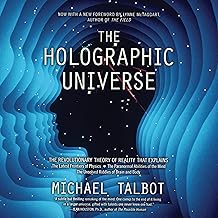 The Holographic Universe: The Revolutionary Theory of Reality by Michael Talbot
Disclosure: This post may contain affiliate links. We only recommend products we believe in, and We may receive a commission at no cost to you! Thank you for your support!
Acknowledgement: Cover Image by moneycatzzz.com
Disclaimer: The information is provided for general information only – moneycatzzz.com makes no representations or warranties in relation to the information, including but not limited to any representation or warranty as to the fitness for any particular purpose of the information to the fullest extent permitted by law. While every effort has been made to ensure that the information provided in this article is accurate, reliable, and complete as of the time of writing, the information provided in this article should not be relied upon to make any financial, investment, real estate or legal decisions. Additionally, the information should not substitute advice from a trained professional who can take into account your personal facts and circumstances, and we accept no liability if you use the information to form decisions.