 Reading Time: 8 mins #
 This post may contain affiliate links.
Self-care isn’t a product you buy or a retreat you schedule; it’s a radical practice of receiving something many of us have forgotten how to do. I landed in Taipei running on fumes: not jet lag, but life lag. For two years, I’d been everyone’s anchor, quietly starving myself of comfort and rest. My body called it quits, and my mind stopped. I was a ghost, drawn to a city that measured Gross National Happiness.
Arriving Empty at Shilin Night Market
For two years, I’d been everyone’s anchor. My mother’s illness. My sister’s divorce. My best friend’s career crisis. I held space for everyone’s pain while quietly starving myself of comfort, rest, and care. I called it love. My therapist called it codependency. My body called it quits.
The breaking point came during a work presentation when I literally forgot how to finish my sentence. Not a pause, a complete blank. My mind, overfed with others’ needs and underfed with my own care, came to a halt.
My doctor prescribed rest. I booked a flight to Taiwan instead, drawn by something I couldn’t quite put my finger on. It could be the promise of anonymity. It was the desire to be somewhere that didn’t require me to be anything in particular.
I arrived at Taipei night market at dusk, when the city transforms into a constellation of lights, steam, and possibility.
The Philosophy of Xiaochi: Small Eats, Big Wisdom
Shilin Night Market doesn’t serve meals; it serves Xiao Chi (小吃), “small eats.” This isn’t just about portion size. It’s a philosophy of abundance through accumulation, nourishment through variety, satisfaction through choosing.
I stood paralyzed at the entrance on my first night. Hundreds of stalls stretched before me: oyster omelets sizzling on flat grills, stinky tofu perfuming the air, bubble tea pearls glistening like black pearls. The paradox of choice when you’ve forgotten how to choose for yourself.
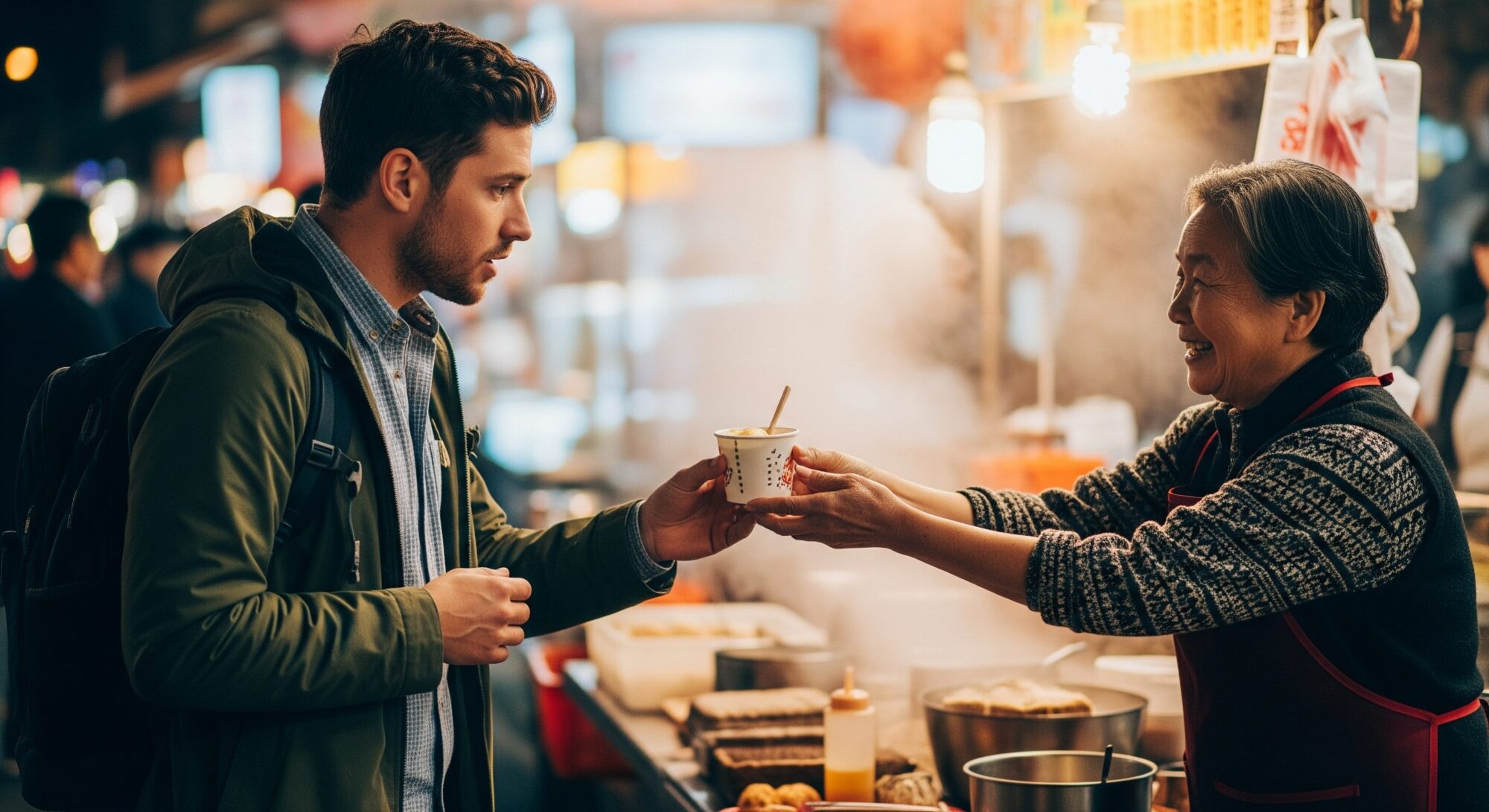
An elderly vendor noticed my overwhelm. She handed me a small cup of douhua (silken tofu pudding) without my asking.
“Xiao Chi (小吃),” she said, gesturing for me to eat. “Small first. Then more.”
That first spoonful of douhua: silky, sweet, warm, was the first thing I’d eaten in months without multitasking, without guilt, without calculating who else might need it more.
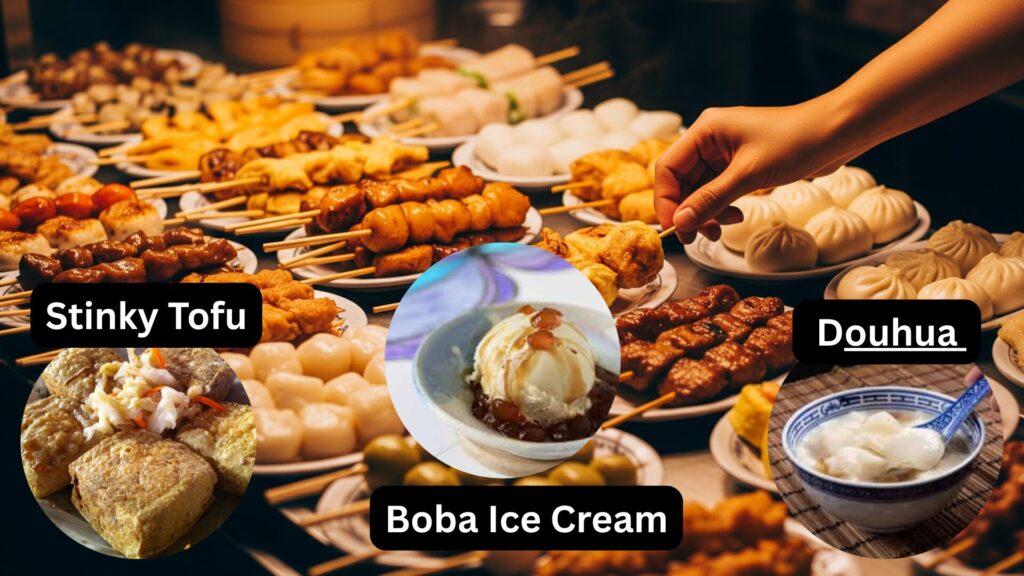
[“The Philosophy of Xiaochi: Small Eats, Big Wisdom” – Image by moneycatzzz.com]
Why Self-Neglect Feels Like Virtue
At the Taipei night market, surrounded by abundance, I finally understood my pattern. Self-neglect had become my identity:
- The friend who always listens but never shares.
- The daughter who shows up for every crisis.
- The colleague who takes on extra work without complaint.
- The woman who eats standing up, sleeps too little, says yes to everything.
I thought I was being good. Helpful. Valuable.
But here’s what self-care actually taught me: giving until empty isn’t generosity, it’s a form of hiding.
When you’re always the giver, you never have to receive. Never have to admit need. Never have to be vulnerable enough to accept care. It’s easier to be the strong one than to realize you’re starving.
“Self-care isn’t selfish. Self-neglect isn’t noble. Both are choices.”
The Night Market Method of Overcoming Burnout
Each evening at the Taipei night market, I practiced something radical: feeding myself first.
Not metaphorically. Literally.
I’d start at a different stall, choosing based on what my body wanted, not what was practical, healthy, or appropriate. Some nights that meant beginning with dessert (brown sugar boba ice cream). Other nights, it meant the strangest thing I could find (iron eggs, century eggs, blood pudding).
The practice taught me about overcoming burnout through micro-nourishments:
Lesson 1: You Can’t Give What You Don’t Have
The vendors at the Taipei night market prep their ingredients first. They feed themselves during quiet moments. They understand that an empty vendor can’t fill anyone’s bowl.
Lesson 2: Small Portions Prevent Depletion
Xiao Chi prevents the feast-or-famine cycle. Instead of starving then binging, you maintain steady nourishment. Self-care works similarly; daily micro-practices can prevent major burnout.
Lesson 3: Variety Sustains Interest
One stall sells only spring onion pancakes. Another only makes fresh soy milk. Specialization allows sustainability. In self-care terms, you don’t have to be everything to everyone.
The Stinky Tofu Revelation About Self-Care
On my fifth night, I finally tried stinky tofu, fermented tofu that smells like garbage but tastes like heaven. Watching locals line up for something that literally repels tourists taught me something crucial about self-care:
What nourishes you might repel others. That doesn’t make it wrong.
My self-care might look like:
- Saying no to social events that drain me
- Taking solo trips without explanation
- Eating dinner at 4 PM because that’s when I’m hungry
- Going to bed at 9 PM on Fridays
- Choosing silence over small talk
At the Taipei night market, no one apologizes for loving stinky tofu. Why was I apologizing for basic self-care?
Learning to Receive at the Night Market
One evening, a young vendor noticed me photographing his dragon beard candy stall. Instead of posing or performing, he pulled off a piece of the delicate spun sugar and held it out to me.
“Gift,” he said in English. “No money. Just enjoy.“
I almost cried. When had receiving become so hard?
This is the shadow side of chronic giving; we become allergic to receiving. We deflect compliments, refuse help, and minimize our needs. We become one-way streets, wondering why we feel so alone.
At the Taipei night market, I practiced receiving:
- Free samples offered with genuine pleasure
- Directions given by the patient’s locals
- Seats provided by strangers when tables were full
- Extra scoops added “for pretty lady” (their words, not mine)
Each small receiving was a rebellion against my self-neglect pattern.
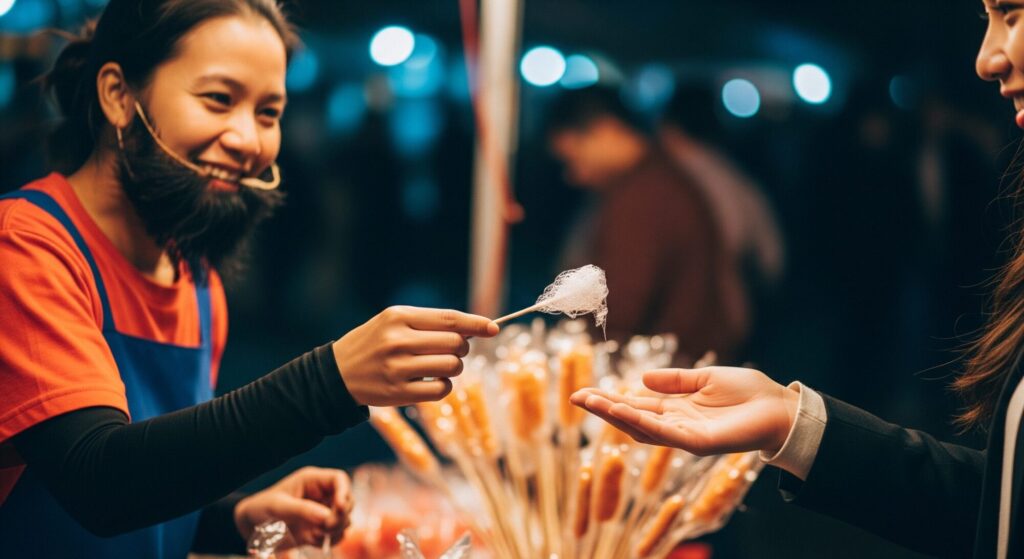
[“Learning to Receive at the Night Market” – Image by AI]
Practical Steps for Self-Care (The Night Market Way)
Step 1: Start with Xiaochi
Begin with tiny acts of self-care. Five-minute practices. Small indulgences. Don’t wait for the perfect spa day — start with a small spoonful.
Step 2: Feed Yourself First
Literally, eat sitting down. Eat without your phone. Eat what you want, not what’s left over.
Step 3: Practice Receiving
Accept compliments without deflecting. Take help when offered. Let someone else be the strong one sometimes.
Step 4: Diversify Your Nourishment
Self-care isn’t just physical. Feed your creativity, curiosity, playfulness, rest, connection, solitude — all the hungers.
Step 5: Stop Apologizing for Your Appetite
Whether it’s for rest, recognition, pleasure, or peace, your needs are not negotiable. They’re necessary.
FAQ About Self-Care and Overcoming Burnout
Isn't self-care just a form of privilege dressed up as wellness?
Basic self-care, including eating, sleeping, and setting boundaries, isn't a privilege; it's a necessity. It's survival. The commercialized version might be, but nourishing yourself is a necessity, not a luxury.
How do I practice self-care when everyone needs me?
How do I practice self-care when everyone needs me?
Start with five minutes. Everyone can survive five minutes without you. If they can't, that's codependency, not love.
What if self-care makes me feel guilty?
That guilt is probably old programming that says your worth comes from giving. Overcoming burnout requires challenging that belief.
The Last Night: Full at Last
On my final evening at the Taipei night market, I realized something had shifted. I wasn’t grabbing food while walking. I was sitting. Tasting. Choosing based on desire, not duty.
I watched families sharing tables, vendors laughing between orders, tourists fumbling with chopsticks. Everyone feeds themselves first, then shares from abundance rather than depletion.
A vendor I’d bought from several times recognized me. “You look different,” she said in Mandarin, then switched to English: “More full.”
She was right. For the first time in years, I felt full. Not just my stomach, my spirit. The gnawing hunger that no amount of external validation could fill had finally been addressed with the radical act of self-care.
Your Next Small Bite of Self-Care
The vendors of Taipei night market understand something we’ve forgotten: you cannot serve from an empty wok. You cannot pour from an empty teapot. You cannot give from an empty heart.
Self-care isn’t about becoming selfish. It’s about becoming sustainable. It’s about feeding yourself with the same attention you feed others. It’s about small, consistent acts of nourishment that prevent the dramatic collapse of burnout.
Overcoming burnout doesn’t require a retreat to Bali or a complete life overhaul; it can be achieved through simple adjustments. It needs “xiaochi“: small eats, small acts, small choices that accumulate into fullness.
Start tonight. Eat something you love. Slowly. Sitting down. Without apology.
Because self-neglect isn’t love, it’s slowly starving while surrounded by abundance. And you deserve to be full.
Resources for Your Journey
Essential Books on Self-Care and Boundaries:

The Gifts of Imperfection
Set Boundaries, Find Peace
Experience Taipei Night Market:
- Best time: 5 PM – midnight, weekdays are less crowded
- Must-try Xiao Chi: Beef noodle soup, oyster omelet, mango shaved ice
- Pro tip: Bring cash, come hungry, pace yourself
Resources:
Shilin Night Market: Link Here.
Taiwan Culinary Delights: Links here and here.
About Taiwan:
Where to stay: AirBnB
Disclosure: This post may contain affiliate links. We only recommend products we believe in, and We may receive a commission at no cost to you! Thank you for your support!
Acknowledgement: Cover Image by moneycatzzz.com
Disclaimer: The information is provided for general information only – moneycatzzz.com makes no representations or warranties in relation to the information, including but not limited to any representation or warranty as to the fitness for any particular purpose of the information to the fullest extent permitted by law. While every effort has been made to ensure that the information provided in this article is accurate, reliable, and complete as of the time of writing, the information provided in this article should not be relied upon to make any financial, investment, real estate or legal decisions. Additionally, the information should not substitute advice from a trained professional who can take into account your personal facts and circumstances, and we accept no liability if you use the information to form decisions.