Transformation in a once-shamed land
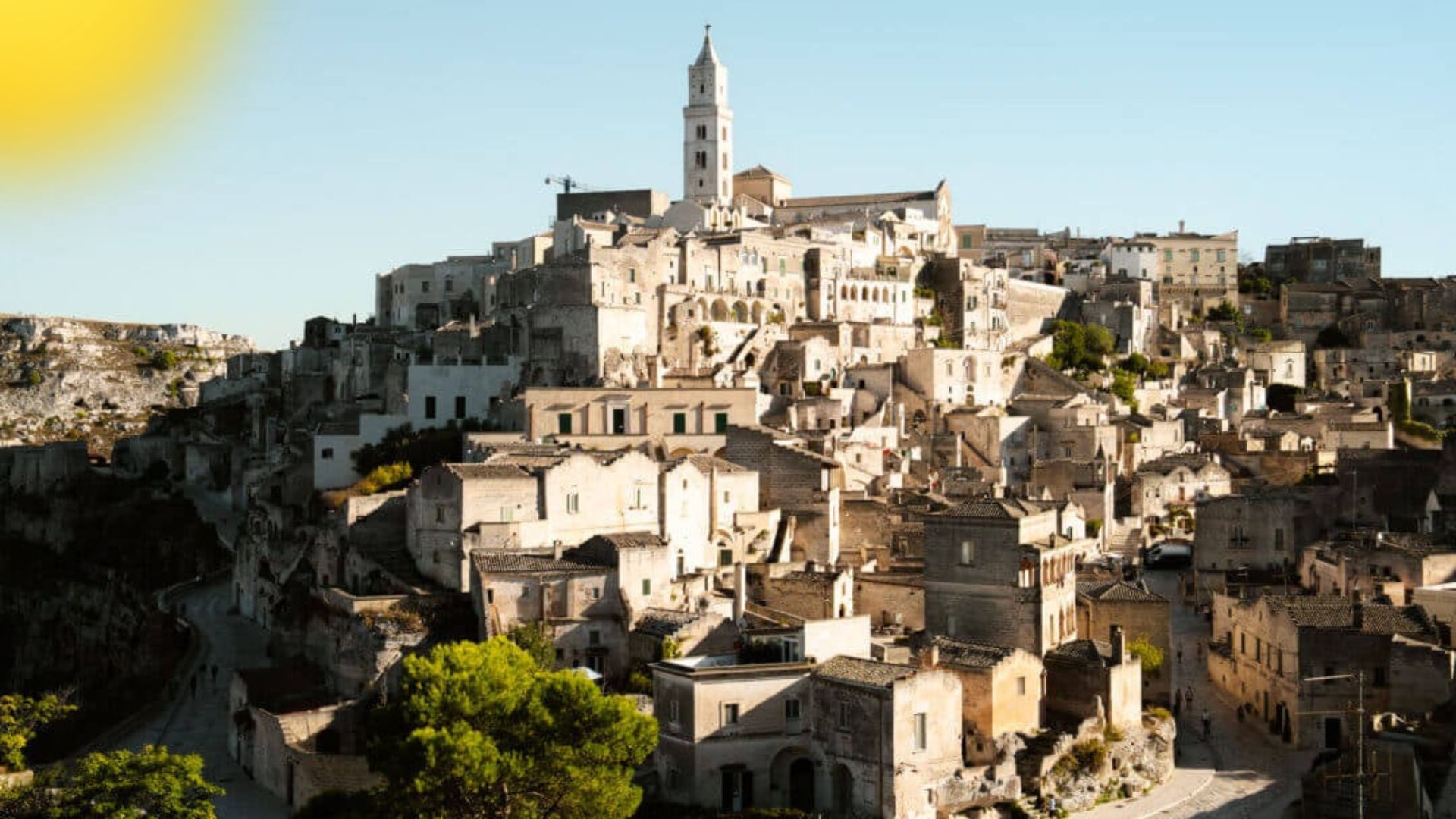
Rome dazzles, Florence sings, and Venice seduces. But Matera, Italy does not greet you like other Italian cities. Matera confronts. From the first step into its narrow stairways, you feel swallowed into another world, as if the cliffs themselves have remembered you.
The city rises and falls in layers of caves called the Sassi di Matera, carved directly into limestone. They are not polished ruins meant for postcards, but scars of survival. Here, life once clung to walls damp with centuries of breath. Families and animals lived together in a single room. Poverty, disease, and hunger marked Matera’s history with a reputation so dire that Italian politicians in the 1950s called it the vergogna d’Italia — the shame of Italy.
Walking those stairways, I felt both an intruder and a witness. The air carried the weight of stories abandoned, rejected, and later reclaimed.
Exile as Mirror
Matera’s history is a mirror for anyone who has known exile. Not only the physical exile of being sent away, but the quieter kind: when you are told your story is unworthy, your voice inconvenient, your body unwanted.
The government once relocated the people of Matera, Italy. Their caves were deemed unfit for human life, a symbol of backwardness. To leave was supposed to be salvation. And yet, decades later, the world returned: tourists, architects, and artists – praising the same Matera caves as masterpieces of human resilience and design.
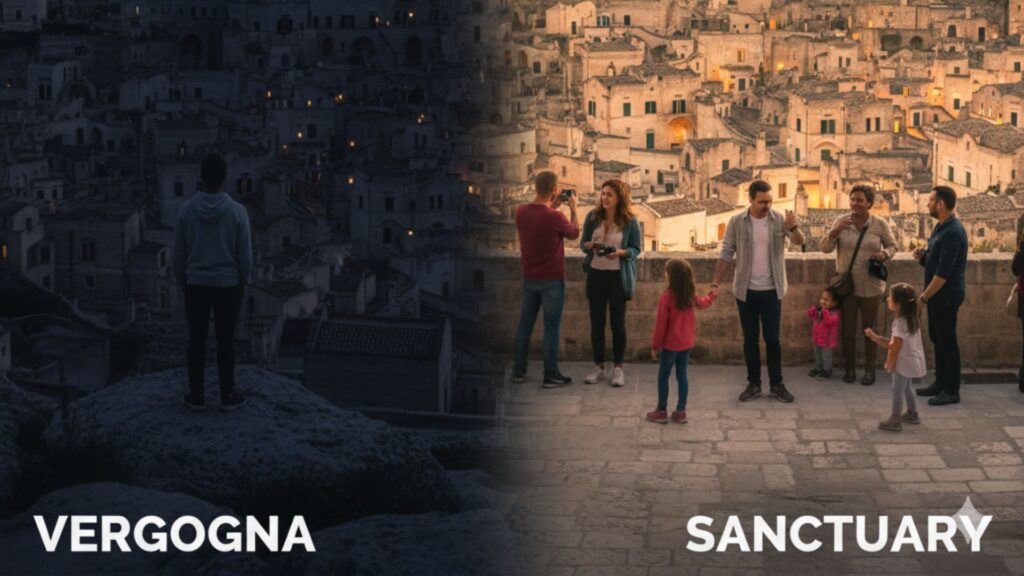
That paradox is familiar. Exile strips you of belonging, but in the stripping, it can prepare you for transformation. What was shame becomes sanctuary. What was abandoned becomes precious.
The Weight of Vergogna
In Italian, vergogna means shame. It is a word spoken with a lowered voice that clings like damp air to the skin. Matera, Italy, was not just a poor city but shamed into silence. For years, Italy wanted to forget it.
But here lies the irony: what a culture tries hardest to bury often holds its most profound wisdom.
Matera, Italy, is celebrated as a UNESCO World Heritage Site and named a European Capital of Culture. Tourists wander through restored cave hotels and dine under stone ceilings that once echoed with despair. Once hidden in silence, the same Sassi di Matera are now lit at night, glowing golden across the ravine.
It is not that the shame has disappeared; it has been reframed. The scars have not been erased. They are now honored.
I thought of my scars; the manuscripts I abandoned, the moments I let someone else’s judgment silence me. Shame may not be a sign that we must bury the story, but an offer to one day return to reclaim it.
[“Transformation in Layers” – Image by moneycatzzz.com]
You may also like:

When Silence Hurts: Speak Your Truths and Build Stronger Relationships

Transformation in Layers
Matera’s history does not unfold in a straight line. The city folds back on itself, stairways looping into stairways, houses built on the roofs of older structures. You cannot walk in Matera, Italy, without losing your sense of direction.
That may be the point. Transformation rarely happens in a straight path. It is a spiral, much like the Hermetic Principle of Rhythm, which teaches that everything moves in cycles. What falls returns, what recedes advances again, and every descent carries the seed of ascent.
In Matera, exile becomes transformation not because the shame is erased but because it is absorbed. The caves are still here. The shadows remain. And yet, light now pours into them.
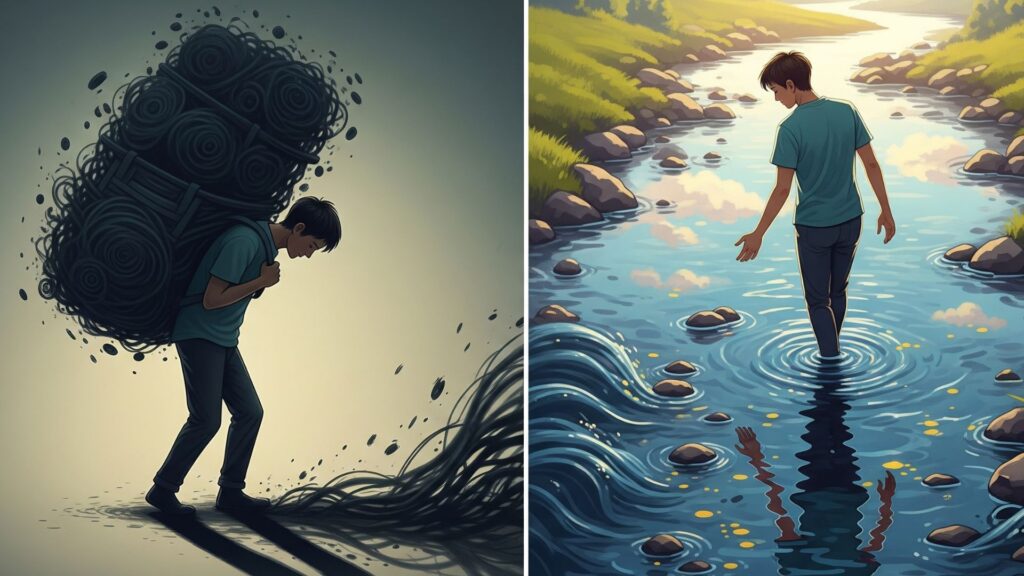
When I think of my life, I see a similar layering: the jobs I left behind, the friendships that dissolved and the parts of myself that I thought were failures. They are not gone. They form the foundation of who I am today. Every step forward rests on the roof of an older shell.
[“The Weight of the Past” – Image created by moneycatzzz.com]
From Abandonment to Sanctuary
Matera, Italy, also whispers a radical truth: exile can turn into sanctuary. What is cast out today may be what saves you tomorrow.
Walking those stone passages, I realized that the parts of myself I had once tried hardest to abandon- my sensitivity, longing for solitude, and refusal to fit into prescribed roles – were the qualities now guiding me back to wholeness.
The Matera caves remind us that nothing is wasted. Even the shadows can be reshaped into shelter.
Read Related Articles:

Emotional Clarity: Breaking the Spiral of Reaction
Closing Reflections on Matera, Italy
Matera, Italy, is not simply a city of caves. It is a city of paradoxes. Shame and pride. Poverty and beauty. Exile and rebirth.
Standing at the ravine’s edge at sunset, the stones glowed like embers. I thought about how long it takes to see the worth of what we once rejected, about how exile, whether chosen or imposed, can become a teacher.
Matera proves that there is no final abandonment. What is left behind may wait silently for the day it can be seen again, not as vergogna, but as sanctuary.
The Sassi di Matera are not merely historical. They are a mirror. For me, for you, for anyone who has felt cast out, unfinished, or forgotten.
“Like Matera’s caves, the parts of you once buried in shame may one day become the sanctuary where you rediscover yourself.”
Because Matera’s truth is this: the shadows are not the end of the story, they are where rebirth begins.

A Deeper Dive: Books on Shame, Exile, and Rebirth
For those who resonate with Matera’s journey from shame to sanctuary, these books offer profound insights into embracing complex histories and finding resilience.
1. Daring Greatly by Brené Brown: Brown’s seminal work is a must-read for anyone seeking to understand the power of vulnerability. It offers a powerful framework for overcoming vergogna (shame) by embracing your imperfections and finding the courage to show up as your authentic self.
2. Exile and the Kingdom by Albert Camus: This classic collection of short stories explores spiritual and emotional exile themes. Camus’s work resonates with Matera’s history by examining what it means to be cast out and the difficult, yet profound, journey of returning to oneself and finding a new kind of belonging.
3. The Midnight Library by Matt Haig: Haig’s novel is a metaphorical journey through a life of what-ifs, speaking directly to the experience of feeling like you’ve made the wrong choices or have “wasted” parts of your life, offering a story of rebirth and second chances that is both hopeful and profoundly moving.
4. When Things Fall Apart by Pema Chödrön: This guide to difficult times provides a Buddhist perspective on transforming suffering into wisdom, s offering a compassionate way to sit with discomfort, and uncertainty – mirroring Matera’s story of turning a painful history into a source of strength and beauty.
The Traveler’s Essential Toolkit
In the spirit of Matera’s transformation from chaos to calm, here are some tools I’ve found indispensable for bringing order to the road.
Tripped Travel Gear: Products that combine innovation with exceptional quality to deliver an unmatched experience.
Booking.com: Discover unique hotels that feel like a retreat, not just a room.
Airbnb: Find a local home that offers a sense of belonging in a new place.