
 Reading Time: 8 mins #
 This post may contain affiliate links.
Overcome Burnout & Thrive: Reignite Your Life
In a rat race where output trumps input, the constant barrage of to-do lists and ever-increasing targets leave many feeling burnt out, like used batteries discarded before their time. What once ignited your passion and fueled your curiosity has dimmed, replaced by exhaustion and indifference. Countless individuals grapple with burnout – a state of emotional, physical, and mental depletion.
Burnout isn’t an isolated incident; it’s a widespread epidemic. Statistics from the American Psychological Association (APA) reveal that over 70% of employees experience burnout – a state of emotional, physical, and mental exhaustion caused by prolonged or excessive stress. This isn’t just a personal struggle; it impacts businesses and communities, leading to decreased productivity, higher healthcare costs, and increased employee turnover.
“Self-care is not self-indulgence; it is self-preservation.” – Audrey Lorde
But unlike machines, we can heal, recharge, and reignite our passion. This article isn’t about pushing harder or becoming a high achiever. It equips you with eight powerful strategies to combat burnout, reclaim your well-being, and emerge stronger than ever before.
1. From Hustle to Heart: Unmasking the Root Causes
The road to burnout isn’t a sudden plunge; it’s a gradual descent. Many of us, myself included, initially embrace the “hustle culture.” Long hours, constant work calls, and saying “yes” to every project seem like the path to success. Initially, we experience a sense of accomplishment. However, the cracks soon begin to show. Exhaustion sets in, cynicism towards our work grows, and the joy we once had vanishes.
This experience serves as a cautionary tale. Identifying the root causes fueling your burnout is crucial for crafting solutions and prioritizing your well-being. These can include workload overload, lack of control over your work environment, unclear expectations, or an unhealthy work-life balance. Recognizing the triggers empowers you to take back control and implement changes that promote a healthier and more sustainable work style.

[“The Power of “No” – Image by freepik]
2. The Power of “No”: Prioritizing Self-Care
One of the most effective ways to combat burnout is to set healthy boundaries and prioritize self-care. A crucial element is learning to say “no” more often. It’s perfectly acceptable to decline additional tasks if you’re already overloaded. Establishing clear lines between your work and personal life is essential.
Self-care isn’t a luxury; it’s a necessity. It encompasses a range of practices that nurture your physical, mental, and emotional well-being. For instance, mindfulness meditation can help manage stress and regain a sense of calm. Exercise is another powerful tool for boosting mood and energy levels. Remember, self-care isn’t selfish; it’s essential for long-term success and work-life balance. Building a solid self-care routine is crucial for preventing burnout, but it’s not the only puzzle piece.
3. Rekindle Your Passion: Reconnect with Meaning
A sense of purpose is a powerful antidote to burnout. When you connect with the “why” behind your work, it becomes more motivating and fulfilling. Ask yourself: what values are most important to me? Does my work align with those values? How does my work contribute to the bigger picture? If the answer is unclear, it’s Time to explore! A new project within your company, a volunteer opportunity, or a career shift could reignite your passion and sense of purpose. Remember, Viktor Frankl’s book “Man’s Search for Meaning” reminds us that finding meaning is crucial for fulfillment, even in challenging circumstances.

Case Study: Tobias Rekindles His Passion for Teaching
A dedicated high school English teacher for ten years, Tobias increasingly dreaded work. The spark that ignited his passion for literature had dimmed, replaced by a sense of routine and disillusionment. Lesson plans felt like a chore, and connecting with his students became a struggle (Signaling a disconnect from his purpose).
Rekindling the Flame:
To combat this burnout, Tobias implemented strategies to reconnect with his passion for teaching:
- Volunteering at a Literacy Program: Working with eager adult learners rekindled his joy in sharing language’s power (Rediscovering his work’s inherent value).
- Joining a Book Club with Fellow Educators: Discussing classic and contemporary literature with colleagues reignited his love for reading and sparked new ideas for engaging his students (Reinvigorating his connection to the subject matter).
- Refocusing on Project-Based Learning: Tobias developed a curriculum incorporating student choice and real-world applications, making learning more relevant and fostering a sense of purpose in his classroom (Enhancing the meaning and impact of his work).
Positive Outcomes: By implementing these strategies, Tobias rediscovered his passion for teaching. His lessons became more engaging, his students more motivated, and the once-dreaded classroom transformed into a vibrant space for learning and exploration. This case study highlights the importance of reconnecting with the core reasons why we do our work and demonstrates its positive impact on ourselves and those we interact with.
4. Taming the Time Monster: Effective Time Management Strategies
Feeling overwhelmed by work demands is a significant contributor to burnout. Like most people, I struggled with managing my overflowing to-do list. Tasks piled up, deadlines loomed, and the feeling of constantly behind was paralyzing. Thankfully, effective time management techniques can help you regain control. Here are a few strategies that have been lifesavers for me:
- Prioritization: Not all tasks are created equal. Techniques like the Eisenhower Matrix can help you categorize tasks based on urgency and importance. Tackle the high-priority tasks first and delegate or reschedule less critical ones.
- Delegation: Be bold and delegate tasks to colleagues or subordinates when possible. This frees up your Time for more strategic work and allows others to develop their skills.
- Time Blocking: In your calendar, block specific time slots for focused work on particular tasks. This minimizes distractions and helps you stay on track. Remember, the book “Getting Things Done” by David Allen offers a comprehensive framework for mastering your time and reclaiming control.
By implementing these strategies, you can transform your time management from a source of stress to a tool for productivity and well-being.
Now that you have strategies to manage your workload and reconnect with your purpose let’s explore the importance of nurturing your social connections.

[“Taming the Time Monster” – Image from Pixabay.com]
5. Prioritizing Time (with Friends and Family) Over Money
In today’s fast-paced world, societal pressure often pushes us to prioritize work and financial success over personal relationships. However, research by Jonathan Haidt in his book “The Happiness Hypothesis” demonstrates a strong link between strong social connections and well-being.
Spending quality time with loved ones provides emotional support, reduces stress, and boosts happiness. Early on in my career, I fell victim to this trap. Work became my sole focus, friendships drifted apart, and I became increasingly isolated. This isolation contributed to a sense of loneliness and ultimately worsened my burnout.
Learning to prioritize quality time with loved ones made a significant difference. It gave me a much-needed emotional outlet and helped me maintain a healthy work-life balance. Remember, your relationships are essential for your well-being. Refrain from letting the pursuit of professional success come at the expense of your connections.
Strong social connections are a cornerstone of emotional well-being, but sometimes, you may need additional support to navigate challenges and prevent burnout. Let’s explore the importance of building a support system.
My Face-to-Face with Burnout: How I Reclaimed My Passion
Early in my career, I dove headfirst into the “hustle culture.” Long hours, overflowing inboxes, and saying “yes” to every project were badges of honor. Fueled by the self-improvement craze, I thrived on the constant challenge. However, this relentless pace took its toll. One morning, a crushing dread settled in my stomach. Every task seemed impossible, and my joy for my work vanished, replaced by a cynical indifference.
This experience was a wake-up call. I craved a change and realized I needed to prioritize my well-being. The first step was setting boundaries. Learning to say “no” empowered me to regain control of my time and focus on meaningful projects. I also reconnected with activities that sparked creativity and energy. Daily walks in nature offered a refreshing change of scenery while rediscovering my love for painting brought joy and fulfillment. By implementing these changes, I wasn’t just combating burnout but building a sustainable and fulfilling work style. I still prioritize productivity today, but I do so with a renewed sense of purpose and a commitment to my well-being.
6. Building a Strong Support System
Burnout can feel like a lonely battle, but you don’t have to face it alone. Building a solid support system is crucial for navigating challenges and promoting well-being. This support system can include friends, family, colleagues, a therapist, or even a support group. Don’t be afraid to reach out for help and share your struggles. Talking to someone you trust can provide valuable perspective and emotional support.
A robust support system provides a safety net and a source of encouragement, but prioritizing quality sleep is another critical element in preventing burnout.

[“Building a Strong Support System” – Image from LinkedIn]
7. Prioritizing Sleep for Optimal Performance and Recovery
While the previous strategies focused on managing stress and workload, prioritizing sleep is equally essential for preventing burnout. Sleep deprivation can significantly impact your energy levels, mood, focus, and overall well-being. For me, establishing a consistent sleep schedule was key. Going to bed and waking up at the same time each day, even on weekends, helped regulate my body’s natural sleep-wake cycle.
Here are some additional tips for better sleep:
- Create a Relaxing Bedtime Routine: Wind down before bed with calming activities like reading or bathing.
- Optimize Your Sleep Environment: Ensure your bedroom is dark, quiet, and calm for optimal sleep quality.
- Limit Screen Time Before Bed: The blue light emitted from electronic devices can disrupt your sleep cycle.
You’ll be better equipped to manage stress, improve your performance, and prevent burnout by prioritizing sleep hygiene and getting enough quality rest.
Remember, preventing burnout is not a one-time fix; it’s an ongoing process.
8. Preventing Relapse: Building Sustainable Habits
Burnout is a recurring challenge. The key to long-term success lies in establishing sustainable habits that promote well-being:
- Integrate Self-Care Practices: Do self-care practices like exercise, meditation, and spending time in nature a regular part of your routine.
- Maintain Boundaries: Continue to set clear boundaries between work and personal life.
- Identify Stressors: Learn to identify your stress triggers and develop coping mechanisms to manage them effectively.
- Seek Support: Be bold and seek support from friends, family, a therapist, or a support group if you feel overwhelmed.
Creating a personalized action plan can help you integrate these practices into your daily life. This plan should be flexible and adaptable to your evolving needs.
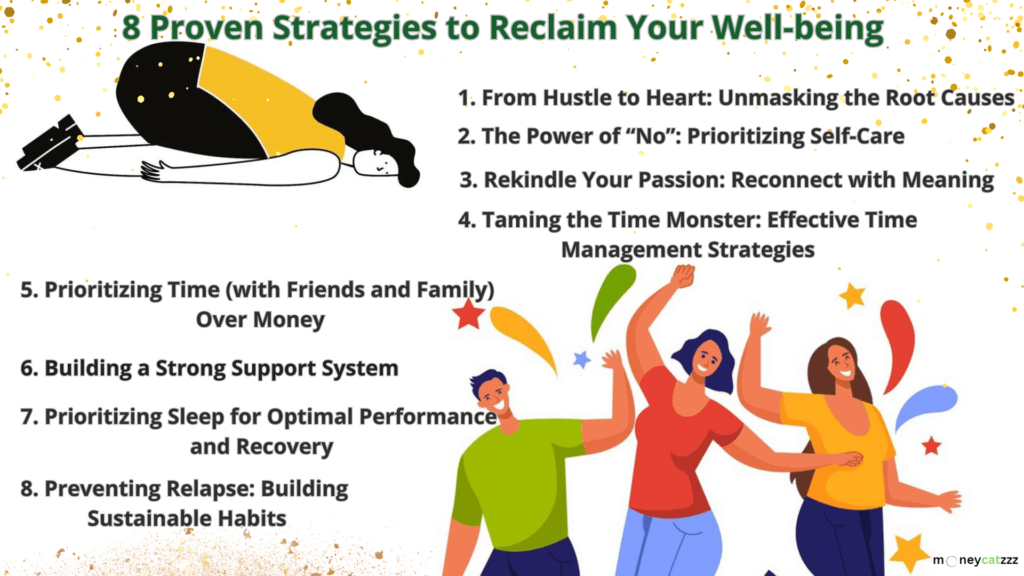
[“8 Proven Strategies to Reclaim Your Well-being” – moneycatzzz.com]

Remember, you are not alone in this journey. By taking these steps, prioritizing your well-being, and reigniting your inner flame, you can overcome burnout and emerge stronger, more resilient, and ready to thrive.
Reignite Your Passion and Take Control
Feeling overwhelmed and on the verge of burnout? Don’t wait! Take action today and reclaim your well-being. Here are some resources to get you started:
- Download our free “Burnout Recovery Toolkit”! This toolkit includes actionable tips, worksheets, and self-assessment tools to help you identify your burnout triggers and craft a personalized recovery plan.
- Explore our library of self-care resources! We offer a variety of articles, guided meditations, and downloadable resources to support your physical, mental, and emotional well-being.
- Consider personalized coaching! If you need additional support, we offer individual and group coaching programs to help you overcome burnout, achieve your goals, and create a life you love.
Remember, burnout is a temporary state, not a life sentence. By prioritizing your well-being, implementing the strategies outlined in this article, and utilizing the available resources, you can reignite your passion, reclaim your energy, and emerge stronger and more resilient.
Start your journey to burnout recovery today!
This concludes the article with a strong call to action, offering resources and encouraging readers to take the first step toward recovery.
Disclosure: This post may contain affiliate links. We only recommend products we believe in, and We may receive a commission at no cost to you! Thanks for your support!”
Acknowledgement: Cover Image by Unsplash.com
Disclaimer: The information is provided for general information only – moneycatzzz.com makes no representations or warranties in relation to the information, including but not limited to any representation or warranty as to the fitness for any particular purpose of the information to the fullest extent permitted by law. While every effort has been made to ensure that the information provided in this article is accurate, reliable, and complete as of the time of writing, the information provided in this article should not be relied upon to make any financial, investment, real estate or legal decisions. Additionally, the information should not substitute advice from a trained professional who can take into account your personal facts and circumstances, and we accept no liability if you use the information to form decisions.