
Reading Time: 8 mins #
This post may contain affiliate links.
If you want to escape financial stagnation, start with leverage you can afford: a $20 book that downloads decades of lessons into a weekend. Most people treat reading like a luxury. The wealthy often treat it like a lever. This list is for anyone ready to trade “stuck” for strategy and build a long-term financial growth mindset.
Quick note: books will not fix structural barriers by themselves. They can change your playbook so you can see and use the levers you do have.
Why books are a leverage
- High ROI: One good idea, applied for years, beats a thousand hot takes.
- Compounding: New mental models change every decision after you learn them.
- Access: Mentors you cannot meet still teach you through their pages.
Reading habits matter. A 2021 Pew Research Center report, “Book Reading 2021,” found that the median U.S. adult reads roughly five books a year, a number that has remained largely unchanged since 2011. This low median figure underscores the point that treating books as intentional tools, not just a casual luxury, is one way to start breaking cycles of poverty and career stagnation.
The 4 books to escape financial stagnation
Each pick shifts how you see money, risk, and wealth leverage strategies. Read for action, not trivia. After each title, you’ll find one “Try this move.”
1) The Millionaire Fastlane by MJ DeMarco
Core idea: Stop trading time for money forever. Build or buy assets that decouple income from hours: products, platforms, equity, systems. The “slow lane” promises distant freedom if you stay employed and save for 40 years. The “fast lane” is about control, scale, and speed through assets that can grow without your constant presence.
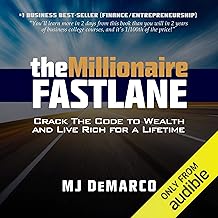
Why it helps you escape financial stagnation: It rewires your default from “work more” to “build systems.” You ask leverage questions: Can this be produced, automated, licensed, or scaled?
Try this move: List one skill you have that solves a real problem. Brainstorm three ways to package it as an asset (template, mini-course, service with a production scope).
2) The Psychology of Money by Morgan Housel
Core idea: Money decisions are emotional before they are mathematical. We bring our parents’ stories, luck, fear, and overconfidence to every choice. Wealth is what you don’t see. Long-term thinking wins because survival beats brilliance.
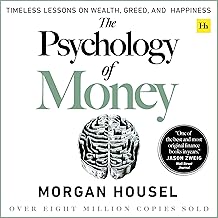
Why it helps you escape financial stagnation: It builds a financial growth mindset rooted in behavior. You learn to set rules you can keep during panic and euphoria, not just on calm Tuesdays.
Try this move: Write your “stay-in-the-game” rules. For example, invest a fixed percent monthly, keep a 3–6 month cash cushion, and never act on headlines alone.
Related read on bias and money: APA overview of decision biases

[“Building Your Wealth Machine” – Image by moneycatzzz.com]
3) $100M Offers by Alex Hormozi
Core idea: You do not earn more by doing more. You gain more by crafting offers that solve urgent problems so clearly that the price feels like a bargain. Value design beats more hours—positioning, guarantees, and specificity matter.
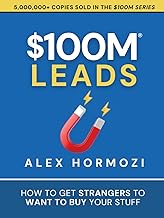
Why it helps you escape financial stagnation: It teaches wealth leverage strategies through pricing and product design. You stop discounting your skills and start engineering value.
Try this move: Write one offer using four levers: dream outcome, perceived likelihood of success, time delay, and effort/sacrifice. Improve at least one lever.
4) Rich Dad Poor Dad by Robert Kiyosaki
Core idea: Employees chase income. Owners chase assets and cash flow. Financial literacy means learning the language of assets, liabilities, and leverage. You need not agree with every take to benefit from the mindset shift.
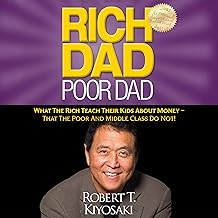
A Note on the Controversy: It’s essential to approach this book critically. Common criticisms include anecdotal evidence over verifiable data, a focus on real estate and multi-level marketing that may not apply to everyone, and a sometimes overly simplistic view of financial systems. Readers should see it as a framework for a new mindset, not a detailed financial blueprint. Its true value lies in its ability to challenge the traditional “go to school, get a job, and save” narrative.
Why it helps you escape financial stagnation: It challenges the belief that security only comes from a paycheck. You begin to see small paths to ownership: equity, royalties, real estate, and IP.
Try this move: List one asset you could acquire or build in 90 days.
Examples: a tiny rental you co-own, a paid template, a revenue share on a project, a local service with repeat customers.
Note: None of these are guarantees. They are frameworks to spot and use leverage.
How to read for leverage (not trivia)
- Set an application target: One idea per book to test within two weeks.
- Build a “Move list”: Keep a simple doc with experiments, results, and next steps.
- Use time boxes: 25–30 minutes of focused reading, then 10 minutes to draft your “Try this move.”
- Read with a friend: Share your one action each week. Social proof makes it stick.
Moving Forward
Constraints are real: wages that lag, care work, debt, and biased systems. Escaping stagnation is not only a personal project. Use every lever you can access and pursue structural help where possible.
- Grow skills that compound (analytics, sales, writing, negotiation).
- Build social capital (mentors, peers, communities).
- Use public and nonprofit resources for upskilling and capital, where available.
If you are in survival mode, stabilize first. The books and movies will be waiting.
FAQ: Escaping financial stagnation
Will reading these books make me wealthy?
Reading alone will not. Applying one idea repeatedly can. Expect gradual gains that compound over the years.
Are these only for entrepreneurs?
No. Employees can use the same leverage ideas: own projects, build rare skills, negotiate value, create internal “products” that save time or money.
What if I’m starting with debt and a low income?
Start small and steady. Build an emergency buffer, add one income skill, and pursue one asset you can afford. Leverage grows from small bases.
A 30‑day micro‑plan to break stagnation
- Week 1: Read 30 minutes a day. Pick one. “Try this move.” Please do it.
- Week 2: Improve one offer (resume bullet, service scope, or product page).
- Week 3: Add one asset seed (template, tiny product, equity slice, or co-created offer).
- Week 4: Review results. Double down on what moved the needle.
Final Thoughts: From Reader to Investor
Reading is not a passive hobby; it’s a strategic act. The books on this list are about money and changing your default operating system. They help you shift from an employee to an owner’s mindset, from trading time to building systems, and from emotional reactions to disciplined behavior.
The journey to escaping financial stagnation begins not with a stock tip or a lottery ticket, but with a single changed idea. The goal is to become an investor of ideas: one who reads, selects a strategy, and acts on it. Your future is not determined by how many pages you turn, but by how many “Try this move” actions you take. Start today by reading for leverage, and watch as your financial narrative changes.
Beyond Books: Tools to Accelerate Your Progress
The books you’ve just read provide the strategy; these tools provide the systems. Financial growth is about automating good habits and tracking your progress. Here are a few products that can help you practice these books’ principles.
1. A Financial Tracking App (like YNAB). The core idea of The Millionaire Fastlane is to stop trading time for money. To do this, you must first know where your money is going. A budgeting app like YNAB (You Need a Budget) helps you with the “Try this move” from The Psychology of Money by forcing you to give every dollar a job. It’s a system for actively managing your cash flow, making it a powerful tool for behavior change.
2. An Online Course Platform (like Coursera or Udemy), Rich Dad Poor Dad, and $100M Offers stress the importance of financial literacy and skill leverage. While books provide the theory, a structured online course can give you a practical, hands-on education in financial analysis, product design, or marketing. Platforms like Coursera and Udemy offer courses from top universities and industry experts, allowing you to build the high-income skills needed to execute “fastlane” strategies.
3. A High-Yield Savings or Investment Account. The principle of owning assets from Rich Dad Poor Dad is foundational. To get started, you need a place for your money to work for you. A high-yield savings account is a simple way to make your cash reserves earn more. In contrast, a low-fee investment account (like those from a popular robo-advisor) can help you build a portfolio of assets, aligning with the core message of escaping the “slow lane.” These tools are the practical counterparts to the mindsets you’ve gained from the books.
Disclosure: This post may contain affiliate links. We only recommend products we believe in, and We may receive a commission at no cost to you! Thank you for your support!
Acknowledgement: Cover Image by moneycatzzz.com
Disclaimer: The information is provided for general information only – moneycatzzz.com makes no representations or warranties in relation to the information, including but not limited to any representation or warranty as to the fitness for any particular purpose of the information to the fullest extent permitted by law. While every effort has been made to ensure that the information provided in this article is accurate, reliable, and complete as of the time of writing, the information provided in this article should not be relied upon to make any financial, investment, real estate or legal decisions. Additionally, the information should not substitute advice from a trained professional who can take into account your personal facts and circumstances, and we accept no liability if you use the information to form decisions.