 Reading Time: 8 mins #
 This post may contain affiliate links.
The train from Bangkok rattled west for three hours. The air grew thicker. The rice fields gave way to scrub jungle. The river appeared suddenly. Brown. Slow. Unimpressed by history.
I did a day trip to Kanchanaburi to see the bridge. I did not know that I would come to understand personal transformation instead.
The bridge crosses the Mae Klong River, which is renamed the Khwae Yai at that junction.
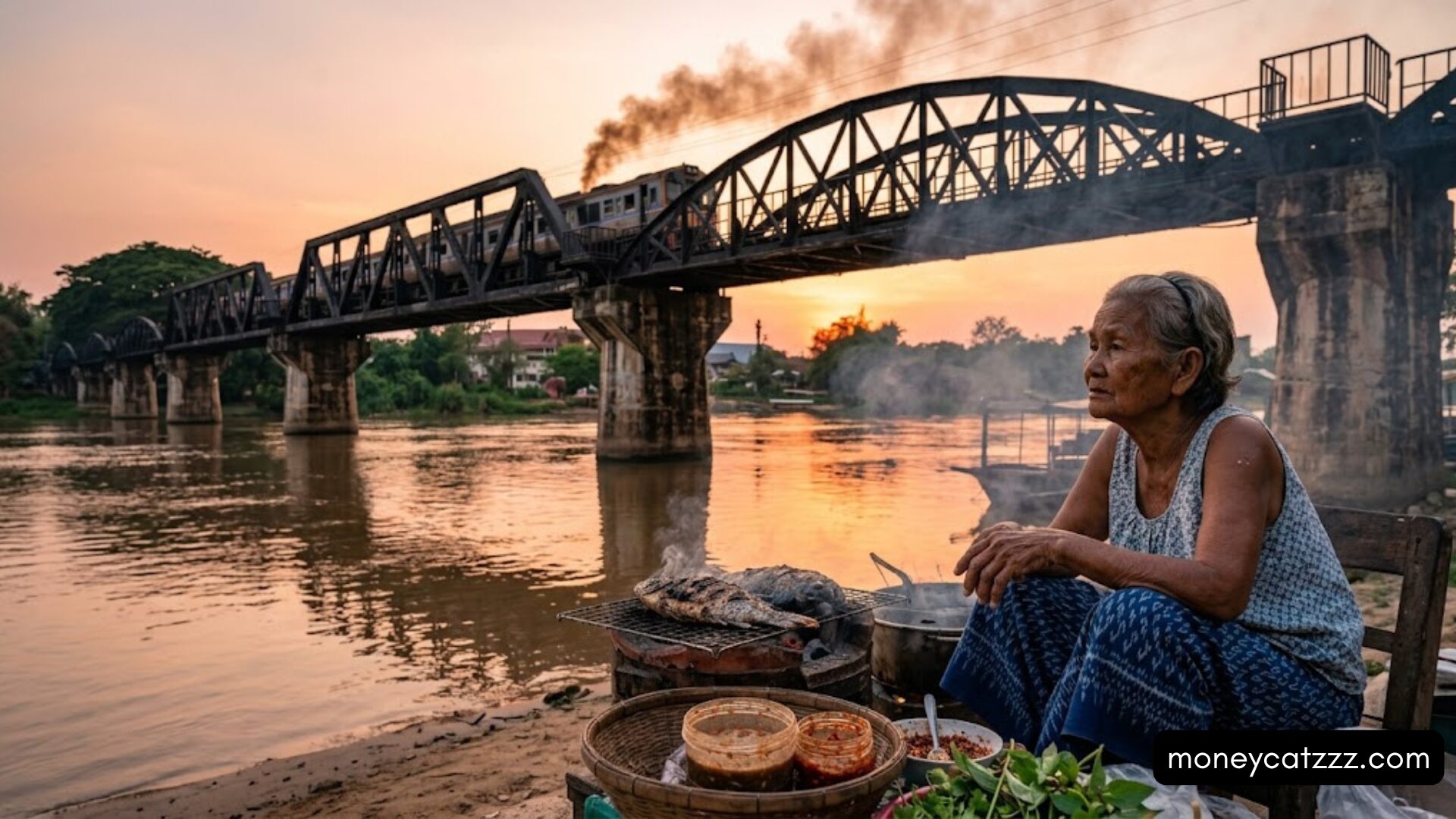
The heat hit me first—not a dry heat, but a wet one. The kind that sits on your chest and breathes with you. Smells of BBQ River Fish from a nearby stall filled the air: charred scales, woodsmoke, and the salty, pungent tang of fermented fish sauce. Something primal and sharp. Then the smell of the river hit: Mud. Decay. Life.
The bridge is black iron. Arched. Still standing after eighty years. You can walk across it. You can feel the train tracks under your feet. The gaps between the sleepers are wide enough to see the river below. I walked slowly; each step was a tiny negotiation with vertigo.
A ‘Khon Phai Ruea‘ (คนพายเรือ) sat on the bank, his calloused palms resting upward—the hands of a man who had paddled against the current as long as the bridge had spanned it. His skin was leather. His teeth were few. He waved at me. I waved back. He did not speak. A ‘Look Mae Nam’ (Child of the Mother River) in every sense. He just pointed at the bridge and then at his chest. He is gesturing to me: “I have seen this bridge every day for forty years; you are not the first to look for answers here.“
He was right.
The Jungle That Grows Back Every Morning
The Death Railway was built in 1942. The Japanese needed a supply route from Thailand to Burma. The terrain was jungle. Thick.
Impenetrable. The monsoon turned dirt to mud. The heat turned men to ghosts.
More than 90,000 Asian laborers and 16,000 Allied POWs worked on the railway. They cleared the jungle with hand tools. They laid track with nothing but will and suffering. One man died for every sleeper laid. That is not metaphorical speaking—that is a matter of record.
But we, the living, come here to find a language for our own internal struggles. We look at the iron because we need to know that things built in heat and agony can still hold.
I walked to the cemetery first. Rows of white headstones. Clean. Quiet. The names were British, Dutch, and Australian. The ages were nineteen, twenty-two, and twenty-four. I stood there for a long time. The heat was the same as the one they felt. The jungle was the same. But I could leave. They could not.

Internal resistance habits are that jungle. The habits that grow back every morning. Fear of failure. Fear of success. The voice that says stop, this is too hard, go back to what you know. You clear it with effort. Then you sleep. Then it grows back.
The difference between a prisoner and a free person is not the presence of resistance—it is the decision to clear it again, and again, and again.
The boatman later told me one sentence that said it all.
“Many people come to see the bridge. Few come to see themselves.”
Then he turned back to the river. The conversation was over.
What the Dead Taught Me About Foundations
In the museum, I saw photographs. The men who built the bridge barely looked like men. Ribs showing. Eyes hollow. But their hands were steady on the tools.
The Bridge on the River Kwai was not beautiful. It was functional. They cut corners in some places where they had to, but the foundations were deep. The piles went all the way down to the bedrock. That is why the bridge still stands.
Personal transformation requires the same. Not beautiful hacks. Not Instagram-worthy habits. Foundations.
I thought about every time I had started a new regimen. A new diet. A new meditation practice. A new business plan. I built the superstructure first. The visible part. The part I could show off. I ignored the foundations. Then the first storm came. Everything collapsed.

[The Jungle Within: The Internal Conflict | moneycatzzz.com]
A local guide named Mali spoke to our small group. She was young. Maybe thirty. Her English was perfect with a strong hint of Thai accent. But her voice was not practiced. It cracked sometimes.
“My grandfather worked on the railway,” she said. “He survived. He never talked about it. When I was a child, I asked him why he woke up so early every day. He said, ‘The jungle does not sleep, so I cannot sleep.'”
She stopped. Looked at the river.
“He woke up at 4 am every day for fifty years, not because he wanted to. He has learned that survival is not a sprint. Survival is a schedule.”
Her grandfather was describing the minimalist approach to growth. It is not calling for more effort, more consistency, or a grand gesture. It is about a small action. Repeated. Until the jungle learns you are not leaving.
The Grandmother Benchmark
Mali’s grandmother ran a food stall in Kanchanaburi. Every morning, she prepared Tom Yum (ต้มยำ) from scratch. She did not rush. It was a steady culinary art form—a symphony of labor against the heat. She chopped the lemongrass into perfect rounds. She crushed the galangal. She squeezed the limes until her palms were slick. She tasted the broth with a wooden spoon, adjusting the balance one drop at a time. It was intentional. It was the slow construction of a masterpiece.
By 11 am, the stall was ready. By 2 pm, it was sold out. By 3 pm, she was napping.
“That is orchestration vs agony,” I said to myself.
The Death Railway was agony. Forced labor. Suffering. Death. Many self-improvement approaches are the same. Grind. Hustle. No rest. No sleep. No boundaries. The gym at 5 am. The emails at 11 pm. The weekend catch-up.
The grandmother’s stall was an orchestration. Calm. Efficient. Planned. She did not work harder. She worked smarter. She did not fight the jungle—She cleared the same small patch every day and let the rest grow wild.
The Saboteur at the Finish Line
Later that day, I wanted to walk across the bridge again. A train was coming, so I stepped onto the walkway. The train passed slowly. The cars were old. The wheels screeched. The passengers looked out the windows. They did not see me. They are only interested in seeing the river.
I thought about the film, The Bridge on the River Kwai. The British colonel, Nicholson, builds a beautiful bridge. He is proud of it. He helps the Japanese improve it. Then, at the moment of completion, he tries to blow it up.
Why? Because he has become attached to his creation. He would rather destroy it than see it used by his enemy.
The saboteur within psychology is real. We reach the finish line. Then we sabotage. A new relationship gets serious. We pick a fight. A promotion arrives. We start missing deadlines. A weight loss goal is met. We binge eat.
I have done this every time. The closer I get to what I want, the louder the voice says, “Burn it down.”
A monk sat by the river near the bridge. He wore orange robes and held a newer iPhone than mine. I couldn’t resist staring at his bare feet. He did not look up when I approached. I sat down next to him. The river was brown and slow. A water buffalo stood on the opposite bank. It did not move.
After a long silence, I was thinking out loud, “Why do we destroy what we build?”
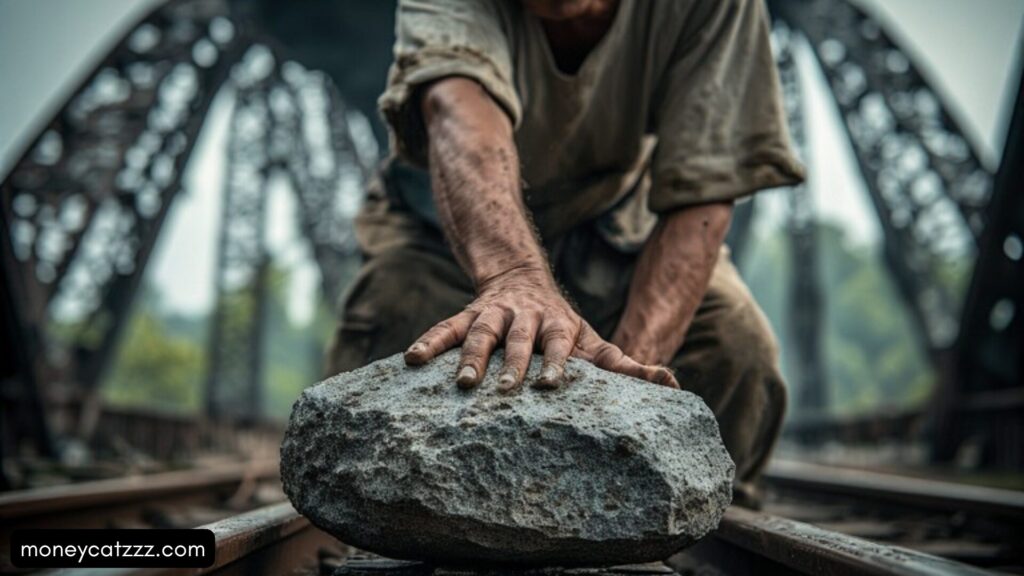
He heard me. He did not answer. He picked up a small river stone. He placed it on the dirt. He picked up another. He balanced it on the first. He built a small tower—a matter of balance. Three stones high.
Then he knocked it over with his finger.
“Now build again,” he said.
I built the tower. He knocked it over.
“Again,” he said.
I built it a third time. This time, he did not knock it over. He stood up and walked away into the heat.
He was imparting the record, showing me the effort to find balance (Samattha) amidst the “current” of life. The saboteur never leaves. You must build faster than the world can destroy.
The grandmother seasoned one drop at a time—the act of creation; the POW built one sleeper at a time—the record of survival.
Orchestration Over Agony
After surviving the Nazi’s concentration camps, Viktor Frankl did not write about suffering. He wrote about the meaning behind the suffering. The ones who survived were not the strongest—they were the ones who found a reason to keep going.
I downloaded Man’s Search for Meaning from Amazon and read it on the bus back to Bangkok. The chapter on logotherapy hit hard. Frankl says that between stimulus and response lies a space. In that space is your freedom—your power to choose.
The POWs on the railway had no freedom. Some of them still found that space. They shared their food. They told jokes. They helped weaker men carry tools. They built a bridge inside themselves, not of iron but one made of dignity.
The orchestration vs agony conundrum is the difference between building with suffering and building despite suffering. Both require effort. One leaves you dead. The other leaves you napping at 3 pm.
I am done with agony. I have done my time on the Death Railway of self-improvement. The 5 am wake-ups. The cold showers. The “no pain, no gain.” I built bridges that way. They collapsed.
I plan to build differently. One stone at a time. With rest. With Tom Yum. I now know that the jungle will grow back. That is fine. I will clear it again tomorrow. At 7 am. After coffee.

The Bridge That Carries You Home
I bought a small iron nail from a vendor near the cemetery. The vendor was old. His hands were gnarled. He said the nails came from the original railway. I do not know if that was true—I bought it anyway.
The nail sits on my desk now. It is rusted. Bent. Useless for holding anything together—but it reminds me of something.
Personal transformation is not about becoming a new person. It is about becoming the person who can build a bridge in the jungle. Not a perfect bridge. A bridge that stands. A bridge that carries you home.
The value of the excursion was not the bridge. It was about the resilience forged in the heat of its construction. The calluses on your hands. The blisters that turned to scars. The memory of the river below your feet. The taste of Pad Kra Pao Moo (ผัดกะเพราหมู) after a long day. Soul food.
[The Stone and the Space | moneycatzzz.com]
I walked across the bridge one last time when the sun was low. The river has turned orange. A train horn sounded in the distance. The boatman was gone. The monk was gone. The vendor was packing up.
I put my hand on the iron rail. It was hot. I did not pull away.
This bridge is still standing because it was built with nothing but suffering and will. Your bridge is no different. You are in the jungle now. The concrete is loud and noisy. The heat is on your chest. The voice says stop. Do not stop. Lay one more sleeper—then another.
The saboteur will come. Let it come. Build anyway.
Eric Lomax wrote The Railway Man about his time on the Death Railway. He survived, then spent decades haunted by rage. His personal transformation came not from forgetting but from forgiving. He met his torturer. He forgave him. That is the final bridge. The one that carries you across the river of your own hatred.
I am not there yet. But I am building.
What the Bridge Taught Me
The train back to Bangkok was crowded. I stood near the door. The wind was hot. The rice fields blurred past. I held the iron nail in my pocket.
The bridge is still there. Trains still cross it. Tourists still take photos. The dead are buried in rows. The living walk across the iron and wonder what it costs.
Like the boatman, we eventually stop looking at the bridge and start carrying its weight and strength within us.
Now you know.
The Sleeper and the Drop: Further Reading
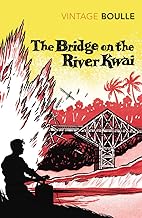
The Bridge of the River Kwai
by Pierre Boulle
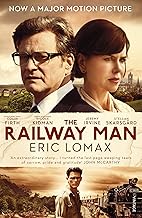
The Railway Man
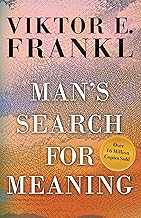
Man’s Search for Meaning
Disclosure: This post may contain affiliate links. We only recommend products we believe in, and we may receive a commission at no cost to you! Thank you for your support!
Acknowledgment: Cover Image by moneycatzzz.com
Disclaimer: The information is provided for general information only – moneycatzzz.com makes no representations or warranties in relation to the information, including but not limited to any representation or warranty as to the fitness for any particular purpose of the information to the fullest extent permitted by law. While every effort has been made to ensure that the information provided in this article is accurate, reliable, and complete as of the time of writing, the information provided in this article should not be relied upon to make any financial, investment, real estate or legal decisions. Additionally, the information should not substitute advice from a trained professional who can take into account your personal facts and circumstances, and we accept no liability if you use the information to form decisions.