
 Reading Time: 8 mins #
 This post may contain affiliate links.
In 2005, Barry Schwartz delivered a line to a TED audience that challenged the fundamental foundation of high achievement. He identified low expectations as the primary driver of life satisfaction. This protocol replaces the standard pursuit of optimization with a more accurate orientation: by reducing the predictive weight of the result, you maximize the utility of the reality.
Fifteen million views later, most people still share the clip as a joke.
But they’ve missed the finding entirely.
The Immediate Objection
This looks like a surrender to mediocrity. It reads like a blueprint for a life that accepts the default settings and refuses to verify the results. The immediate objection is obvious. It’s also wrong.
Schwartz was making a precise observation about the relationship between expectation and experience. They are not of the same variable, and conflating them makes the idea sound dangerous when it’s actually a structural correction to how most high performers operate.
The distinction is binary. Expectations of outcome are predictions about how an experience will feel once it arrives. Standards of effort are the demands you place on your own work and on your commitment throughout the process. Schwartz’s argument is entirely about the former. It says nothing about the latter.

You can hold yourself to extraordinarily high standards of craft and discipline while simultaneously holding low expectations about how the result will feel when it lands. That combination of high effort standards with low outcome expectations is the optimal configuration for both performance and well-being.
Almost nobody operates this way, though.
Our culture has built a mythology around high expectations as a form of respect for your ambitions. The data runs in the opposite direction. High outcome expectations are a reliable framework for chronic disappointment with genuinely good results.
The Maximizer’s Structural Failure
Schwartz’s research produced a clinical distinction worth understanding precisely.
The maximizer needs the best possible option before committing to any decision. They research exhaustively. Compare relentlessly. Optimize across every available variable. The satisficer identifies a “good enough” threshold and stops searching once something meets it.
The findings are all too obvious.
Maximizers consistently achieve objectively better outcomes. Better job. Better deal. Better product. Better everything. They also report significantly lower life satisfaction, higher rates of depression, and persistent regret even after successful decisions.
Better outcomes. More misery. The mechanism is expectation.
Because the maximizer invested so heavily in finding the optimal option, they simultaneously set an expectation so high that even the optimal result struggles to meet it. They win and immediately catalog what the win failed to deliver. They succeed and begin measuring the gap between the success and the version of success they’d been carrying in their head for eighteen months.

[The Efficiency of the Baseline Standard | moneycatzzz.com]
This is the paradox of choice operating at full structural capacity. More options and higher standards don’t lead to greater happiness—they produce more reference points against which your experience gets measured and found insufficient.
Ryan Holiday makes the ancient case for this in The Obstacle Is the Way. The Stoics drew a hard line between what is “up to us,” effort, judgment, response, and what is “not up to us,” outcomes, other people’s reactions, and external results. This isn’t philosophical comfort—it’s a functional architecture for ambition without attachment. Full commitment to the work. Released expectation of what the work will deliver. These are separable acts.
Separating them is a skill most people never develop because nobody teaches it.
Why Your Brain Gets This Wrong Structurally
The psychological mechanism that makes low expectations necessary, not merely preferable, is hedonic adaptation.
It is one of the most robust findings in modern psychology. One of the least internalized in daily life.
Hedonic adaptation describes the process by which people return to a stable baseline of happiness despite external events. Lottery winners return to their prior levels of happiness within approximately 2 years. People who experience serious physical injuries report comparable life satisfaction to pre-injury levels within similar time-frames. The extraordinary becomes the new ordinary. The remarkable becomes the baseline. The adaptation is structural, not optional.
Daniel Gilbert’s research identified the precise failure point. He stressed that we are systematically wrong about how good future positive events will make us feel. We overestimate both the intensity and the duration of the satisfaction they’ll produce. Gilbert called this affective forecasting error—and it operates consistently across cultures, income levels, and personality types.
The implication is direct.
The thing you’re expecting to make you feel successful will finally make you feel successful for less time than you think. The maximizer constructing an enormous expectation for a future outcome is building a structure on a foundation that hedonic adaptation will erode faster than anticipated. The outcome arrives. The expectation was larger.
Disappointment follows, not because the outcome was objectively poor, but because the brain had already adapted to the anticipation of it.
Low expectations aren’t pessimism—they’re an accurate model of how human psychology actually processes achievement.
The Forensic Case Study
Roger Federer documented his mental approach to individual points across multiple interviews during his career.
He didn’t expect each point to go his way. He expected to compete on every point. That distinction, effort standard versus outcome expectation, gave him something structurally unavailable to opponents carrying higher outcome expectations: emotional resilience across five sets of pressure tennis.
When a point went wrong, he wasn’t recovering from a violated expectation. He was moving to the next point. The psychological cost of each lost point was minimized not by caring less about the match but by holding low expectations of each exchange within it.
Twenty Grand Slam titles. The most in men’s tennis history at his retirement.
This is not a strategy for people who don’t care about winning. It’s the strategy of someone who understood that ambition without attachment to individual outcomes is what makes sustained high performance structurally possible.
James Clear identifies the underlying mechanism with forensic precision: “You do not rise to the level of your goals. You fall to the level of your systems.” The goal (expectation) is not what produces the performance. It is produced by the system—the standard of effort.
The Atomic Habit author also stresses that when psychological investment shifts from outcome to process, the paradox of choice loses its grip. You stop evaluating your experience against an imagined ideal result. You start evaluating it against the quality of your own engagement with the work.
That’s a variable you actually control.
The Practical Protocol
Understanding the theory is irrelevant; the utility lies in the Structural Implementation.
1. The Decoupling Protocol
Before any high-stakes engagement, hard-code the distinction in writing:
- Define the Effort Standard: Establish a baseline of “Maximum Technical Engagement.” This is your only controllable variable.
- Define the Outcome Expectation: Categorize the result as “Variable and Unpredictable.” Acknowledge the market’s inherent volatility.
- Isolate the Inputs: Write them as separate lines. Physically prevents the brain from collapsing effort and reward into a single, high-stakes metric.
- Protect the Performance: By lowering the predictive weight of the result, you keep the nervous system out of “protection mode” and the execution loose.
2. The Forensic Post-Mortem
When a successful outcome feels like a failure, run the audit in reverse:
- Identify the Delta: Measure the gap between the actual result and the internal response.
- Isolate the Variable: Determine if the dissatisfaction stems from the Outcome (technical failure) or the Expectation (predictive error).
- The Diagnostic: Ask: “Was this result structurally capable of meeting the internal target?”
- The Verdict: If the outcome was objectively good, the “Maximizer” built a structure that reality was never designed to support.

[Structural Clarity through Outcome Decoupling | moneycatzzz.com]
3. The Neutrality Buffer
Before deployment (pitch, launch, or negotiation), install a neutrality buffer:
- Acknowledge the Variance: Replace “This must go a specific way” with the forensic reality: “I don’t know how this will go.”
- Calibrate the Register: Shift from the “Defeatist” register to the “Honest” one. Accuracy is the goal.
- Regulate the System: High predictive weight creates paralysis. Neutrality ensures the performance stays responsive.
4. The Internal Ledger
Shift the daily audit from “Outcome Quality” to “Process Integrity”:
- The Single Metric: Did you meet the pre-defined Effort Standard?
- Eliminate External Noise: Results are “corrupt data” for measuring personal competence.
- Reclaim the Ledger: Attaching satisfaction to results is an accounting error. Attaching it to effort is the only way to keep the books within your own architecture.
The shift from external results to internal metrics isn’t a coping mechanism—it is the final piece of the structural correction.

What the Fifteen Million Missed
Schwartz delivered the line. The audience laughed. Most of the fifteen million who watched it later shared it as irony, as a joke about giving up, as the kind of thing you say when you’ve stopped trying.
The forensic read is different.
Low expectations are the operating system of people who’ve understood that expectation and effort are separate levers, that hedonic adaptation will compress every outcome to baseline regardless of its objective quality, and that life satisfaction is generated by the quality of engagement with the process, not the size of the result at the end of it.
The paradox of choice that Schwartz identified is ultimately structural. The more you expect from outcomes, the less you actually experience the work of getting there. And the work is most of it.
The outcomes are brief. They adapt quickly. They rarely feel the way the expectation promised they would.
Ambition without attachment is a performance protocol, not a philosophical stance. It decouples exceptional work from the toxic demand for emotional salvation. This framework allows for pursuing high-stakes objectives without the process cannibalizing the journey’s experience.
Schwartz was right.
Not because life isn’t worth engaging with fully, but because full engagement requires letting go of the expectation of what that engagement will deliver.
The low expectations aren’t about the work. They’re about the reward.
Do the work. Release the reward. Measure the process.
That’s the finding.
What expectation are you currently carrying that’s making a good outcome register as insufficient?
The Structural Case for Low Expectations: Deeper Dive
The TED Talk: The Paradox of Choice 🎤
This is the original 2005 presentation where Barry Schwartz outlines how an abundance of choice leads to “analysis paralysis” and dissatisfaction. It is the foundational source for the “low expectations” argument.
The Paradox of Choice – Why More Is Less (Book Summary) 📚
A deeper dive into Schwartz’s research, specifically the distinction between “Maximizers” (who seek the best) and “Satisficers” (who seek good enough). It explains the structural reasons why Maximizers are often less happy.
Expectation Management and Performance Psychology 🧠
This article explores the “performance protocol” side of expectations, discussing how lowering outcome-based expectations can reduce performance anxiety and improve technical execution in high-stakes environments.
The Deep Dive Library: Mastering the Paradox of Choice
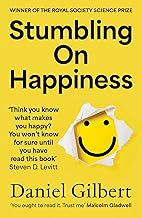
Stumbling on Happiness

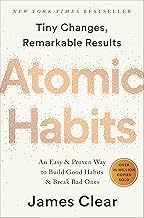
Atomic Habits
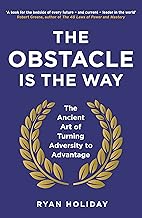
The Obstacle Is the Way
Disclosure: This post may contain affiliate links. We only recommend products we believe in, and we may receive a commission at no cost to you! Thank you for your support!
Acknowledgment: Cover Image by moneycatzzz.com
Disclaimer: The information is provided for general information only – moneycatzzz.com makes no representations or warranties in relation to the information, including but not limited to any representation or warranty as to the fitness for any particular purpose of the information to the fullest extent permitted by law. While every effort has been made to ensure that the information provided in this article is accurate, reliable, and complete as of the time of writing, the information provided in this article should not be relied upon to make any financial, investment, real estate or legal decisions. Additionally, the information should not substitute advice from a trained professional who can take into account your personal facts and circumstances, and we accept no liability if you use the information to form decisions.