
 Reading Time: 8 mins #
 This post may contain affiliate links.
A machine exists to transform inputs into outputs. Fuel in, motion out. Hours in, results out. A garden exists for no reason at all. It grows, rests, decays, blooms again. You cannot optimize a garden. You can only tend it.
Somewhere along the line, we traded the garden for the machine. We started treating our days like production lines and efficiency like a religion. The question stopped being, “Is this meaningful?” and became, “Is this productive?“
I fell into this trap myself. For years, I lived by the log: sleep cycles, step counts, deep-work blocks, and email latency. I sliced my life into fifteen-minute increments, chasing the dopamine hit of an empty to-do list. I felt a surge of pride every time I “optimized” a spare moment, and a cold spike of panic every time I sat still.
I was successfully running a system, but I had forgotten how to inhabit a life.
Then one evening, I looked at my logs. I had perfected a system for getting more done. But I could not remember the last time I had done something just because it felt good—the machine was running smoothly.
The garden was dead.
The Rise of Life Optimization
Life optimization is now a multi-billion-dollar industry. Morning routines, bio-hacking, productivity stacks, time-blocking templates. An entire economy built on the promise that you are not living efficiently enough.
The assumption is never questioned. Efficiency is good. Inefficiency is bad. Waste is sin.
But what is efficiency actually? It’s getting the maximum output from a given input. That works for factories. It works for code. It does not work for humans, because humans do not have a fixed output. The best moments of your life: the conversation that ran long, the afternoon you got lost, the hour you stared out a window – none of those were efficient. Most of them were what any productivity consultant would call waste.
Jenny Odell argues that the attention economy has colonized even our rest. We do not rest anymore—we optimize our recovery to work harder. The distinction has collapsed.
A Stanford study on the productivity paradox found that beyond a certain point, increased efficiency leads to decreased creativity and well-being. The brain needs inefficiency. It needs wandering, boredom, and unallocated time. Those are not bugs. They are features.
Yet we continue to treat them as problems to solve. Another app. Another morning routine. Another life hack.

The Machine That Runs on Guilt
I tracked my time for six months. Not for work – for everything. I logged every minute I spent with my family, every minute I spent reading, every minute I spent doing nothing.
The data was devastating. Not because I was wasting time. Because I felt guilty about almost all of it.
I would sit with my daughter. After twenty minutes, a voice would whisper, “You have emails.” I would walk in the woods. After ten minutes, another whisper: you could be listening to a podcast. I would lie in bed on Sunday morning. The whisper: you are falling behind.

[“The Price of the XV-Minute Slice” – Image by moneycatzzz.com]
Productivity obsession had turned my own mind against me. The machine demanded optimization even when there was nothing to optimize, even when the only goal was presence.
Oliver Burkeman addresses this directly in Four Thousand Weeks. He points out that the average human life spans about 4,000 weeks. That is not a lot. But no amount of efficiency will make it enough. The problem is not that you are wasting time. The problem is that you believe you should never waste any of it.
Time management burnout is not caused by having too much to do. It is caused by believing that you could do it all if only you were more efficient. That belief is a lie. And it is making you miserable.
The Turn Toward Slow Living
Slow living is not about doing nothing. It is about doing one thing at a time. It is about allowing inefficiency when inefficiency serves a purpose.
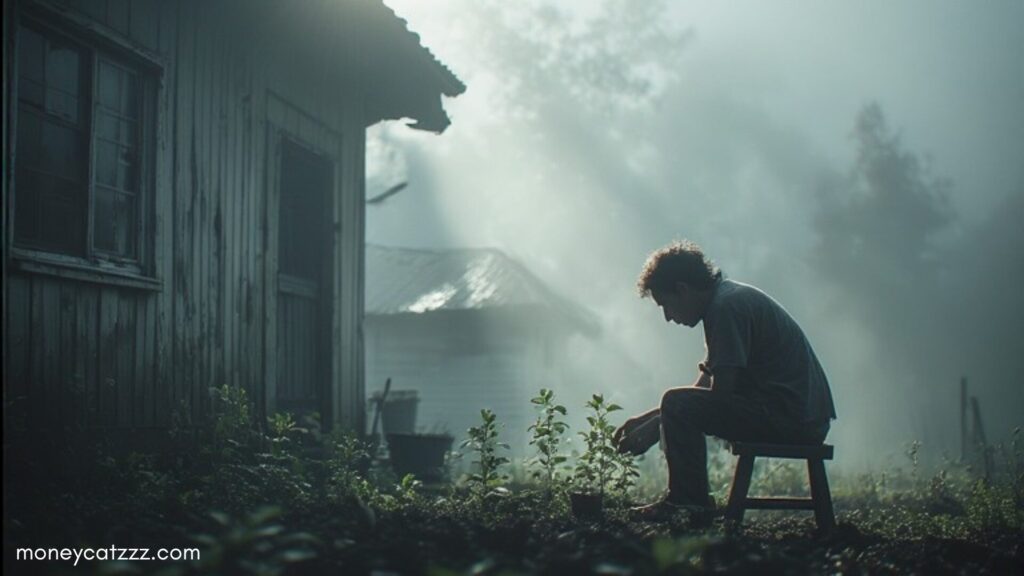
I learned this from a gardener I met years ago. He tended a small plot behind his house. Nothing about his method was efficient. He watered by hand. He pulled weeds slowly. He sat on a stool and stared at his plants for no reason at all.
I asked him why he did not install drip irrigation. He laughed. “I like watering. It gives me something to do with my hands while I think about nothing.”
He was not optimizing his garden. He was living in it. The garden was not a project. It was a relationship.
Greg McKeown makes a similar argument in Essentialism. He writes that the most productive people are not the ones who do the most. They are the ones who do only what matters. Efficiency is about doing things right. Essentialism is about doing the right things.
That framing might seem too mechanical, but the right things are not always efficient; they are sometimes inefficient by design: a long dinner, a walk without a destination, or an afternoon with no agenda.
These are not wastes of time. They are the point of having time.
The Data We Ignore
A Harvard study on leisure and life satisfaction found that people who prioritize free time over productive time report significantly higher well-being. The effect was strongest among those who deliberately protected unstructured hours.
Another study asked participants to spend a week without any productivity tracking: no to-do lists, no time logs, no optimization. At the end of the week, most reported lower anxiety and higher creativity. They also reported feeling guilty—not because they had wasted time, but because they had enjoyed wasting it.
The guilt is the trap. Efficiency has become a moral imperative. Inefficiency feels like failure. So we optimize everything. And the more we optimize, the less we enjoy.
Cal Newport distinguishes between deep work and shallow optimization. Deep work is focused, meaningful, and absorbed. Shallow optimization is rearranging deck chairs. It feels productive. It is not. It is just productivity obsession dressed in a bullet journal.
I’ve watched people spend weeks engineering the “perfect” morning routine, only to race through it every morning. They’ve built a sequence of meditation, journaling, and bio-hacking that they now treat like a gauntlet. The routine isn’t a sanctuary anymore—it’s just another set of boxes to tick before they can get to their “real” work.
In the end, the optimization consumes the very life it was supposedly designed to serve.

The Garden Approach
A garden does not care about your efficiency. It grows at its own pace. Some days nothing happens. Some days, everything blooms at once. You cannot force it, hack it—you can only show up and pay attention.
This is the alternative to the relentless optimization of the machine. It isn’t laziness. It is not a nation. It is simply a different relationship with time. It is recognizing that slow living is not a retreat from the world but a way of being fully present in it.
I stopped tracking my time. I stopped trying to hack my mornings. I stopped the exhausting practice of measuring my worth by my daily output. The guilt didn’t instantly, but it gradually quieted. Over time, the silence was enough. Eventually, I was able to sit with my daughter without the persistent urge to check my phone. I could walk in the woods without needing a podcast as an accomplice. I could finally lie in bed on a Sunday morning and feel nothing but the comfort of the sheets.
Those are not wasted minutes. They are the only minutes that matter.
[“Tending vs. Optimizin” – Image by moneycatzzz.com]
A Modest Protocol for Escaping the Trap
Do not try to optimize your way out of optimization. That is just more of the same. Instead, try these four small shifts.
One: protect inefficiency on purpose. Schedule twenty minutes a day for doing nothing: no agenda, no tracking. Just sit. The first week will feel uncomfortable – that is the withdrawal.
Two: ask why before how. Before you optimize anything, ask yourself: What is this for? If the answer is “to get” more done, ask “gain. More done for what? If you cannot answer meaningfully, leave it inefficient.
Three: measure what matters. Stop tracking hours. Start tracking moments of presence. How many times have you forgotten your phone? How many conversations did you not rush? How many meals did you actually taste?
Four: remember the garden. You are not a machine. You do not need to produce. You need to grow. And growth is not efficient.
What Remains When the Machine Stops
I still have my old time logs. I look at them sometimes. They are impressive. Look how much I did. Look how little I wasted.
But I do not miss that person. He was busy. He was optimized. He was also exhausted, distracted, and secretly convinced he was not doing enough.
The machine stopped. The garden remained. The weeds grew. The flowers bloomed. Nothing happened on schedule. Everything happened anyway.
Your life is not a production line. Efficiency is not your purpose. You are allowed to waste time. You are allowed to be slow. You are allowed to do one thing at a time and then stop.
The garden is waiting. It does not care about your optimization. It just needs you to show up.
The Garden and the Machine: Finding the Pulse Beneath the Productivity
Essentialism

Deep Work
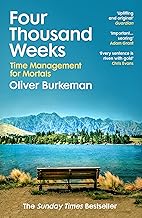
Four Thousand Weeks
Disclosure: This post may contain affiliate links. We only recommend products we believe in, and we may receive a commission at no cost to you! Thank you for your support!
Acknowledgment: Cover Image by moneycatzzz.com
Disclaimer: The information is provided for general information only – moneycatzzz.com makes no representations or warranties in relation to the information, including but not limited to any representation or warranty as to the fitness for any particular purpose of the information to the fullest extent permitted by law. While every effort has been made to ensure that the information provided in this article is accurate, reliable, and complete as of the time of writing, the information provided in this article should not be relied upon to make any financial, investment, real estate or legal decisions. Additionally, the information should not substitute advice from a trained professional who can take into account your personal facts and circumstances, and we accept no liability if you use the information to form decisions.