
 Reading Time: 8 mins #
 This post may contain affiliate links.
If you’ve ever stared at a menu for ten minutes and still felt unsure, you already know the feeling. It’s not a lack of intelligence; it’s too many inputs and not enough boundaries. The decision diet is a way to calm that storm. Think of it as a handful of small, humane rules that shrink the noise so you can choose and move.
A decision diet is a simple set of defaults, good‑enough rules, and tiny tests that cut low‑value choices and speed up the few that matter, so you act with clarity instead of getting stuck in analysis paralysis.
We’ll build this gently. No rigid life overhauls. Just a few rails that turn “I don’t know” into “I know enough to decide.“
In this article, we will first show you how to sort decisions using the impact and reversibility test, then establish a good-enough rule to end endless pondering, and finally, build your Decision Menu of defaults to protect your energy daily.
Why a decision diet now
The world offers infinite options; your day offers finite energy. Left unchecked, that gap becomes choice overload and decision fatigue. You spend attention on things that don’t move the needle and show up tired for the ones that do. The goal here isn’t to think less, it’s to think where it counts.
If you’ve wondered why more options can make you less happy, Barry Schwartz’s The Paradox of Choice is a comforting read that puts words to the itch when menus, feeds, and plans get too big.
And if you’ve ever felt your brain split between fast, gut reactions and slower, careful judgments, Daniel Kahneman’s Thinking, Fast and Slow offers a friendly tour of why that happens, and how to work with it.
What a decision diet looks like (in real life)
Three ingredients, used lightly:
- Defaults: small, automatic choices that save your brain for bigger work.
- Good‑enough rule: a clear bar that says “this is sufficient; ship it.“
- Tiny tests: quick, low‑risk steps that replace hand‑wringing with feedback.
We’ll put these to work with a few simple tools and smooth transitions between them.
Step 1: Sort decisions the easy way (impact × reversibility)
Not all choices deserve the same effort. Most daily calls are reversible decisions — two‑way doors you can walk back through. Treat those lightly. Save deep thinking for one‑way doors.
Try this 2×2 on a sticky note:
- Low impact + reversible: pick in under 2 minutes.
- High impact + reversible: After 10–20 minutes of thinking, act and review.
- High impact + not easily reversible: slow down, add a second opinion, and plan a tiny test first if possible.
- Low impact + not easily reversible: avoid or redesign until it becomes reversible.
Once you know how much a choice deserves, set a bar that tells you when to stop pondering.
Step 2: Set a good‑enough rule (so you can stop)
Deciding is easier when you can say, “That’s enough.” Borrow a simple good‑enough rule: decide with 40–70% of the information, then move. Below 40% you’re guessing; above 70% you’re probably stalling.
Pair that with the Heath brothers’ WRAP framework from Decisive (Widen options, Reality‑test assumptions, Attain distance, Prepare to be wrong). Even a tiny dose helps: widen your choices to three, test one hypothesis, and ask, “If a friend were deciding, what would I tell them?”
A bar is excellent. A clock makes it real.
For more on the WRAP Decision Process, read the full article here: ModernThinkers

[“Heath Brothers’ WRAP Framework” – Image by moneycatzzz.com]
Step 3: Try timeboxing decisions (give choices a clock)
Put a gentle timer on the kinds of calls that eat your day. Ten minutes for a tool choice. Twenty for a proposal outline. Pick the best option that meets your good‑enough rule when the timer ends.
This isn’t pressure; it’s relief. Timeboxing decisions turns endless and may turn into a real commitment. If it’s reversible, you’ll learn faster by moving.
Now shrink the menu so you’re not comparing the entire internet.
Step 4: Use option architecture to shrink the menu
You don’t need every option, you need three good ones. Curate your own option architecture:
- Pre‑pick two go‑to lunches, two weekday outfits, and two default meeting lengths.
- Keep a shortlist of vendors, templates, or formats you trust.
- For purchases or tools, compare three, not thirteen.
Nudge’s core idea applies well here: how choices are arranged changes how we choose (ResearchGate). You’re creating a kinder layout for your future self.
With choices sorted, clocks set, and menus small, swap speculation for tiny tests.
Step 5: Replace speculation with tiny tests (and learn)
Instead of debating for an hour, run tiny tests:
- Send the version you’d be comfortable showing a wise friend.
- Ship a draft to one stakeholder and ask one question.
- Try a one‑week trial before a complete switch.
Use the OODA loop (Observe, Orient, Decide, Act) to keep the steps small and reversible. One loop beats ten hypothetical arguments.
A few evergreen defaults will keep your decision diet alive on hectic days.
Your Decision Menu (defaults you can use tomorrow)
Work
- Morning default: two protected focus blocks; meetings after 11.
- Draft‑then‑send: write, one revision, ship by 4 p.m. unless the stakes are genuinely high.
- Pre‑mortem (5 minutes) for big moves: “If this failed next month, why?“
Money
- Purchases over $50: 24‑hour pause by default.
- Three‑option compare only; no late‑night buys.
- Weekly 10‑minute review: one number, one tweak.
Life
- Two default dinners, two default workouts, one default wind‑down.
- Pre‑decide “no” to the types of asks that derail you; offer one alternative.
- Sunday “choose three“: name the outcomes that would win the week.
Rules can sound rigid. In practice, they make room for judgment and ease.
A personal moment (and why this stuck)
I used to spend half an hour “choosing the perfect template” for a simple proposal. My decision diet now is three lines: three templates only; 15 minutes to adapt; ship by 4 p.m. The first week felt awkward. The second felt free. More shipped, less second‑guessing.
If you enjoy a counterpoint to overcomplication, Gerd Gigerenzer’s work on heuristics (Simple Heuristics That Make Us Smart) shows how well simple rules can perform in real life.

[“The Organized Mind” – Image by moneycatzzz.com]
Gentle guardrails for big decisions
When the stakes rise, slow the rhythm — don’t abandon it.
- Expand your circle: get one dissenting view and one domain expert.
- Run a longer pre‑mortem: list three failure risks and add one mitigation per risk.
- Sleep on it once. If it still feels right in the morning, proceed.
You can also borrow a page from WRAP: attain distance. Ask, “In ten months, how much will this matter?” That quiet question often rights the ship.
FAQ: Your questions, answered simply
What is a decision diet?
A small set of defaults, a good‑enough rule, and tiny tests that reduce choice overload and speed up the calls that matter.
Will rules make me rigid?
Done right, no. Defaults handle the routine, so you have more room for nuance where it counts. You can always override a default on purpose.
How do I use this with a team?
Share the 2×2 for reversible decisions, agree on timeboxing decisions for common choices, and publish a short Decision Menu (work, meetings, comms). Clarity beats constant debate
What if I'm prone to analysis paralysis?
Shrink every step: three options, a 10‑minute timer, and one tiny test. The moment you collect honest feedback, the loop loosens its grip.
How do I handle truly irreversible decisions?
Slow down, widen options, add a pre‑mortem, and get another perspective. If possible, run a limited pilot to surface risks before you commit.
Final Thoughts: Reclaim Your Cognitive Life
You don’t need a new personality to choose well; you need a kinder pattern. A decision diet isn’t about restriction; it’s about redirection. It trims the menu, gives you a fair bar, and replaces worry with tiny tests.
This disciplined simplicity delivers an exponential return. When you use a system to handle the small, reversible calls, you are no longer spending your best cognitive energy on trivial details. That energy doesn’t disappear; it compounds. It becomes the focus you bring to a vital client conversation, the clarity you use to plan your future, and the presence you give to the people you love.
That’s the ultimate impact of fewer, better choices: less stress for the world’s noise, and more life for the parts of your world that truly need you. This isn’t just a guide to choosing well, it’s your declaration of independence from choice overload.
Foundational Books on Choice and Decision
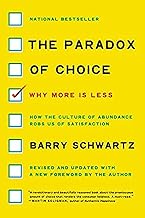
The Paradox of Choice

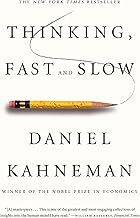
Thinking, Fast and Slow
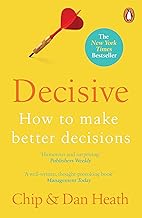
Disclosure: This post may contain affiliate links. We only recommend products we believe in, and We may receive a commission at no cost to you! Thank you for your support!
Acknowledgement: Cover Image by moneycatzzz.com
Disclaimer: The information is provided for general information only – moneycatzzz.com makes no representations or warranties in relation to the information, including but not limited to any representation or warranty as to the fitness for any particular purpose of the information to the fullest extent permitted by law. While every effort has been made to ensure that the information provided in this article is accurate, reliable, and complete as of the time of writing, the information provided in this article should not be relied upon to make any financial, investment, real estate or legal decisions. Additionally, the information should not substitute advice from a trained professional who can take into account your personal facts and circumstances, and we accept no liability if you use the information to form decisions.