
 Reading Time: 8 mins #
 This post may contain affiliate links.
Mastering Time Management with Time Blocking and Time Boxing
In a world where attention spans are dwindling to an average of eight seconds, and productivity is plummeting due to information overload, mastering time blocking and time boxing has never been more critical. A staggering 70% of employees report feeling overwhelmed by their workload, while studies show that poor time management costs businesses billions annually.
Amidst this crisis of time, two powerful strategies have emerged: time blocking and time boxing. These time management techniques offer a lifeline to individuals and organizations struggling to navigate modern life and work complexities.
Why Time Blocking and Time Boxing Matter
Effective time management is the foundation of productivity, and time blocking and time boxing provide structured methods to optimize how we allocate our time. Whether you’re professional juggling multiple tasks or a student trying to stay focused, these techniques can help maximize efficiency while reducing stress.
How Time Blocking and Time Boxing Improve Productivity
- Time Blocking: This method involves scheduling dedicated time slots for specific tasks, ensuring deep focus, and minimizing distractions.
- Time Boxing: This technique sets strict time limits for each task, creating urgency and preventing tasks from expanding indefinitely.
By implementing time blocking and time boxing, individuals can take control of their schedules, improve time management, and enhance overall work-life balance.
Start Using Time Blocking and Time Boxing Today
Whether you struggle with procrastination, inefficient workflows, or a lack of structure, time blocking and time boxing offer practical solutions. Experiment with both techniques, find the best fit for your needs and take the first step toward mastering your time.
“Time is the most valuable resource you have; invest it wisely.” – Unknown
Understanding Time Blocking: Structuring Your Day
Time blocking is a time management technique that involves dividing your day into specific, dedicated time blocks for different tasks or activities. Individuals can enhance focus, reduce distractions, and optimize productivity by allocating predetermined time segments.
The Core Principles of Time Blocking and Time Boxing
At the heart of time blocking and time boxing lies the concept of prioritization. Individuals can ensure that essential activities receive the attention they deserve by identifying crucial tasks and assigning them dedicated time blocks or predefined time limits. These structured approaches foster a sense of purpose and direction, minimizing the mental overhead often associated with deciding what to tackle next.
How Time Blocking and Time Boxing Enhance Productivity
- Time Blocking: This method involves creating dedicated time slots for specific tasks, allowing individuals to focus intensely on one activity at a time.
- Time Boxing: Instead of allocating open-ended blocks of time, this technique sets strict time limits, encouraging efficiency and preventing tasks from expanding unnecessarily.
Both time blocking and time boxing cultivate a deep work environment, helping individuals immerse themselves fully in their tasks. Studies have shown that focused work sessions, free from constant interruptions, can significantly boost productivity and lead to higher-quality output.
Balancing Structure and Flexibility
While time blocking and time boxing provide structure, it’s essential to maintain flexibility. Rigid adherence to a schedule can be counterproductive, especially when unexpected tasks, emergencies, or personal commitments arise. To avoid disruptions, incorporating buffer time into the schedule ensures a smoother workflow and adaptability to unforeseen circumstances.
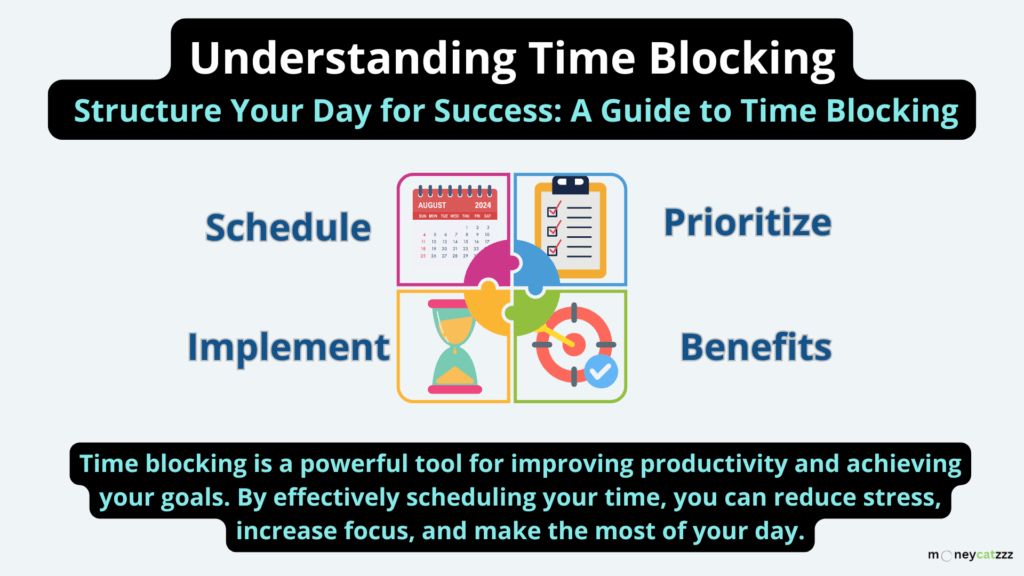
[“The Core Principles of Time Blocking” – moneycatzzz.com]
Implementing Time Blocking and Time Boxing
Individuals should create a comprehensive list of tasks and responsibilities to implement time blocking and time boxing effectively. These tasks should be categorized based on priority, urgency, and alignment with overall goals. Once prioritized, they can be assigned to specific time blocks or fixed time limits to enhance focus and efficiency.
Key Considerations for Success
- Set Realistic Time Estimates: Overestimating can lead to frustration, while underestimating can cause delays. Striking a balance is crucial for maintaining productivity.
- Incorporate Short Breaks: Regular breaks between time blocks or boxes help prevent burnout and sustain focus throughout the day.
- Please review and Adjust Regularly: As priorities shift and unexpected challenges arise, it’s essential to adapt the schedule accordingly. This iterative approach ensures that time blocking and time boxing remain effective and aligned with evolving goals.
Benefits of Time Blocking and Time Boxing
1. Enhanced Focus and Concentration: By dedicating uninterrupted time to specific tasks, time blocking and time boxing enable individuals to achieve deeper immersion, minimize distractions, and enhance overall productivity.
2. Improved Time Management: These techniques foster a clear understanding of time spent, helping individuals identify and eliminate time-wasting activities while making necessary adjustments for efficiency.
3. Reduced Procrastination: The structured approach of time blocking and time boxing helps combat procrastination by creating a sense of urgency and accountability, ensuring tasks are completed within set time frames.
4. Better Work-Life Balance: By allocating dedicated time blocks or fixed time limits for work and personal activities, individuals can establish clear boundaries, preventing work from encroaching on personal time.
5. Increased Productivity: By eliminating distractions and optimizing task execution, time blocking and time boxing can significantly boost productivity, ensuring that important tasks receive the attention they deserve.
Potential Drawbacks of Time Blocking and Time Boxing
While time blocking and time boxing offer numerous benefits, it’s important to recognize their potential challenges.
1. Rigidity in Scheduling: One common drawback is the rigidity of these methods. Strictly adhering to a schedule can be difficult, especially in fast-paced or unpredictable environments where unexpected tasks frequently arise. Maintaining flexibility is key to avoiding frustration.
2. Difficulty in Estimating Task Durations: Accurately predicting how long a task will take can be challenging. Overestimating or underestimating time requirements can disrupt the entire schedule. To mitigate this, it’s best to start with conservative time estimates and adjust over time based on real-world experience.
By understanding these challenges, individuals can adapt time blocking and time boxing effectively, ensuring these techniques remain practical and beneficial.
Understanding Time Boxing: Focus on Completion
While time blocking and time boxing enhance productivity, they differ in execution. Timeboxing involves setting strict, predefined timeframes for tasks, ensuring completion within a fixed period rather than allocating large, open-ended blocks of time to broad activities.
The Core Principles of Time Boxing
1. Creating a Sense of Urgency
A key principle of time boxing is imposing strict time limits to drive efficiency and reduce procrastination. Unlike time blocking, which allocates time for deep work, time boxing pushes individuals to work quickly and avoid perfectionism traps.
2. Prioritizing Progress Over Perfection
Rather than aiming for absolute perfection, time boxing emphasizes meaningful progress within a fixed timeframe. This approach prevents analysis paralysis and ensures that tasks are completed efficiently while maintaining high productivity.
By integrating time blocking and time boxing, individuals can create a structured yet flexible workflow, balancing deep focus with rapid execution for optimal time management.
Implementing Time Blocking and Time Boxing
Successfully implementing time blocking and time boxing starts with identifying key tasks and breaking them into manageable sub-tasks. While time blocking assigns dedicated periods for deep work, time boxing sets strict time limits for task completion.
1. Setting Realistic Time Frames: Choosing practical time limits is crucial. Time blocking requires structured schedules, while time boxing demands constraints encouraging focus without inducing stress.
2. Utilizing Productivity Tools: Using timers or productivity apps helps enforce both time blocking and time boxing, ensuring individuals stay on track.
3. Reviewing and Adjusting: Regular evaluations allow individuals to analyze performance, refine time estimates, and optimize workflow efficiency. Over time, this process enhances productivity, helping individuals master time blocking and time boxing for peak efficiency.

[“Key Benefits of Time Boxing” – moneycatzzz.com]
Benefits of Time Blocking and Time Boxing
Both time blocking and time boxing are powerful time management techniques that can significantly enhance productivity and efficiency.
- 1. Increased Productivity: By imposing structured time constraints, time blocking and boxing encourage focused work, preventing tasks from expanding unnecessarily.
- 2. Improved Time Management: These methods help individuals better understand their time usage, identify inefficiencies, and eliminate time-wasting activities.
- 3. Overcoming Procrastination: The sense of urgency created by time blocking and time boxing promotes accountability, helping individuals complete tasks more efficiently.
- 4. Enhanced Decision-Making: Setting strict time limits forces individuals to make quick yet effective decisions, prioritizing tasks and allocating resources efficiently.
- 5. Reduced Stress and Overwhelm: Individuals can maintain focus without feeling overwhelmed by breaking down large projects into manageable time blocks or time boxes.
Potential Drawbacks of Time Blocking and Time Boxing
While time blocking and time boxing offer numerous benefits, it’s essential to consider their potential challenges.
- Pressure to Meet Time Limits: The structured nature of time blocking and time boxing can create stress, particularly for perfectionists who may struggle with strict deadlines.
- Not Ideal for All Task Types: While time boxing is excellent for efficiency, some creative or complex projects may require extended periods of deep focus, making time blocking a better choice.
- Difficulty in Estimating Time Accurately: Misjudging task durations can disrupt schedules. It’s important to start with conservative time estimates and adjust as needed.
- Potential Rigidity: Strict adherence to time blocking and time boxing can reduce flexibility. Allowing buffer time helps accommodate unexpected changes.
Comparing Time Blocking and Time Boxing
Time blocking and time boxing are powerful yet distinct time management techniques that can be used together or independently to boost productivity.
Time Blocking: A Structured Approach
- It is ideal for individuals who prefer a planned schedule and must manage multiple responsibilities.
- Works well for recurring tasks, deep work sessions, and work-life balance.
Time Boxing: A Focused Approach
- It is best suited for individuals who struggle with procrastination or have difficulty estimating task durations.
- It is particularly effective for completing specific projects with clear deadlines.
Combining Time Blocking and Time Boxing for Maximum Productivity
Many people find that combining time blocking and time boxing creates a synergistic effect. Using time blocking to structure the day and time boxing to manage specific tasks within each block ensures a balanced approach to focus, efficiency, and time management.
Choosing the Right Method
The best time management approach depends on individual preferences, work style, and specific tasks. There is no one-size-fits-all solution. Experimentation is key to finding the method that works best for you.
Consider your work style. Are you more inclined toward structure and planning, or do you prefer a more flexible and spontaneous approach? Your answer will influence your preference for time blocking or time boxing.
Additionally, assess the nature of your tasks. Some tasks require focused, uninterrupted blocks, while others can be tackled in shorter bursts. You can maximize your productivity by matching the time management technique to the task.

[“The Power of Combining Techniques” – Image on Canva]
Implementing Time Blocking and Time Boxing: Practical Tips
To successfully implement time blocking and time boxing, consider the following tips:
- Start small: Begin by incorporating time blocking or boxing into a small portion of your day and gradually increase the time allocated.
- Utilize technology: Numerous productivity apps and tools are available to assist with time management. Explore options that align with your preferences and work style.
- Be flexible: While structure is important, allowing for flexibility is essential. Unexpected events and changes in priorities are inevitable.
- Review and adjust: Regularly assess the effectiveness of your time management system and make necessary adjustments.
- Experiment and iterate: Be bold, try different approaches, and find what works best for you.
Overcoming Challenges
Implementing time blocking or time boxing may present challenges. Common obstacles include difficulty estimating task durations, managing interruptions, and maintaining consistency.
To overcome these challenges, it’s essential to develop effective strategies. For example, to improve time estimation, track your time spent on tasks and adjust estimates accordingly. To minimize interruptions, establish clear boundaries and communicate your focus time to others. Build habits and time management into your daily routine to maintain consistency.
The Power of Combining Time Blocking and Time Boxing
While time blocking and time boxing are effective, combining these techniques can lead to exceptional productivity gains. By using time blocking to structure your day and time boxing to set strict time limits for tasks within each block, you can achieve maximum efficiency, focus, and time management success.
How to Use Time Blocking and Time Boxing Together
For example, you might use time blocking to allocate a two-hour session for project work in the morning. Within that block, you can apply time boxing to specific tasks, such as:
- 30 minutes for research
- 45 minutes for writing
- 30 minutes for editing
- 15 minutes for review
Why This Hybrid Approach Works
This method provides the best of both worlds—a structured daily plan with built-in flexibility. It helps you prioritize tasks, maintain deep focus, and prevent work from expanding beyond necessary limits. By optimizing your time management with time blocking and time boxing, you create a highly effective system for boosting productivity and reducing procrastination.
Combining Time Blocking and Time Boxing for Maximum Productivity
- Many people find that combining time blocking and time boxing creates a synergistic effect. Using time blocking to structure the day and time boxing to manage specific tasks within each block ensures a balanced approach to focus, efficiency, and time management.
Cultural Considerations in Time Blocking and Time Boxing
It’s important to acknowledge that time management practices vary across cultures. While some cultures emphasize punctuality and strict schedule adherence, others adopt a more flexible approach to time. Understanding these cultural differences can help individuals adapt time blocking and boxing to their work environment and lifestyle.
For example, in cultures where relationship-building is highly valued, allocating time blocks for networking, client meetings, or team collaboration may be necessary. Time boxing can also ensure that social interactions remain meaningful while staying within a productive timeframe.
- Individuals can enhance collaboration, productivity, and cross-cultural communication by recognizing and adapting to cultural differences in time perception and management. Respecting different time management styles and balancing structure and flexibility can create a more inclusive and effective work environment.
The Role of Technology in Time Blocking and Time Boxing
Technology plays a crucial role in time blocking and time boxing, especially in today’s digital age. Numerous productivity apps and tools are available to assist individuals in scheduling tasks, managing priorities, tracking time, and enhancing focus. These tools help streamline workflows, ensuring that time blocking and time boxing techniques are implemented effectively.
However, it’s essential to use technology mindfully. While these tools can be valuable aids, excessive reliance on them can lead to distractions, digital overload, and decreased productivity. Striking a balance between leveraging technology for better time management and maintaining focus is key to long-term success.
Overcoming Challenges and Sustaining Success
- Successfully implementing time blocking and time boxing requires discipline, persistence, and adaptability. Common challenges include difficulty maintaining focus, managing interruptions, and overcoming procrastination. To sustain success, individuals must continuously refine their approach, adjust their schedules as needed, and remain flexible while staying committed to their goals.
Maximizing Productivity with Time Blocking and Time Boxing
Time blocking and time boxing offer powerful frameworks for boosting productivity and achieving personal and professional goals. By understanding the core principles of these techniques and tailoring them to your unique needs, you can optimize your time management and make meaningful progress toward success.
- However, effective time management is a continuous journey, not a fixed destination. It requires consistent effort, experimentation, and adaptability. By embracing time blocking and time boxing and applying them regularly, you can unlock your full potential, enhance focus, and create a more balanced, fulfilling, and productive life.
Remember, effective time management is a journey, not a destination. It requires ongoing attention, experimentation, and flexibility. By embracing these strategies and consistently applying them, you can unlock your full potential and create a more fulfilling and productive life.
Disclosure: This post may contain affiliate links. We only recommend products we believe in, and We may receive a commission at no cost to you! Thanks for your support!”
Acknowledgement: Cover Image by BalashMirzabey on Freepik
Signup to our Newsletter for regular updates:
Disclaimer: The information is provided for general information only – moneycatzzz.com makes no representations or warranties in relation to the information, including but not limited to any representation or warranty as to the fitness for any particular purpose of the information to the fullest extent permitted by law. While every effort has been made to ensure that the information provided in this article is accurate, reliable, and complete as of the time of writing, the information provided in this article should not be relied upon to make any financial, investment, real estate or legal decisions. Additionally, the information should not substitute advice from a trained professional who can take into account your personal facts and circumstances, and we accept no liability if you use the information to form decisions.