
 Reading Time: 8 mins #
 This post may contain affiliate links.
In a world brimming with distractions—notifications lighting up our screens, to-do lists multiplying by the minute—it’s easy to become numb. We rush, we react, and in the process, we miss something vital—each other. But amid the noise, a deceptively simple act can change everything from our relationships to our careers to our bank accounts: consideration.
Not politeness. Not performative niceness. Actual consideration—the art of genuinely seeing, hearing, and valuing others. It’s a quiet force that can redefine how we live, work, and connect.
“The Golden Rule: Do unto others as you would have them do unto you.” – Matthew 7:12
The Heartbeat of Connection: Personal Consideration
Think back to a time when someone noticed you. Not because you told them something was wrong, but because they picked up on it—a shift in your voice, tired eyes, and how you sighed at the end of a long day.
A colleague might have slid you a coffee without saying a word. Perhaps a stranger held the door when your hands were full. These quiet gestures stay with us. Why? Because they make us feel seen—without having to ask.
In The Art of Happiness, the Dalai Lama writes that compassion, the root of consideration, creates a deep emotional bridge between people. Even the smallest, most unassuming acts can trigger joy, reduce isolation, and foster long-term well-being. Research supports this, showing that being on the receiving—or giving—end of kindness increases life satisfaction and strengthens emotional resilience.

A Moment That Shifted Everything
During one of the lowest points in my career, I showed up, did the work, and pretended everything was fine. One day, a note appeared on my desk:
“You’re doing great. Don’t forget to breathe.”
It wasn’t grand. It wasn’t even signed. But it stopped me in my tracks. That small act reminded me I wasn’t invisible—someone noticed—and changed how I saw myself.
That’s the magic of consideration. It doesn’t need a stage. It needs presence. A listening ear. A moment of intentionality.
Want to start? Try this:
“I see you. What you’re doing matters.”
Say it to a friend, a co-worker, or your partner. Watch how it softens the space between you.

[“I see You” – Photo by Samantha Garrote]
The Science of Thoughtfulness: What Consideration Does to the Brain and Body
Far from being sentimental fluff, consideration has hard science behind it. Research shows that small, intentional acts of kindness and empathy do more than feel good—they change our biology.
- Boosts happiness: Studies from ResearchGate found that performing kind acts increased overall life satisfaction and decreased symptoms of depression.
- Lowers stress: Compassionate behavior reduces cortisol (the stress hormone) and helps regulate mood.
- Improves health: Kindness is linked to reduced blood pressure and improved immune response.
- Builds better relationships: Considerate actions increase trust, deepen emotional bonds, and improve communication.
So when you hold space for someone else, you’re not just helping them—you’re rewiring your emotional and physiological landscape.
As Maya Angelou said:
“People will forget what you said and did, but never forget how you made them feel.”
The Workplace Secret Weapon: Professional Consideration
Too often in corporate culture, consideration is mistaken for weakness. But the truth is, empathy and awareness are power moves—essential ingredients for thriving, innovative teams.
In his book Leaders Eat Last, Simon Sinek argues that environments built on psychological safety—where people feel valued and heard—outperform even the most technically skilled but emotionally barren organizations. His research, grounded in neuroscience and organizational behavior, shows trust-based teams are more creative, resilient, and loyal.
Case Study: Patagonia’s Considerate Culture
Patagonia, the outdoor apparel giant, known for its people-first philosophy, offers on-site childcare and flexible schedules and prioritizes environmental and social causes. According to Harvard Business Review, this approach has led to high retention, strong brand loyalty, and a thriving work culture built on mutual respect.
This isn’t fluff—it’s strategy. Patagonia proves that treating people like human beings isn’t just nice. It’s smart.
Bring This to Your Office:
- Active Listening: Put your phone down during meetings. Your full attention is rare—and powerful.
- Recognize Efforts: Celebrate small wins publicly. A Slack message, a Post-it note, or a shout-out at the Monday meeting can do wonders.
- Ask Meaningful Questions: Try, “What’s something you need right now to feel supported?“
It’s not about being perfect. It’s about being present.
A Transformative Journey
Sarah and Jake are a couple burdened with debt and stress. By aligning their spending with their core values—family time and financial security—they eliminated $50,000 in debt within three years. Their journey wasn’t just about numbers but about reclaiming peace and purpose.
🔗 Discover Sarah and Jake’s inspiring journey.
Financial consideration isn’t about deprivation. It’s about directing resources—time, money, and energy—toward what truly enriches your life.
Financial Consideration: Spending With Intention
We often don’t connect money with empathy—but we should. How we spend, save, and give is one of the clearest reflections of what we value. In many cases, the stress we feel around finances stems not from scarcity but from misalignment.
In the game-changing book Your Money or Your Life, Vicki Robin challenges readers to track their expenses by category and meaning. Every dollar spent, she argues, is a vote for the kind of life you want. That mindfulness can be revolutionary.
Do your financial choices reflect your priorities—or your autopilot?
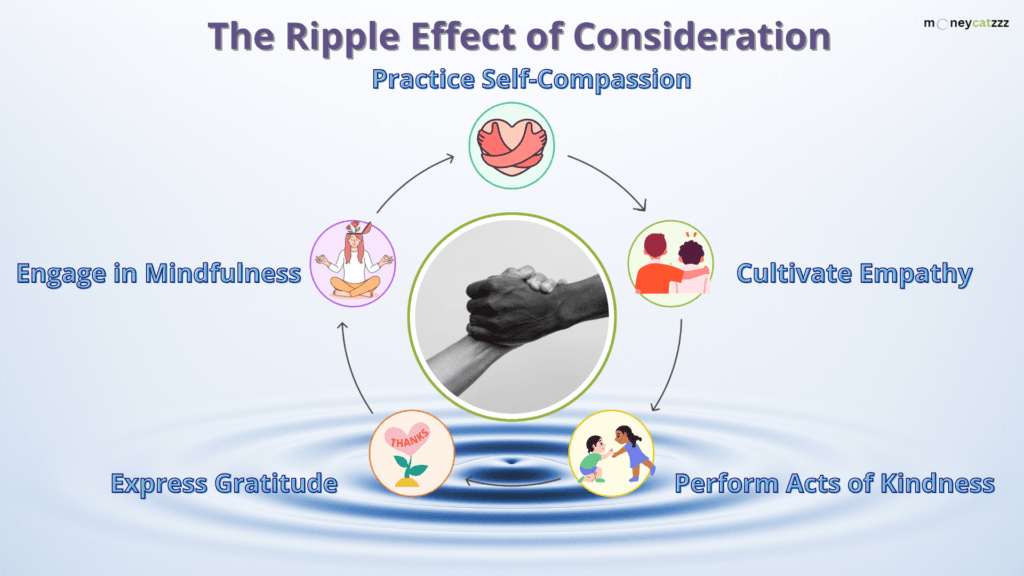
[“The Ripple Effect of Consideration” – moneycatzzz.com]

Practical Ways to Practice Financial Consideration:
- Use budgeting apps like YNAB or Monarch to track whether your spending matches your values.
- Give intentionally: Choose causes that matter to you and build giving into your monthly budget.
- Ask before you spend: Will this add to my well-being—or distract from it?
As The Millionaire Next Door highlights, most wealthy people aren’t flashy but thoughtful. Consideration breeds abundance, not just financially but emotionally.
The Ripple Effect: When You Truly See Others
Consideration isn’t confined to one corner of life—it’s the connective tissue between all of it. From emotional support to thoughtful spending to workplace kindness, every considerate act sends a ripple outward.
Dale Carnegie argued that the most influential people aren’t necessarily the most innovative or most accomplished—they’re the ones who make others feel valued. That principle hasn’t changed.
When you look up from your phone, ask, “How are you?”
When you leave space for someone to speak—even if they don’t know how to say it.
When you spend time in a way that reflects not just what you want now but who you want to be…
You’re creating impact.
Everyday Ways to Live the Power of Consideration
Personal
- Pause before reacting—sometimes, the best response is just being there.
- Write a quick note—not an email, not a text. A handwritten message hits differently.
- Notice something others miss—how your friend always helps clean up, or your partner never forgets birthdays.
Professional
- Begin meetings with check-ins—how’s everyone doing?
- Create space for feedback—and receive it with grace.
- Model empathy—especially when stress runs high.
Financial
- Set a value-based budget—assign dollars to what brings you peace, joy, and meaning.
- Buy less, give more—to yourself, your future, and others.
- Ask: “Will I still be proud of this decision a year from now?”
The Call to See
As Adam Grant writes in Give and Take, the most successful people aren’t takers or matches—they’re givers. Not doormats, but those who lead with presence, empathy, and intentionality. Their success isn’t in what they extract but in what they contribute.
So today, pause.
Look up from your screen. Breathe. And ask:
Who can I see today?
Because every act of consideration—however small—plants a seed. And that seed can grow into something far greater than you imagined in a world hungry for connection, kindness, and meaning.
Let’s make consideration of the new default. One word. One gesture. One decision at a time.
Disclosure: This post may contain affiliate links. We only recommend products we believe in, and We may receive a commission at no cost to you! Thank you for your support!
Acknowledgement: Cover Photo by Arjunsyah on Unsplash
Disclaimer: The information is provided for general information only – moneycatzzz.com makes no representations or warranties in relation to the information, including but not limited to any representation or warranty as to the fitness for any particular purpose of the information to the fullest extent permitted by law. While every effort has been made to ensure that the information provided in this article is accurate, reliable, and complete as of the time of writing, the information provided in this article should not be relied upon to make any financial, investment, real estate or legal decisions. Additionally, the information should not substitute advice from a trained professional who can take into account your personal facts and circumstances, and we accept no liability if you use the information to form decisions.