
 Reading Time: 8 mins #
 This post may contain affiliate links.
November 14th, 2:47 PM. I stood frozen in the conference room as my mentor’s single word hung in the air: “Wrong.” Not “needs work,” not “consider another angle,” just “Wrong.” In that moment, I wasn’t justified in my thinking, my approach, or apparently, my existence in that room. My chest tightened. Vision blurred. Five years of confidence evaporated in five letters.
That night, I called my mentor, sobbing so hard I could barely speak. “She pointed at my presentation, then at me, and just said ‘Wrong.’ Like I was fundamentally broken.” My mentor listened, then said something that would take me five years to understand: “You’ve just become both the accused and accuser in your own trial. Until you realize you’re also the judge, you’ll never feel justified again.”
She was right. That single word triggered what she called a verdict dilemma: when someone’s judgment becomes so internalized that you spend years trying to overturn a sentence you gave yourself. It’s the birthplace of imposter syndrome, the death of creativity, and the reason talented people disappear into safe, small lives.
The Anatomy of Destruction by Single Word
Words have weight. Brené Brown explores this in Daring Greatly, demonstrating how shame-inducing language can literally alter our neural pathways. But “Wrong” is special in its violence. It’s not feedback; it’s a verdict. It doesn’t critique the work; it condemns the worker.
When my mentor said “Wrong,” she wasn’t evaluating my strategy presentation. She was issuing a life sentence. And like any good prisoner, I immediately internalized the judgment. Within seconds, I’d transformed from a confident strategist to the accused and accuser in my own psychological courtroom.
The presentation I’d worked on for six months? Wrong. The methodology I’d developed? Wrong. My understanding of the client’s needs? Wrong. My right to be in that room? Absolutely wrong.
Research from Harvard Business Review shows that 70% of professionals experience imposter syndrome at some point. But what they don’t tell you is how often it starts with a single, weaponized word from someone you trust.
The Verdict Dilemma: Choosing Between Two Impossibilities
The verdict dilemma my mentor identified works like this: When someone you respect tells you you’re wrong, you face two equally devastating options:
Option 1: They’re right, and you’re fundamentally flawed
Option 2: They’re wrong, and your mentor/boss/hero is fallible
Most of us can’t handle Option 2. It’s too destabilizing to believe the person guiding us might be incorrect, unfair, or simply having a bad day. So we choose Option 1 by default. We accept the verdict and become our own prosecutor, building cases against ourselves daily.
For five years, I lived in this verdict dilemma. Every success was luck. Every failure was evidence of my fundamental wrongness. I worked eighty-hour weeks, not from passion but from a desperate need to collect enough evidence to appeal my own sentence.
The Internal Courtroom Where You’re Always Guilty
Once you’ve accepted the “Wrong” verdict, your mind becomes a courtroom where you’re simultaneously the accused and accuser. It’s an exhausting performance:
As the Accused: You constantly defend your right to exist in professional spaces. Every meeting becomes a trial where you must prove you belong.
As the Accuser: You gather evidence of your inadequacy. Missed a comma in an email? Evidence. Does your colleague disagree with your approach?
Evidence. Project takes longer than expected? Overwhelming evidence.
This internal trial never ends because you’ve rigged it against yourself. No amount of external success can overturn an internal conviction. I won three industry awards during those five years. My internal prosecutor dismissed them as flukes.
Amy Cuddy’s Presence describes this perfectly: when we feel like impostors, we become disconnected from our own power. We perform our professional lives rather than living them. Every interaction becomes about seeking validation rather than creating value.
The Imposter Syndrome Factory
Imposter syndrome isn’t just self-doubt; it’s the industrialized production of unworthiness. Once that “Wrong” verdict is internalized, it becomes a factory that manufactures evidence of your inadequacy 24/7.
My factory was particularly efficient:
- Client happy with work? They have low standards.
- Colleague asks for advice? They don’t know I’m a fraud yet.
- Promoted to a senior role? Diversity quota, obviously.
- Successful project launch? The team carried me.
A Psychology Today post on imposter syndrome reveals that high achievers often experience it most intensely. The more you accomplish, the more evidence you need to feel justified, because the stakes of being “found out” keep rising.
The Desperate Search for Validation
When you’re living in a verdict dilemma, validation becomes a drug. You need constant doses to function. But here’s the cruel irony: you’re seeking approval from the very voice that condemned you.
I spent three years sending my best work to that mentor, hoping for redemption. She’d left the company, moved to another country, and probably forgot I existed. But I was still performing for her, still seeking her “Not Wrong” that would justify me.
The tragedy is that validation was everywhere. Clients loved my work. Colleagues sought my input. My direct reports called me the best manager they’d had. But I couldn’t receive any of it because I was still appealing to a judge who’d left the courtroom years ago.

[“Breaking the Cycle of the Accused and Accuser in Professional Life” – moneycatzzz.com]
The Three Words That Changed Everything
March 3rd, 4:15 PM. A routine Friday. I’d sent a complex analysis to a peer, Sarah, bracing for criticism. Her response was three words: “Well done, Lizabeth.”
I stared at the screen, then burst into tears.
Not “good job” or “nice work” but “Well done.” The opposite of wrong. From someone who had no agenda, no power over me, no reason to lie. Just a peer acknowledging competent work.
Sarah had unknowingly given me what Viktor Frankl describes in Man’s Search for Meaning: the power to choose my response to my circumstances. I could choose to remain condemned or choose to be free. The verdict had only held power because I continued to honor it.
Breaking Free from The Accused and Accuser Cycle
My mentor helped me understand that healing from a “Wrong” verdict requires three steps:
Step 1: Fire Your Internal Prosecutor
That voice saying you’re not good enough? It’s not protecting you; it’s persecuting you. Research on self-compassion indicates that internal criticism can decrease performance, while self-compassion can enhance it.
I literally wrote my internal prosecutor a termination letter: “Your services are no longer required. Your case files are closed. The defendant is free to go.”
Step 2: Acknowledge the Fallibility of the Judge
“Wrong”? She was going through a divorce, facing a hostile takeover at work, and by her own later admission, “not in a good place that year.” Her verdict wasn’t divine truth; it was a stressed human having a bad moment.
This isn’t about blame. It’s about perspective. The people who wound us are usually wounded themselves. Their verdicts say more about their internal trials than our actual guilt.
Step 3: Become Your Own Authority
Being justified doesn’t mean being wrong. It means having the authority to assess your own work, learn from mistakes, and grow without needing external permission.
I developed what I call the Self-Justification Framework:
- Did I act with integrity? Yes.
- Did I apply my best knowledge? Yes.
- Did I learn from the outcome? Yes.
Then I am justified in my effort, regardless of results.
The Friday Practice: Overturning Your Own Verdicts
Every Friday, I do a Verdict Review:
Identify Active Verdicts
What “wrongs” are you still carrying? Whose pointing finger still directs your choices?
Challenge the Evidence
That verdict dilemma you’re living with? What evidence supports the OTHER option – that they were wrong, not you?
Seek Clean Validation
Find validation from sources without an agenda. Peers, not superiors. Clients, not critics. Let their “well done” start to balance the “wrong.”
Practice Self-Justification
You don’t need permission to be justified in your professional existence. You earned it by showing up, trying, failing, learning, and trying again.

[“Reclaiming Authority After an Imposter Syndrome Verdict” – moneycatzzz.com]
The Compass Rebuilt
It’s been seven years since that “Wrong” verdict. I still have the presentation that triggered it. Looking at it now, it wasn’t wrong. It was incomplete and unclear in places and could be improved. But not wrong.
More importantly, even if it had been entirely wrong, that wouldn’t make ME wrong. The work can be flawed without the worker being condemned. The idea can fail without the ideator being the accused and accuser forever.
Psychological research on a growth mindset shows that viewing failures as data rather than verdicts is key to resilience. Every “wrong” is just information about what to try differently, not a life sentence.
Your Verdict Reversal Starts Now
If you’re carrying a “Wrong” verdict, living in a verdict dilemma, or struggling with imposter syndrome, know this: The trial is over. You don’t need to gather more evidence. You don’t need one more accomplishment to be justified.
The person who pointed that finger? They’ve moved on. The only one still prosecuting you is you.
You are already justified. Not because someone else says so, but because you survived the verdict and kept going. That persistence, that refusal to disappear, that courage to keep creating despite the condemnation – that’s your justification.
The compass you thought was broken? It was always pointing true north. You just needed to stop letting someone else’s “Wrong” convince you otherwise.
Well done for still being here.
The "Wrong" Recovery List: Books to Help You Overturn Your Internal Verdicts
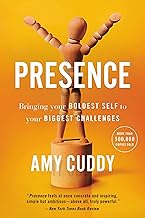
Presence

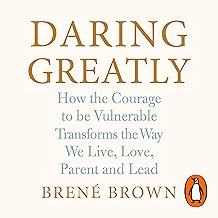
Daring Greatly

Man’s Search for Meaning
Disclosure: This post may contain affiliate links. We only recommend products we believe in, and we may receive a commission at no cost to you! Thank you for your support!
Acknowledgment: Cover Image by moneycatzzz.com
Disclaimer: The information is provided for general information only – moneycatzzz.com makes no representations or warranties in relation to the information, including but not limited to any representation or warranty as to the fitness for any particular purpose of the information to the fullest extent permitted by law. While every effort has been made to ensure that the information provided in this article is accurate, reliable, and complete as of the time of writing, the information provided in this article should not be relied upon to make any financial, investment, real estate or legal decisions. Additionally, the information should not substitute advice from a trained professional who can take into account your personal facts and circumstances, and we accept no liability if you use the information to form decisions.