
 Reading Time: 8 mins #
 This post may contain affiliate links.
I once planned my week like a game of Tetris. Every block had to fit. Color-coded calendars. Time-blocked spreadsheets. A Sunday ritual that took two hours.
By Wednesday, the whole structure would collapse. An email that was supposed to take “just five minutes” ended up taking an hour. My body needed rest; I hadn’t scheduled. The carefully stacked blocks tumbled, and I’d spend the rest of the week playing catch-up.
How to organize your week became a question that haunted me, not because I lacked systems, but because I was using the wrong metaphor.
I no longer organize my week like Tetris. I organize it like a garden. Some things I plant deliberately. Some stuff I prune. And some weeks, I water what’s already there and call it enough.
This weekly planning practice assumes you’re human, not a machine. Here’s how it works.
At a Glance: My 6-Move Weekly Planning Practice
- Friday Afternoon – Close the week (5 min: win, let-go, lesson)
- Sunday Morning – Plan 3 anchor tasks (15 min, no more)
- Monday Morning – Protect your one anchor (block 3 hours)
- Wednesday Midday – Check in and adjust (5 min)
- Thursday 5 pm – No new commits (give yourself 48 hours)
- Sunday Evening – Write your “done list” (gratitude over anxiety)
The Shift: From Filling Time to Choosing Time
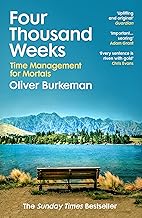
The change occurred when I read Oliver Burkeman’s “Four Thousand Weeks.” The title is a gut punch: if you live to 80, you get roughly 4,000 weeks. That’s it.
Burkeman writes that our productivity obsession is, in fact, an attempt to deny our finitude, to pretend we can fit everything in if we work hard enough. But we can’t.
That realization freed me. If I can’t do everything, I don’t have to try to do everything. I have to choose what matters this week, and let the rest wait or go.
My weekly routine shifted from focusing on maximum efficiency to making deliberate choices, not “How much can I fit?” but “What do I want to tend?”
1. Friday Weekly Review: The Closing Ritual
One Friday afternoon, I wrote three lines in my notebook:
Win: finished the draft.
Let go: the perfect headline.
Learned: done beats perfect.
That simple practice steadied me through a whole season of overthinking.
Now I close every week the same way. Before I shut my laptop, I opened a note titled “This Week” and wrote one win, something I’m glad I did. Then, I let go of one thing: what I chose not to do, without guilt. And one thing I’ve learned, about work, myself, or just life.
Then the laptop closes. The week is done.
I used to save my weekly review for Sunday night, which meant I spent my last free evening thinking about work. Moving it to Friday changed everything. Research on the Zeigarnik effect shows our brains obsess over unfinished tasks, looping through what we didn’t complete. By naming what’s done and what I’m deliberately leaving undone, I give my nervous system permission to rest. The loop stops. The weekend begins.

[“The Shift: From Filling Time to Choosing Time” – Image by moneycatzzz.com]
2. Sunday Weekly Planning: The Opening Ritual
I no longer spend two hours planning. I don’t time-block every task or color-code my calendar. I don’t assign things I know I won’t do or pretend I’ll suddenly become someone who meal-preps on Tuesday.
What I do instead: fifteen minutes on Sunday morning with tea and no phone.
I write three categories in my notebook: anchor tasks (the 2–3 things that matter most this week), margin moves (small things I’d like to do if time opens), and what I’m not doing (so guilt doesn’t creep in). Then I assign each anchor to a specific day. Not a particular hour. Just a day.
That’s it.
Time-boxing research from Harvard Business Review shows that assigning tasks to specific days makes you 30% more likely to complete them. But over-scheduling creates decision fatigue and kills flexibility. My fifteen-minute weekly planning ritual gives structure without suffocation. The week has shape, but it can still breathe.
3. Monday Morning Time Management: Protect Your Anchor
MIT’s Human Dynamics Lab found something I wish I’d known years ago: how you spend the first three hours of Monday predicts your sense of control for the entire week. Start reactive, stay reactive. Start intentionally, stay steadier.
Monday used to overwhelm me. Inbox full. Calendar crowded, a week’s worth of urgency before I’d finished my coffee. Now I choose one anchor task for Monday and protect it like a vow.
Before email. Before Slack. Before I let the world write my day, I do the one thing I said mattered most this week. I block 9–12 on my calendar, label it “Anchor,” and treat it like a meeting I can’t skip.
One Monday, my anchor was “write the difficult email I’ve been avoiding.” I wrote it at 9 am, sent it at 9:47 and spent the rest of the week lighter because the hard thing was already done. The relief lasted days.
4. Wednesday Check-In: Organize Your Week Mid-Course
Wednesday is the pivot point. If I don’t pause here, I either burn out by Friday, or drift into a weekend full of “I meant to…” So, at lunch on Wednesday, I glance at my three anchor tasks and ask, “What’s done?” What’s still possible? What needs to shift?
Takes five minutes. Sometimes less.
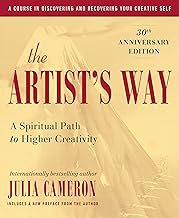
Psychologist Gabriele Oettingen refers to this mental process as mental contrasting, which involves comparing your plan to reality without judgment or criticism. It helps you adapt without abandoning the goal. Julia Cameron, in The Artist’s Way, refers to it as “course-correcting without catastrophizing.” I call it survival.
One Wednesday, I realized I’d said yes to too many things. I moved two anchor tasks to the following week, emailed apologies with clean sentences (no drama, no self-flagellation), and spent Thursday taking a breath instead of bracing for the next task. The week didn’t collapse. It softened.
If you need scripts for the apology part, my piece on boundaries without burning bridges can help.
5. The “No New Commits After Thursday” Boundary
This rule changed my life, and it’s more straightforward than it sounds.
After Thursday at 5 pm, I don’t commit to anything new for the following week. No “yes” to meetings, projects, or favors. I give myself 48 hours just to be before I start building the following week.
Someone asks for my time after Thursday? I say: “I’m reviewing my calendar this weekend. Can I reevaluate Monday?”
Then, on Sunday, when I plan, I make decisions with a clear head, rather than reacting to someone else’s urgency.
Before this rule, I once agreed to a Friday afternoon call that killed my weekend energy. I said yes because I felt guilty saying no. I spent Saturday resentful and Sunday anxious. Never again.
Research from Stanford on decision fatigue shows that we make worse decisions when we’re tired. By Friday, I’m exhausted. So I stop deciding. The boundary isn’t rigid; it’s protective. It keeps me from writing checks my weekend self can’t cash.
For more on small boundaries that don’t feel harsh, my Microboundaries piece goes deeper.
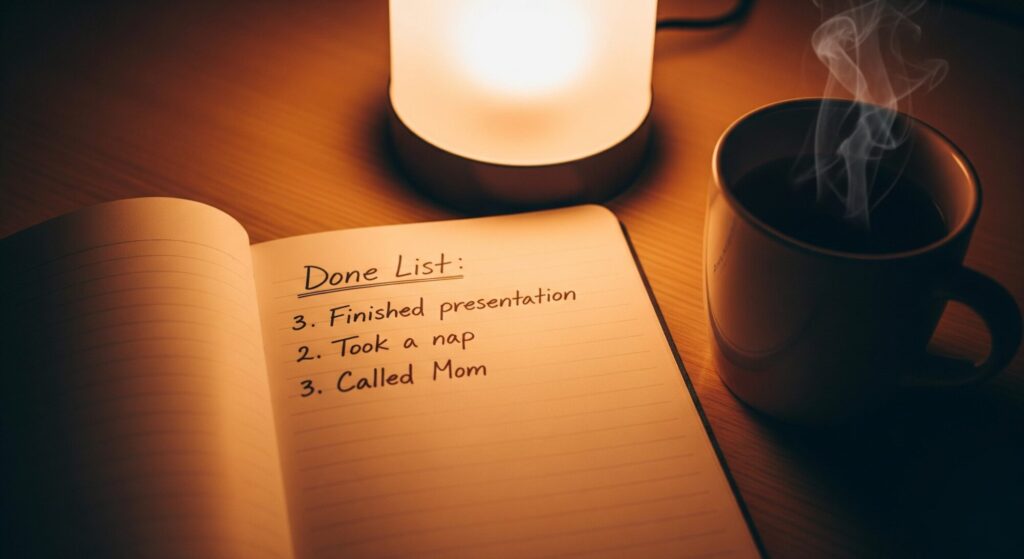
6. Sunday Evening: The “Done List”
I used to end Sundays scrolling through my calendar with a knot in my chest, mentally listing everything I hadn’t done. Now I end it differently.
Before bed on Sunday, I write a “done list”, not a to-do list. Just three things I did last week that I’m proud of. Work, life, and small things. Doesn’t matter.
One Sunday, my to-do list was: “Finished the thing. Took a nap. Texted my friend back.” That last one mattered more than the first.
Research from UC Berkeley’s Greater Good Science Center on gratitude shows that reflecting on what went right can improve sleep quality and reduce Sunday anxiety. The done list isn’t about productivity. It’s about noticing that the week held more than what you missed. It shifts the lens from scarcity to sufficiency which is a kindness worth practicing.
What I Don’t Do (The Anti-Productivity List)
Here’s what I’ve stopped doing, and why:
I don’t time-block every hour. Flexibility is a feature, not a failure.
I don’t track my time in apps. It made me judge myself more, not manage myself better.
I don’t plan more than three anchor tasks per week. If it doesn’t fit in three, I’m overpromising.
I don’t use my phone for my weekly planner. Paper doesn’t send notifications or tempt me into email.
I don’t expect the same energy every week. Some weeks I plant. Some weeks, I water.
This approach shares DNA with the mini-habits practice I wrote about earlier: small, repeatable, and forgiving. The goal isn’t to become a productivity machine. It’s to stay human while still getting things done.
[“The Done List: Gratitude Over Anxiety” – Image by moneycatzzz.com]
For Hard Seasons
Some weeks, even this feels like too much.
If you’re in the middle of grief, burnout, caregiving, or just surviving — skip the ritual. Just choose one anchor. Or choose none.
You’re not behind. You’re in a different season. The garden metaphor still works: sometimes the only job is to keep the soil alive. Water. Rest. Wait.
That’s enough.
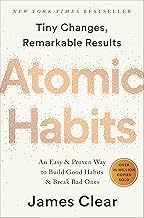
James Clear writes in Atomic Habits that “you do not rise to the level of your goals; you fall to the level of your systems.” But in hard seasons, let the system fall too. You can rebuild it when you’re resourced.
Right now, breathe.
Three Ways to Start This Week
Pick one of these and try it once. Just once.
- Close Friday gently. Write three lines before you shut your laptop: one win, one thing you let go, one thing you learned.
- Sunday: choose three anchors. Not ten. Not “everything.” Three things that matter this week. Assign each to a day. Let the rest wait.
- Protect Monday’s first three hours. Block the time. Label it “Anchor.” Do the one thing that will make the rest of the week feel lighter.
FAQ: How to Organize Your Week (Common Questions)
Q: How do I organize my week if I have an unpredictable schedule?
A: Anchor tasks still work—assign them to "morning" or "afternoon," not specific hours. Keep the Friday close and Sunday open rituals. Flexibility lives inside the structure.
Q: What if I don't finish my three anchor tasks?
A: Then you learned something about your capacity this week. Adjust next week. This isn't about perfection—it's about patterns.
Q: Do I need a fancy planner for this weekly routine?
A: No. A blank notebook works. I use a simple weekly spread with three sections: anchors, margin, and not doing. That's it.
Q: How can I organize my week when I have ADHD or struggle with executive function?
A: Make the rituals even smaller. Friday close: one line. Sunday plan: one anchor. Visual cues also help—such as sticky notes, color coding, or alarms that cue each ritual
Q: What if my job requires constant availability?
A: Anchor tasks can be fifteen minutes. The Friday close can be five. Even tiny rituals signal to your nervous system: "I'm choosing, not just reacting."
Q: How to organize your week without a traditional planner?
A: Use what works for you—a notes app, a whiteboard, the back of an envelope. The system matters less than the rhythm. I know someone who organizes their week using voice memos.
Q: How long until this weekly planning practice feels natural?
A: In my experience, about 4–6 weeks. The first few Sundays will feel awkward. By week five, your body will have developed a craving for the rhythm.
The Garden at Dawn
Every Sunday morning, I sit with a cup of tea and a blank page. I don’t plan to be the person I wish I were, the one who wakes at 5 am and journals for an hour, and answers every email within twenty-four hours.
I plan for the person I am. Tired some days. Energized others. Humans always.
I choose three things to tend. I name what I’m letting go. I protect the margins where life actually happens: the friend who calls, the nap I didn’t schedule, or the walk that clears my head.
By the time I close the notebook, my week has taken shape. Not a rigid structure. A gentle container.
And when Friday comes, I’ll close it again. I’ll name the win, the letting-go, the lesson… Then I’ll step away from the garden and let it rest.
You don’t need a perfect system to organize your week. You need a kind one. Begin with three anchors, one closing ritual, and the permission to adjust when life unfolds as it does.
The week is not a puzzle to solve. It’s a rhythm to live.
Books That Taught Me How to Tend Time
The Artist’s Way

Four Thousand Weeks
Atomic Habits
Disclosure: This post may contain affiliate links. We only recommend products we believe in, and we may receive a commission at no cost to you! Thank you for your support!
Acknowledgment: Cover Image by moneycatzzz.com
Disclaimer: The information is provided for general information only – moneycatzzz.com makes no representations or warranties in relation to the information, including but not limited to any representation or warranty as to the fitness for any particular purpose of the information to the fullest extent permitted by law. While every effort has been made to ensure that the information provided in this article is accurate, reliable, and complete as of the time of writing, the information provided in this article should not be relied upon to make any financial, investment, real estate or legal decisions. Additionally, the information should not substitute advice from a trained professional who can take into account your personal facts and circumstances, and we accept no liability if you use the information to form decisions.