
 Reading Time: 8 mins #
 This post may contain affiliate links.
You wake up and the world’s already screaming at you.
Emails. Notifications. A to-do list that looks like it’s reproducing on its own.
Before you’ve even brushed your teeth, you’re reacting, not living.
Marcus Aurelius, the Roman emperor who ruled a world far rougher than yours, started his days the same way: surrounded by chaos. Only difference? He wrote to himself before the world could.
That journal became Marcus Aurelius’ Meditations, a private notebook turned timeless guide, a kind of daily stoic practice that kept him sane while leading armies and holding an empire together.
So here’s the question: If an emperor could find peace before war, what’s your excuse before coffee?
The Daily Stoic Problem: Why You’re Overwhelmed (and He Wasn’t)
The Stoics didn’t preach calm; they trained for it.
That’s the first modern misunderstanding. Stoicism isn’t emotional numbness; it’s emotional mastery. It’s the discipline of separating what’s in your control from what’s not, the dichotomy of control that remains psychology’s most practical gift from antiquity.
1. The Tyranny of Reaction
Your brain is wired for fight or flight. But in 2025, the lions are Slack messages and client pings.
You’re reacting to everything, which means you’re choosing nothing.
Marcus wrote, “You have power over your mind, not outside events. Realize this, and you will find strength.”
That’s the original cognitive behavioral therapy in one sentence — centuries before CBT was born.
Psychologist Albert Ellis even cited Stoicism as his main influence when developing Rational Emotive Behavior Therapy. So yes, Marcus Aurelius was doing self-therapy long before psychology got a PhD.
2. The Illusion of Productivity
Modern hustle culture tells you busyness equals worth.
Stoicism says the opposite. It whispers: Activity isn’t the same as progress.
In Meditations, Marcus warns: “Don’t waste what remains of your life in thoughts about others.”
In other words: Stop scrolling through other people’s curated chaos.
The daily stoic practice begins with subtraction, not addition.
3. The Distraction Economy
Today’s gods aren’t Roman; they’re digital.
Attention is the new currency, and every app wants a tithe.
Marcus didn’t have TikTok, but he had the Senate, the mob, and invading tribes. Still, he started each morning with silence, reflection before reaction. That’s the emperor’s real flex.

[“The Wakeful Pause (Step 1 of the Framework)” – Image by moneycatzzz.com]
The Framework: The “A.M. Imperium” Method
If you want to live with Stoic calm in a world designed to hijack your attention, you need a system — something practical.
Here’s mine, inspired by Marcus Aurelius’ Meditations and adapted for modern mornings:
Step 1: The Wakeful Pause
Before touching your phone, sit up and take five deep breaths. Ask, What’s actually within my control today?
That single question separates emotion from impulse. You’re training awareness — not for peace, but for power.
Marcus began his mornings reminding himself: “When you wake up, remind yourself: the people you deal with today will be meddling, ungrateful, arrogant…” He didn’t meditate to escape conflict, he rehearsed for it.
Step 2: The View from Above
Imagine zooming out on your life like a Google Earth camera. See the roof of your house, the city, the planet.
That’s called The View from Above, a Stoic visualization practiced by ancient philosophers.
You realize how small your worries look from orbit.
It’s mindfulness with perspective, a reset that deflates ego and inflates gratitude.
Step 3: The Emotional Audit
Write down three emotions you felt yesterday that controlled your behavior: irritation, envy, and guilt.
Ask, Did these emotions serve me, or own me?
Marcus treated emotions like data, not enemies. “The soul becomes dyed with the color of its thoughts,” he wrote.
That’s self-leadership, not suppression.
Step 4: The Virtue Ledger
At night, review your actions through four Stoic virtues:
- Wisdom: Did I act from understanding or impulse?
- Courage: Did I do what was right, not easy?
- Justice: Did I treat others as equals?
- Temperance: Did I overindulge?
This reflective bookkeeping keeps your character solvent.
Step 5: The Stoic Reset (Technology Detox)
Delete one app for 7 days. Not forever, just to prove to your mind who’s boss.
Marcus practiced voluntary discomfort: sleeping on the floor, fasting, wearing rough clothes, to remind himself comfort isn’t control.
You don’t have to go full monk. Just reclaim your inputs.

[“The View From Above (Perspective Shift)” – Image by moneycatzzz.com]
Real-World Evidence: Stoicism Works (Even Without a Toga)
You don’t need to command legions to apply Marcus Aurelius’ Meditations.
Example 1 — The CEO Reset: A tech founder I coached replaced his 6:00 a.m. Slack check with the A.M. Imperium routine. Within a month, he reported “more decisive mornings, fewer reaction spirals.” His leadership improved because he stopped confusing urgency with importance.
Example 2 — The Burnout Nurse: A healthcare worker used the “View from Above” practice before each shift. Instead of drowning in patient chaos, she visualized herself as part of a greater web of care. Anxiety dropped. Compassion rose.
Example 3 — The Broke Freelancer: He used Stoic journaling as his nightly ritual, asking, “What’s in my control about my finances?” It helped him separate money stress from money strategy. Six months later, his income doubled.
Modern problems, ancient tools. Same species, same psychology.
Frequently Asked (and Avoided) Questions
Q1: Isn’t Stoicism just emotional suppression?
Hell no. Stoicism isn’t about feeling less — it’s about being ruled less by what you feel. Think of it as emotional aikido. You redirect, not resist.
Q2: How long before I see results from daily stoic practice?
Two weeks for calmer mornings. Two months for better reactions. Lifelong for mastery. Like the gym — reps, not reading, build strength.
Q3: What if I’m not a philosopher?
Perfect. Marcus wasn’t either — he was a ruler, soldier, and father. Meditations isn’t theory; it’s field notes from someone trying to stay human under pressure.
Q4: Can I combine Stoicism with mindfulness or therapy?
Absolutely. In fact, Stoicism was mindfulness before it was trendy. Cognitive Behavioral Therapy directly borrows from it — check the roots in Dr. Aaron Beck’s early papers.
Q5: What books can help me go deeper?
Start with:
- Meditations by Marcus Aurelius (Gregory Hays translation)
- The Daily Stoic by Ryan Holiday and Stephen Hanselman
- A Guide to the Good Life by William B. Irvine
For authority reading, check The Daily Stoic website and Modern Stoicism Project — both grounded resources on applied Stoicism.
Closing Reflection: The Emperor Within
Most people read Marcus Aurelius’ Meditations like a museum artifact, ancient words under glass. But he never wrote them for you. He wrote them for himself, to fight his own bullshit.
And maybe that’s the whole point.
The daily stoic practice isn’t about being calm. It’s about being clear.
It’s not about detachment. It’s about choosing what deserves your attention.
Marcus didn’t live a peaceful life. He lived a purposeful one. And if you can wake up tomorrow, face your chaos, and still whisper, “Only my actions are mine,” you’re already practicing like an emperor.
So tomorrow morning, before you check your phone, check yourself.
Ask: What would Marcus write in his notebook about today?
The Cat Speaks Series | Marco Ban for moneycatzzz.com
Mindful living meets philosophical rebellion.
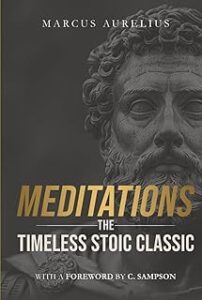
Meditations

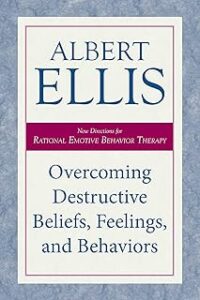
Overcoming Destructive Beliefs
The Gift of Mindfulness
Disclosure: This post may contain affiliate links. We only recommend products we believe in, and We may receive a commission at no cost to you! Thank you for your support!
Acknowledgment: Cover Image by moneycatzzz.com
Disclaimer: The information is provided for general information only – moneycatzzz.com makes no representations or warranties in relation to the information, including but not limited to any representation or warranty as to the fitness for any particular purpose of the information to the fullest extent permitted by law. While every effort has been made to ensure that the information provided in this article is accurate, reliable, and complete as of the time of writing, the information provided in this article should not be relied upon to make any financial, investment, real estate or legal decisions. Additionally, the information should not substitute advice from a trained professional who can take into account your personal facts and circumstances, and we accept no liability if you use the information to form decisions.