
 Reading Time: 8 mins #
 This post may contain affiliate links.
Being too available feels like a virtue. You answer late. You say yes. You smooth things over. You think this makes you reliable.
It makes you cheap.
Not because you are worth less. Because you have indicated that your time costs nothing to access, you are overcommitting. Then you underdeliver. Then the empty promises pile up. And people stop believing you altogether.
I know because I was that person. The one who replied to emails at 10 pm. Who said “no worries” when someone canceled for the third time? Who never wanted to be the problem.
I thought I was being nice. I was being a doormat. And the worst part?
Nobody respected me for it.
The Open Door Problem
My office had a door. For years, I left it open. Anyone could walk in anytime. Interrupt a thought. Derail a conversation—ask for something small that has grown into something long.
I thought the open door made me accessible. Approachable. A good colleague.
Then I noticed something. The people whose doors were closed got more done. They also got more respect. When they opened their doors, people paid attention. When I opened mine, people kept talking over me.
The open door did not signal approach-ability—it signaled that my time was not valuable enough to protect.
So I closed the door. Not forever. Just most of the time. The world did not end. My colleagues adapted. And for the first time, I finished my work before 6 pm.
The door is the metaphor. Open means cheap. Closed means valuable. Sometimes you open it. But you decide when. Not the hallway.
What Being Too Available Signals
Let me name what being too available actually communicates, and it is not what you think.
Your Time Has No Price Tag
Every time you answer a non-urgent message within thirty seconds, you teach the sender something. You teach them that you are always there. That your attention is abundant—that they do not need to plan or respect your focus.
Abundant things are not valued. That is basic economics. Water is essential. It is also cheap. Diamonds are useless. They are expensive. Scarcity creates value.
You have made your time abundant. So people treat it like water. They waste it. They spill it. They assume there is more where that came from.
You Are Training People to Ignore Your Needs
Behavioral psychology has a concept called reinforcement. When you reward a behavior, it tends to repeat.
Every time you respond instantly to a late-night message, you reward the sender. Every time you say yes to a meeting you should have declined, you reward the requester. Every time you apologize for being unavailable, you reward the person who interrupted you.
You are not born with disrespectful colleagues and friends. You train them. Every day. With every small yes.
Reliable and Available Are Not the Same
Here is the distinction I learned too late.
Reliable means people can count on you to do what you said you would do. Available means people can access you whenever they want.
You can be reliable without being available. In fact, you must be. Because if you are always available, you never have time to do the things people are counting on you to do.
The most reliable person I know is a surgeon. She is impossible to reach during the day. Her phone is off. Her door is closed. But when she is with you, she is fully there. And she always does what she promised.
Nobody thinks she is unreliable because she does not answer texts. They think she is a professional.
[“The Economics of Attention” – Image by moneycatzzz.com]
Why People Don’t Respect Your Time
Let me answer the question you have been afraid to ask.
Why people don’t respect your time is not because they are bad people. It is because you have not given them a reason to.
The Scarcity Principle
Time to be “No More Mr. Nice Guy,” it is uncomfortable but true. “Nice” behavior is often a covert contract. You are available because you want something in return: appreciation, loyalty, reciprocation.
When you do not get it, you resent everyone. But they never agreed to your terms. You never stated them. You just assumed that being available would earn you respect.
It does not. Availability earns you more requests. That is all.
The Cost of Constant Responsiveness
The cost of constant responsiveness is quantifiable. I tracked my response habits for one week. Every time I answered a non-urgent message outside working hours, I noted it. Every time I said yes to something I should have declined, I noted it.
The total was fourteen hours. Fourteen hours of my personal time. Gone. Responding to things that could have waited. Attending meetings that should have been emails—reassuring people who did not need reassurance.
That is almost two full work days per week. Two days I will never get back. For what? For the privilege of being seen as “responsive.”

Greg McKeown makes the counterargument in Essentialism. Less but better. Applied to availability, this means fewer access points but higher quality presence when you are accessible.
I tried it. I stopped answering emails after 6 pm. I stopped checking my phone on weekends. I set an auto-responder that said, “I will reply within 24 hours.”
The first week, I was anxious. I thought I would miss something critical—I did not. The second week, I relaxed. The third week, I wondered why I had not done this years ago.
The Empty Promises Connection
Here is where empty promises enter the picture.
Being too available leads to overcommitment. You say yes to everything because you cannot stand the discomfort of saying no. You want to be helpful. You want to be liked—you want to avoid the awkward silence that follows a decline.
So you say yes. Then you realize you cannot do everything. So you do nothing well. Or you forget entirely. Or you deliver late and poorly.
The person on the other end does not see your good intentions. They see an empty promise. They learn that your ‘yes’ means ‘maybe’. Your maybe means no. Your word means nothing.
Manuel J. Smith wrote When I Say No, I Feel Guilty precisely for this problem. The book contains the actual scripts. The words to say. The phrases that shut down the conversation without starting a fight.
I memorized one line. “I cannot do that right now. Let me check and get back to you.”
That line saved me. It gave me space. It stopped the immediate ‘yes’ that later became an empty promise. And when I got back to people with a real answer, they trusted me more than when I said yes immediately and failed to deliver.
Setting Availability Boundaries That Stick
Here is the protocol I developed. It works.
The Response Delay
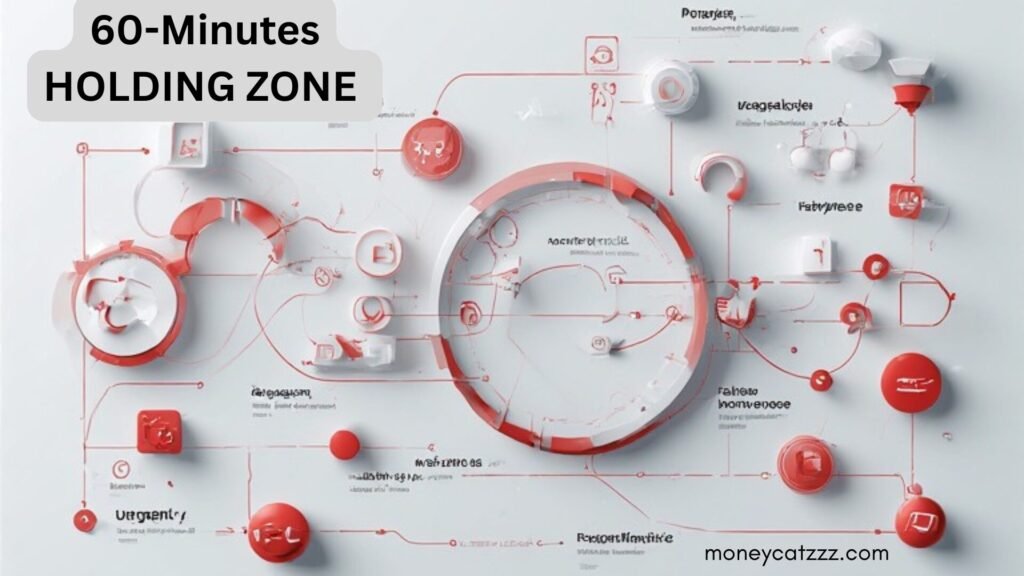
For one month, wait sixty minutes before responding to any non-urgent message. Not a day. Not a week. Just one hour.
The world will not end. The fire will be fake. And you will discover that most “urgent” requests resolve themselves when you do not answer immediately.
After one month, expand to three hours. Then twenty-four. You are not being rude. You are retraining the people who trained you.

The Scheduled Unavailable
Block time on your calendar under “Unavailable.” Not “Focus Time.” Not “Deep Work.” “Unavailable.” That word signals something different—it signals that you are not reachable. Not busy. Unavailable.
During that block, close your email. Close Slack. Turn your phone face down. Do not check anything—work. Or rest. Or stare at a wall. The point is not productivity. The point is inaccessibility.
Start with one hour per day. Then two. Then three. Most people can get to four hours of protected unavailability within a month.
The Three Sentences of No
You do not need a long explanation. You need three sentences.
Sentence one: “Thank you for asking.”
Sentence two: “I cannot do that right now.”
Sentence three: “I will let you know if anything changes.”
That is it. No apology. No excuse. No justification. Just a clean no. The other person will survive. And you will have avoided another empty promise.

[“The Quiet Weight of the 6:00 PM Reply” – Image by moneycatzzz.com]
Setting Availability Boundaries With Specific People
Different relationships require different boundaries. Here is how I handle each.
For my manager: I am available during working hours. I respond within two hours. Outside working hours, I do not exist. My manager knows this because I told her. Not in a dramatic conversation. In a simple statement. “I check email between 9 am and 5 pm. Outside that, I am unavailable.” She said, “Okay.” That was it.
For my colleagues: I am available for scheduled meetings. I am not available for unscheduled calls. I have a rule. No call without a calendar invite. No invite without an agenda. This eliminated 80% of the interruptions that used to fragment my day.
For my friends and family: I am available for emergencies. Everything else waits. I taught them the difference. An emergency is a hospital visit. A broken bone. A crisis. A bad day is not an emergency. A question about dinner plans is not an emergency. I love them. I also need to work and sleep.
For myself: I am unavailable to my phone from 8 pm to 8 am. It lives in the kitchen. I do not check it in bed. I do not check it first thing in the morning. This single change added hours to my life. Hours I actually remember.
Close the Door
Setting availability boundaries is not selfish. It is strategic. It is not rude. It is clear. It is not permanent. It is flexible. You decide when to open the door. Not the hallway.
The people who matter will adapt. The people who do not matter will reveal themselves by their resistance to your boundaries. That is useful information.
Close the door. Not forever. Just most of the time. Let them knock. Let them wait—answer when you are ready.
That is not rudeness. That is respect. Start with your own.
The empty promises will stop when you stop making promises you cannot keep. And you will stop making those promises when you stop being too available to everyone who asks.
Deep Dives: The Currency of Inaccessibility

No More Mr. Nice Guy

Essentialism
Disclosure: This post may contain affiliate links. We only recommend products we believe in, and we may receive a commission at no cost to you! Thank you for your support!
Acknowledgment: Cover Image by moneycatzzz.com
Disclaimer: The information is provided for general information only – moneycatzzz.com makes no representations or warranties in relation to the information, including but not limited to any representation or warranty as to the fitness for any particular purpose of the information to the fullest extent permitted by law. While every effort has been made to ensure that the information provided in this article is accurate, reliable, and complete as of the time of writing, the information provided in this article should not be relied upon to make any financial, investment, real estate or legal decisions. Additionally, the information should not substitute advice from a trained professional who can take into account your personal facts and circumstances, and we accept no liability if you use the information to form decisions.