
 Reading Time: 8 mins #
 This post may contain affiliate links.
Boost Team Performance: 6 Proven Strategies for Success
Imagine your workplace as a finely tuned orchestra, where each team member plays a crucial role in creating a harmonious symphony of productivity and innovation. However, the entire performance suffers when even one instrument falls out of tune.
A Gallup study found that companies with high employee engagement are 21% more profitable, highlighting the undeniable connection between team dynamics, productivity, and business success. Organizations must focus on fostering collaboration, clarity, and motivation within their teams to stay ahead.
In this article, we’ll explore six actionable steps to help you boost team performance, enhance efficiency, and create a workplace where every member thrives. By drawing insights from renowned books and blending them with real-world experiences and powerful metaphors, we’ll provide a practical roadmap for building a high-performing team.
Just as a conductor ensures a seamless orchestral performance, transparent and open communication within your team is vital. It keeps everyone aligned, reduces misunderstandings, and strengthens collaboration. But communication is just the first step. Defining clear roles and responsibilities is equally crucial to ensuring that each team member knows their part in the symphony of work—creating a workplace that operates with precision, purpose, and success.
“The strength of the team is each individual member. The strength of each member is the team.” – Phil Jackson
1. Foster Open Communication
Open communication is the cornerstone of a high-performing team. Think of your team as an orchestra where clear signals from the conductor ensure harmony. Without open communication channels, misunderstandings arise, tasks overlap, and conflicts fester, decreasing productivity.
The book “Crucial Conversations” by Kerry Patterson et al. emphasizes the importance of open dialogue, especially during high-stakes situations. It is essential to create an environment where team members feel safe expressing their thoughts and concerns. This can be achieved by encouraging regular team meetings and one-on-one check-ins and fostering a culture of active listening.
For instance, in a project I was involved with a few years ago, we faced significant challenges due to poor communication. Deadlines were being missed, and the work quality needed improvement. We implemented daily stand-up meetings where everyone shared their progress and roadblocks. This simple change transformed our dynamics. Team members started understanding each other’s challenges and offered support, leading to a more cohesive effort and timely project completion.
To further enhance communication, consider using collaboration tools like Slack or Microsoft Teams, which can facilitate real-time discussions and information sharing. Additionally, providing training on practical communication skills can help team members express themselves more clearly and listen more actively.

[Teamwork – Photo by Artem Podrez]
2. Define Clear Roles and Responsibilities
Imagine a sports team where each player knows their position and duties. Everyone knows where to be and what to do, which leads to a coordinated effort and successful outcomes. The same principle applies to workplace teams.
In “The Five Dysfunctions of a Team,” Patrick Lencioni highlights the chaos of unclear roles and responsibilities. Role ambiguity leads to confusion, redundancy, and task gaps, severely impacting productivity. It’s crucial to define clear roles and responsibilities for each team member.
In one of my previous jobs at a startup, roles needed to be clearly defined, causing confusion and inefficiency. Team members often duplicated efforts or missed critical tasks. To address this, we created a detailed role matrix outlining each person’s responsibilities and how they contributed to the overall goals. This clarity improved efficiency and boosted team morale, as everyone knew exactly what was expected of them.
Furthermore, ensuring that these roles and responsibilities are regularly reviewed and updated as needed is vital. As projects evolve and team members grow, their roles may need to be adjusted to align with new objectives and skills. This adaptability can prevent stagnation and keep the team agile and responsive to changes.
When team members understand their roles and responsibilities, they can focus their energy on excelling in their specific tasks, much like athletes who specialize in their positions on the field. Clear roles prevent confusion, redundancy, and task overlap, creating a more efficient and effective team. As we continue to build this strong foundation, the next step involves fostering a culture of continuous learning and development to keep your team members growing and adapting to new challenges.

3. Encourage Continuous Learning and Development
Continuous learning and development are akin to a garden where constant nurturing leads to flourishing plants. Staying updated with the latest skills and knowledge is imperative in a rapidly evolving business landscape.
Daniel H. Pink’s book “Drive” discusses the significance of mastery and growth in motivating individuals. Providing opportunities for continuous learning through workshops, training programs, and access to online courses can significantly enhance employee skills and productivity. Encourage a culture where learning is valued and supported.
For example, our company once noticed a gap in our team’s digital marketing skills. We invested in a comprehensive training program that included online courses and workshops. The results were astounding. Our digital marketing efforts improved, and team members felt more confident and engaged in their roles. This investment in learning paid off in increased productivity and innovation.
As Carol Dweck described in her book “Mindset,” Encouraging a growth mindset can further bolster continuous learning. By fostering an environment where challenges are seen as opportunities to learn rather than obstacles to avoid, you can inspire your team to embrace ongoing development.
Investing in continuous learning and development for your team is like watering a garden; it keeps your team members thriving and resilient in the face of change. By encouraging your team to expand their knowledge and skills, you ensure they remain engaged and innovative. Alongside this growth mindset, creating a positive work environment is essential to nurture these developments and sustain high morale and productivity levels.
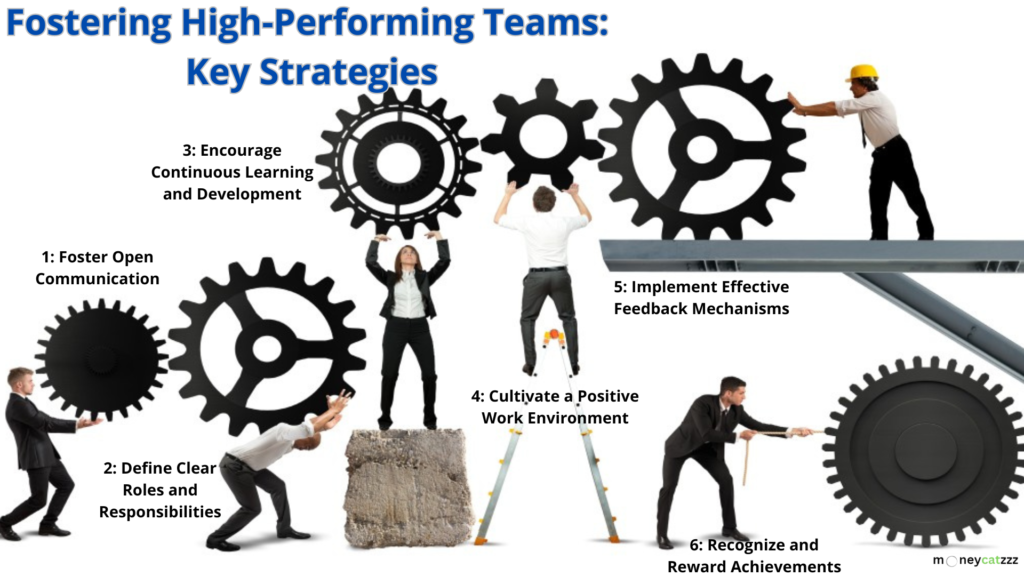
[Fostering High-Performing Teams- moneycatzzz.com]
4. Cultivate a Positive Work Environment
A positive work environment is like fertile soil for plants to thrive. When team members feel valued, respected, and happy, they are more likely to be productive and engaged.
In “Leaders Eat Last,” Simon Sinek emphasizes the importance of trust and positivity in building a solid team. Creating a positive work environment involves promoting work-life balance, recognizing achievements, and fostering a culture of respect and inclusion.
I once worked in a toxic workplace where negativity and competition were rampant. This environment stifled creativity and productivity. Determined to make a change, we implemented policies to promote work-life balance, organized team-building activities, and made a concerted effort to recognize and celebrate achievements. The transformation was remarkable. Team morale improved, collaboration increased, and productivity soared.
To cultivate a positive work environment, consider implementing flexible work arrangements, offering wellness programs, and promoting a healthy work-life balance. Encouraging social interactions through team-building activities and creating spaces where employees can relax and recharge can create a more positive atmosphere.
A positive work environment is the fertile ground for your team’s potential to flourish. By cultivating a space where employees feel valued and supported, you set the stage for increased motivation and collaboration. But even in the best environments, continuous feedback is crucial to guide and improve performance, ensuring your team remains aligned and effective.
5. Implement Effective Feedback Mechanisms
Feedback is crucial for growth and improvement, much like a GPS system guiding a road trip. Team members need regular and constructive feedback to avoid veering off course and missing their targets.
Kim Scott’s “Radical Candor“ illustrates the power of honest and compassionate feedback. Implementing effective feedback mechanisms, such as regular performance reviews, 360-degree feedback, and informal check-ins, can significantly improve team performance and productivity.
In one of my previous roles, feedback could have been more consistent and often negative, leading to low morale and high turnover. We adopted a more structured feedback approach, incorporating quarterly performance reviews and encouraging peer feedback. This shift helped team members improve and fostered a culture of continuous improvement and mutual respect.
When giving feedback, it’s essential to be specific, timely, and constructive. Highlighting both strengths and areas for improvement can help employees understand their performance and how they can grow. Additionally, creating a two-way feedback loop where employees can provide feedback to managers can enhance trust and openness within the team.
Just as a GPS provides necessary adjustments to stay on course, effective feedback mechanisms ensure your team members constantly improve and align with organizational goals. Providing regular, constructive feedback fosters a culture of continuous improvement and mutual respect. Recognizing and rewarding achievements reinforces positive behaviors and motivates your team to excel.
6. Recognize and Reward Achievements
Recognizing and rewarding achievements is like adding fuel to a fire. It motivates employees to strive for excellence and reinforces positive behaviors.
“The One Minute Manager“ by Ken Blanchard and Spencer Johnson highlights the impact of timely recognition and rewards on employee motivation. Implementing a recognition program that acknowledges individual and team accomplishments can boost morale and productivity.
In our team, we introduced a monthly recognition program where team members could nominate their peers for outstanding contributions. This program boosted morale and fostered a culture of appreciation and teamwork. Recognized employees felt valued and motivated to continue performing at their best.
Consider various methods to effectively recognize and reward achievements, such as verbal praise, written notes, public acknowledgments, and tangible rewards like bonuses or gifts. Tailoring the recognition of the individual’s preferences can make the gesture more meaningful and impactful.
Real-Life Case Studies of Improved Team Dynamics and Employee Productivity
Case Study 1: Royal Canadian Mint’s Change Management Program
The Royal Canadian Mint faced a significant organizational change and needed to prepare its employees to manage this transition effectively. They partnered with Outback Team Building & Training to design a custom change management program tailored to their needs.
Program Details:
- Session One: Focused on preparing over 65 employees for the upcoming changes, highlighting the skills and mindset required to adapt effectively.
- Session Two: Aimed at the leadership team, this session provided them with the necessary tools to lead their teams through the transition.
- Session Three: The final session guided another group of 65 employees in implementing the changes smoothly and effectively.
Outcomes:
- Improved readiness for change among employees.
- Enhanced leadership capabilities in managing transitions.
- A well-defined strategy for implementing change.
By customizing the program to the Royal Canadian Mint’s specific needs, the organization could navigate the complex change process efficiently, resulting in better team dynamics and overall productivity.
For more information, you can read the entire case study here.

Case Study 2: Microsoft Azure’s Virtual Team Building During the COVID-19 Pandemic
During the COVID-19 pandemic, Microsoft’s Azure team experienced a decline in employee morale due to remote work challenges. They collaborated with Outback Team Building & Training to host a virtual team-building event to address this.
Program Details:
- Virtual Clue Murder Mystery: The team participated in a fun, engaging, and collaborative virtual activity to enhance communication and teamwork.
- Objectives: To lift spirits, foster connection among team members, and maintain high engagement levels despite physical distance.
Outcomes:
- Increased employee morale and engagement.
- Strengthened team cohesion and collaboration.
- Positive feedback from participants about the engaging and enjoyable nature of the event.
This virtual team-building initiative helped Microsoft Azure’s team reconnect and reengage, improving team dynamics and productivity even during challenging times.
For more details, you can explore the entire case study here.
These case studies highlight how tailored team-building programs can significantly improve team dynamics and productivity by addressing specific organizational needs and fostering a collaborative and engaging environment.

[Develop a Culture of Teamwork – Image by Lifestylememory]
Improving team dynamics and employee productivity is not a one-time effort but a continuous process. You can transform your team into a high-performing unit by fostering open communication, defining clear roles, encouraging continuous learning, cultivating a positive work environment, implementing effective feedback mechanisms, and recognizing achievements. Remember, a harmonious and productive team is like a finely tuned orchestra, where each member plays a crucial role in creating a symphony of success.
Commit to these steps, and watch your team’s dynamics and productivity soar, driving your business towards unprecedented success. Implement these strategies today and share your experiences as you embark on this transformative journey.
Summary of Actionable Steps
- Foster open communication.
- Define clear roles and responsibilities.
- Encourage continuous learning and development.
- Cultivate a positive work environment.
- Implement effective feedback mechanisms.
- Recognize and reward achievements.
Further Reading and Resources
- “The Five Dysfunctions of a Team“ by Patrick Lencioni
- “Drive: The Surprising Truth About What Motivates Us“ by Daniel H. Pink
- “Leaders Eat Last“ by Simon Sinek
Downloadable Resources
By incorporating these elements, the article will be even more comprehensive, engaging, and practical for readers, helping them implement the actionable steps effectively in their workplaces.
Disclosure: This post may contain affiliate links. We only recommend products we believe in, and We may receive a commission at no cost to you! Thanks for your support!”
Acknowledgement: Cover Image by rawpixel.com on Freepik
Signup to our Newsletter for regular updates:
Disclaimer: The information is provided for general information only – moneycatzzz.com makes no representations or warranties in relation to the information, including but not limited to any representation or warranty as to the fitness for any particular purpose of the information to the fullest extent permitted by law. While every effort has been made to ensure that the information provided in this article is accurate, reliable, and complete as of the time of writing, the information provided in this article should not be relied upon to make any financial, investment, real estate or legal decisions. Additionally, the information should not substitute advice from a trained professional who can take into account your personal facts and circumstances, and we accept no liability if you use the information to form decisions.