
 Reading Time: 8 mins #
 This post may contain affiliate links.
You didn’t choose this personality. You inherited it from circumstance, forged it in the heat of invisible threats, and polished it so meticulously that even you sometimes forget it was ever a tool, not a truth.
The Invisible One. The One Who Makes Constant Jokes to De-escalate Tension. The Calm Face in the Room. Every trait you’ve been proud of, every behavior others applauded, was originally a survival mechanism. And now, it’s a cage.
Not metaphorically, yet you feel it physically. That tight pull in your upper traps when you say “yes” to yet another request isn’t a muscle knot. It’s your eight-year-old self clinching, believing the lights will go out if you’re not useful. The nervous system remembers danger, even when the threat is long gone.
The Fossilized Personality: Why Survival is a Cage
Personality isn’t a discovery; it’s a solution. And solutions, once perfected, resist change.
You were rewarded for adapting. If you suppressed frustration, you got the nod. If you became hyper-independent, you avoided disappointment. If you learned to anticipate moods, you earned safety—over time, these survival habits calcified into what everyone calls your “personality.”
However, here lies the problem: survival contexts change, and your personality often doesn’t. Adaptations that once protected you now restrict you. They make you over-cautious, hyper-efficient, emotionally distant, or chronically exhausted.
A study in the journal Springer Nature¹ shows how early coping behaviors become stable personality patterns in adulthood, often without our awareness. These are the invisible chains that most of us walk around praising them.
The Physical Weight of Adaptation
This is where most articles fail: they talk about personality as if it exists solely in thought. It doesn’t. It’s in your body.
- The clutch in your chest when you take on extra responsibility.
- The tightening jaw during a difficult conversation.
- The shallow inhale when you think about asking for help.
These are not quirks. They are the remnants of a self that survived. They are the scaffoldings surrounding your cage.
Ask anyone who has worked in high-pressure environments or grown up in unpredictable households—the body remembers the original threat long after the mind has moved on. Emotional survival patterns are lodge in muscles, posture, even the way you walk down a hallway.

When Strength Becomes a Trap
Your traits were rewarded, so you doubled down. Reliable? You became the default solver of everyone else’s problems. Strong? You refused to ask for help even when exhaustion clawed at your bones. Calm? You suppressed rage, grief, excitement—all to avoid shaking the foundations of your survival script.
At some point, the praise and success reinforce the cage. External validation tells you, “keep being this way,” even as your internal systems scream for relief.
The paradox is cruel; the very skills that kept you alive now limit your life, and the more “successful” you are, the tighter the trap seems to close.

[“Somatic Memory: The Physical Weight of Adaptation” – Image by moneycatzzz.com]
Recognition is Freedom
The first step out isn’t meditation, journaling, or even therapy (though they can help)—it’s recognition—not gentle, not reassuring. Cold, precise acknowledgment.
Look at a behavior and ask: what threat was this solving?
- The overachiever who can’t stop working; was it survival in a household where love was conditional?
- The peacemaker who refuses to upset anyone; was it avoidance of conflict to preserve safety?
- The emotionally unavailable partner; was it fear of rejection in a world that punished vulnerability?
Once you see the origin—you weaken its unconscious grip. You realize it was never you. It was armor, forged in fire. And armor is heavy.
Why Self-Improvement Often Backfires
You probably tried to “fix” yourself with habits, apps, courses, or books. You were trying to upgrade the cage. You added productivity systems to overachievement. You added mindfulness to anxiety. You added communication skills to a habit of withdrawal.
The gist of Atomic Habits speaks to behavior change, but even James Clear admits that identity-level change drives lasting results. That is to say that fixing what you do without interrogating what you are will often amplifies the cage.
Real transformation requires reframing the survival logic itself.
The Emotional Cost
Survival identities create quiet suffering.
- You succeed, but your chest feels tight.
- You connect, but something vital is missing.
- You grow, but the growth feels hollow.
You’re not failing at life. You’re failing at a system that was perfect for survival but it is also often lethal for thriving.
Small Acts, Big Shifts
Breaking free doesn’t require explosive gestures. It requires experimentation.
- Ask for help once a week in small ways.
- Express disagreement in minor, safe contexts.
- Allow minor failure in work or personal tasks.
These micro-changes recalibrate the nervous system. They teach your body and mind that the world does not collapse when the old rules are broken.
Over time, freedom grows and you learn to loosen the grip of your survival identity. You experience choice, not compulsion.

The Grit of Specific Observation
Here’s the kind of specificity that sticks:
- That twitch in your right eyebrow when someone asks you to do “one more thing”? That’s a survival reflex.
- That slight tightening around your navel when you consider saying “no”? That’s your system trying to protect the version of yourself that once kept you safe.
Lived experience, not theory, tells the truth. Psychology gives context—specificity gives recognition.
Bessel van der Kolk’s demonstrated how trauma lodged in the body will influence identity, and survival becomes tangible: muscle memory, posture, and habitual tension.

[“Micro-Changes to Break the Survival Loop” – Image by moneycatzzz.com]
The Cost of Not Seeing It
Most people live decades inside cages they built themselves. They succeed, are admired, and never question the weight. Emotional exhaustion is normalized. Chronic stress is framed as “hard work.” Burnout is celebrated as dedication.
All the while, the nervous system never stops sending signals: tight shoulders, shallow breathing, a low hum of tension.
The first recognition that these sensations aren’t random, aren’t “weakness.” These are signs of cracks in the cage.
Bottom Line
The cage was brilliant. Necessary. Protective.
But protection is not living. Recognition is the first act of liberation. Small, imperfect experiments are the only path out.
The personality you built to survive will never vanish, but it can be recalibrated. Strength can become flexibility. Reliability can become a choice. Calmness can coexist with presence.
The cage is heavy, but now that you see it, you can start carrying it differently, or set it down entirely.
Updating your identity isn’t a ‘healing journey.’ It’s a hardware upgrade. You’re clearing out legacy code that is slowing down your current processing speed. Do it or don’t, but stop pretending the lag is part of your ‘essence.’
Because survival was the training, thriving is the challenge.
Personality and Beyond: A Deeper Dive
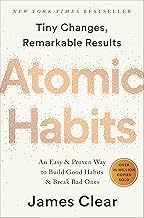
Atomic Habits

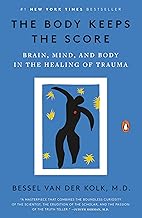
The Body Keeps the Score
Thinking, Fast and Slow
Disclosure: This post may contain affiliate links. We only recommend products we believe in, and we may receive a commission at no cost to you! Thank you for your support!
Acknowledgment: Cover Image by moneycatzzz.com
Disclaimer: The information is provided for general information only – moneycatzzz.com makes no representations or warranties in relation to the information, including but not limited to any representation or warranty as to the fitness for any particular purpose of the information to the fullest extent permitted by law. While every effort has been made to ensure that the information provided in this article is accurate, reliable, and complete as of the time of writing, the information provided in this article should not be relied upon to make any financial, investment, real estate or legal decisions. Additionally, the information should not substitute advice from a trained professional who can take into account your personal facts and circumstances, and we accept no liability if you use the information to form decisions.