
In a world where entrepreneurs, leaders, and growth-minded individuals seek clarity, balance, and fulfillment, the Science of Mind philosophy offers more than spiritual insight—it provides a practical, actionable framework for thriving in life and business.
Penned by visionary philosopher Ernest Holmes, The Science of Mind goes beyond metaphysical musings—it champions core principles like the Power of Thought, the Law of Cause and Effect, and the Mind-Body Connection, giving readers a timeless blueprint for self-mastery and transformation.
Whether scaling a startup, leading a team, or navigating personal reinvention, these universal principles can help you shift from reactive living to intentional creation. Here’s how.
“The greatest discovery of my generation is that human beings can alter their lives by altering their attitudes of mind.” – Albert Einstein.

Ernest Holmes: The Philosopher of Conscious Leadership
Ernest Holmes (1887–1960) was more than a spiritual teacher—he pioneered conscious leadership before the term existed. As the founder of Religious Science, Holmes synthesized Eastern philosophy, Christianity, New Thought, and metaphysics into a cohesive philosophy for living intentionally.
Holmes believed that every individual has the power to shape their life by aligning with universal laws. In The Science of Mind, he offers a roadmap for activating that power through awareness, discipline, and faith. His ideas continue to influence leaders, therapists, coaches, and creatives seeking to align purpose with performance.
The Power of Thought: Shaping Success From the Inside Out
A simple truth lies at the heart of Holmes’ philosophy: thoughts create reality—this is more than mindset theory—it’s a call to mental mastery. Holmes teaches that the universe responds to the frequency of our thoughts, just as a seed responds to the soil in which it’s planted.
“Change your thinking, change your life,” Holmes asserted.
The Power of Thought is not about naive optimism. It’s about cultivating thought patterns that align with the outcomes you seek. Repeating “I’m failing” trains the subconscious to expect failure. Replacing it with “I’m growing through challenges” invites resilience, innovation, and problem-solving.
Business leaders who adopt this mental discipline often report greater clarity, more resilient teams, and improved emotional intelligence—all stemming from a deliberate choice to master their internal narrative.
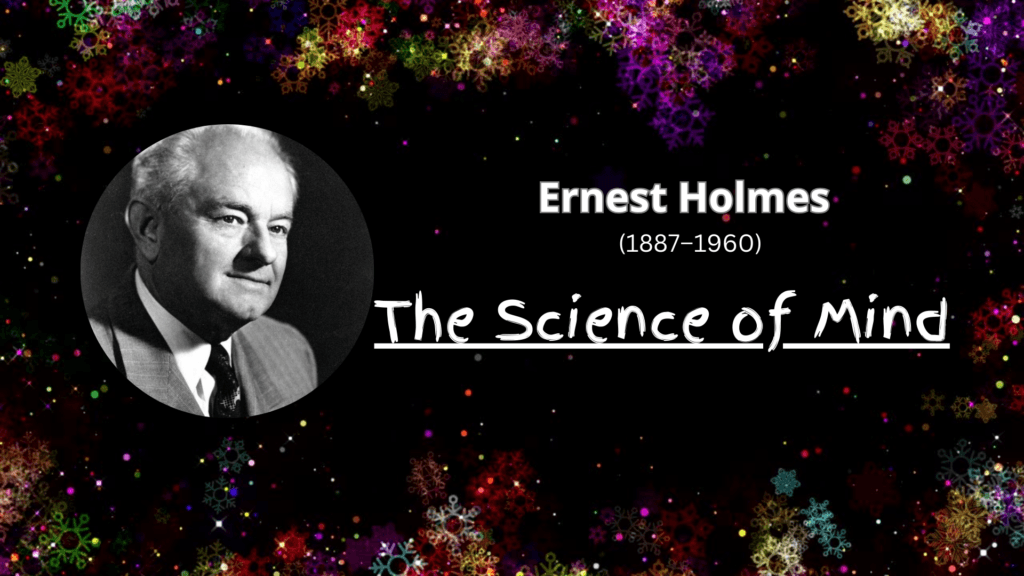
[” Ernest Holmes – The Science of Mind” – Image by moneycatzzz.com on Canva]
The Law of Cause and Effect: Results Aren’t Random
In The Science of Mind, Ernest Holmes elucidates the Law of Cause and Effect, asserting that every outcome in our lives stems from an invisible chain of causes—our thoughts, beliefs, words, and actions. This principle emphasizes that results are not arbitrary but the natural consequences of our mental and emotional states.
For entrepreneurs and executives, this translates to understanding that performance metrics, team morale, and customer satisfaction reflect internal culture and mindset. One must examine and adjust the underlying beliefs and attitudes to effect change in these areas.
Consider a founder who operates from a scarcity mindset—fearing loss of funding or competition. Such a perspective may inadvertently cultivate a reactive, risk-averse company culture. Conversely, a founder focusing on vision, value creation, and abundance will likely foster innovation and agility within their organization.
This principle empowers individuals by reinforcing that life doesn’t happen to you but through you. By consciously directing your thoughts and beliefs, you can influence the outcomes you experience.

The Mind-Body Connection: Wellbeing as a Leadership Strategy
Another cornerstone of Holmes’s teachings is the Mind-Body Connection. He posits that physical health is intrinsically linked to mental and emotional well-being. Our thought patterns can significantly impact everything from energy levels to immune function.
For high-performing professionals, this insight transcends mere self-care; it becomes a strategic component of productivity. Leaders who internalize this connection prioritize mental clarity, stress reduction, and emotional regulation with the same seriousness as quarterly KPIs. Practices such as meditation, breathwork, affirmations, and gratitude become essential tools in their leadership arsenal.
Imagine a leader who is perpetually anxious and multitasks without respite. Over time, this chronic stress can manifest as burnout, fatigue, or illness. In contrast, leaders who ground their day in mindfulness and gratitude will likely experience enhanced performance, better decision-making, and more effective interpersonal interactions.
Faith and Flow: Trusting the Process Without Forcing the Outcome
Holmes redefines faith as passive belief and active trust in the universe’s natural order. He encourages individuals to release anxiety and the need for micromanagement, advocating instead for confidence that aligned intentions will manifest in due course.
This mindset is akin to the concept of “flow” experienced by athletes—a state of effortless engagement and heightened intuition. Professionals who adopt this approach often operate with greater ease and creativity.
Even amidst uncertainty, leaders who trust in the process tend to exude calmness, confidence, and clarity. This demeanor can be contagious, positively influencing teams and organizational culture.
“Faith is the substance of things hoped for, the evidence of things not seen.” – Ernest Holmes
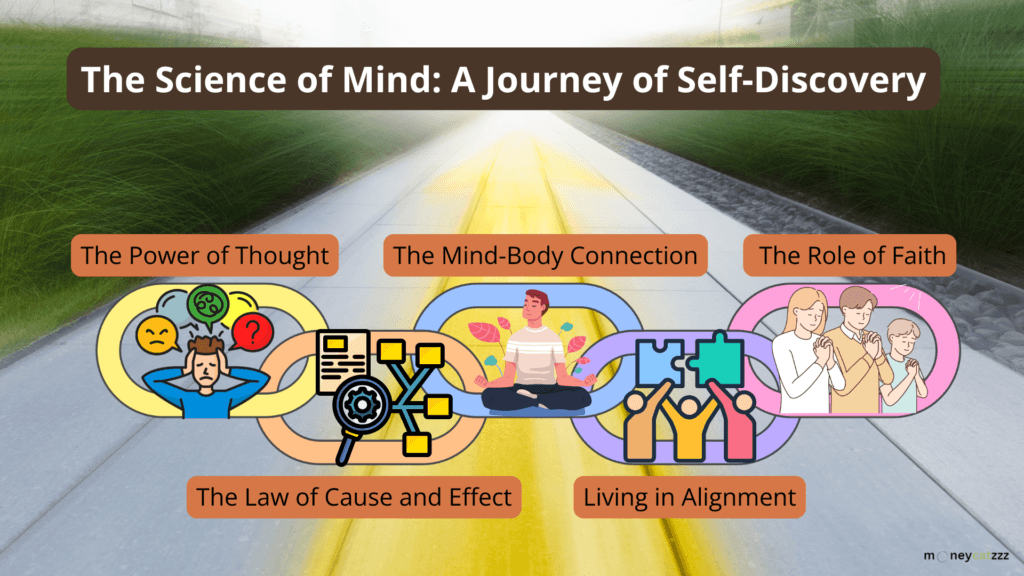
[“The Science of Mind: A Journey of Self-Discovery” – Image by moneycatzzz.com on Canva]
Living in Alignment: A Daily Practice, Not a Destination
The true power of The Science of Mind lies in its advocacy for living in harmony with universal laws. Holmes teaches that when we act from love, think with clarity, and lead with compassion; we initiate a ripple effect that enhances every facet of our lives.
Personal growth, therefore, is not a finite goal but a continuous journey of aligning thoughts, words, and actions with our highest selves.
Start with small, intentional practices:
- Speak with purpose.
- Cultivate empowering thoughts.
- Prioritize balance and well-being.
- Trust in the unseen progress.
These daily commitments can compound over time, leading to profound transformation and fulfillment.

Final Word: A Modern Manual for Conscious Leadership
The Science of Mind remains one of the most relevant and robust resources for anyone seeking purpose-driven success. Its teachings blend timeless spiritual wisdom with practical psychological insight, offering a roadmap for living—and leading—with intention.
Whether reinventing your career, scaling your business, or simply seeking more peace and fulfillment, the principles of thought, cause and effect, and mind-body connection can radically shift your results.
Because in the end, the most powerful strategy isn’t just in your business plan—it’s in your mind.
Disclosure: This post may contain affiliate links. We only recommend products we believe in, and We may receive a commission at no cost to you! Thank you for your support!
Acknowledgement: Cover Image by Canva.com
Disclaimer: The information is provided for general information only – moneycatzzz.com makes no representations or warranties in relation to the information, including but not limited to any representation or warranty as to the fitness for any particular purpose of the information to the fullest extent permitted by law. While every effort has been made to ensure that the information provided in this article is accurate, reliable, and complete as of the time of writing, the information provided in this article should not be relied upon to make any financial, investment, real estate or legal decisions. Additionally, the information should not substitute advice from a trained professional who can take into account your personal facts and circumstances, and we accept no liability if you use the information to form decisions.