
 Reading Time: 8 mins #
 This post may contain affiliate links.
Tony Schwartz discovered something revolutionary while training elite athletes that changed how Fortune 500 companies operate: Time management is obsolete. The real energy management secrets that separate peak performers from everyone else have nothing to do with calendars, to-do lists, or productivity apps.
They are closely related to mitochondria, glucose metabolism, and ultradian rhythms.
“Manage your energy, not your time,” Schwartz quotes from The Power of Full Engagement. This isn’t motivational speaking; it’s a biological fact.
You have 24 hours. So does everyone else. Jeff Bezos has 24 hours. Your broke cousin scrolling TikTok has 24 hours. The difference isn’t time allocation; it’s energy optimization. And the science behind this shift is rewriting everything we thought we knew about productivity.
Studies by Harvard Medical School found that workers who aligned tasks with their biological energy patterns achieved 47% more productivity than those using traditional time management methods. They didn’t work longer. They worked in sync with their biology.
McKinsey’s research on executive performance discovered something even more striking: The top 10% of performers don’t work more hours; they average 52 hours weekly, barely above the norm. However, they generate four times more value per hour. The secret? They’ve mastered what neuroscientists call “energy state management.”
These aren’t time hackers. They’re energy architects.
I’ve spent two years studying how elite performers, from Olympic athletes to hedge fund managers, structure their days around energy, not hours. Four energy management secrets emerged repeatedly. Not because they read the same books, but because biology doesn’t care about your productivity philosophy.
What follows will challenge everything you believe about accomplishing tasks. More importantly, it will show you why your afternoon crash isn’t a weakness; it’s a signal you’ve been ignoring.
Secret #1: The 90-Minute Revolution (Your Hidden Biological Clock)
Every 90 minutes, your brain screams for a break. Most people grab coffee and push through. Peak performers listen and leverage.
This isn’t opinion. It’s a hardwired biological phenomenon called the “ultradian rhythm,” a 90-120 minute cycle that governs your energy throughout the day. Discovered by sleep researcher Nathaniel Kleitman (who also discovered REM sleep), these cycles don’t stop when you wake up. They continue all day, creating predictable waves of high focus and necessary recovery.
The Science That Changes Everything
Dr. Ernest Rossi’s research at UCLA Medical School found that ignoring these rhythms triggers what he calls “Ultradian Stress Syndrome“:
- Cortisol spikes by 23%
- Cognitive performance drops 40%
- Error rates increase by 70%
- Recovery time doubles
But when you work with these rhythms? Magic happens.
Your brain operates in 90-minute sprints naturally. The first 70-80 minutes bring peak focus. In the last 10-20 minutes, your brain demands recovery. Fight this pattern and you’re literally fighting your own biology.
The Billionaire’s Secret Schedule
Ray Dalio’s Day at Bridgewater Associates:
7:00-8:30 AM: Deep analysis (Sprint 1)
8:30-8:50 AM: Walking meditation
8:50-10:20 AM: Critical decisions (Sprint 2)
10:20-10:40 AM: Yoga or breathing
10:40-12:10 PM: Creative strategy (Sprint 3)
Notice the pattern? Ninety minutes on, twenty minutes off. Every cycle. Without exception.
“I thought I was being lazy taking breaks every 90 minutes,” Dalio revealed in Principles. “Then I realized I was getting twice as much done as when I powered through. The breaks weren’t costing me time—they were buying me energy.”
Optimizing Focus: The 90-Minute Ultradian Protocol
| hase | Duration | Key Activity / Characteristic |
| 1. Peak | 0–70 minutes | Complex cognitive work, critical decisions, creative problem-solving, deep focus tasks. |
| 2. Transition | 70–80 minutes | Quality naturally declines, attention begins wandering, mistakes increase. |
| 3. Trough | 80–90 minutes | The brain demands rest; forcing work here is counterproductive. Recovery quality determines the next cycle’s success. |
| 4. Recovery | 20 minutes | Active Rest: Walk (best option), breathwork, light stretching, water and snacks. |
Implementation: The 90-Minute Tracker
Download Be Focused Pro, which is designed specifically for ultradian rhythm tracking. Set 90-minute work blocks with 20-minute breaks. The app tracks your cycles and shows peak performance patterns over time.
After tracking over 1,000 hours of work using this system, I discovered something shocking: my “eight-hour workdays” contained only 4-5 hours of actual, focused work. But those 4-5 hours, timed adequately with ultradian rhythms, produced more than my previous 10-hour grinds.
The ultradian rhythm productivity boost isn’t about working less; it’s about working in harmony with your brain’s natural cycles.
Secret #2: The Metabolic Multiplier (Food as Cognitive Fuel)
Your brain weighs approximately 2% of your body weight, yet it consumes around 20% of your glucose. Every thought, decision, and creative insight burns actual fuel. Yet most people treat food as an afterthought, not a performance tool.
The fourth energy management secret that elite performers understand: You’re not just what you eat; you’re when and how you eat.
The Glucose Rollercoaster Disaster
Dr. Michael Mosley’s research at Newcastle University revealed that the typical office worker’s blood sugar levels resemble a penny stock chart, characterized by massive spikes and crashes throughout the day. Each collision doesn’t just make you tired, it also:
- Reduces IQ by 15 points temporarily
- Increases cortisol by 34%
- Triggers inflammatory responses
- Accelerates cellular aging
Meanwhile, peak performance energy requires a stable glucose level. Not high, not low; stable.

[“The 20-Minute Investment That Buys Back Hours” – Image by moneycatzzz.com]
The CEO’s Fuel Protocol
Tim Cook’s Daily Energy Stack:
5:00 AM: Protein-heavy breakfast (eggs, avocado, minimal carbs)
8:00 AM: Handful of macadamias
11:00 AM: Green smoothie with MCT oil
1:00 PM: Large salad with salmon
3:30 PM: Apple with almond butter
6:00 PM: Light dinner (vegetables, lean protein)
7:30 PM: Fasting begins until morning
“I used to eat for convenience,” Cook told a Stanford MBA class. “Now I eat for cognitive performance. The difference in afternoon energy is worth millions in better decisions.”
The Science of Strategic Eating
Breakfast: The Protein Priority
Studies from the University of Missouri show that 30g of protein at breakfast:
- Stabilizes blood sugar for 4+ hours
- Increases dopamine production
- Reduces afternoon cravings by 60%
Lunch: The Danger Zone
This is where most people destroy their afternoon. Heavy lunches trigger:
- Post-prandial somnolence (food coma)
- Insulin spikes that crash energy
- Inflammatory responses that fog thinking
The Solution: The 40-30-30 Rule
- 40% vegetables (fiber slows glucose absorption)
- 30% protein (maintains satiety)
- 30% healthy fats (sustained energy)
The Fasting Advantage
Here’s what nobody tells you about energy management vs time management: The most productive people don’t eat more strategically; they eat less frequently.
Intermittent fasting isn’t a diet trend for CEOs. It’s a cognitive enhancement tool. Research from Johns Hopkins shows that fasting for 14-16 hours:
- Increases BDNF (brain fertilizer) by 50%
- Improves focus and clarity
- Enhances neuroplasticity
- Accelerates cellular cleanup (autophagy)
Your Metabolic Optimization Plan
| Week | Phase Focus | Key Actions |
| Week 1 | Baseline | Track everything you eat and your energy levels hourly. Use a food tracker for intake, and rate your energy level 1-10 each hour. |
| Week 2 | Stabilization | Implement a protein-heavy breakfast. Avoid all refined carbohydrates before 2 PM. Introduce small, scheduled fat/fiber inputs (handful of nuts) every 3 hours. |
| Week 3 | Optimization | Implement a 14-hour fasting window (e.g., 8 PM to 10 AM). Move all carbohydrates to the evening meal only. Add MCT oil to morning coffee to maintain energy during the fast. |
| Week 4 | Mastery | Find your perfect formula. Maintain stable glucose levels, consistent energy, and optimal performance. |
Secret #3: The Recovery Paradox (Why Rest Multiplies Results)
Here’s the counterintuitive truth about biological prime time: Your peak performance doesn’t come from your active hours; it comes from your recovery quality.
Microsoft’s study of their own software developers found something bizarre: The programmers who took the most breaks wrote better code faster. Not despite the breaks, because of them.
The Four Types of Recovery
| Type of Recovery | Duration | Key Actions | Impact |
| Micro-Recovery | 30 seconds – 2 minutes | Deep breathing between tasks, standing and stretching, looking at distant objects (reduces eye strain), drinking water mindfully. | Prevents compound fatigue throughout the day. |
| Meso-Recovery | 15–20 minutes | Post-ultradian rhythm breaks, power naps (never exceed 20 minutes), walking meetings with yourself, meditation or breathwork. | Resets cognitive capacity for the following work block. |
| Macro-Recovery | 2–3 hours | Evening routines, weekend mornings, exercise sessions, creative hobbies. | Rebuilds depleted neurotransmitters. |
| Meta-Recovery | 24–72 hours | Full weekends off, quarterly retreats, annual vacations, sabbaticals. | Prevents burnout, enables breakthrough thinking. |
The Nap Controversy Settled
NASA’s study on pilots found that a 26-minute nap improved performance by 34% and alertness by 100%. But here’s what they didn’t publicize:
Naps longer than 30 minutes trigger sleep inertia, making you groggier than before.
The Perfect Nap Formula:
- 1:00-3:00 PM window (post-lunch dip)
- 10-20 minutes maximum
- Dark, cool environment
- Coffee immediately before (caffeine kicks in as you wake)
Sara Mednick’s research at UC San Diego demonstrated that a 20-minute nap provides the cognitive boost equivalent to 200mg of caffeine, without the associated crash.
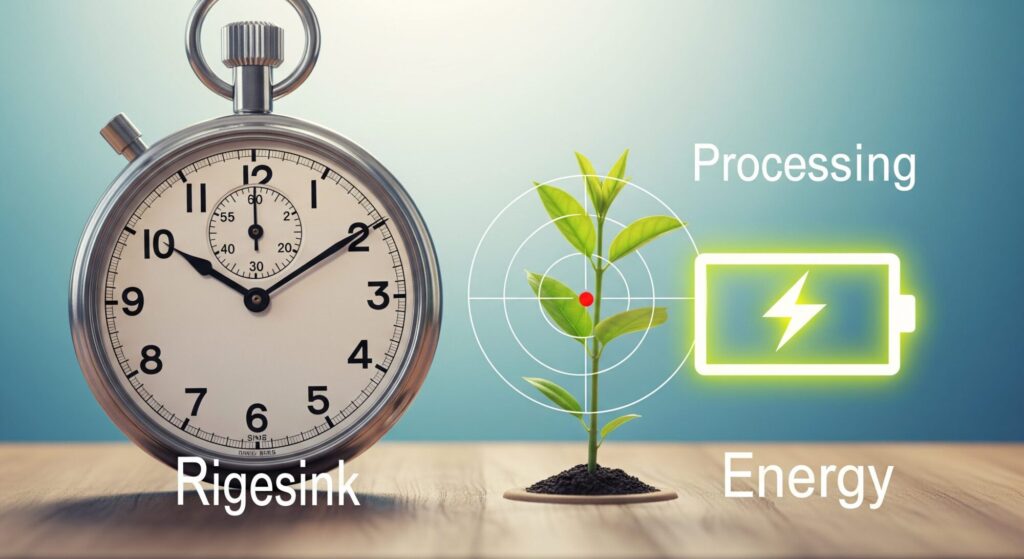
[“The Wrong Scorecard: Energy vs. The Clock” – Image by moneycatzzz.com]
Case Study: The Burnout That Built an Empire
Arianna Huffington collapsed from exhaustion in 2007, breaking her cheekbone on her desk. This wake-up call led her to study the science of recovery, which ultimately led to her selling the Huffington Post for $315 million and founding Thrive Global.
Her energy management secrets are now mandatory at Thrive:
- No emails after 6 PM
- Nap rooms in every office
- Recovery bonuses (paid time off for disconnecting)
- Sleep tracking as a KPI
“We treat machinery better than ourselves,” Huffington writes in The Sleep Revolution. “We wouldn’t dream of running our smartphone battery to zero, yet we do it to ourselves daily.”
The Recovery ROI Calculator
Track these metrics for 30 days:
- Hours slept
- Number of breaks taken
- Energy level (1-10) at 3 PM
- Quality of work output
- Creative breakthroughs
Plot them. You’ll find a direct correlation: More recovery equals higher performance. Not eventually, immediately.
Secret #4: The Emotional Energy Equation (The Hidden Multiplier)
Physical energy gets you to your desk. Mental energy helps you focus. But emotional energy? That’s what separates good from legendary.
Jim Loehr, who trained 16 world number-one tennis players, discovered that peak performance energy isn’t just physical or mental; it’s predominantly emotional. The same principle applies in boardrooms.
The Four Emotional Energy States
| Energy State | Characteristics (Emotion & Chemistry) | Output / Impact on Work |
| Survival Zone (High Negative) | Angry, fearful, defensive. Dominated by Cortisol flooding and active fight-or-flight response. | Reactive decisions, significant relationship damage. IQ drops significantly. |
| Burnout Zone (Low Negative) | Depressed, exhausted, hopeless. Characterized by Dopamine depletion and minimal engagement. | Creativity is nonexistent. Output is the bare minimum, resulting in high error rates. |
| Recovery Zone (Low Positive) | Calm, peaceful, relaxed. The Parasympathetic nervous system is active, allowing for restoration. Openness to new input. | Good but not great work. This is the foundation for moving back to performance. |
| Performance Zone (High Positive) | Confident, challenged, joyful. Dopamine and serotonin are optimal. Flow states are accessible. | Maximum creativity and focus, leading to breakthrough results. |
The Emotional Energy Audit
Daniel Goleman’s research on emotional intelligence found that emotional regulation accounts for 58% of performance in all job types. For executives, the rate is 86%.
Track These Daily:
- Morning mood (1-10)
- Post-lunch energy (1-10)
- End-of-day satisfaction (1-10)
- Emotional triggers encountered
- Recovery methods used
Pattern recognition emerges quickly. You’ll discover that your emotional energy drains, and you can learn to manage them.
The Positivity Ratio
Dr. Barbara Fredrickson’s research at UNC found that high performers maintain a 3:1 ratio of positive to negative emotions. Not constant positivity; that’s delusional. But three positive micro-moments for every negative one.
Tactical Positivity Injections:
- 2-minute gratitude practice (morning)
- Send one appreciation text (lunch)
- Celebrate one small win (evening)
- Connect with someone you enjoy (daily)
- Engage in mastery activities (weekly)
This isn’t feel-good fluff. MRI scans show these practices literally rebuild your prefrontal cortex, improving decision-making and impulse control.
Case Study: The $100 Million Mood Shift
Howard Schultz returned as Starbucks CEO during the 2008 crisis. The company was hemorrhaging money. His first move wasn’t financial; it was emotional.
He closed 7,000 stores for “re-training,” but really for an emotional reset. He reinstated employee benefits that others were cutting. He personally visited hundreds of stores to restore emotional energy.
“Leadership is about finding hope in hopeless situations,” Schultz said. “When you change the emotional energy, you change everything.”
Starbucks’ stock increased 20x over the next decade.
The Integration Protocol: Making Energy Management Automatic
Understanding these energy management secrets intellectually isn’t enough. You need systems that make them automatic.
The 30-Day Energy Transformation
Week 1: Awareness
- Track ultradian rhythms
- Monitor glucose/energy correlation
- Note emotional states
- Measure recovery impact
Week 2: Alignment
- Schedule tasks by energy state
- Adjust eating windows
- Implement strategic breaks
- Practice emotional regulation
Week 3: Optimization
- Fine-tune work/rest ratios
- Optimize nutrition timing
- Extend recovery periods
- Build positive practices
Week 4: Automation
- Create energy-based templates
- Set environmental triggers
- Build accountability systems
- Measure ROI

[“The Small Moments That Rebuild Your Focus” – Image by moneycatzzz.com]
The Tools That Make It Real
For Rhythm Tracking:
Rise Sleep – Tracks your biological prime time and energy peaks
For Nutrition Optimization:
Levels – Continuous glucose monitoring shows food’s energy impact
For Recovery Quality:
Whoop – Measures recovery and suggests optimal work/rest balance
For Emotional Energy:
Mood Meter – Quick emotional check-ins reveal patterns
The Compound Energy Effect
When you implement all four energy management vs time management principles simultaneously, something extraordinary happens: You don’t just add energy; you multiply it.
- Ultradian alignment increases focus by 40%
- Metabolic optimization adds 25% cognitive capacity
- Strategic recovery boosts creativity by 50%
- Emotional optimization doubles execution speed
Combined? You’re operating at 250% of your previous capacity without working a single hour more.
This isn’t theoretical. Tony Schwartz’s Energy Project has trained thousands of executives at companies like Google, Apple, and Sony.
Average results:
- 106% increase in focus
- 92% better work/life balance
- 88% improvement in teamwork
- 70% increase in engagement
The Uncomfortable Truth
Most people will read this and do nothing. They’ll return to their time management apps, productivity hacks, and 14-hour days that produce only 4 hours of real value.
But some, maybe you, will recognize the truth: In a world where everyone has the same 24 hours, biological prime time optimization is the only real competitive advantage left.
The science is clear. The tools exist. The only question is whether you’ll keep fighting biology or start flowing with it.
Your Next Step
Pick one secret. Just one. Implement it for seven days with religious consistency.
- If you choose ultradian rhythms, set a timer for 90 minutes
- If you decide on metabolic optimization, eat protein-first for one week
- If you choose recovery, take a 20-minute break every afternoon
- If you choose emotional energy, track your mood hourly
Measure the impact. Energy levels, output quality, life satisfaction. Then add another secret. Then another.
Within 30 days, you won’t recognize your productivity. Within 90 days, you won’t recognize your life.
Because when you master energy management secrets, you don’t just get more done. You become someone different; someone who operates at a frequency others can’t access.
Download the Energy Optimization Tracker: A comprehensive spreadsheet that monitors all four energy types and shows you exactly where your power comes from.
The future belongs to those who manage energy in a world obsessed with time. The clock is the wrong scorecard. Energy is the game.
Resources for Energy Management Secrets

Principles


The Sleep Revolution

Emotional Intelligence
Featured Book of the Week
The Power of Full Engagement
Disclosure: This post may contain affiliate links. We only recommend products we believe in, and we may receive a commission at no cost to you! Thank you for your support!
Acknowledgment: Cover Image by moneycatzzz.com
Disclaimer: The information is provided for general information only – moneycatzzz.com makes no representations or warranties in relation to the information, including but not limited to any representation or warranty as to the fitness for any particular purpose of the information to the fullest extent permitted by law. While every effort has been made to ensure that the information provided in this article is accurate, reliable, and complete as of the time of writing, the information provided in this article should not be relied upon to make any financial, investment, real estate or legal decisions. Additionally, the information should not substitute advice from a trained professional who can take into account your personal facts and circumstances, and we accept no liability if you use the information to form decisions.