
 Reading Time: 8 mins #
 This post may contain affiliate links.
You don’t just read Rumi. You remember him.
His words hit like déjà vu, an echo from somewhere you’ve already been but forgot to name. Eight hundred years later, Rumi’s poetic wisdom remains timeless, transcending cultures, religions, and even the algorithms of modern technology.
You’ll find him quoted on Instagram next to latte art, but what he’s really offering is not comfort; it’s awakening. Rumi’s poems aren’t about God in the clouds. They’re about the psychology of love, the physics of surrender, the messy human process of becoming whole. And if you let him, he’ll teach you a spiritual practice that’s equal parts neuroscience, mysticism, and mindfulness.
Why Rumi Still Resonates: The Sufi Equation
The 13th-century mystic Jalal ad-Din Rumi lived in an era of upheaval, marked by war, exile, and uncertainty.
Under such chaos, instead of collapsing, he turned inward and found order in surrender. His transformation began when he met Shams of Tabriz, a wandering dervish who shattered his intellectual certainty and ignited what we’d now call a full-blown spiritual recalibration.
1. The Science of the Soul
Rumi wasn’t preaching doctrine; he was mapping consciousness.
What he called “the Beloved” isn’t theology, it’s the deeper self, the consciousness beneath the ego.
Modern psychology would call it integration, the merging of shadow and light, control and surrender. Carl Jung, who read Persian mystic poetry extensively, believed that spiritual transformation mirrors psychological individuation: the process of becoming whole.
Rumi was describing that eight centuries before depth psychology existed.
“The wound is the place where the Light enters you.”
Every time life breaks you open, that fracture becomes a portal. Not punishment. Passage.
2. The Mathematics of Love
In Sufi mysticism, love isn’t emotion; it’s energy. It dissolves boundaries, burns illusions, and connects the finite to the infinite.
Think of it like quantum entanglement of the soul; what affects one part of consciousness resonates through all. Rumi’s love poems are algorithms for transcendence.
When he writes, “I want to see you, know your voice, recognize you when you first come around the corner,” he’s not talking about a lover. He’s describing the moment of meeting your own awareness.
The Framework: The “Guest House Practice”
One of Rumi’s most famous poems, “The Guest House,” isn’t just beautiful; it’s a manual for emotional regulation, centuries before the term was coined.
It begins:
“This being human is a guest house
Every morning, a new arrival
A joy, a depression, a meanness
Welcome and entertain them all.”
This isn’t poetic fluff. It’s emotional literacy in verse. He’s saying: stop labeling emotions as intruders.
Instead, host them. Each feeling carries information, a message from your inner system.
From a neuroscience perspective, this aligns with mindfulness-based cognitive therapy, which involves observing without judgment.
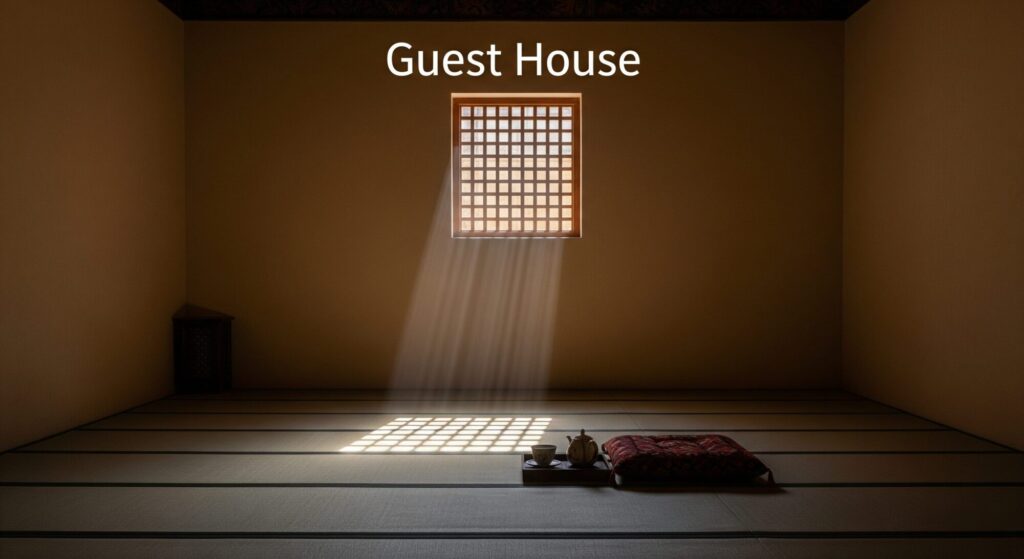
[“The Framework: The “Guest House Practice” – Image by moneycatzzz.com]
Let’s turn that into a practical framework:
Step 1: Recognize the Visitor
When an emotion arrives: anxiety, guilt, jealousy; name it without narrative.
“I see you, anger. You’re here to tell me something’s crossed a line.”
Naming interrupts reactivity. Your prefrontal cortex takes control from your limbic system.
Step 2: Serve Tea (But Don’t Let Them Move In)
Rumi invites us to welcome emotions, not worship them.
Allow the experience. Feel the physiological sensations. Then, release.
This echoes Acceptance and Commitment Therapy (ACT) — a modern modality that teaches presence without attachment.
“Don’t run away from grief, o soul. Look for the remedy inside the pain.”
Step 3: Clean the House
Once the visitor leaves, reflect on what remains.
What truth did this feeling reveal?
What illusion did it burn?
Journaling here isn’t therapy homework, it’s spiritual hygiene. You’re processing data from the subconscious into wisdom.
Step 4: Return to the Beloved
Rumi’s ultimate step isn’t emotional management. It’s union, returning to that still point within you where awareness watches all guests come and go.
This is meditation disguised as poetry. The Beloved isn’t someone outside you. It’s the field of consciousness that’s never left home.
As Rumi writes: “What you seek is seeking you.“
Real-World Evidence: Poetry Meets Psychology
You don’t need a Sufi robe or a candlelit cave to apply Rumi’s teachings.
Example 1 — The Entrepreneur Who Meditated on The Guest House
A founder I coached began reading The Guest House each morning before checking emails. Within weeks, her anxiety dropped. She stopped fighting feelings of fear before pitches; she welcomed them. Her performance improved.
Example 2 — The Therapist Who Used Rumi with Clients
One psychotherapist used Rumi’s verses as cognitive reframing tools.
Clients struggling with grief found peace in lines like, “Don’t grieve. Anything you lose comes round in another form.“ Emotional recovery times shortened.
Example 3 — The Burnout Engineer
A data analyst replaced his nightly doom-scroll with five minutes of mindfulness through poetry, repeating Rumi’s verse: “Be like melting snow. Wash yourself of yourself.“ He reported clearer thinking, fewer migraines, and a revived sense of purpose.
It turns out that ancient mysticism doubles as modern neuroscience.

[“Return to the Beloved (Meditation in Motion)” – Image by moneycatzzz.com]
Frequently Asked (and Avoided) Questions
Q1: Do I have to be religious to understand Rumi?
Not at all. Rumi's language is spiritual, not sectarian. He speaks of consciousness, not creed. His poetry is a map to your inner architecture — whether you call it soul, psyche, or system.
Q2: How do I start a meditation using Rumi's poetry?
Pick one verse. Read it aloud three times. Let one word anchor your focus — love, stillness, flame. Breathe into it for five minutes. It's simple, powerful, and evidence-based in its regulation of neural rhythms.
Q3: What's the connection between Sufi mysticism and modern psychology?
Both study transformation. Sufism emphasizes devotion, while psychology emphasizes awareness. The destination is identical — self-integration.
Q4: What books deepen this practice?
Start here:
- The Essential Rumi, translated by Coleman Barks
- The Forty Rules of Love by Elif Shafak
- The Soul's Code by James Hillman
For a deeper study, visit The Rumi Foundation or explore the Greater Good Science Center's work on compassion, which provides scientific parallels to Rumi's teachings.
Closing Reflection: Becoming the Flame
Rumi once said, “Don’t be the moth. Be the flame.”
Most people chase enlightenment as if it were outside of them: another course, another retreat, another guru. But the fundamental transformation begins when you realize the fire’s already in you.
Rumi’s poetry isn’t meant to soothe. It’s intended to burn away what’s false.
You’re not broken; you’re refining.
You’re not lost; you’re remembering.
You’re not waiting for light; you are light learning how to see itself.
So tonight, when the world feels too heavy, open a page of Rumi. Read until a line finds you.
Let it move through you, a whisper from the 13th century, reminding you that the human soul hasn’t evolved away from mystery.
And that’s the point.
Timeless Wisdom Meets Practical Transformation.

The Guest House


Forty Rules of Love
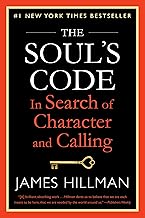
The Soul’s Code

The Essential Rumi Hardcover
Disclosure: This post may contain affiliate links. We only recommend products we believe in, and we may receive a commission at no cost to you! Thank you for your support!
Acknowledgment: Cover Image by moneycatzzz.com
Disclaimer: The information is provided for general information only – moneycatzzz.com makes no representations or warranties in relation to the information, including but not limited to any representation or warranty as to the fitness for any particular purpose of the information to the fullest extent permitted by law. While every effort has been made to ensure that the information provided in this article is accurate, reliable, and complete as of the time of writing, the information provided in this article should not be relied upon to make any financial, investment, real estate or legal decisions. Additionally, the information should not substitute advice from a trained professional who can take into account your personal facts and circumstances, and we accept no liability if you use the information to form decisions.