 Reading Time: 8 mins #
 This post may contain affiliate links.
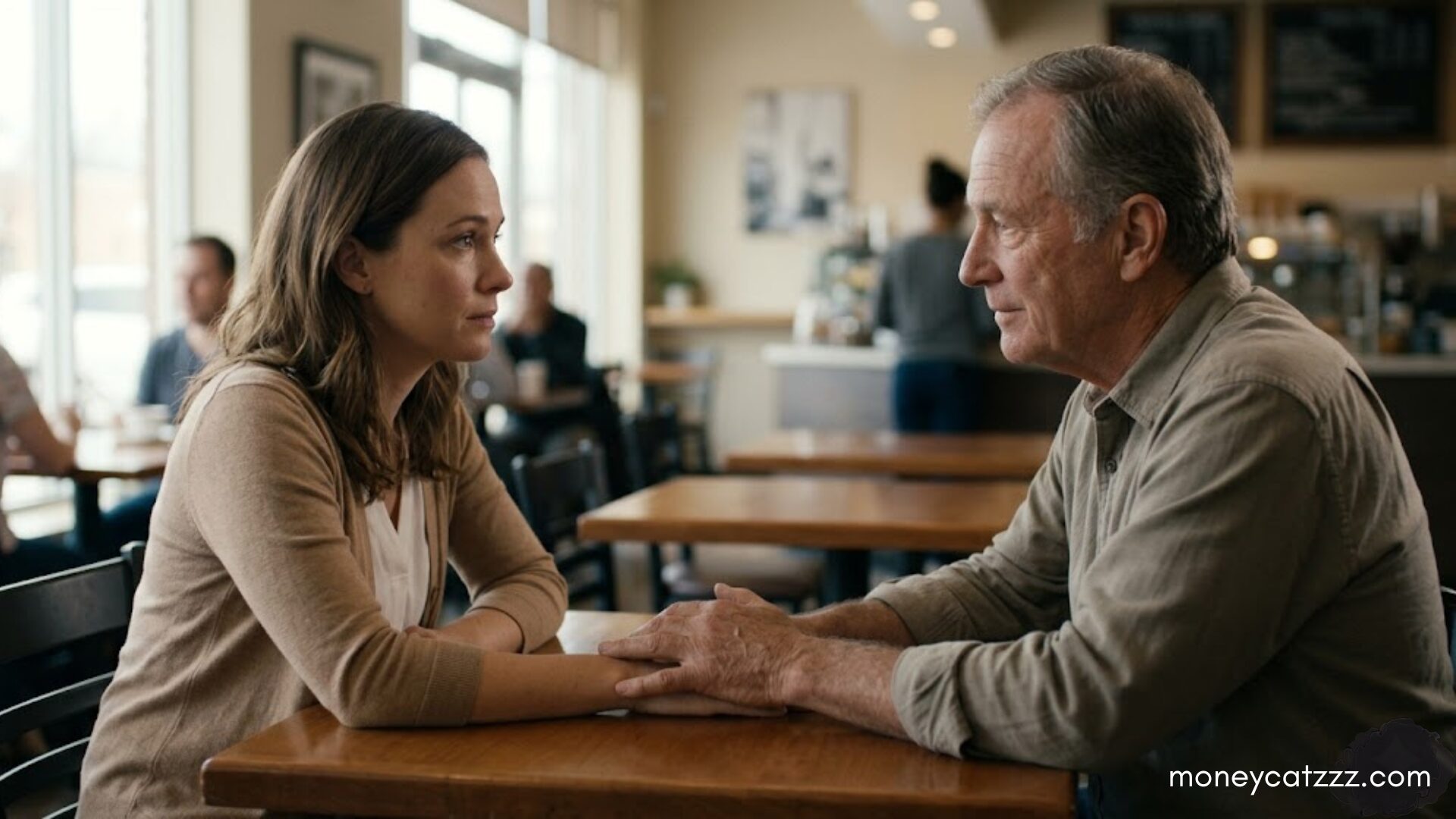
I had lunch with my father last week. We ate. We chatted. We laughed. We laughed again. At one point, he reached out his hand and placed it on mine. A flood of memories came rushing back. Not the warm ones. The old ones, like the birthday party where he left early. The school play where he sat in the back row, checking his phone. The recital he missed. The empty seat. The story I told myself for fifteen years: he did not care.
But sitting there, his hand on mine, I realized something: the past is not a recording. It is a manuscript, and I had been cutting out every scene where he showed up.
The recital happened when I was ten. I played “Für Elise.” I knew every note. When I finished, I looked for his face in the audience. He was not there. That moment became a scar. My father chose work over me. He did not care. He missed the most important night of my young life. That was the story.
I was young, and my memory was also a narrative, and I chose to leave out some facts. He came for the last three songs. I did not see him. He saw me. After the recital, he found me backstage. He hugged me. He said he was proud. I was still angry. I do not remember his exact words. I remember my own disappointment.
A few days before lunch, I found a box of old photos. Inside was the recital program. On the back, my father’s handwriting: “Got stuck in traffic. Made it for the last three songs. She was amazing.”
The story I had been telling did not include the program. It did not include the traffic. It did not include the handwriting. I had edited those details out because they complicated the plot. The plot needed a villain. My father was convenient.
The story was not a lie. It was an incomplete manuscript that I had been living inside for fifteen years. The moment my father placed his hand on mine that afternoon, I stopped editing, finally.
How Memory Really Works
Elizabeth Loftus spent decades proving that memory is not a playback device. Every time you recall an event, you are basically rebuilding it as details shift and emotions color what you keep. The original moment disappears, replaced by the last version you told yourself.
This is not a flaw. It is efficiency. Your brain does not have space for perfect recordings. It stores highlights and fills in the gaps with what makes sense given your existing beliefs. If you believe someone hurt you, your memory will find evidence to support that belief. If you later change your belief, the memory can change too.
Daniel Kahneman calls this the “peak-end rule.“ We judge past experiences by how they felt at their most intense point and at the end. Everything else is noise. For me, the peak was the empty seat. The end was my anger as I walked out of the auditorium. The traffic, the last three songs, the hug—those details did not fit the peak-end shape, so my brain discarded them.
Memory bias is not dishonesty. It is your mind doing its job. The problem is when you forget that the job includes editing. You start treating the edited version as the original.

The Four Edits We All Make
Over the years, I have watched myself and others apply the same four edits to their stories. See if you recognize them.
1. Adding motive. You decide why someone did something. You had no evidence. You never asked. But the motive becomes fact. She ignored me because she is jealous. He criticized me because he feels threatened. Your past is full of these invented intentions.
2. Removing context. The details that soften the story get cut. The apology you did not accept. The effort someone made that fell short of your standard. The traffic. The exhaustion. The misunderstanding. Context complicates the plot—so you delete it.
3. Exaggerating emotion. You turn a disappointment into a betrayal. A small failure becomes proof that you are unlucky or unworthy. The exaggeration feels honest because the emotion was real, but emotion is not evidence.
4. Freezing the characters. In your story, people never change. The friend who let you down ten years ago is still that person. The parent who hurt you is still capable of only harm. You stop updating your file on them. This saves you from having to revise anything else.
Lori Gottlieb declares that her patients arrive with frozen manuscripts. The characters are fixed. The ending is already written. Therapy, she says, is not about discovering new facts but about realizing that you hold the pen.

[Why We Only Remember the “Peak” – Image by moneycatzzz.com]
The Cost of an Unrevised Manuscript
A colleague of mine spent eight years angry at a former boss. The story: he stole her idea and presented it as his own. She told the story constantly. It became part of her narrative identity—the wounded innovator, the one who was wronged.
In a coaching session, someone asked her: “What did he say when you confronted him?”
She had never confronted him. She had assumed his motive, built a case, and convicted him without a trial.
She reached out. He did not remember the incident. “If I used your idea without credit, I am sorry. But I honestly do not remember.”
Eight years. She had been carrying a grudge against a man who had no idea he had done anything wrong. The story was real to her. It was not real to anyone else.
She told me, “I am not saying he was innocent. I am saying I will never know. And carrying the certainty has been heavier than carrying the question.”
She rewrote the story. Not to let him off the hook. To let herself off.
Three Questions to Unlock Your Own Revisions
You do not need a therapist or a box of old photos. You need to ask three questions about any story you have been telling for years.
What did I assume? List every motive you assigned to other people. Then ask: what evidence do I actually have? Not what feels true. What can you prove?
What did I leave out? What details softened the story? What moments of kindness, apology, or ordinary human failure did you cut because they did not fit the plot?
What would change if I were wrong? This is the hardest question. If your story is incomplete, not false, just incomplete, what would you have to let go of? Resentment? Victimhood? The comfort of being right?
Your past is not a sculpture. It is a document. Documents can be edited.
Why Revision Is Not Betrayal
James Pennebaker’s research shows that writing about emotional events heals only when you revise. Venting the same story over and over does not help. It entrenches the neural pathways—you become better at feeling hurt, not better at moving on.
Healing comes when you find a new way to tell the story. A way that includes the traffic. A way that includes a hug. A way that does not require anyone to be all good or all bad.
I used to believe that revising my story about my father would mean betraying my younger self. That ten-year-old girl deserved to be angry.

She deserved someone to witness her pain. Revising felt like telling her she was wrong.
But that is not what revision means. Revision means adding the missing pages. The ten-year-old can keep her anger. The forty-year-old can also keep the program. Both can be true. The manuscript can hold complexity.
Letting go of the old story did not feel like forgiveness. It felt like putting down a heavy bag I had forgotten I was carrying.
The Hand on the Table
My father does not remember the recital the way I do. He remembers being proud. He remembers the traffic. He remembers finding me backstage.
When I asked him last week, he said, “I am sure I was there for most of it. I am sorry I missed the beginning.”
That was enough. Not because he apologized perfectly. Because I stopped needing him to be the villain.
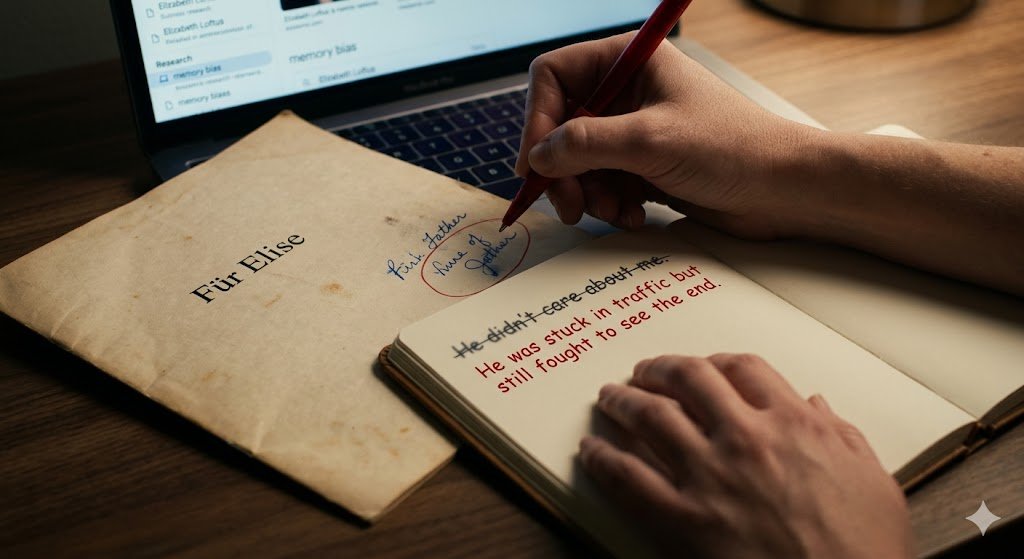
[“Rewriting the Narrative Identity” – Image by moneycatzzz.com]
Emotional truth is not the same as factual truth. The factual truth is boring. Traffic. Late. Saw most of it. Hug. The emotional truth wants a hero and a villain. Real life has neither.
What I finally realized is that our greatest bottlenecks aren’t external, but internal “operating systems” built on legacy data. The old story was running in the background, making decisions for me, long after the event had faded. It told me who to trust. It told me what to expect. It told me that love always comes with an empty seat.
That operating system needed an update.
You Can Keep the Old Manuscript
Many people do. It is warm there. Familiar. The characters are known. The ending is certain, even if it is sad.
But certainty is not the same as truth. And familiar pain is still pain.
The program is in a box. The handwriting has not changed. I have.
You can open your own box. Look at the evidence you have been hiding from yourself. Add the missing scenes. Give the other characters their humanity back. Permit yourself to be wrong about the story you have been telling.
Not because the old story was a lie. Because it was incomplete.
And you have been carrying the incomplete version long enough.
The Incomplete Manuscript: Why Your Past is a Work in Progress
Maybe You Should …

Secret LIfe of Pronouns
Thinking, Fast and Slow
Disclosure: This post may contain affiliate links. We only recommend products we believe in, and we may receive a commission at no cost to you! Thank you for your support!
Acknowledgment: Cover Image by moneycatzzz.com
Disclaimer: The information is provided for general information only – moneycatzzz.com makes no representations or warranties in relation to the information, including but not limited to any representation or warranty as to the fitness for any particular purpose of the information to the fullest extent permitted by law. While every effort has been made to ensure that the information provided in this article is accurate, reliable, and complete as of the time of writing, the information provided in this article should not be relied upon to make any financial, investment, real estate or legal decisions. Additionally, the information should not substitute advice from a trained professional who can take into account your personal facts and circumstances, and we accept no liability if you use the information to form decisions.