
 Reading Time: 8 mins #
 This post may contain affiliate links.
Last Saturday started like every other. Before my feet even hit the floor, my brain was already running the numbers: clean the garage, tackle the inbox, map out Monday so it doesn’t leave me breathless. You know the drill. It’s that low-level hum of “should” that follows us around.
But this time, I ignored it. I stayed in bed. I decided that doing nothing wasn’t a lapse in judgment—it was the plan.
Twenty minutes passed. My brain tried again. You are wasting time.
People would kill for your opportunities. You are being lazy. I did not argue. I just stayed. A dust mote floated through a sunbeam. I watched it. Nothing else.
Deep Purple played from my phone. “I don’t want to do anything at all. I’m just lazy, lazy, lazy.” The song was older than me. It still worked. I do not recommend laziness as a lifestyle. But for one Saturday?
Absolutely.
The Morning: The Voice Arrives
The pressure to perform does not take weekends off. It sits on your chest while you sleep, waiting for consciousness to return. Then it whispers. You should be building something. You should be improving something—You should be becoming someone.
I picked up Jenny Odell’s How to Do Nothing at a thrift store. She calls this the attention economy; the constant demand that your waking hours be monetized, optimized, or documented. Doing nothing is resistance. Not loud resistance. Quiet. The kind that does not argue. Just declines.
My colleague Keiko, a director who lives her life in “Always On” mode, taught me why this is so hard. Her therapist actually prescribed an hour of “nothingness” every Sunday. No phone. No books. No background music. Just her and a chair.
She told me the first three weeks were pure torture. Her skin crawled. Every minute felt like a crime against her own productivity, time she could never claw back. But by week four, the static cleared. She stopped checking the clock and began noticing how the light hit the floor, the sound of her own breath.
“I’m still terrible at it,” she told me, “but now I know why I need it.”
Mental rest is not a luxury. It is maintenance. You do not argue with a car that needs an oil change. You change the oil. The car does not have to earn the right to be maintained.

The Midday: Resistance
By 11 AM, I had done nothing. The garage was still a mess. Emails were still unread. The week was still unplanned. My brain escalated its campaign.
You are wasting the whole day.
People are working right now.
You will regret this on Monday.
I almost gave in. I reached for my laptop. Then I stopped. I asked myself: What am I afraid will happen if I do Nothing?
The answer was not a disaster. The answer was shame. I was afraid of feeling lazy. Afraid of admitting that I was not the person who grinds every day. Afraid of being seen as someone who stops.

[“The Guilt of the Empty Hand” – Image by moneycatzzz.com]
Tom Hodgkinson calls this the Protestant work ethic: the belief that idleness is sin. In How to Be Idle, Hodgkinson argues the opposite. Idleness is where ideas come from. Idleness is when you remember you are a human, not a human doing.
I closed the laptop. I went back to the couch. The dust mote was gone. I found another one.
My time is not for scheduling a massage or a meditation app. It is the refusal to perform when no one is watching. It is the choice to be useless for a few hours. Not strategic uselessness. Just uselessness.
The Afternoon: Surrender
Something shifted around 2 PM. The voice stopped yelling. It started mumbling. Then it went quiet.
I cannot explain exactly what happened. Deep Purple’s Lazy has ended. I did not restart it. The room was silent. I sat in the silence with: no thoughts, no plans, no guilt.
I remembered a study from the University of California, Irvine. Researchers found that deliberate, unstructured time with no cognitive demands restores executive function better than sleep. The brain needs to wander, not toward anything in particular. Just wander.
I was wandering. Not through thoughts. Through Nothing. The afternoon light changed from harsh to soft. I noticed. Then I forgot I noticed.
Devora Zack writes about this in Singletasking. Her argument is counterintuitive for a productivity book: focus requires stopping. You cannot direct your attention fully unless you also withdraw it fully. Unplugging is not the opposite of work. It is the foundation of work.
I was not unplugging to work better on Monday. I was unplugging because it was Saturday and I wanted to. That was enough.
he Evening: The Realization
By 6 PM, I realized something. I had done Nothing all day. Not a single productive thing. And I felt fine—more than fine. I felt guilt-free for the first time in months.
The guilt usually arrives in waves. Did you do enough? Did you do the right things? Did you miss something important? The waves crash. You drown a little. Then you get up and do more.
But that Saturday, the waves did not come. Because I had not given them anything to grab onto, there was no “enough” to measure. There was no “right thing” to check. There was just a day—a day where I chose doing nothing over doing something.
The Sunday Scaries phenomenon is real. Data shows that most people feel anxiety about the impending workweek as early as Sunday afternoon. The anticipation of demands usually creates a heavy dread, but I felt no such weight. My Sunday was different because my Saturday had been empty—not drained, just empty.

[“Finding Inner Chi” – Image by moneycatzzz.com]
The Night: The Reframe
I went to sleep that night without setting an alarm or making a to-do list for Monday. Without promising myself, I would be more productive tomorrow.
Here is what I learned.
Doing Nothing is not a gap in your life. It is the shape your life sometimes takes. Like sleep. Like silence. Like the space between heartbeats. You do not apologize for those. You do not need to justify them.
Me-time is not a productivity hack. It is not a way to recharge so you can work harder; it is a way to remember that you are not a machine. Machines break when you don’t turn them off. Humans break when you never do.
Guilt-free is a choice; it is not always easy, but it is simple. You decide that your output does not measure your worth. You decide that a Saturday with no agenda is not a Saturday wasted. You decide that the voice in your head, the one tallying your ‘to-dos’, does not get a vote on your day off.

Mental rest is not earned. It is taken. You do not have to be exhausted to deserve it. You do not have to be burned out to need it. You can want it. That is enough.
Unplugging is not disappearing. It is returning to yourself. The version of you that exists before the demands, before the notifications, before the endless list of things you should be doing. That version is still there. It is just quiet. It needs you to stop making noise so it can be heard.
The Morning After
I woke up on Sunday feeling something I had not felt in years. Boredom. Real boredom. The kind that itches. The kind that makes you want to do something.
I did not do something. I sat in boredom. It passed. Then I made coffee. Then I sat some more.
Monday came. The emails were still there. The garage was still a mess. The week still needed planning. But I was different. Not more productive. Not more disciplined. Just less afraid of stopping.
The “Lazy” song ended. The dust mote settled. I went to sleep. The world did not end—it just kept spinning, indifferent to my productivity. That was the point.
Some days you do not want to do anything. That is perfectly alright. You do not need a reason. You do not need to earn it. You do not need to justify it to anyone, including yourself.
The garage can wait. The emails can wait. The week can wait. You have been waiting long enough.
Required Reading for the Overwhelmed
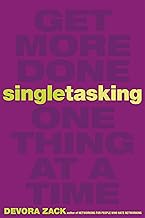
Singletasking

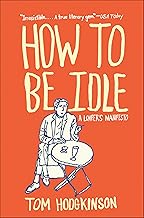
How To Be Idle
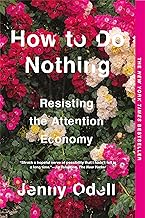
How To Do Nothing
Disclosure: This post may contain affiliate links. We only recommend products we believe in, and we may receive a commission at no cost to you! Thank you for your support!
Acknowledgment: Cover Image by moneycatzzz.com
Disclaimer: The information is provided for general information only – moneycatzzz.com makes no representations or warranties in relation to the information, including but not limited to any representation or warranty as to the fitness for any particular purpose of the information to the fullest extent permitted by law. While every effort has been made to ensure that the information provided in this article is accurate, reliable, and complete as of the time of writing, the information provided in this article should not be relied upon to make any financial, investment, real estate or legal decisions. Additionally, the information should not substitute advice from a trained professional who can take into account your personal facts and circumstances, and we accept no liability if you use the information to form decisions.