
 Reading Time: 8 mins #
 This post may contain affiliate links.
Pink Floyd had it wrong. Time isn’t just slipping into the future; it’s hemorrhaging out of your account at 86,400 seconds per day, and you’re letting it happen. While you’re reading productivity hacks and downloading time management apps, you’re bleeding out the only currency that actually matters.
Listen closely: You can lose your entire net worth and rebuild it. You can destroy your reputation and resurrect it. You can tank your business and relaunch it. But you cannot, under any circumstances, buy back yesterday. Yet here you are, trading your time as capital for meetings that could be emails, relationships that drain your soul, and busy work that someone else should be doing.
I watched a billionaire cry actual tears because he couldn’t repurchase his twenties. All his money, all his power, were worthless against the brutal mathematics of mortality. That’s when I realized most people don’t understand time as capital until their account is almost empty. By then, you’re trying to write checks your body can’t cash.
The Criminal Waste of Treating Time as Infinite
Here’s the wake-up call you need: If you’re not treating time as capital, you’re committing professional and personal suicide in slow motion. Every pointless meeting, every toxic relationship, every low-value task is you literally trading your life for nothing.
Let me make this brutally clear with real numbers:
- You have approximately 700,000 hours of life
- You sleep for 230,000 of them
- You work for 90,000 of them
- That leaves 380,000 hours for everything that matters
Now tell me: why are you spending those hours on people and projects that wouldn’t attend your funeral?
The opportunity cost of life isn’t some philosophical concept. It’s a mathematical reality. Every hour you waste on low-value activities is an hour you can’t invest in building wealth, deepening relationships, or creating a legacy. You’re not just wasting time; you’re destroying future compound returns.
Temporal Bankruptcy: The Disease of High Achievers
Temporal bankruptcy is when you have all the external markers of success but zero time to enjoy them. It’s the corner office with the view you never see. It’s the house you only sleep in. It’s the family that knows your assistant better than you do.
I see it everywhere: entrepreneurs grinding 100-hour weeks, convinced they’re “investing” in their future. No. You’re not investing; you’re spending. And what you’re spending can never be earned back. This isn’t hustle; it’s temporal bankruptcy disguised as ambition.
Cal Newport nails this in Deep Work: the modern professional is addicted to busyness as a proxy for productivity. But busyness isn’t production; it’s often elaborate procrastination. You’re so busy being busy that you never ask if what you’re doing actually matters.
Research from McKinsey Global Institute shows knowledge workers spend only 39% of their time on role-specific tasks. The rest? Meetings about meetings, emails about emails, the theater of looking productive. That’s not work; that’s temporal bankruptcy in action.
Strategic Time Allocation: The Three Buckets That Matter
Stop managing your time and start allocating it like the finite resource it is. Strategic time allocation means every hour goes into one of three buckets, or it doesn’t happen:
Bucket 1: Creation Value (40% minimum)
This is deep work that makes a meaningful impact: writing the code, closing the deal, building the system. If it doesn’t create measurable value, it doesn’t belong here. No meetings, no “quick calls,” no reactive tasks. Pure creation.
Bucket 2: Relationship Equity (30% minimum)
Time invested in people who matter: family, mentors, allies. Not networking, not social obligations, not energy vampires who take but never give. Genuine relationships that compound in value over time.
Bucket 3: Recovery Investment (30% minimum)
Not rest, which is passive, but active recovery. Exercise, reading, and thinking time. This isn’t leisure; it’s maintenance on your primary asset: yourself. Skip this, and you’re running your engine without oil.
Anything outside these buckets? Kill it. That “quick coffee” with someone picking your brain? Dead. That committee you joined to “stay connected”? Gone. That hobby project that’s been “almost done” for three years? Buried.

[“How to Treat Time as Capital Investment for Maximum ROI” – Image by moneycatzzz.com]
The Non-Renewable Focus Revolution
Your non-renewable focus is the sharpest blade you have, and you’re using it to cut birthday cake at office parties. Every distraction, every interruption, every context switch dulls that blade until you’re trying to cut steel with a butter knife.
James Clear’s Atomic Habits demonstrates that focus isn’t about doing more; it’s about doing less but doing it better. Your non-renewable focus should be treated like weapons-grade plutonium: dangerous, powerful, and absolutely not to be wasted on trivial pursuits.
Here’s my protocol for protecting non-renewable focus:
- Phone in airplane mode for the first 4 hours of the day
- Email checked twice: 11 AM and 4 PM, that’s it
- No meetings before noon, ever
- Every meeting has a written agenda, or it doesn’t happen
- Default answer to all requests: “No, unless…”
This isn’t antisocial; it’s pro-survival. Your focus is finite. Spend it on $10 tasks, and you’ll live a $10 life.
The Mathematics of Buying Back Your Life
Let’s talk money, because that’s what finally makes this real for most people. If you value your time at $200/hour (and if you don’t, that’s your first problem), then every hour spent on menial tasks costs you $200 in the opportunity cost of your life.
The math is simple, but most people fail it:
- House cleaning: 4 hours/week = $800
- Paying a cleaner: $150/week
- Net gain: $650/week = $33,800/year
Yet people won’t spend $150 to buy back 4 hours because they’re thinking poorly. They see expense, not investment. They’re so focused on saving money that they’re spending their life.
A BBC programme prove that buying time increases happiness more than buying things. People who spend money to buy back time report higher life satisfaction than those who don’t, regardless of income level.
The Compound Interest of Protected Time
Here’s what happens when you treat time as capital with the respect it deserves:
Year 1: You reclaim 20 hours/week from low-value activities. That’s 1,040 hours to invest in high-return projects.
Year 2: Those projects generate enough revenue to buy back another 10 hours/week. You’re now operating with 1,560 hours of focused time annually.
Year 3: The compound effect kicks in. Your deeper work, stronger relationships, and better health create exponential returns. You’re not just saving time; you’re multiplying it.
Peter Drucker understood this in The Effective Executive: time is the scarcest resource, and unless it’s managed, nothing else can be managed. But Drucker was being polite. Let me be clear: unless you treat time as capital, you’re guaranteeing a life of mediocrity.
The Opportunity Cost of Life Calculator
Run this calculation right now:
- Your annual income goal: $______
- Divide by 2,000 (working hours/year): $____/hour
- Every hour wasted costs you: $____
- Hours wasted per week: ____
- Weekly opportunity cost of life: $____
- Annual cost of time waste: $____
Shocking. That number represents the cost of your lack of boundaries.
That’s the tax you pay for saying yes to everything. That’s the price of not treating time as capital.
The Three Questions That Change Everything
Before any commitment, ask:
- Does this increase my capacity? If not, it’s consumption, not investment.
- Can someone else do this as well as 80%? If yes, delegate it immediately.
- Will this matter in 10 years? If not, it doesn’t deserve your non-renewable focus.
Most activities fail all three questions. Those are the vampires draining your temporal wealth.
Strategic Time Allocation in Practice
A post by Decision Lab suggests that reducing the number of decisions can lead to increased performance. Every micro-decision depletes your strategic time allocation capacity. Solution? Eliminate decisions through systems:
- Same morning routine, automated
- Same lunch every workday
- Same workout schedule, no negotiation
- Same bedtime, no exceptions
Boring? No. Brilliant. You’re preserving decision-making capacity for what actually matters.

[“Buy Back Your Life” – Image by moneycatzzz.com]
Your Temporal Emergency Plan
Starting tomorrow:
Morning: The first 2 hours are dedicated to creation only. No input, no meetings, no email. Pure output on your highest-value project.
Midday: Handle necessary evils in batches. All meetings in one block. All emails in one session. All calls back-to-back.
Evening: Relationship and recovery only. Work ends at a specific time, no exceptions. Your future self depends on present recovery.
This isn’t a suggestion. This is strategic time allocation for individuals who refuse to succumb to temporal bankruptcy.
The Final Invoice
One day, sooner than you think, your temporal account will hit zero: no overdraft protection, no payment plans, no negotiations. The only question will be: did you spend your time as capital on things that mattered, or did you let it leak away on things that didn’t?
Every billionaire would trade places with you right now if they could have your time back. You have what they desperately want but can’t buy. Stop treating it like it’s worthless.
Your time is capital. Spend it like the non-renewable focus it is, or watch it disappear into the opportunity cost of life you’ll spend your final years regretting.
The clock isn’t just ticking. It’s billing you.
What are you buying today?
Books and Resources To Regain Your Time
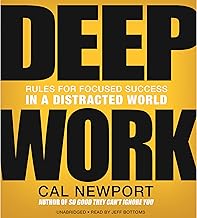
Deep Work

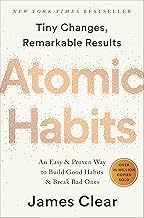
Atomic Habits
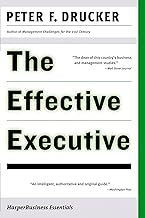
The Effective Executive
Disclosure: This post may contain affiliate links. We only recommend products we believe in, and we may receive a commission at no cost to you! Thank you for your support!
Acknowledgment: Cover Image by moneycatzzz.com
Disclaimer: The information is provided for general information only – moneycatzzz.com makes no representations or warranties in relation to the information, including but not limited to any representation or warranty as to the fitness for any particular purpose of the information to the fullest extent permitted by law. While every effort has been made to ensure that the information provided in this article is accurate, reliable, and complete as of the time of writing, the information provided in this article should not be relied upon to make any financial, investment, real estate or legal decisions. Additionally, the information should not substitute advice from a trained professional who can take into account your personal facts and circumstances, and we accept no liability if you use the information to form decisions.