 Reading Time: 8 mins #
 This post may contain affiliate links.
The Power of Deep Work and Productivity
In today’s fast-paced digital age, distractions are everywhere—yet true focus remains the key to unlocking your full potential. Despite a world where ideas flow freely and creativity soars, the art of deep work and productivity is becoming increasingly rare. Recent research shows that 71% of workers feel distracted at work, and knowledge workers spend only 39% of their time on tasks that truly matter.
In this post, we reveal proven strategies to overcome constant interruptions and transform shallow work (like endless emails and routine meetings) into meaningful, high-impact focus. Discover how mastering deep work not only boosts productivity but also sets you apart from your peers.
“The ability to perform deep work is becoming increasingly rare. It is a superpower that allows you to produce work of exceptional quality in a world that increasingly values quantity over quality.” – Cal Newport

[“In the Zone – Deep Work” – Image by Pexels from Pixabay]
The Deep Work and Productivity Revolution: A Game-Changer for Success
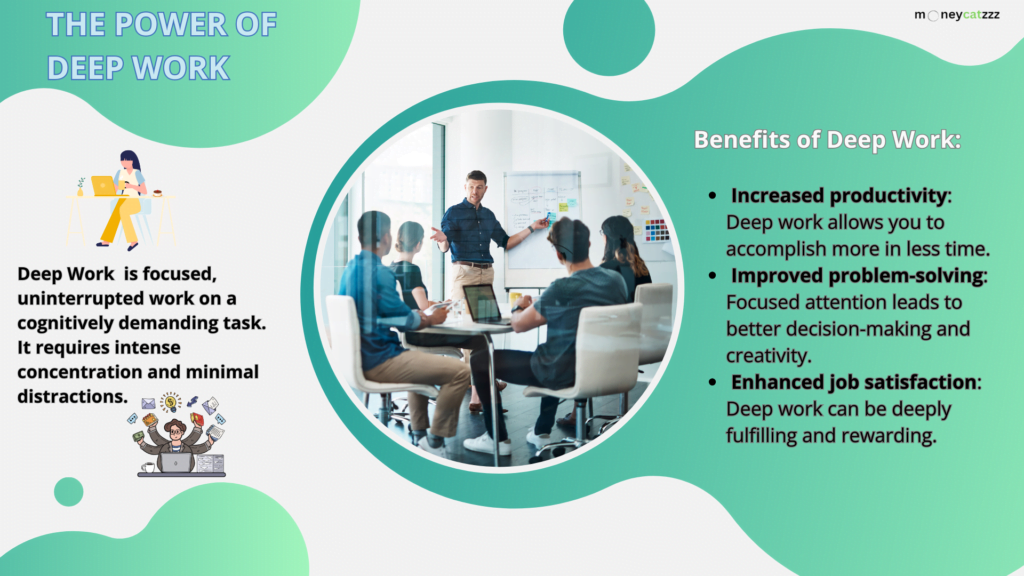
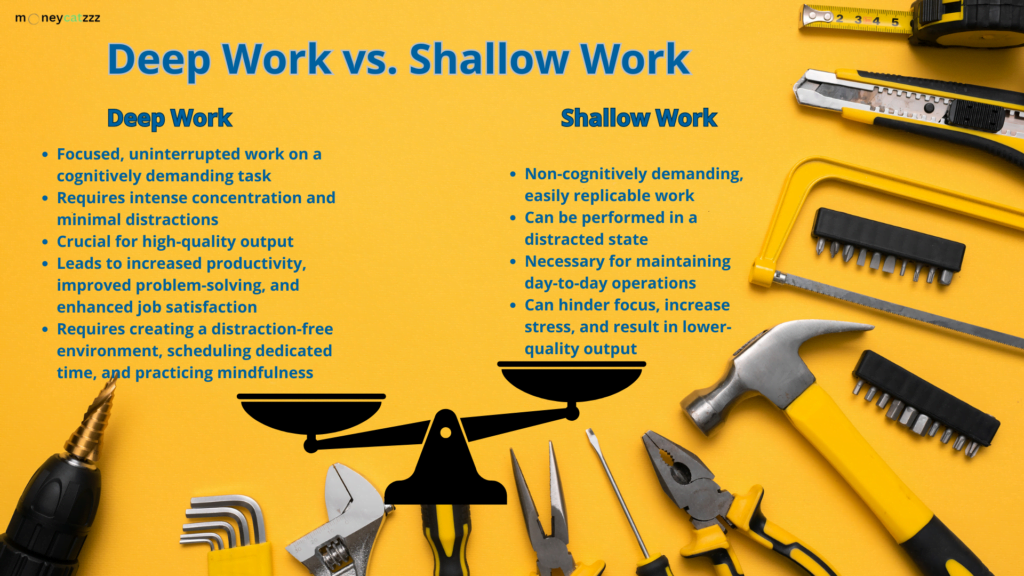
Deep work, a term coined by computer science professor Cal Newport in his groundbreaking book “Deep Work: Rules for Focused Success in a Distracted World,” refers to the ability to focus without distraction on a cognitively demanding task. This state of flow allows individuals to push their cognitive capabilities to their limits, producing high-quality work that creates significant value.
The Shallow Work Dilemma
Contrast this with shallow work – non-cognitively demanding, logistical-style tasks often performed while distracted. These tasks are easy to replicate and typically don’t create much new value worldwide. In our modern workplace, shallow work often dominates our schedules, leaving little room for the deep, meaningful work that truly moves the needle.
The Cost of Distraction
The prevalence of shallow work and constant distractions comes at a high cost. A University of California Irvine study found that it takes an average of 23 minutes and 15 seconds to return to a task after an interruption. This constant task-switching, context switching, can reduce productivity by up to 40% (American Psychological Association).
[“The Power of Deep Work” – moneycatzzz.com]
The Science Behind Deep Work and Productivity
Research has shown that deep work isn’t just a productivity hack – it’s a fundamental shift in how we approach our professional lives. A study published in the Journal of Experimental Psychology found that even brief interruptions can double the number of errors made in a sequence of tasks (Altmann et al., 2014). This underscores the importance of creating distraction-free environments for deep work.
The Neurological Basis of Deep Work
Neuroscience provides compelling evidence for the power of deep work. When we engage in focused, uninterrupted work, our brains enter a state of flow characterized by increased activity in the prefrontal cortex – the area responsible for complex problem-solving and creativity. This state is associated with the release of neurotransmitters like dopamine and norepinephrine, which enhance focus and satisfaction.
Deep Work and Productivity: Real-Life Success Stories
J.K. Rowling’s Deep Work Triumph
J.K. Rowling, the acclaimed author of the Harry Potter series, is a prime example of the power of deep work. To complete the final book in the series, “Harry Potter and the Deathly Hallows,” Rowling checked into the Balmoral Hotel in Edinburgh, Scotland. There, she sequestered herself in a suite, free from distractions, to engage in intense periods of deep work. The result? A 607-page novel was completed in just six months, selling 11 million copies within 24 hours of its release.
Elon Musk’s “Batcave” Approach
Elon Musk, the innovative entrepreneur behind Tesla and SpaceX, is known for his ability to tackle complex problems through deep work. At SpaceX headquarters, Musk has a desk at the end of the factory floor, nicknamed the “Batcave.” Here, he engages in intense problem-solving sessions, often working 80-100 hour weeks. This dedication to deep work has been crucial in SpaceX’s mission to revolutionize space technology (source).
Bill Gates’ “Think Weeks”
Microsoft co-founder Bill Gates is renowned for his “Think Weeks” – periods of deep work where he isolates himself to read, reflect, and strategize. These intense periods of focus have led to major strategic decisions and innovations at Microsoft, demonstrating the power of sustained deep work at the highest levels of business.

The Deep Work Toolkit: Essential Strategies for Success
Create Ritual and Routine
In his book “Daily Rituals: How Artists Work,” Mason Currey explores the habits of history’s most creative minds. A common thread emerges – the power of routine in facilitating deep work. By establishing a consistent time and place for deep work, you train your brain to enter a state of focus more readily.
Embrace Boredom
Another key strategy outlined in Newport’s “Deep Work” is embracing boredom. In our constantly connected world, we’ve lost the ability to be bored. Yet, in these moments of boredom, our brains can engage in the kind of diffuse thinking that often leads to creative breakthroughs.
Minimize Shallow Work
In “The 4-Hour Work Week,” Tim Ferriss introduces the concept of elimination before optimization. Applied to deep work, this means ruthlessly cutting out shallow tasks before trying to optimize your deep work sessions. This might involve delegating, automating, or simply saying no to low-value activities.
Harness the Power of Rest
It might seem counterintuitive, but rest is a crucial component of deep work. In “Rest: Why You Get More Done When You Work Less,” Alex Soojung-Kim Pang argues that deliberate rest enhances our ability to engage in deep work. Activities like walking, napping, or engaging in hobbies can refresh our minds and boost our cognitive capabilities.
[“Deep vs. Shallow Work” – moneycatzzz.com]
Implement the 90-Minute Focus Block.
In his book “The Way We’re Working Isn’t Working,” Tony Schwartz introduces the concept of 90-minute focus blocks. This aligns with our natural ultradian rhythms – cycles of high-frequency brain activity followed by lower-frequency brain activity. We can maximize our productivity and cognitive performance by working in 90-minute intervals followed by short breaks.
“Focus is the key to success. The ability to focus on the task at hand, to shut out the distractions, and to give your full attention to what you are doing is essential for achieving your goals.” – Arnold Schwarzenegger
The Deep Work Advantage: Transforming Industries and Careers
The ability to perform deep work is becoming increasingly valuable across various industries. From software development to creative writing, scientific research to strategic planning, those who consistently engage in deep work have a significant competitive advantage.
Revolutionizing Software Development
In the fast-paced world of software development, the ability to enter a flow state and tackle complex coding challenges is invaluable. Companies like Basecamp have embraced this philosophy, implementing company-wide policies that protect employees’ ability to engage in deep work. The result? Higher quality code, faster problem-solving, and increased job satisfaction.
Transforming Creative Industries
For creative professionals, deep work can be the difference between mediocrity and brilliance. Pixar Animation Studios, known for its innovative and emotionally resonant films, has built its creative process around profound work principles. By providing artists and writers with distraction-free environments and long stretches of uninterrupted time, Pixar consistently produces groundbreaking animated features.
Accelerating Scientific Breakthroughs
In scientific research, deep work is often the key to groundbreaking discoveries. The Human Genome Project, which successfully mapped the human genome, required intense periods of focused work from scientists worldwide. This monumental achievement, revolutionizing medical research, is a testament to the power of sustained deep work in advancing human knowledge.
Overcoming Obstacles to Deep Work
While the benefits of deep work are clear, implementing it in our distraction-filled world can be challenging. Here are some strategies to overcome common obstacles:
Digital Detox
Our digital devices are often the biggest hindrance to deep work. Consider implementing a digital detox routine, where you disconnect from all devices for a set period each day or week. This practice, advocated by digital minimalism expert Cal Newport in his book,”Digital Minimalism“, can help reset your attention span and make deep work easier.
Time Blocking
Allocate specific blocks of time for deep work in your calendar. Treat deep work with the same respect you would give to an important meeting during these periods. This technique, popularized by productivity expert Francesco Cirillo in his book “The Pomodoro Technique,” can help you create the mental space necessary for deep work.
Environmental Design
Create a physical environment conducive to deep work. This could involve setting up a dedicated workspace, using noise-cancelling headphones, or renting a separate office space. The key is to create clear boundaries between your deep workspace and the rest of your life.
Mindfulness and Meditation
Mindfulness and meditation can significantly enhance your ability to focus and engage in deep work. A study published in Psychological Science found that just two weeks of mindfulness training improved GRE reading comprehension scores and working memory capacity while reducing mind-wandering during performance tasks.
Nutritional Support
Your diet can play a crucial role in your ability to focus. Foods rich in omega-3 fatty acids, antioxidants, and complex carbohydrates can support brain health and cognitive function. Staying hydrated is essential for maintaining focus and mental clarity during deep work sessions.
[“The Impact of Deep Work” – moneycatzzz.com]
Measuring the Impact of Deep Work
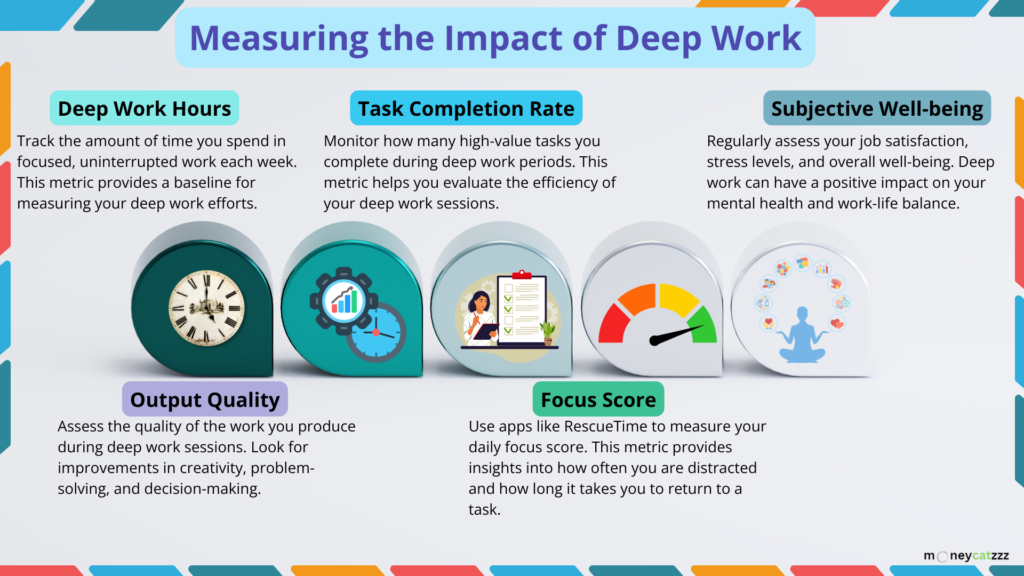
Measuring its impact is important to harness the power of deep work. Here are some key performance indicators (KPIs) to consider:
- Deep Work Hours: Track the hours spent in deep work each week.
- Output Quality: Assess the quality of work produced during deep work sessions.
- Task Completion Rate: Monitor how many high-value tasks are completed during deep work periods.
- Focus Score: Use apps like RescueTime to measure your daily focus score.
- Subjective Well-being: Regularly assess your job satisfaction and stress levels.
By tracking these metrics, you can quantify the impact of deep work on your productivity and overall professional satisfaction.
“The greatest ideas often come to us when we are not actively trying to think about them.” – Carl Jung
The Future of Work: Deep Work as a Competitive Advantage
As we move further into the knowledge economy, the ability to perform deep work will become an increasingly valuable skill. Those who can master this art will be well-positioned to tackle the complex challenges of the future, from artificial intelligence to climate change.
Moreover, as remote work becomes more prevalent, the ability to engage in deep work without the structure of a traditional office environment will be crucial. Companies that foster a culture of deep work among their distributed teams will have a significant advantage in attracting and retaining top talent.
The Rise of Deep Work and Productivity in Education
Educational institutions are beginning to recognize the importance of teaching deep work skills. Some universities are introducing focus and attention management courses, preparing students for a future where the ability to concentrate intensely will be a key differentiator in the job market.
Deep Work and Artificial Intelligence
As artificial intelligence continues to automate routine tasks, the premium on human creativity and complex problem-solving will only increase. Deep work cultivates these uniquely human capabilities and will become even more valuable in an AI-driven world.

Embracing the Deep Work Revolution
In a world of constant distraction, the ability to engage in deep work is nothing short of a superpower. By cultivating this skill, we can unlock our full potential, produce work of lasting value, and find greater satisfaction in our professional lives.
As you embark on your deep work journey, remember that it’s a skill that can be developed over time. Start small, be consistent, and gradually increase the duration and intensity of your deep work sessions. You’ll unlock new levels of productivity, creativity, and professional success with practice and perseverance.
The profound work revolution is here, offering a path to increased productivity and a more meaningful and fulfilling professional life. In a world that increasingly values depth over breadth, those who can harness the power of deep work will find themselves at the forefront of innovation and success.
Are you ready to join the profound work revolution and unlock your full potential? The future belongs to those who can think deeply, focus intensely, and create meaningful work in a distracted world. The choice is yours – will you embrace the power of deep work?
Disclosure: This post may contain affiliate links. We only recommend products we believe in, and We may receive a commission at no cost to you! Thanks for your support!”
Acknowledgement: Cover Image by Nick Wyatt
Signup to our Newsletter for regular updates:
Disclaimer: The information is provided for general information only – moneycatzzz.com makes no representations or warranties in relation to the information, including but not limited to any representation or warranty as to the fitness for any particular purpose of the information to the fullest extent permitted by law. While every effort has been made to ensure that the information provided in this article is accurate, reliable, and complete as of the time of writing, the information provided in this article should not be relied upon to make any financial, investment, real estate or legal decisions. Additionally, the information should not substitute advice from a trained professional who can take into account your personal facts and circumstances, and we accept no liability if you use the information to form decisions.