
 Reading Time: 8 mins #
 This post may contain affiliate links.
The client’s voice was cold through the phone: “You seem distracted lately. We’re going with someone else.” Third contract lost in six months. As I hung up, I realized I’d been mentally elsewhere during our entire conversation, replaying an argument with my sister from two weeks ago. My self-reflective thoughts had become so loud that I couldn’t hear actual people speaking to me. That lost contract was worth more than money; it was the moment I understood that my unexamined mind was costing me my life.
That evening, exhausted and defeated, I watched “Inception“ for probably the tenth time. There’s a line where Mal says, “Do you know what it is to be a lover? Half of a whole?” But she’s not talking about love; she’s talking about being trapped in a recursive dream, unable to distinguish between what’s real and what’s a projection. That’s when it hit me: I was living in my own inception, layers deep in recurring patterns of thought that had nothing to do with my actual reality.
My therapist, Sarah, had been trying to tell me this for months. “Your internal dialogue isn’t background music,” she’d said. “It’s the director’s commentary, and right now, it’s directing you straight into walls.” I thought she was being dramatic. Turns out, she was being generous.
The True Cost of Mental Loops
Before that phone call, I thought my racing thoughts were just part of being “deep” or “thoughtful.” I wore my overthinking like a badge of intellectual honor. But when I did the math, the reality was brutal:
- Lost contracts from distraction: Three clients worth approximately $150,000 annually
- Delayed decisions from mental paralysis: Six months behind on launching my course
- Relationship strain from being mentally absent: My partner asks if I even hear her anymore
- Creative drought from mental exhaustion: Zero new ideas in four months
My self-reflective thoughts weren’t making me wiser; they were making me broke, isolated, and creatively dead.
Michael Singer addresses this in The Untethered Soul, describing how we become prisoners of our own mental commentary. But reading about it and experiencing the bankruptcy of an unexamined mind are different universes of understanding.
The Mirror Principle
Sarah introduced me to what she called “The Mirror Principle“: your recurring patterns of thought aren’t random static; they’re precise reflections of what you’re avoiding in reality. Every loop is pointing to something unresolved, unacknowledged, or unacted upon.
She had me track my thoughts for one week. Don’t judge them, don’t fix them, notice what keeps returning. The results were embarrassing in their predictability:
Work thoughts (40% of loops): Replaying conversations where I felt inadequate, projecting future failures, rehearsing defenses for criticism that hadn’t happened.
Relationship thoughts (35% of loops): Imaginary arguments where I finally said the “right” thing, resentments I’d never voiced, fears of abandonment I’d never admitted.
Self-worth thoughts (25% of loops): Comparing myself to others’ highlight reels, questioning every decision, building cases for why I didn’t deserve success.
Research from Harvard’s psychology department shows that people spend 47% of their waking hours thinking about something other than what they’re doing, and this mind-wandering typically makes them unhappy. I was above average in all the wrong ways.
Recurring Patterns as GPS Coordinates
Once I saw the patterns, Sarah helped me understand that recurring patterns aren’t problems; they’re coordinates. They’re telling you exactly where your life needs attention. Ignore them, and they get louder. Address them, and they dissolve.
My work-related loops about inadequacy? They were pointing out that I’d taken on projects outside my expertise, trying to be everything to everyone. The relationship loops? Highlighting conversations I needed to have but was avoiding. The self-worth spirals? Revealing that I was seeking external validation for internal wounds.
Danny Penman explores this in Mindfulness for Creativity, showing how noticing thought patterns without judgment can unlock creative energy that’s been trapped in loops. But first, you have to stop treating your thoughts like entertainment and start treating them like data.

[“The Thought Audit That Saved My Business” – Image by Nano Banana (moneycatzzz.com)]
Mental Clarity Through the Audit Process
I developed what I now call the Thought Audit Process, and it saved my business and sanity:
Morning Download (5 minutes):
Every morning, before coffee, before phone, before anything, I write stream-of-consciousness for five minutes. No editing, no censoring, just downloading whatever’s looping. This clears the cache and reveals what my internal dialogue is actually obsessing about.
Pattern Recognition (Weekly):
Every Sunday, I review the week’s downloads and look for themes. What showed up three or more times? Those are the recurring patterns demanding attention. I categorize them: Action Required, Conversation Needed, or Feeling to Process.
The 48-Hour Rule:
Any thought that appears three days in a row gets addressed within 48 hours. Period. If it’s a work concern, I schedule time to solve it. If it’s a relationship issue, I have the conversation. If it’s an emotion, I feel it thoroughly rather than thinking about it.
This process restored my mental clarity within six weeks. Clients started commenting that I seemed “more present.” My partner said I was actually listening again. Ideas began flowing because loops didn’t consume my mental bandwidth.

Emotional Intelligence as a Navigation System
The breakthrough came when I realized that emotional intelligence isn’t about controlling emotions; it’s about understanding what your self-reflective thoughts are trying to tell you through emotions.
Travis Bradberry breaks this down in Emotional Intelligence 2.0, explaining that emotions are data, not directives. When I started treating my mental loops as emotional data points rather than truth, everything shifted:
- Anxiety loops = pointing to undefined boundaries
- Anger loops = highlighting violated values
- Sadness loops = revealing unprocessed losses
- Fear loops = indicating growth edges I was avoiding
Research from Yale’s Center for Emotional Intelligence demonstrates that people with higher emotional intelligence earn more, have better relationships, and report greater life satisfaction. But emotional intelligence starts with actually listening to what your emotions are saying through your thoughts.
Internal Dialogue as Creative Director
The most profound shift happened when I stopped trying to silence my internal dialogue and started directing it. Instead of letting it run wild with worst-case scenarios and past regrets, I gave it productive work:
Morning Question: “What needs my attention today?” instead of “What could go wrong?”
Afternoon Check-in: “What’s working right now?” instead of “What’s missing?”
Evening Review: “What did I learn?” instead of “What did I mess up?”
This isn’t positive thinking nonsense. It’s recognizing that your internal dialogue will run regardless, so that you can give it useful scripts. Within three months, my self-talk transformed from a critical parent to a strategic advisor.
The Action Protocol
Here’s the exact protocol that transformed my self-reflective thoughts from liability to asset:
Week 1-2: Observation Only
No judgment, no action, just notice. What thoughts return? When? What triggers them? Document without analyzing.
Week 3-4: Pattern Mapping
Identify your top five recurring patterns. Give each a name. “The Inadequacy Loop,” “The Resentment Replay,” whatever fits. Naming creates distance and mental clarity.
Week 5-6: Strategic Response
For each pattern, create one specific action:
- Inadequacy Loop → Schedule skill development
- Resentment Replay → Have the actual conversation
- Comparison Spiral → Delete social media apps
- Future Catastrophizing → Create contingency plans
- Past Regret Loops → Write forgiveness letters (even if never sent)
Week 7-8: Integration
Build systems that prevent loops from returning: regular check-ins, scheduled processing time, and boundaries that avoid triggers of the pattern.

[“Recurring Patterns as GPS Coordinates” – Image by moneycatzzz.com]
The Liberation of the Examined Mind
Six months after that devastating phone call, my business had not just recovered but transformed. Five better-aligned ones replaced the three lost clients. The mental energy I’d been spending on loops was redirected into creation. I launched two courses, wrote a book proposal, and actually enjoyed my work again.
But the fundamental transformation was internal. My self-reflective thoughts changed from torturer to teacher. They still arise, but now they‘re messengers, not masters. When a loop appears, I know it’s pointing to something that needs attention, not something wrong with me.
Studies on metacognition show that people who observe their thinking patterns without identifying with them have greater resilience, creativity, and life satisfaction. The thoughts don’t stop; your relationship with them transforms.
Your Mirror Awaits
Your self-reflective thoughts aren’t your enemy. They’re not even really “yours.” They’re patterns of internal dialogue shaped by experience, running on autopilot until you consciously redirect them. The recurring patterns that frustrate you most are precisely the ones pointing to your next breakthrough.
Sarah was right: these thoughts are directing your life whether you acknowledge them or not. The only question is whether you’ll remain an unconscious actor in their script or become the conscious director of your own mental clarity.
Like the spinning top in “Inception,” your thoughts will keep spinning until you question whether they’re even real. Most aren’t. They’re just old programs running on repeat, waiting for you to notice and choose something different.
The mirror of your mind is constantly reflecting. The question is: are you brave enough to look?
Your emotional intelligence begins with listening to what you’ve been trying not to hear.

Books That Helped Me Transform Self-Reflective Thoughts Into Clarity
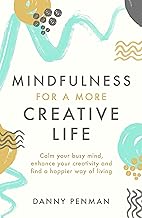
Mindfulness for Creativity


Emotional Intelligence 2.0

The Untethered Soul
Disclosure: This post may contain affiliate links. We only recommend products we believe in, and we may receive a commission at no cost to you! Thank you for your support!
Acknowledgment: Cover Image by moneycatzzz.com
Disclaimer: The information is provided for general information only – moneycatzzz.com makes no representations or warranties in relation to the information, including but not limited to any representation or warranty as to the fitness for any particular purpose of the information to the fullest extent permitted by law. While every effort has been made to ensure that the information provided in this article is accurate, reliable, and complete as of the time of writing, the information provided in this article should not be relied upon to make any financial, investment, real estate or legal decisions. Additionally, the information should not substitute advice from a trained professional who can take into account your personal facts and circumstances, and we accept no liability if you use the information to form decisions.