
My “Top Achiever 2023” award shattered into a million pieces when it hit the floor. I stood there, barefoot, glass everywhere, and felt something I didn’t expect. Nothing. Not loss. Not panic. Not even irritation at the mess, just a hollow quiet, like the sound after a bell stops ringing.
The shelf behind me held the others. Pewter from 2019. Silver-plated from the regional conference. A gold-tone figurine holding a star, given by people whose names I’d already forgotten. Crystal from the industry gala. Each one a testimony. Evidence. Proof that I had followed the right path, made the right moves, achieved the right things.
I swept up the glass and threw it away. And then I sat with a question I’d been avoiding for years: whose life had I been living?
Naming What We Don’t Discuss
The follower’s fallacy is the quiet assumption that what worked for others will work for you. That their path is the path; that the following eliminates risk and guarantees arrival.
It’s seductive because it’s efficient. Why stumble through uncertainty when someone has already walked the road? Why experiment when the formula exists? The follower’s fallacy promises safety: do what they did—get what they got.
But here’s what the formula doesn’t account for: you are not them. Their hunger is not your hunger. Their definition of success was shaped by a life you didn’t live, wounds you didn’t carry, and desires you never actually felt.
M. Scott Peck opened The Road Less Traveled with three words: “Life is difficult.” I read that book in my twenties and thought I understood it. I didn’t. Difficulty meant obstacles to overcome on the way to achievement. Peck meant something else entirely. He meant the difficulty of thinking for yourself, of bearing the weight of your own choices, of refusing the easy comfort of borrowed direction.
I had spent fifteen years following advice. Mentors, books, frameworks, blueprints. I was excellent at following. I could replicate anyone’s strategy, adopt anyone’s habits, mirror anyone’s trajectory. The trophies proved it.
The achievement emptiness proved something else.
The Shelf as Evidence
Look at your own shelf. Literal or metaphorical. The degrees, titles, promotions, milestones. Each one, a moment you performed correctly—each one of the pieces of evidence that you understood the assignment.
But whose assignment was it?
The follower’s fallacy doesn’t feel like a fallacy when you’re winning. It feels like wisdom. It feels like humility, even. Learning from those who came before, standing on shoulders, not reinventing wheels.
I told myself I was being smart. Strategic. Coachable.
I was absent.
Following advice so closely that I never had to ask what I actually wanted. Borrowing success so entirely that I never had to define my own. The trophies accumulated. The achievement emptiness deepened.
Research from the University of Rochester on self-determination theory confirms what I felt. Still, it couldn’t name: external markers of success, rewards, recognition, and status often fail to produce lasting satisfaction. The researchers call it the difference between extrinsic and intrinsic motivation. I call it the difference between a whole shelf and an empty chest.
The Understudy’s Exhaustion
There’s a particular fatigue that comes from performing a role that isn’t yours. Actors call it understudy exhaustion. You know every line, every blocking, every beat, but the part was written for someone else’s body, someone else’s voice.
I had been understudying my own life. Hitting marks set by mentors and delivering lines from books and receiving applause for a performance that was technically flawless and emotionally hollow.
The follower’s fallacy told me this was success. The exhaustion told me otherwise.
I remember a dinner, years ago, celebrating some award or another. Someone asked what I was most proud of. I opened my mouth and heard myself recite accomplishments like a résumé. Metrics. Milestones. The borrowed success of a life optimized for someone else’s scorecard.
Later, alone, I couldn’t remember what I’d said. It didn’t matter. None of it was mine.

[“The Traced Drawing of My Career”- Image by moneycatzzz.com]
The Inherited Appetite
Here’s what following advice does over time: it replaces your hunger with someone else’s.
You start chasing goals you never chose. You develop appetites for achievements that don’t nourish you. You eat and eat and stay empty because the food was never meant for your body.
The follower’s fallacy is not just about strategy. It’s about desire. When you follow long enough, you forget what you actually want. Your own wanting becomes faint, hard to locate, like trying to remember a dream three days later.
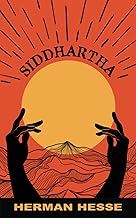
Hermann Hesse understood this. In Siddhartha, the protagonist spends years following teachers, gurus, and ascetics. Each path brings knowledge but not peace. Each mentor offers wisdom, but not his wisdom. Siddhartha eventually realizes that no one else’s enlightenment can become his own. “Knowledge can be communicated,” Hesse writes, “but not wisdom.” I had been collecting other people’s knowledge and calling it my own wisdom.
I had inherited appetites from every mentor, every book, every framework. I craved corner offices because someone told me to. I chased revenue targets because the blueprint said so. I collected trophies because that’s what success looked like in the photographs I’d been shown.
The achievement emptiness wasn’t a failure of effort. It was a failure of ownership. I had been living a life assembled from other people’s instructions.

The Traced Drawing
When I was young, I traced drawings from comic books. Placed thin paper over the originals and followed the lines exactly. The results looked impressive. People praised my “talent.”
But I knew the truth. The hand wasn’t mine. The lines were borrowed. The image was technically correct and completely hollow.
Following the advice is tracing. You can produce impressive results. You can fool everyone, including yourself. But somewhere beneath the performance, you know: this isn’t yours.
The follower’s fallacy promises mastery through imitation. What it delivers is a portfolio of traced drawings—evidence of skill, absence of soul.
I had a career of traced drawings. A shelf of borrowed success. And a growing suspicion that I had never once made an original mark.
The Morning After the Glass Broke
The morning after the award shattered, I did something I hadn’t done in years: nothing.
No optimization. No strategy. No following advice. I sat with a cup of coffee, watching light move across the wall. I didn’t journal about goals. I didn’t listen to podcasts about success. I didn’t perform.
I just existed. Being present without an agenda. Being whoever I was that day, which turned out to be someone tired, confused, and strangely relieved. I noticed a stain on my shirt I’d been wearing for two days. I didn’t change it.
The follower’s fallacy requires constant motion. Following means moving toward something, always. The opposite isn’t finding a better path. It’s stopping and standing still. Letting the dust settle long enough to notice you’re breathing.
That morning, I noticed for the first time in years.
The Radical Act of Not Following
What if the answer isn’t a better map?
What if it’s no map at all?
Being present means abandoning the follower’s fallacy entirely. Not trading one guru for another. Not swapping frameworks. Not finding your “true path” as if there’s a correct answer hidden somewhere.
Just being. Here. Now. Whoever you are today, that person might be different from yesterday, and might change by tomorrow.
This terrifies the part of us trained on achievement emptiness. If we’re not following, how do we know we’re succeeding? If there’s no path, how do we measure progress? If we stop chasing borrowed success, what do we chase?
Maybe nothing. That could be the point.
Chris Guillebeau wrote The Art of Non-Conformity for people like me. People who followed all the rules felt cheated by the reward. He asks a question I couldn’t answer for years: “What do you really want to get out of life?” Not what you’ve been told to want. Not what looks impressive. What you actually want. I realized I had no idea. The follower’s fallacy had buried my own desires so deep I couldn’t locate them.

Unlearning the Follow
I started small—one day a week with no goals. No optimization. No following anyone’s advice, including my own, from yesterday.
It felt like truancy. Like I was getting away with something. The follower’s fallacy had wrapped itself so tightly around my thinking that simply being present felt like rebellion.
But slowly, something emerged. Faint at first, like remembering a song you used to know but can’t quite hum anymore. My own preferences. My own rhythms. My own definition of a day well-spent looked nothing like the frameworks I’d been following.
I discovered I liked mornings slow, so I didn’t actually care about industry recognition; the goals I’d been chasing were inherited appetites, not genuine hunger.
A Sage Journals paper found that people who pursue extrinsic goals such as wealth, fame, and image show no increase in well-being and sometimes even a decrease. Meanwhile, those who pursue intrinsic goals like personal growth, relationships, and community contribution report sustained satisfaction. The researchers called it the “dark side of the American Dream.” I called it my entire career.
The achievement emptiness began to ease. Not with more achievements, but with presence. With ownership. With the strange satisfaction of a line I drew myself, wobbly and uncertain as it was.

[“The Radical Act of an Empty Shelf” – Image by moenycatzzz.com]
The Empty Shelf
I took the other awards down. Not dramatically. Not as a statement. Just quietly, one afternoon, into a box in the closet.
The shelf is empty now. Sometimes I put a plant there. Sometimes, a book I’m actually reading, not one I should read. Sometimes nothing.
People ask about the awards. I tell them the truth: they belonged to someone else. A version of me that was excellent at following advice, at borrowing success, at tracing other people’s drawings.
That version won a lot. That version was also absent from his own life.
If you’ve felt this absence, this gap between evidence and experience, you might recognize what I wrote about in Emotional Clarity: Breaking the Spiral of Reaction. The follower’s fallacy is one more way we lose ourselves. One more spiral we mistake for progress.
Being Whoever You Are That Day
The follower’s fallacy promises arrival. Follow the path, reach the destination, collect the trophy.
But arrival is a lie. No destination will make you feel like yourself. No achievement that will fill the emptiness left by borrowed success. No amount of following advice will lead you to your own life.
There is only this: being present. Being whoever you are that day. Making marks that are yours, even if they’re imperfect, even if no one gives you an award for them.
The glass is still in the trash somewhere. The shelf is still empty. And I am still here, most mornings, not following anything.
I wish I could tell you it feels like freedom. Some days it does. Other days, it feels like standing in my kitchen at 7 am with nowhere to be, unsure whether that’s peace or just emptiness.
But at least it’s mine. The confusion. The stillness. The slow mornings are going nowhere.
That’s not everything. But it’s a start.
Books That Helped Me Break Free from the Follower’s Fallacy
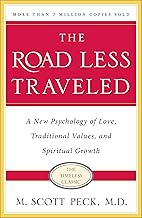
The Road Less Traveled

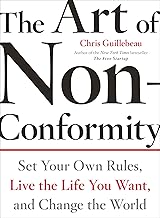
The Art of Non-Conformity
Disclosure: This post may contain affiliate links. We only recommend products we believe in, and we may receive a commission at no cost to you! Thank you for your support!
Acknowledgment: Cover Image by moneycatzzz.com
Disclaimer: The information is provided for general information only – moneycatzzz.com makes no representations or warranties in relation to the information, including but not limited to any representation or warranty as to the fitness for any particular purpose of the information to the fullest extent permitted by law. While every effort has been made to ensure that the information provided in this article is accurate, reliable, and complete as of the time of writing, the information provided in this article should not be relied upon to make any financial, investment, real estate or legal decisions. Additionally, the information should not substitute advice from a trained professional who can take into account your personal facts and circumstances, and we accept no liability if you use the information to form decisions.